
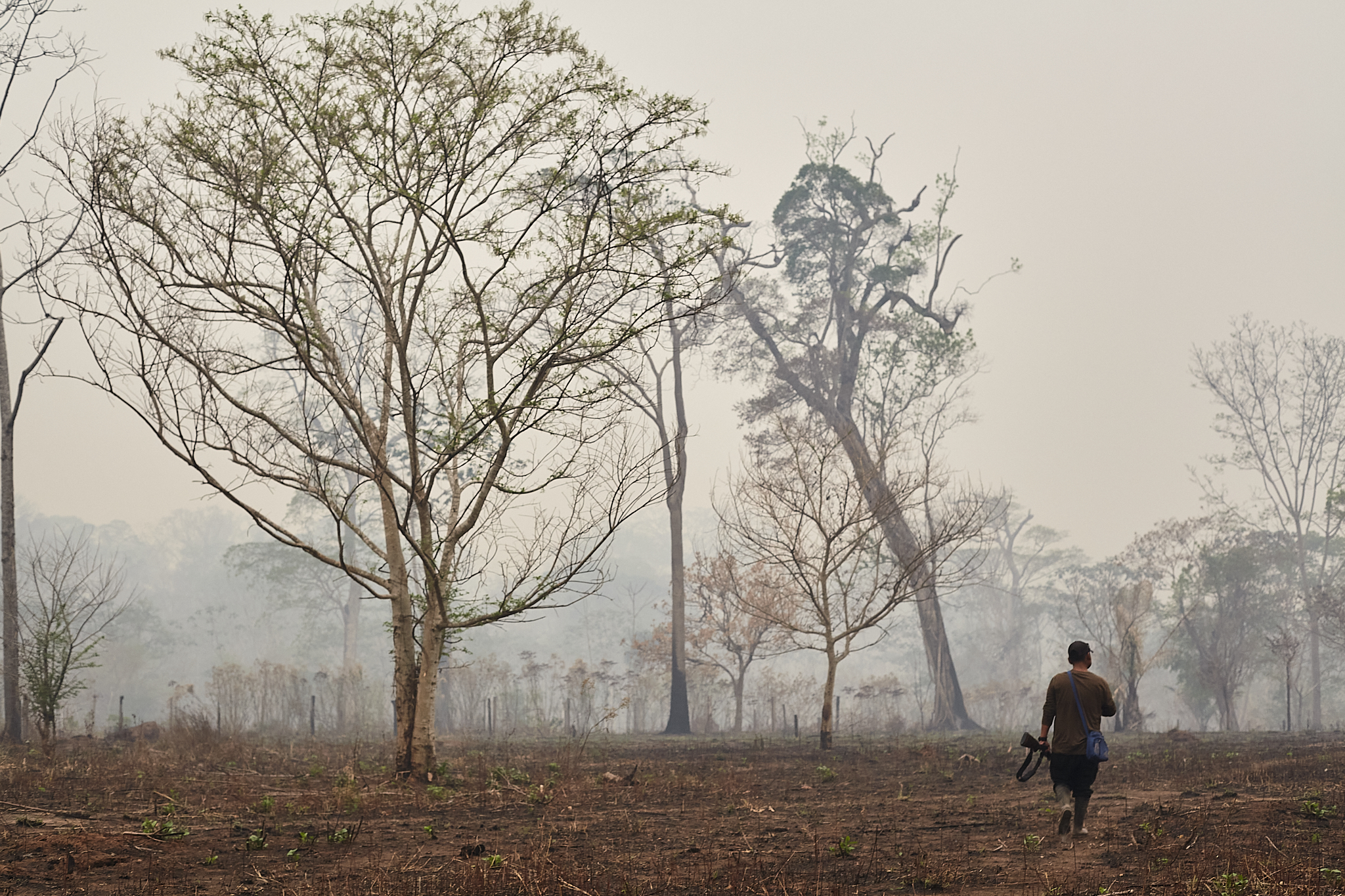
Bolivia has exceeded the record for area burned set in 2019, when the figure of six million hectares was reached nationally. This environmental catastrophe has had devastating consequences for Indigenous communities, severely impacting their access to food and water, compromising their health, and even forcing displacement. Forest fires are a product of climate change but are also fuelled by political and economic factors. In light of this, it is urgent to address this crisis from a perspective that goes beyond emergency responses and addresses the underlying causes.
According to the World Resources Institute (WRI), Latin America is facing an alarming increase in forest fires, reflecting a global trend. From 2001 to 2023, Brazil, Bolivia, Mexico, and Argentina were among the top ten countries worldwide to have the highest tree cover loss caused by fires, according to Global Forest Watch (GFW). Data from the same source reveals that, collectively, these countries have experienced a three-and-a-half-fold increase in forest cover loss due to fires over the past decade compared to the previous one.
According to GFW, Bolivia consistently ranks among the countries in Latin America with the greatest loss of tree cover due to fire, second only to Brazil, with an average annual loss of 89,700 hectares. In turn, this year has set historic records: fire alerts began to spike dramatically in mid-July, and Bolivia is now among the countries with the highest number of alerts worldwide.
Data on the area affected by the fires has not been updated by the central government to date. At the departmental level, the Santa Cruz authorities have quantified an impact of seven million hectares. Civil society organizations such as Fundación Tierra and the Center for Legal Studies and Social Research (CEJIS) denounce the fact that, thus far, the area in hectares is greater and in excess of the area burned in 2019, when six million hectares were burned nationally. The most affected departments include Santa Cruz and Beni, where the Chiquitano dry forest and the Amazon are in flames, affecting forest reserves, protected areas and Indigenous territories.

A recurring threat to Indigenous life
While this year may be particularly devastating, this is not the first time that local NGOs, Indigenous organizations and the public have sought to draw global attention to the crisis. The frequency of fires has been steadily increasing, profoundly impacting Indigenous communities and endangering their physical integrity, health and livelihoods.
Yirka Mendoza, leader of the volunteer fire brigade in her community within the Monte Verde Indigenous territory, located in the Chiquitano dry forest, comments: “We’re afraid for our lives because La Chiquitania is still burning, and we don’t know what more to do.” In turn, she explains that these fires are a recurring threat, severely affecting the people who live in her territory: “Sadly, every year we face these fires, and I fear that we will continue to be affected. In previous years, the entire forest and our crops burned but, this year, the fires have reached an unprecedented scale, even destroying our homes.” Moreover, she stresses that many in the territory rely on honey and artisanal products, which are dependent on the forest and fauna now being destroyed.
The fires have also taken their toll on the community’s health: the dense smoke has led to a significant deterioration in air quality, making breathing difficult and causing frequent headaches and eye irritation. In addition, there are negative impacts on water sources. For just over a decade, the effects of climate change and deforestation have intensified water stress in the communities of the Chiquitano dry forest. Today, the few remaining water sources are contaminated with ash. These health risks, along with limited access to water and the overall threat to physical integrity, are especially concerning for vulnerable groups such as children and the elderly.
Critical shortages of water and medicines, combined with smoke and fire, are forcing many to leave their homes and territories, generating a phenomenon of forced displacement.
Critical shortages of water and medicines, combined with smoke and fire, are forcing many to leave their homes, generating a phenomenon of forced displacement.
Against this backdrop, Indigenous Peoples in Bolivia often take on the role of firefighters: many of the communities in the Monte Verde Territory have established their own fire brigades. After devastating fires here in 2019, Indigenous community members were trained to combat wildfires more effectively. However, Yirka emphasizes that they lack proper equipment. She and her team of 20 volunteer firefighters are on the front line, risking their lives in regular clothing as they try to protect their communities and crops from ongoing fires. Without the proper tools or protective gear, their efforts are even more dangerous.
According to CEJIS’ Observatory on Indigenous Peoples’ Rights in Bolivia (ODPIB), forest fires have led to crop losses and health complications due to air pollution in several Indigenous territories. In turn, critical shortages of water and medicine, along with the dangers of air pollution and the risk of being trapped by fire, are forcing many to abandon their homes and territories, generating a phenomenon of forced displacement that constitutes yet another violation of the fundamental rights of these Indigenous communities.
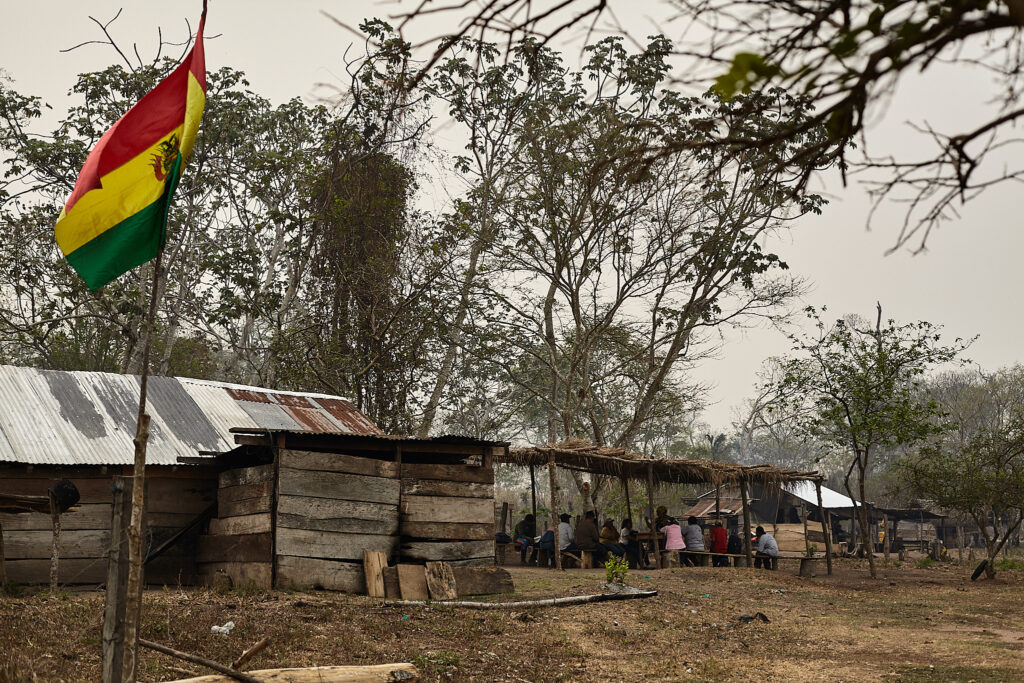
According to CEJIS, in the Monte Verde Territory, at least 10 Indigenous communities associated with the Indigenous Coordinating Body of Concepción (CICC) and the Indigenous Coordinating Body Paiconeca of San Javier (CIPSJ) were forced to abandon their homes and take refuge in the urban centers of Concepción and San Javier. A report by Apoyo para el Campesino-Indígena del Oriente Boliviano (Support for Indigenous/Peasant Farmers in the East of Bolivia/APCOB) reports that the communities of El Regreso, Sagrado Corazón de Jesús, Puerto San Pedro, Makanaté and Monte Verde were the most affected.

Underlying causes of forest fires
The World Resources Institute reports that the growing trend in wildfires is closely linked to climate change: warmer and drier conditions fuel wildfires, which, in turn, release more carbon into the atmosphere, further intensifying climate change and increasing the likelihood of future fires. In addition, the institute notes that while climate change makes forests more vulnerable, commodity-driven deforestation is also a major factor contributing to the increasing number of forest fires in tropical regions.
In addition, Bolivian NGOs attribute the increase in fires to government policies that promote the expansion of agricultural land. In the last 40 years, agricultural land in the Santa Cruz region has increased more than elevenfold, from 264,800 hectares to more than three million. Large landowners, particularly those dedicated to cattle ranching and soybean production, have made significant profits. This agricultural elite exercises substantial political influence and collaborates with transnational corporations such as Monsanto and Cargill. During Evo Morales’ presidency, concessions were granted to the agricultural elite in order to maintain political stability, with plans to expand the agricultural frontier by one million hectares annually up to 2025.
Alongside established large landowners, peasant settler groups are driving this expansion forward. This segment cultivates the land through monoculture production on small properties and aims to increase the size of their holdings so that they can be classified as medium or large. In this way, they try to access financial resources and enhance their production model, which undermines collective Indigenous land ownership due to the perceived unproductiveness of these lands. This is the main sector responsible for the subjugation of Indigenous territories, protected areas and public lands. Critically, a set of laws known as “incendiary laws” has come into place over the last decade to facilitate the conversion of forests into farmland and incentivize deforestation under the guise of promoting food security.
In the Bolivian lowlands, it is common to use fire to clear land for new pastures or agricultural fields. However, during periods of drought, these intentional fires can easily get out of control and spread rapidly.
The growing trend of wildfires is closely linked to climate change.
According to the National Institute of Agrarian Reform (INRA), in 2023, the areas affected by fires, categorized by the type of property on which burn scars were found, are as follows: 37% corporate and medium properties, 18% communal and small properties, 16% Indigenous Territories, 10% Available State Lands and 17% Unavailable State Lands. In October 2023, the State Attorney General’s Office conducted an investigation into those responsible for the fires generated during this administration, identifying 41 agrarian and livestock entities in the departments of Santa Cruz, La Paz and Beni.
According to monitoring carried out by the Center for Autonomous Territorial Planning (CPTA), which reports to CEJIS, as of 20 September of this year, the area burned had affected Indigenous territories in the department of Santa Cruz as follows: 56% Monte Verde, 41% Zapocó, 41% Guarayos and 70% Pantanal. In turn, research conducted by CEJIS in 2021 showed that, between 2010 and 2020, 42% of the total area titled as Tierras Comunitarias de Origen (Native Community Lands/TCOs) in the lowlands of Bolivia, comprising of 58 TCOs, was affected by fires.
In the Bolivian lowlands, it is common to use fire to clear land for new pastures or agricultural fields. However, during periods of drought, these intentional fires can easily get out of control and spread rapidly. Many NGOs consider this practice to be one of the main reasons for the increase in forest fires in Bolivia. As incentives to clear land grow, fires used for this purpose escape more frequently. Once these areas are burned, the damage caused to the forest is often irreversible.
Climate change and deforestation: a crisis that calls for action
As Indigenous Peoples face the devastating impact of wildfires, it is crucial to broaden our perspective beyond the immediate crisis and consider the role of actors in the soy and livestock supply chains. In Bolivia, the fires are not just a result of climate change; they are also driven by political and economic factors that are rooted in a global demand that extends far beyond the country’s borders. Multinational corporations and importers of soybeans and livestock are significant contributors to this crisis as they continue to incentivize agricultural expansion into forested areas, leading to further deforestation.
While immediate support is urgently needed – such as providing better equipment for volunteer fire departments and ensuring access to water and medication – these measures will only offer temporary relief. The problem will not be solved until the broader issues – climate change and the economic systems that promote deforestation – are addressed.
This crisis is not new. While this year may be particularly severe in Bolivia, the problem has been escalating for years. Without a change in global policies and practices, and genuine efforts to address climate change, deforestation and the forces driving agricultural expansion, forest fires are likely to continue to devastate Bolivia and other tropical regions around the world.

Miguel Vargas Delgado is a lawyer specializing in the rights of Indigenous Peoples and Executive Director of the Centre for Legal Studies and Social Research (CEJIS) in Bolivia.

Tora Aurora Jensen is an intern at IWGIA and a master's student in anthropology at Copenhagen University.