
The confluence of the Amazon and Orinoco river basins plays a crucial role in regulating the planet's climate, generating oxygen, producing rainfall, and storing greenhouse gases. Without it, much of South America would be a desert. However, this region holds strategic metals such as gold and coltan and faces threats from both legal and illegal mining. In this context, Indigenous Peoples serve as the first line of defense for the Amazon. Therefore, a key counter strategy the threat is to strengthen the synergy between Protected Natural Areas and Indigenous Territories to ensure the region’s conservation.
Among South America’s many natural wonders, the confluence of the Amazon and Orinoco river basins is exceptional. These are the first and third largest rivers in the world by volume, respectively. The Amazon originates in the heights of the Andes and flows across the subcontinent from west to east until it empties into the Atlantic Ocean. The Orinoco also drains into the Atlantic, following an elliptical course around the Guiana Shield. It rises in the Serranía de Parima, a spur of the shield in the southeastern part of Venezuela’s Amazonas state, and flows to its mouth in Delta Amacuro state at Venezuela’s northeasternmost edge.
The two basins are connected by the Casiquiare, a natural channel that branches off from the Orinoco toward the southwest and merges with the Amazon via the Rio Negro. This makes the confluence a unique hydrological phenomenon, linking two of the world’s largest river systems. But their connection runs even deeper. The area between the northern bank of the Amazon and the southern bank of the Orinoco contains the highest biodiversity per square meter on the planet. And when we talk about biodiversity, we also mean human diversity, as this region has been home to numerous Indigenous Peoples for millennia.
This vast strip of land that covers approximately 2.65 million square kilometers stretches across Colombia, Brazil, Ecuador, Peru, Venezuela, Guyana, Suriname, and French Guiana. Roughly 300 Indigenous Peoples live within it, each with their distinct customs, governance systems, social structures, roles, and languages. If we were to recognize each of these peoples as a Nation with its own legal standing, we would be talking about nearly twice the number of nations currently represented in the United Nations system.
The Gold Boom: Record Prices
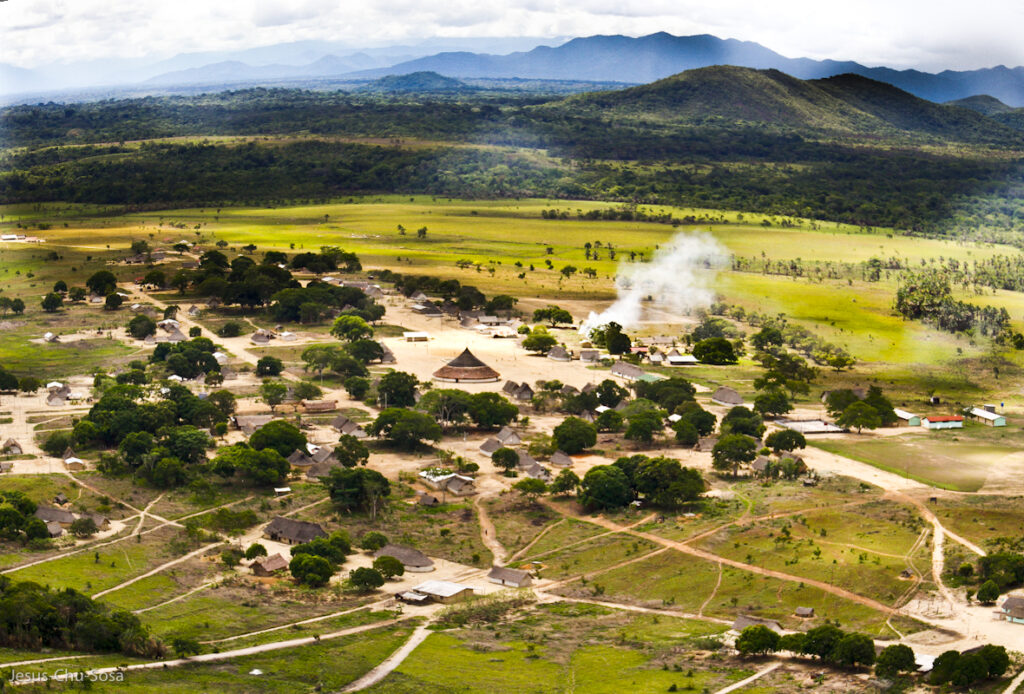
This biotic wealth, beyond its inherent value, is of incalculable importance for life on Earth. It regulates climates and rainfall, acts as the planet’s primary oxygen and water-producing engine, and serves as a reservoir for harmful greenhouse gases. Without it, much of South America would be a desert, and the harmful gases stored beneath its surface could potentially accelerate climate change in an irreversible manner. However, the region’s wealth extends far beyond thi. Beneath its green canopy lie vast reserves of precious and strategic metals, from gold to coltan still not fully quantified. These resources have triggered a “gold rush” of both legal and illegal mining that threatens the region’s existence.
The gold trade is perhaps the most alarming issue—and undoubtedly the most well-known. While not a new phenomenon, the convergence of multiple factors has intensified it over the past decade. One of its key drivers was the aftermath of the 2008 global financial crisis, which spurred a surge in gold demand as major investors sought a safe haven amid instability and recession. The onset of the COVID-19 pandemic had a similar effect.
The situation is unlikely to improve in the coming years. In fact, it may worsen. At the beginning of the century, the price of an ounce of gold on global markets hovered around $270 USD. By 2008, it had climbed to $600 USD. By the end of 2024, it surpassed $2,600 USD, and projections suggest it could reach $7,000 USD by 2030. This surge has fueled increasing pressure on the Amazon as a whole, and on Venezuela’s Amazon region in particular. The country’s deep economic crisis has further driven many people into the Amazon in search of new sources of income.
According to estimates based on satellite imagery and field research done by the organization Wataniba, the land area directly affected by gold mining has expanded dramatically since 2016. By 2019, it had already reached 33,900 hectares, and by 2021, it had grown to 133,700 hectares, representing a 294% increase. The worsening of Venezuela’s crisis, exacerbated by the effects of the global pandemic, has played a key role in the expansion.
The environmental and human consequences have been swift and severe. Mining has contaminated water sources, soil, and crops, leading to food insecurity and the resurgence of diseases such as malaria—whose spread is linked to deforestation and soil erosion. Additionally, Indigenous Peoples face violence from armed groups who see them as obstacles to their predatory operations. More recently, these groups have intensified efforts to recruit Indigenous youth, posing deep social and cultural challenges.
Building Networks to Combat Gold Mining
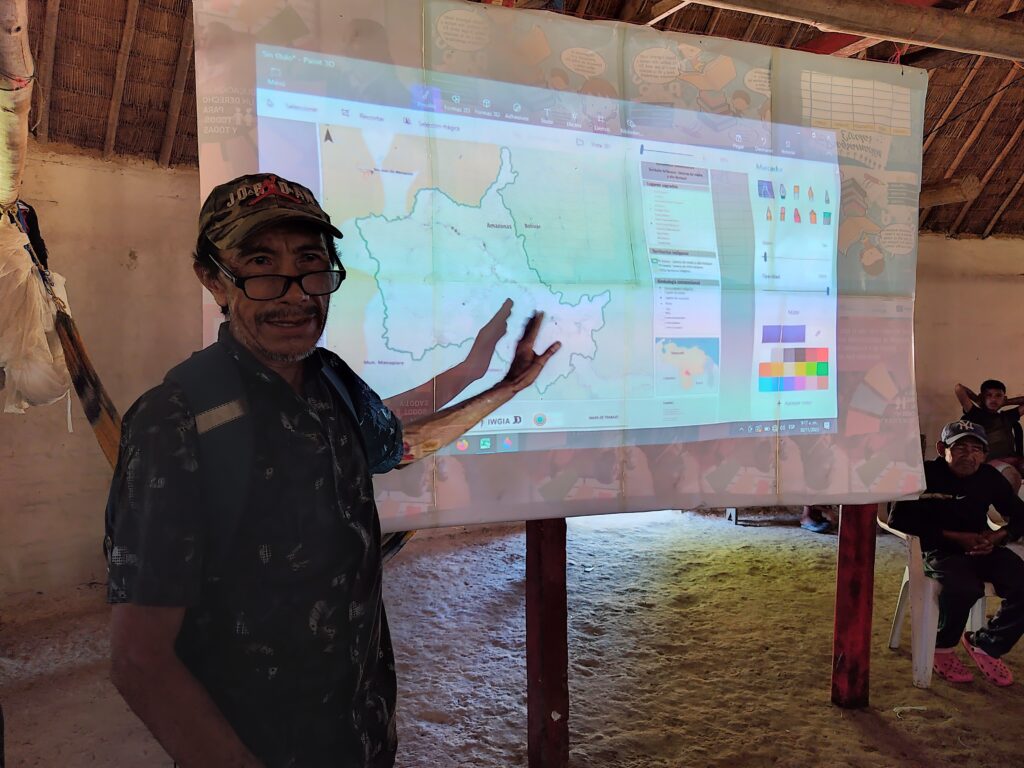
As predatory activities intensify, it is equally crucial to highlight the organizational efforts that Indigenous Peoples have developed to defend their territories, rights, and ways of life. In this context, the work being done in collaboration with the Ye’kwana and Uwottüja peoples—both at the forefront of the fight against extractive industries—is particularly significant.
For the Ye’kwana, Wataniba’s monitoring efforts have identified over 70 active illegal mining sites within territory they share with the Sanema, located in the Manapiare and Alto Orinoco municipalities in Amazonas state. Meanwhile, the Uwottüja territory has become the epicenter of highly aggressive extractive activities, resulting in the persecution and even contract killings of Indigenous leaders and territorial defenders.
At the end of 2024 we presented the Sacred Sites Maps in collaboration with the Indigenous Organization of the Uwottüja People of Sipapo (OIPUS), the Indigenous Organization Ye’kwana of Ventuari (KUYUNU), and with the support of the Regional Organization of Indigenous Peoples of Amazonas (ORPIA). These maps stand out as essential tools for intercultural dialogue in the ongoing struggle for the rights and the defense of their territories. Alongside these maps, we also introduced the Free, Prior, and Informed Consultation Protocols for both the Ye’kwana and Uwottüja peoples.
In a similar mannaer, we collaborated at Wataniba with the Horonami organization that represents the Yanomami people in southern Venezuela—one of the most recently contacted Indigenous groups that has been severely affected by illegal mining, displacement, various forms of violence, and even massacres. Additionally, within the framework of the Amazon Network for Georeferenced Socio-Environmental Information (RAISG), we produced reliable data to support the creation of public policies aimed at protecting the Amazon biome, including the Indigenous Peoples who inhabit it.
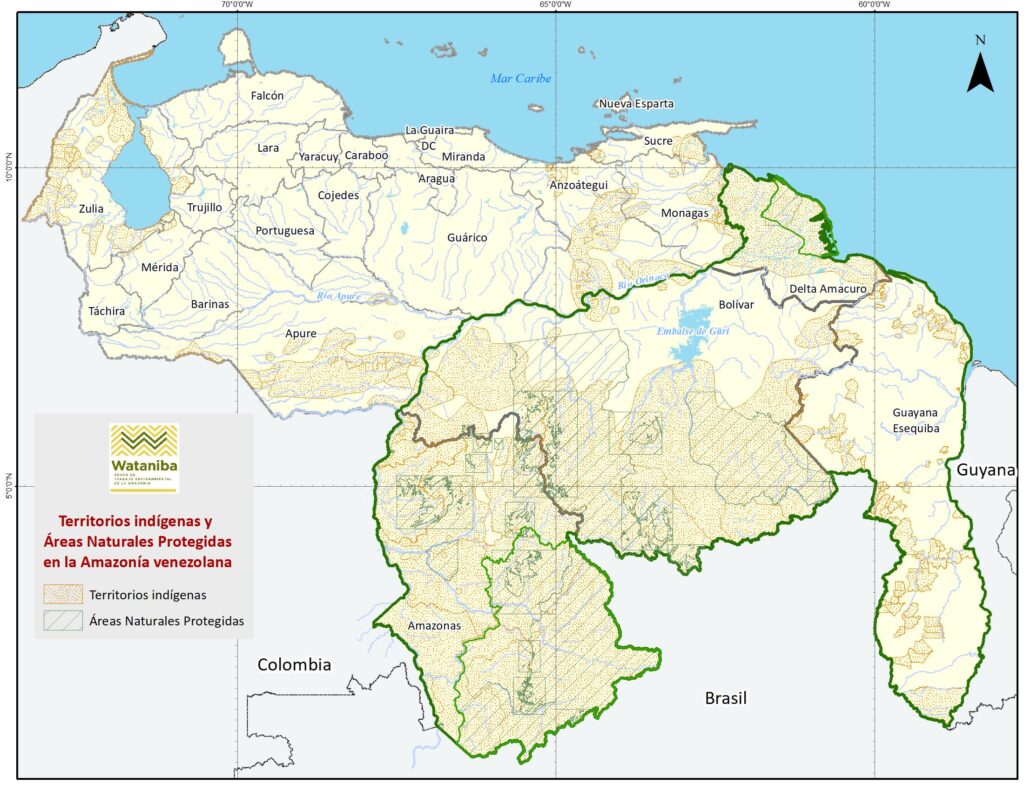
A key outcome of this work has been our ability to demonstrate that the convergence and complementarity between Protected Natural Areas (PNAs) and Indigenous Territories (ITs) represent the most effective strategy for conserving the Amazon biome and its Indigenous populations.
Protected Natural Areas + Indigenous Territories = Greater Biodiversity
Two decades of work have convinced us that fostering and strengthening the synergy between Protected Natural Areas (PNAs) and Indigenous Territories (ITs) is the most effective strategy for conserving the Venezuelan Amazon region and combating climate change. In the Amazon, home to the world’s largest and most biodiverse tropical forests, it has been demonstrated that ecosystems are better preserved where Indigenous territories overlap with natural protection areas. These territories capture more water and store higher levels of forest carbon that prevent the release of greenhouse gases into the atmosphere, thereby helping to slow the acceleration of climate change.
One way to achieve this would be by legally recognizing Indigenous territories, for example, by demarcating them. This would provide a streamlined process for governments to comply with and enforce biodiversity agreements, climate change accords, the Sustainable Development Goals (SDGs), and ensure food, water, and energy security for their populations.
In the case of Venezuela, we propose expanding this strategy by safeguarding the Indigenous territories of the Yanomami and Ye’kwana in the Upper Orinoco, as well as the Middle and Upper Ventuari, and the Uwottüja in Sipapo (Autana municipality). These territories overlap with several national parks, natural monuments, tepuis, and the Upper Orinoco-Casiquiare Biosphere Reserve. These regions are home to Indigenous Peoples living in voluntary isolation or under initial contact, who urgently need the intervention of various governmental bodies.
In conclusion, the issue of illegal mining within Indigenous territories in the Venezuelan Amazon is complex and, in some cases, severe. Beyond highlighting and denouncing this situation, it is crucial to recognize that the fight these Peoples are waging against mining is not just about protecting their territories and way of life, but also safeguarding the integrity of the world’s largest, most biodiverse, and most vital tropical forest.
Wataniba is a civil society organization that promotes sustainable territorial management processes in the Venezuelan Amazon. It seeks to strengthen both the identity of Indigenous Peoples in this region, as well as their technical capacity to defend and exercise their rights.

Luis Salas Rodriguez is a sociologist and political economist, and an advisor to Wataniba.