
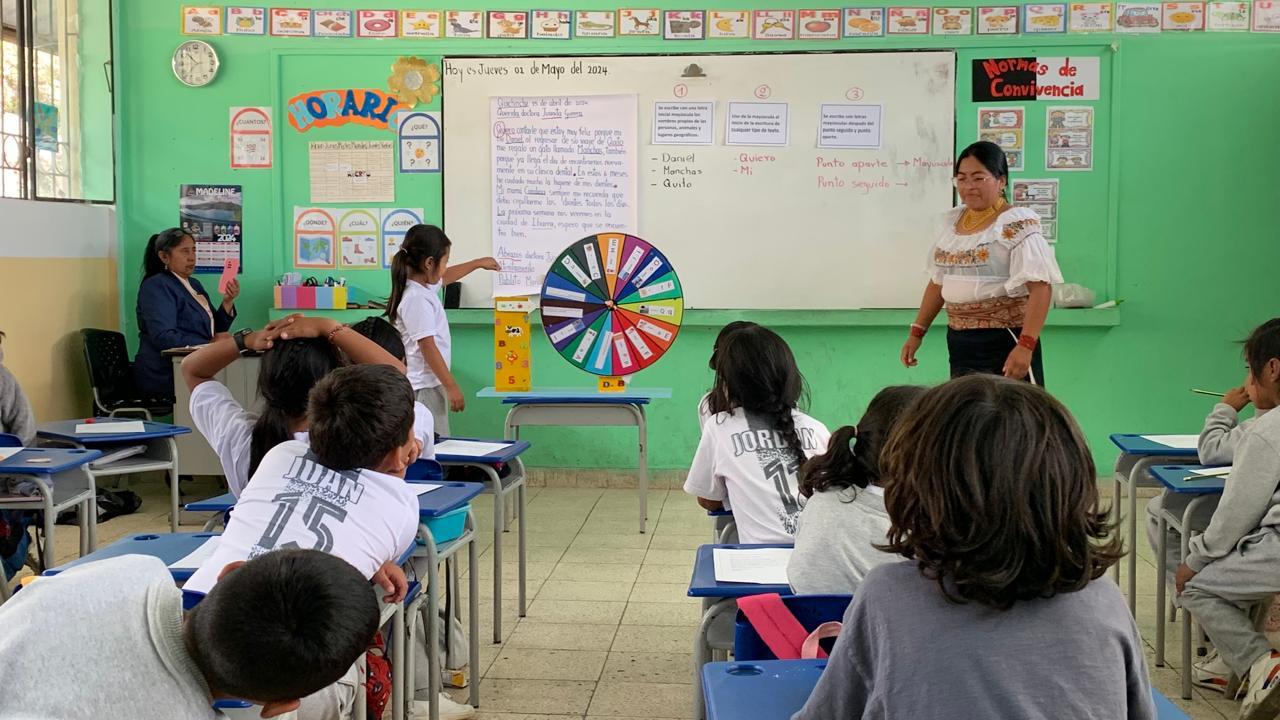
Intercultural Bilingual Education (IBE) in Ecuador emerged in the 1940s with the creation of the Cayambe Clandestine Schools, promoted by Kichwa leader Dolores Cacuango and the Ecuadorian Federation of Indians. After a long process of struggle, it was officially recognized by the State in 1988. Since then, it has made significant progress in teacher training, curriculum development, and the production of educational materials. Today, its main challenges include securing autonomy to define its own educational model, training teachers from various Indigenous nations, and expanding its presence in urban areas.
As in many other Latin American countries, Intercultural Bilingual Education in Ecuador is the result of a long and intense struggle by Indigenous peoples and nations for an education that is culturally and linguistically relevant—and one that also addresses their social realities and supports the advancement of their political projects.
This explains why IBE has been a central demand of the political agenda of Indigenous organizations, and why it has consistently played a key role in political negotiations with the Ecuadorian state. This was especially evident during the Dialogue Tables held in 2022, following the major Indigenous uprising in June of that year.
Historical Trajectory of Intercultural Bilingual Education
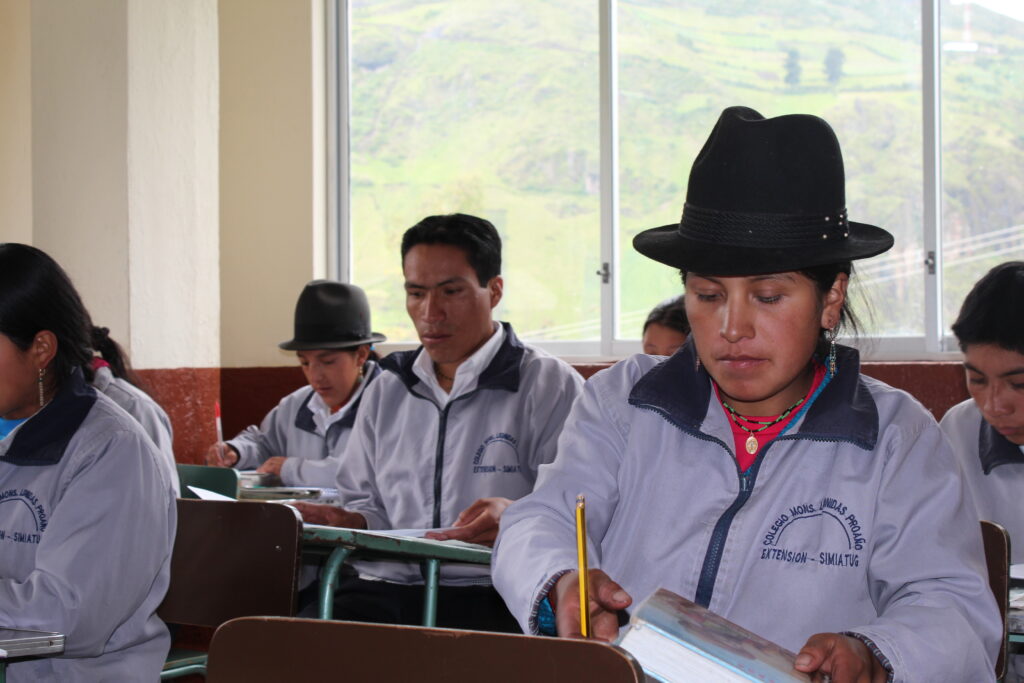
The emergence of Intercultural Bilingual Education in Ecuador dates back to the 1940s, when the Clandestine Schools of Cayambe were established by Dolores Cacuango and the Ecuadorian Federation of Indians, with the goal of teaching literacy to children and youth from communities working on local haciendas. In the decades that followed, various educational initiatives sprang up across the Highlands, the Amazon, and even parts of the Coast.
A defining feature of these initiatives was their autonomous nature: they were created and operated independently of the state and managed directly by the communities themselves. Another important aspect was their commitment to creative and innovative educational approaches—both in terms of content and methodology—aimed at addressing the needs and aspirations of Indigenous communities.
In 1988, as a result of pressure from the Indigenous movement and negotiations with the government of the time, Indigenous education was officially recognized by the Ecuadorian state through Executive Decree 203. Thismilestone led to the creation of the National Directorate of Intercultural Bilingual Education (DINEIB), with the aim of enabling Indigenous peoples and nations, through their organizations, to lead, plan, and manage Indigenous education comprehensively at the national level.
Over the course of more than three decades of institutional life, Intercultural Bilingual Education (IBE) has made significant progress in several areas, including teacher training, curriculum development, and the production of educational materials. However, it has also faced serious challenges and setbacks. The vitality and progress of IBE have depended not only on the priority Indigenous organizations assign to it within their political agendas, but also on the vision and political will of successive governments.
The Current Landscape: Limited Presence in Urban Areas
There is no available data on the quality of Intercultural Bilingual Education in Ecuador, as reports from the National Institute for Educational Evaluation (INEVAL) do not differentiate learning outcomes between the two educational jurisdictions: intercultural (formerly “Hispanic jurisdiction”) and intercultural bilingual. Furthermore, there are no specific criteria for assessing the quality of IBE.
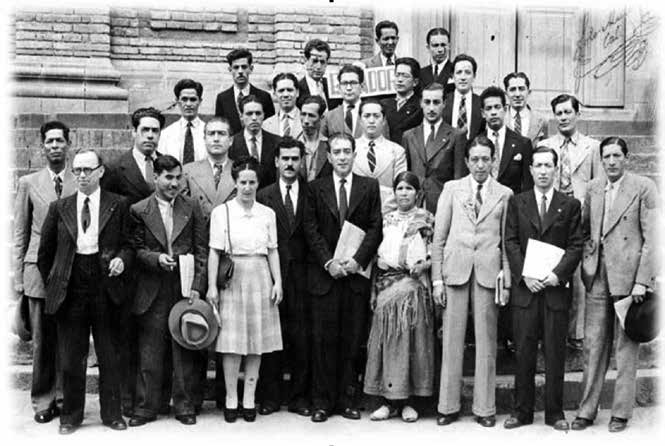
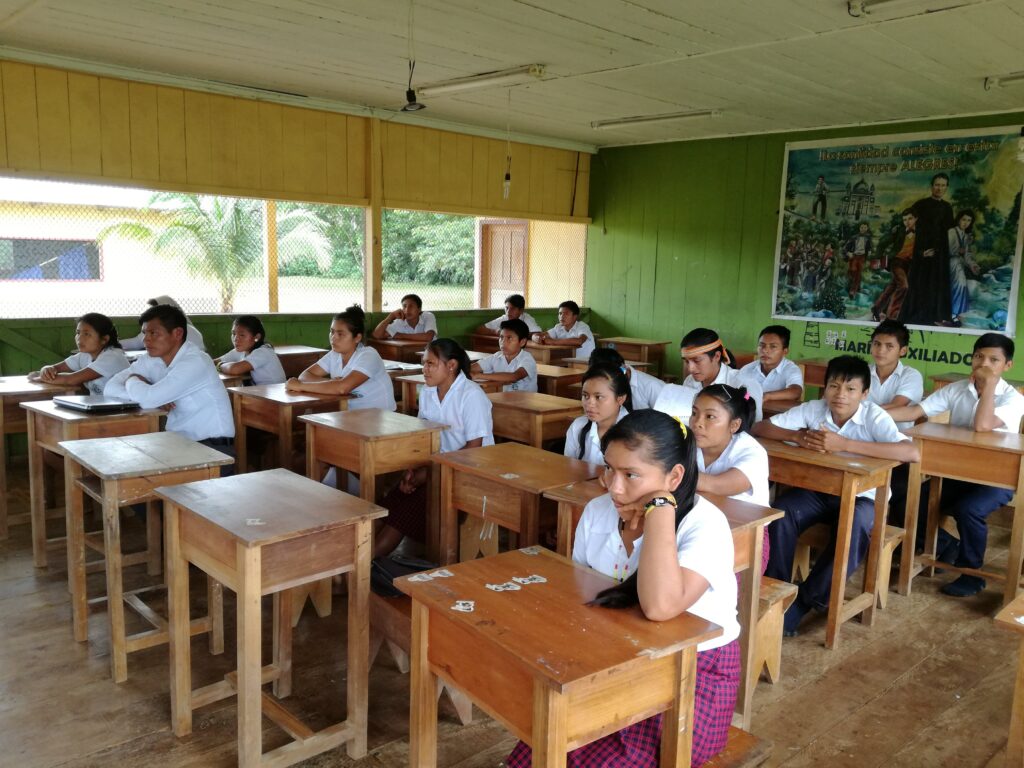
In terms of coverage, IBE currently serves 131,282 students across the three educational levels—early childhood, primary, and secondary—which represents only 3.12% of the country’s total student population. This figure is a cause of concern, particularly in a country where 7.7% of the population identifies as Indigenous.
While 80% of students enrolled in IBE identify themselves as Indigenous, the remaining students identify themselves as mestizo, Afro-descendant, montubio, or white. Among Indigenous students, the majority belong to the Kichwa and Shuar nations (64.73% and 24.12%, respectively), the two largest Indigenous groups in Ecuador. They are followed, in smaller numbers, by students from the Chachi, Achuar, and Awa nations, with other groups represented in minimal percentages.
A related issue is that most IBE students in Ecuador live in rural areas—70.49%. This reflects the fact that 73.87% of the Indigenous population resides in rural areas and also points to one of the current weaknesses of IBE: its limited presence in urban areas.
One notable characteristic that distinguishes Ecuador from other countries in the region is that IBE has a nationwide reach: it operates in 23 of the country’s 24 provinces, including the Galápagos Islands, where sustained Indigenous migration has occurred over several decades. Most IBE students are concentrated in the Amazon and the central Highlands.
Finally, it is important to note that to attend its students, the IBE program currently employs 9,146 teachers working in 1,710 educational institutions of various types (early childhood, primary, secondary, and mixed), sizes, and conditions. The majority are located in rural areas.
Structure of the Educational Proposal
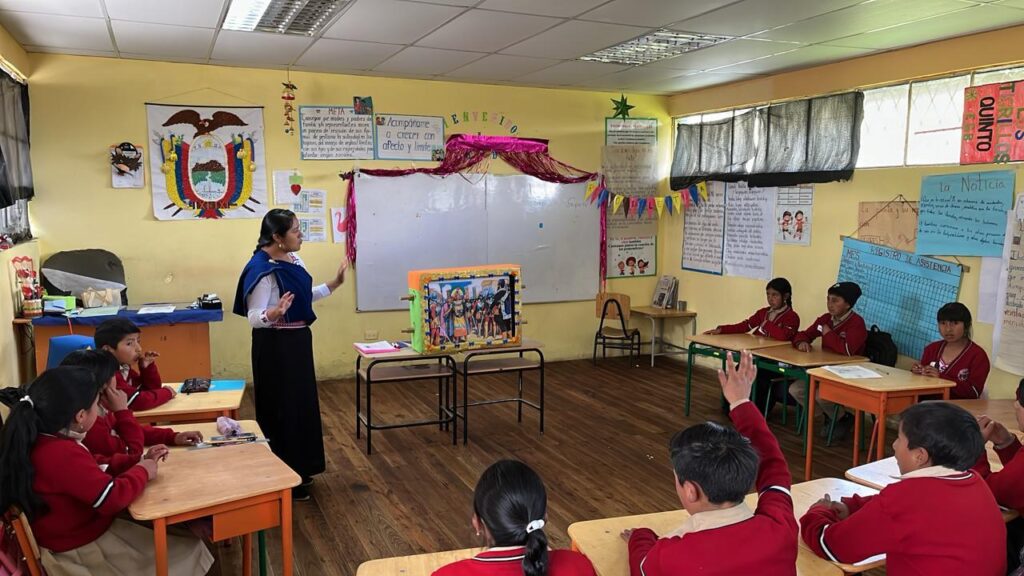
In Ecuador, Intercultural Bilingual Education is based on the Intercultural Bilingual Education System Model, developed by Indigenous peoples and approved in 1993—five years after the state recognized Indigenous education. This model clearly defines the principles, goals, foundations, and strategies of IBE, as well as various criteria for organizing and implementing the educational process, including the academic calendar, language use, classroom methodology, and learning assessment.
IBE is organized into two levels: intercultural bilingual basic education and intercultural bilingual secondary education. The basic level includes two stages: the non-formal stage, which involves family- and community-based early childhood education; and the formal stage, comprising the first ten years of schooling. The formal stage is structured around four sequential processes: introduction to semiotic systems; cognitive, emotional, and psychomotor development; development of academic and technical skills; and investigative learning. The secondary level, or intercultural bilingual high school, includes the final three years before entry into higher education.
Each level of education has its own specific curriculum, approved in 2017. These are adapted versions of the national curriculum. For the basic level, there are 14 specific curricula—one for each Indigenous nation. For the high school level, a unified proposal called Curricular Extension for the Intercultural Bilingual Unified General Baccalaureate was developed to complement the contents of the national curriculum.
The Challenges of a Self-Determined Education
The most pressing challenge today is the issue of autonomy: the right and power of Indigenous nations to define their own education according to their needs and political visions. This is a basic condition for the development of an education that is culturally, linguistically, socially, and politically relevant. Indigenous organizations are working to restore the status they held until 2008, when they had control over appointing authorities, designing curricula, managing the educational process, and training their own teachers. Achieving educational autonomy is a key component of the plurinationality recognized in the Ecuadorian Constitution.
A second major challenge is the need to rethink the curricular proposals. Although there are curricula specifically for IBE, they are ultimately adaptations of what is misleadingly called the “national curriculum,” which in reality reflects the worldview and context of the urban, white-mestizo, middle class. The Confederation of Indigenous Nations of Ecuador (CONAIE) advocates for the development of curricula that respond to the current needs and realities of Indigenous peoples and that support the realization of their political projects.
In recent years, several promising curricular proposals have emerged from different areas in the Highlands and the Amazon. These experiences could serve as valuable references for and contributions to the current process of reform. Naturally, any curriculum reform initiative must be sufficiently flexible to incorporate both core areas of shared learning and the specific needs of Indigenous peoples and nations. This goes beyond language and culture—it also includes organizational, territorial, and political dimensions.
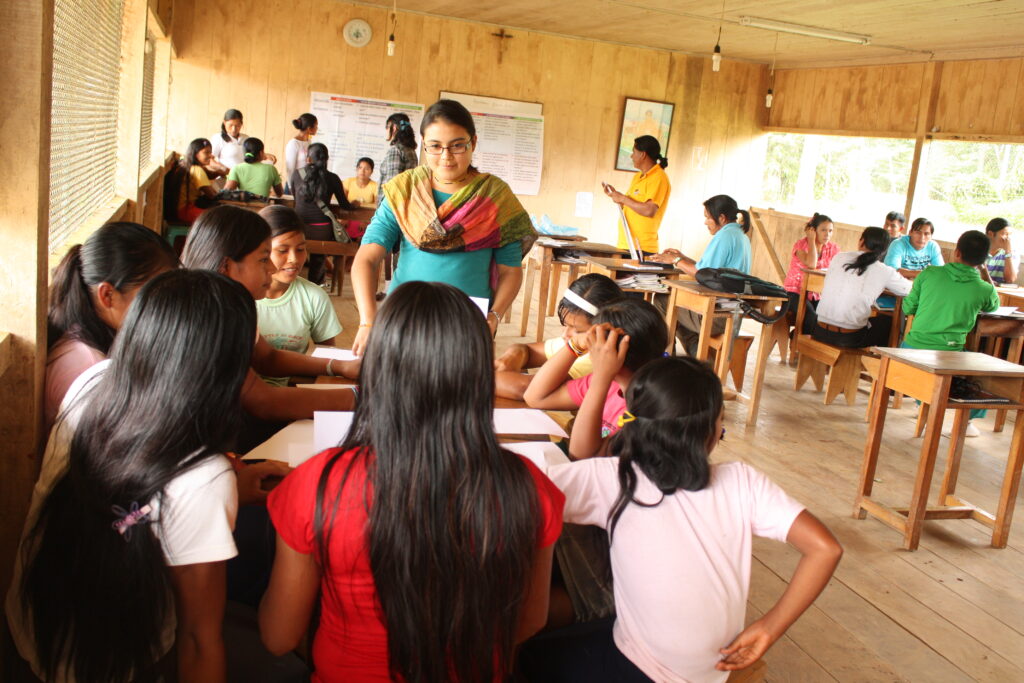
A third major challenge relates to teacher training. Although significant progress has been made over the past three decades, much remains to be done. The challenge lies not only in increasing the number of teachers with specific intercultural profiles, but also in expanding representation from all Indigenous nations. Currently, the majority of teachers in the Intercultural Bilingual Education (IBE) system are from the Kichwa nation (70.95%), followed by Shuar teachers (18.76%). However, there are very few teachers from the other nations.
Inter-institutional coordination and the production of educational materials
Addressing the challenge above requires coordinated efforts among Ecuadorian universities, the Intercultural Bilingual Education System, and Indigenous organizations. The goal is to develop a strong, sustainable teacher training program that acknowledges the internal diversity of Indigenous populations, with special attention to nations with fewer educators.
Closely linked to this is the challenge of producing educational resources and materials. Despite the work carried out over the past thirty years, there is still a shortage of materials in Indigenous languages that reflect the unique cultural, social, and political realities of each people and nation.
Last—but certainly not least—is the challenge of reaching new generations of Indigenous people living in urban areas. The IBE currently being offered in urban contexts is limited, while the rural-to-urban migration trend continues to grow. Addressing the needs of urban Indigenous youth calls for a rethinking of many of the principles that originally shaped and sustained IBE, and for adapting the system to the new educational demands of these populations.
It is also important to consider Indigenous populations living abroad. Migration is an ongoing and increasingly widespread phenomenon that appears to be irreversible. The advances in virtual education in recent years—particularly following the pandemic—could offer significant opportunities for delivering education to Ecuadorian Indigenous communities living outside the country.
Sebastián Granda Merchán is a professor and researcher at Universidad Politécnica Salesiana in Ecuador. He currently serves as director of the Center for Intercultural Training and Research and is a member of the Education and Interculturality research group.