
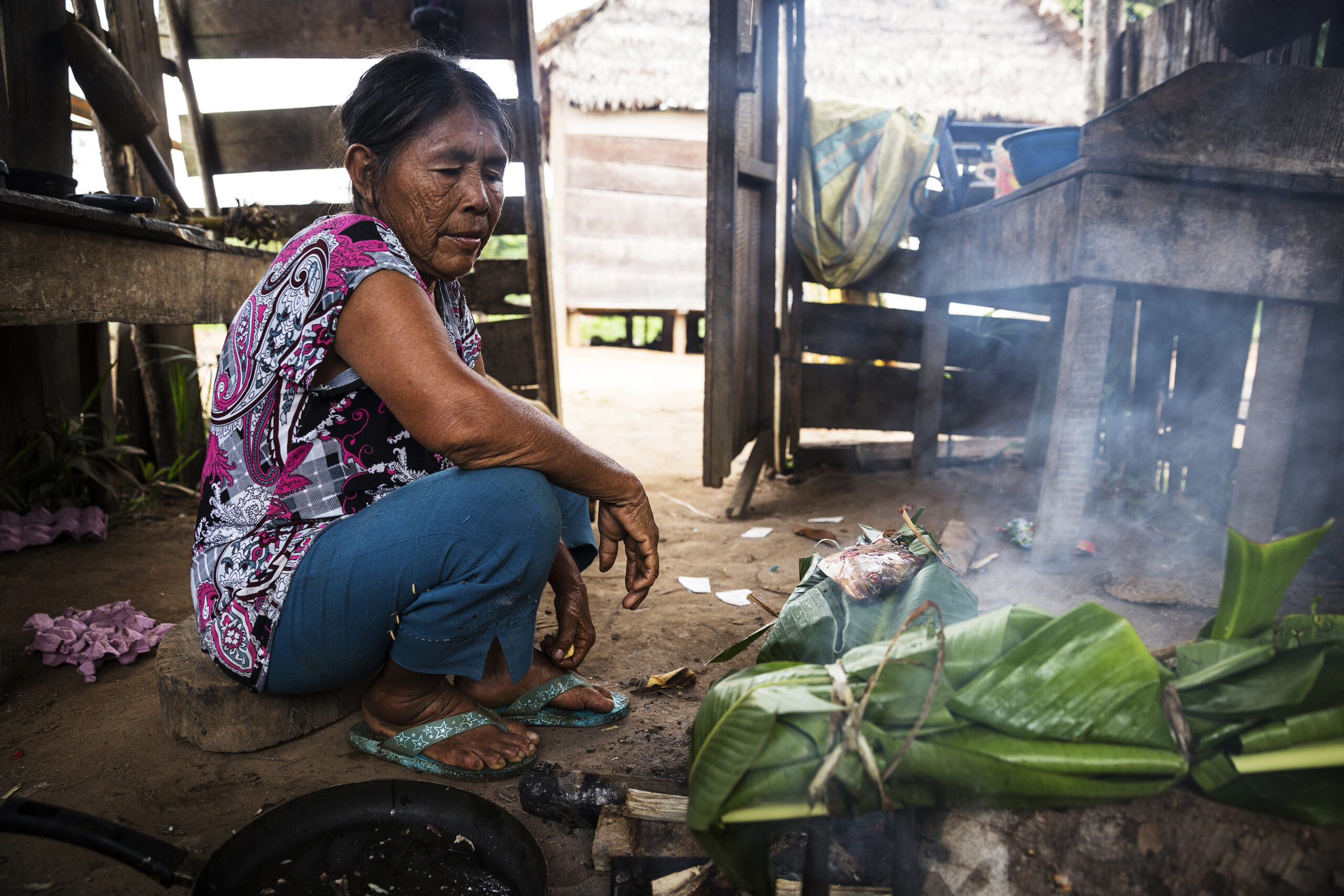
Since Daniel Ortega’s return to power in 2007, Indigenous Peoples in Nicaragua have faced the arbitrary undermining of their communal land titles and the co-optation of their traditional organisational structures. Since 2013, the Mayangna people have endured systematic violence, driven by settler invasions, indiscriminate logging and illegal mining. In this context, displacement to neighbouring countries has become a matter of survival. Leaving their ancestral territory carries short-, medium- and long-term consequences — above all because it represents their most valuable inherited asset. While exile may offer physical safety, it also exposes them to conditions of extreme vulnerability on a daily basis.
The Mayangna are an Indigenous People native to Nicaragua’s Caribbean Coast, whose presence in the region dates back to time immemorial — long before European colonisation. Today, they primarily inhabit the North Caribbean Coast Autonomous Region (RACCN), the South Caribbean Coast Autonomous Region (RACCS), and parts of the country’s central region, including Chontales, Boaco, Matagalpa and Nueva Segovia.
The name Mayangna comes from their own language and can be interpreted as “children of the sun”, “we are of the sun” or “we are from above”. These meanings are deeply embedded in their worldview, which centres around their creator deities: Adu (the sun) and Udu (the moon). Although the term Sumu was historically used in colonial records and anthropological literature, it was an externally imposed label (by both Spanish and English sources) and is now rejected by the people, who identify themselves as Mayangna balna (“the Mayangna people”). Today, the Mayangna are organised according to four ethnolinguistic variants: Panamahka, Tuahka, Yuskuh and Ulwa.
There are three main theories regarding the Mayangna’s earliest migration. One suggests an origin in Greater China or Japan, based on strong ancestral ties, and proposes that they migrated via the Bering Strait to escape warfare between dominant groups. A second theory places their origin in the Mesoamerican region, particularly in what is now Mexico. The third posits a southern origin, in the area now bordering Colombia and Venezuela, where other Indigenous Peoples with similar characteristics are found.
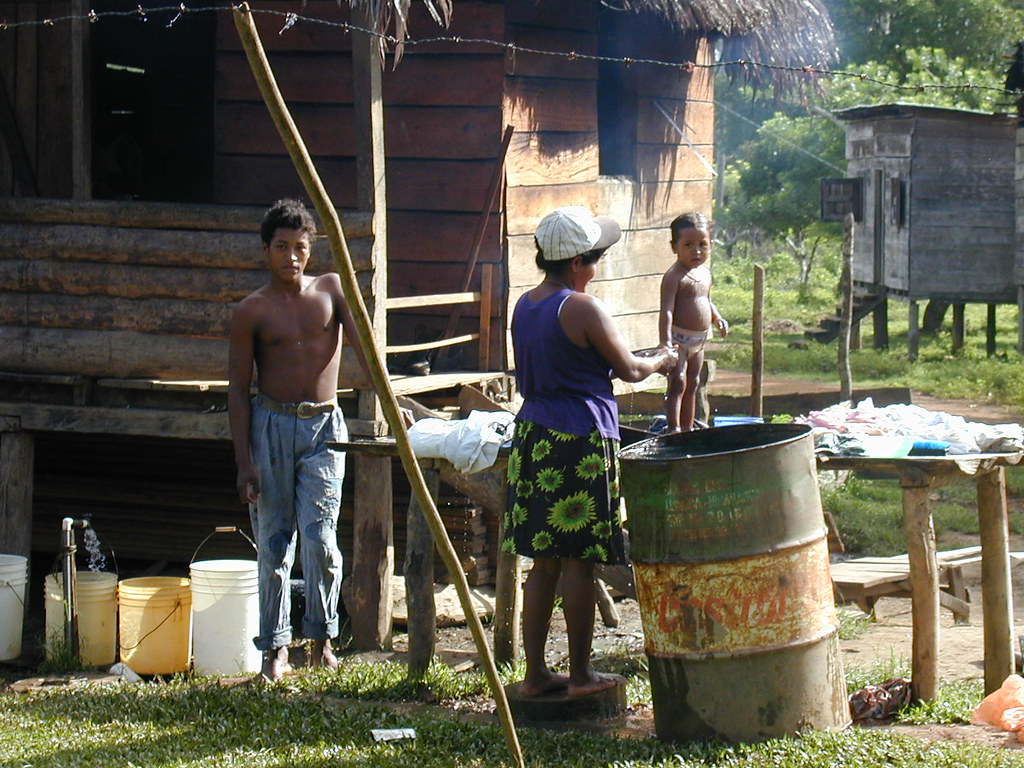
The Mayangna Worldview
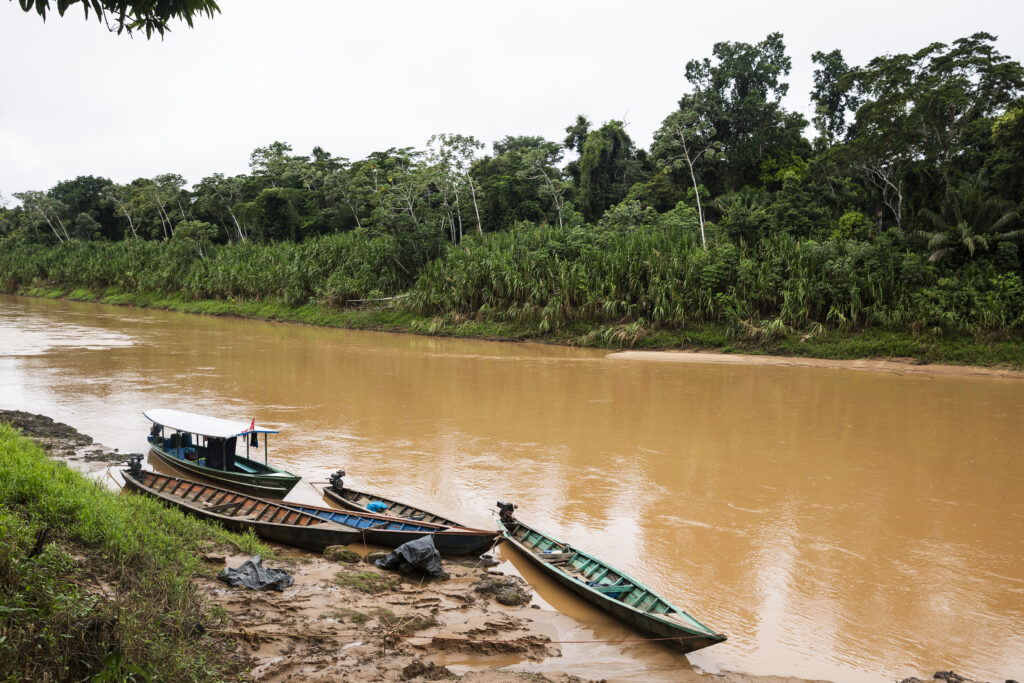
Regardless of theories about their origins, the Mayangna have historically settled in remote and hard-to-reach areas, such as the headwaters of the Waspuk, Wawa, Pispis, Tungki, Uli, Lakus, Bocay and Grande de Matagalpa rivers. This geographical isolation has helped them preserve their culture, language and traditional forms of organisation. Today, there are 76 communities organised across nine territories, with an estimated population of 45,000. Most of these territories hold communal land titles issued by the state, backed by the Regional Autonomy Law (Law 28) and the Communal Property Regime Law (Law 445).
For the Mayangna people, natural wealth is so vital that it is synonymous with life itself. It represents a way of life inherited from their millenary ancestors and holds incalculable value. This wealth encompasses everything from access to water to the quality of the air, and also includes abiotic elements such as rainfall and river flow. Their worldview goes beyond scientific or ecological reasoning — it is grounded in a spiritual dimension that sustains and balances life.
Territory, for the Mayangna, is their most valuable inheritance — not only as a geographical space, but as an ancestral legacy. It is the land where countless generations of their ancestors lived in harmony with nature and who now live on in the historical memory of current generations. It is also where the spirits of grandmothers and grandfathers dwell, along with the spirits of the mountains and forests. More than a resource, it is the spiritual and physical home of the Mayangna people.

Organisation and Territoriality
The traditional organisational structure of the Mayangna people has long revolved around the figure of the sukia or ditalyang — the spiritual leader and guardian of nature’s secrets, entrusted with guiding the destiny of each village and community. Chosen through ancestral ceremonies held at sacred sites such as Asanh Rarah, Kumapaitah and Saubi hills, the sukia was selected for their deep knowledge of astronomy, medicine, prophecy and spiritual insight. In the 1970s, a new model of local governance was introduced: the sautatuna (communal land trustee) and the wisyan (community judge).
It is important to note that, in times of crisis and leadership transition, the Mayangna people often found themselves excluded by Miskitu authorities. In response, they sought a different path — one that preserved their cultural identity while forging new frameworks. This led to the revival of the legal figure of associations and the formal recognition of Sukawala as the national organisation linking all Mayangna communities. Working in coordination with traditional authorities, this initiative established a new form of governance, understood as a transitional phase between customary systems and legal frameworks.
By 1994, the Sukawala experience had expanded opportunities for Mayangna women, youth and artisanal miners (guiriseros), paving the way for the creation of new organisations: Masaku, Matumbak, Amasau Iyamsak, Adesmir, Aumnic and Comjubo. However, following Daniel Ortega’s return to power in 2006, these Indigenous organisations began to unravel due to the suppression of structural reforms in communal governance. As associations were replaced by Indigenous Territorial Governments (GTIs), Sukawala was ultimately fragmented into three groups: Nación Mayangna, AMDES and Mawarat.
The Nicaraguan Regime and Mayangna Migration
Since Daniel Ortega’s return to power, Nicaragua has undergone an authoritarian shift that has severely impacted Indigenous Peoples. The main consequences include the arbitrary annulment of communal land titles, the co-optation of Indigenous organisational structures by political movements, and the imposition of Indigenous Territorial Governments (GTIs) subordinated to the central government and partisan interests. Since 2013, Mayangna territories have been subjected to systematic violence: armed invasions by illegal settlers, illegal logging and mining, assassinations and kidnappings, forced displacement of communities, and the criminalisation of Indigenous leaders and forest rangers.
Attacks have been documented against the communities of Saubi (2016), Wilu (2017), Alal (2021), and Kitangsar (2018 and 2022). In total, 24 Indigenous people have been killed—many of them community leaders—and nine forest rangers imprisoned for defending their territories. In addition, the regime has promoted land appropriation through government-aligned associations such as Achacomjubo, Arnig, and Copamar. To make matters worse, leaders who denounced these violations have faced public persecution, imprisonment, or exile.
Environmental migration results from invasions of their territories by settlers, mining concessions, expansion of agricultural frontiers, and large-scale cattle ranching.
Environmental migration results from invasions of their territories by settlers, mining concessions, expansion of agricultural frontiers, and large-scale cattle ranching.
During the conflict between the Sandinista National Liberation Front (FSLN) and the dictatorship of Anastasio Somoza Debayle, the Mayangna people migrated northwards within Nicaragua, as well as to Honduras and the United States. This wave of migration was among the largest in Central America. Four decades later, Nicaragua once again faces a similar crisis that began in 2015 and intensified with the escalation of state violence in 2018. In this context, individuals and entire families have fled Nicaragua to protect their lives and ensure their survival.
In the specific case of Indigenous Peoples in Voluntary Isolation and Initial Contact (PIACI), migration is driven by environmental, political, economic and cultural factors. Firstly, environmental migration results from invasions of their territories by settlers, mining concessions, expansion of agricultural frontiers, and large-scale cattle ranching. Secondly, political persecution of Indigenous activists, leaders and opposition figures is evident, with 24 Mayangna and three Miskitu individuals imprisoned. Thirdly, there is a lack of employment opportunities to secure livelihoods. Lastly, there is growing fear of a potential extermination plan against PIACI due to their resistance and struggle.

The Indelible Impact of Migration
Since the onset of the national crisis, people from all social backgrounds have been disproportionately affected, resulting in significant losses of economic assets, shrinking employment opportunities, and the breakdown and separation of families. Furthermore, those who oppose the government’s policies and authoritarian trajectory face persecution, assassination, imprisonment, and exile. Consequently, the consequences are both economic and deeply emotional.
It is estimated that more than 9,000 Miskitu, 350 Mayangna, 50 Rama, 30 Garifuna, and 10 Chorotega have migrated, primarily to Costa Rica, widely regarded as one of the most politically open countries in Latin America. While precise figures are unavailable—since many displacements occur covertly to avoid political persecution—the worrying trend is that these numbers are increasing year on year. Among the Mayangna, a significant proportion of migrants are believed to be seeking refuge from political persecution.
Although there is no mass exile, the Mayangna are compelled to relocate due to pressures from colonisation and violence imposed by the government. Consequently, they seek refuge and new opportunities in foreign lands.
Although there is no mass exile, the Mayangna are compelled to relocate due to pressures from colonisation and violence imposed by the government.
The effects of migration leave profound and lasting marks in the short, medium and long term, affecting both the migrants and their families, as well as the communities they leave behind. As a result, Mayangna communities undergo cultural and sociopolitical changes that lead to social disintegration, reorganisation, and the emergence of new social norms.
It is important to highlight that there is no formal concept of “exile.” There is no official documentation of a mass exile of the Mayangna, neither to Honduras in the 1970s nor to Costa Rica in 2018. Rather, what takes place is a gradual but continuous displacement, driven by issues related to land rights and Indigenous autonomy. In summary, although there is no mass exile, the Mayangna are compelled to relocate due to pressures from colonisation and violence imposed by the government. Consequently, they seek refuge and new opportunities in foreign lands.
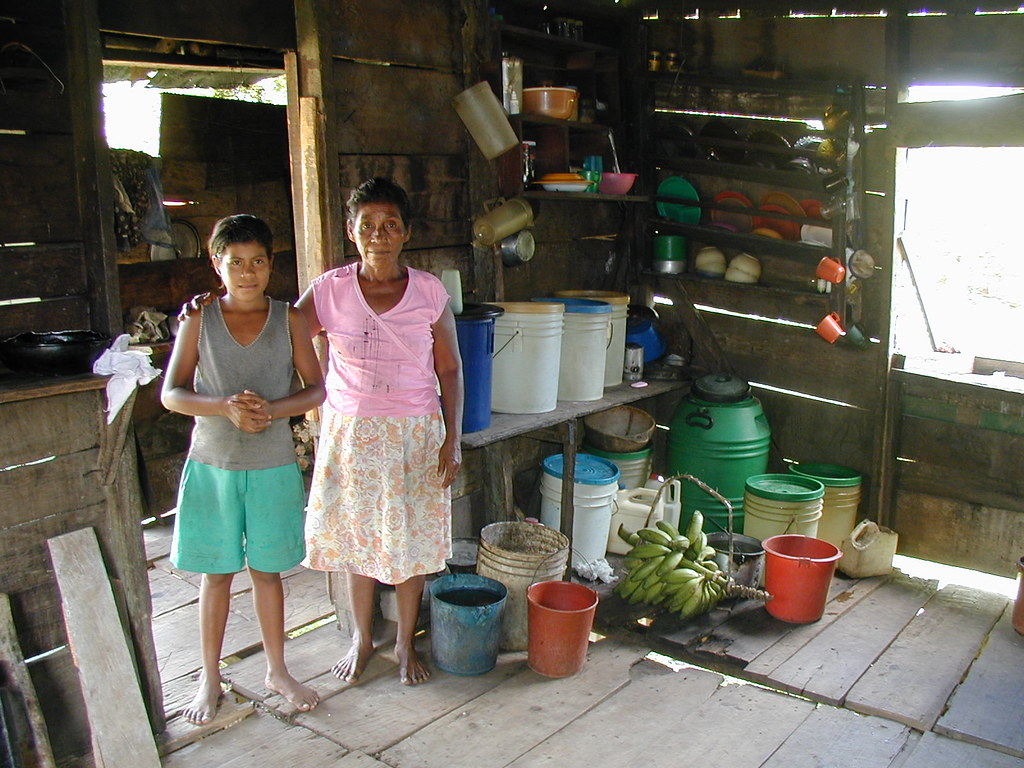
Situation of the Mayangna Population in Exile in Costa Rica
Since 2018, experts have noted a second wave of Mayangna migration, which has accelerated since 2023. In this latest displacement, numerous Mayangna families have fled to Costa Rica, Panama, El Salvador, and the United States, seeking to escape state repression and armed violence from settlers in their communities. In Costa Rica, it is estimated that at least 60 Mayangna families are scattered across the country, living in conditions of extreme vulnerability.
Their main challenges abroad include a lack of employment opportunities and low levels of education, lack of access to land and adequate housing, language barriers—particularly among older women— the absence of culturally appropriate support within the Costa Rican refugee system, and heightened vulnerability due to inadequate care. This situation is further aggravated by the tightening of immigration policies during the Trump administration. The invisibility of the Mayangna as an Indigenous group within international protection systems deepens their marginalisation, as many institutions focus their knowledge and resources on a single Indigenous group, leaving the Mayangna without adequate assistance.
AMDES promotes intercultural dialogue, the representation of the Mayangna in exile, and processes of social, cultural, and economic inclusion in Costa Rica.
AMDES promotes intercultural dialogue, the representation of the Mayangna in exile, and processes of social, cultural, and economic inclusion in Costa Rica.
Due to the lack of autonomous representation, the Mayangna population in exile has reorganised the Mayangna Association for Social Development (AMDES). Established anonymously as a protective measure against state repression, this organisation operates from Costa Rica and has become the main structure for representation, advocacy, and defence of the Mayangna people. Although it lacks formal legal status, it operates with the legal support of allied organisations.
Currently, the Mayangna Association for Social Development carries out key actions including providing support and assistance to Mayangna migrants; establishing networks of aid and protection for displaced families; documenting complaints and raising awareness of human rights violations before national and international bodies; and delivering community training in rights, leadership, and Indigenous participation. In this way, AMDES promotes intercultural dialogue, the representation of the Mayangna in exile, and processes of social, cultural, and economic inclusion in Costa Rica.

Lusben Taylor P is a member of the Mayangna people and an exiled leader.