
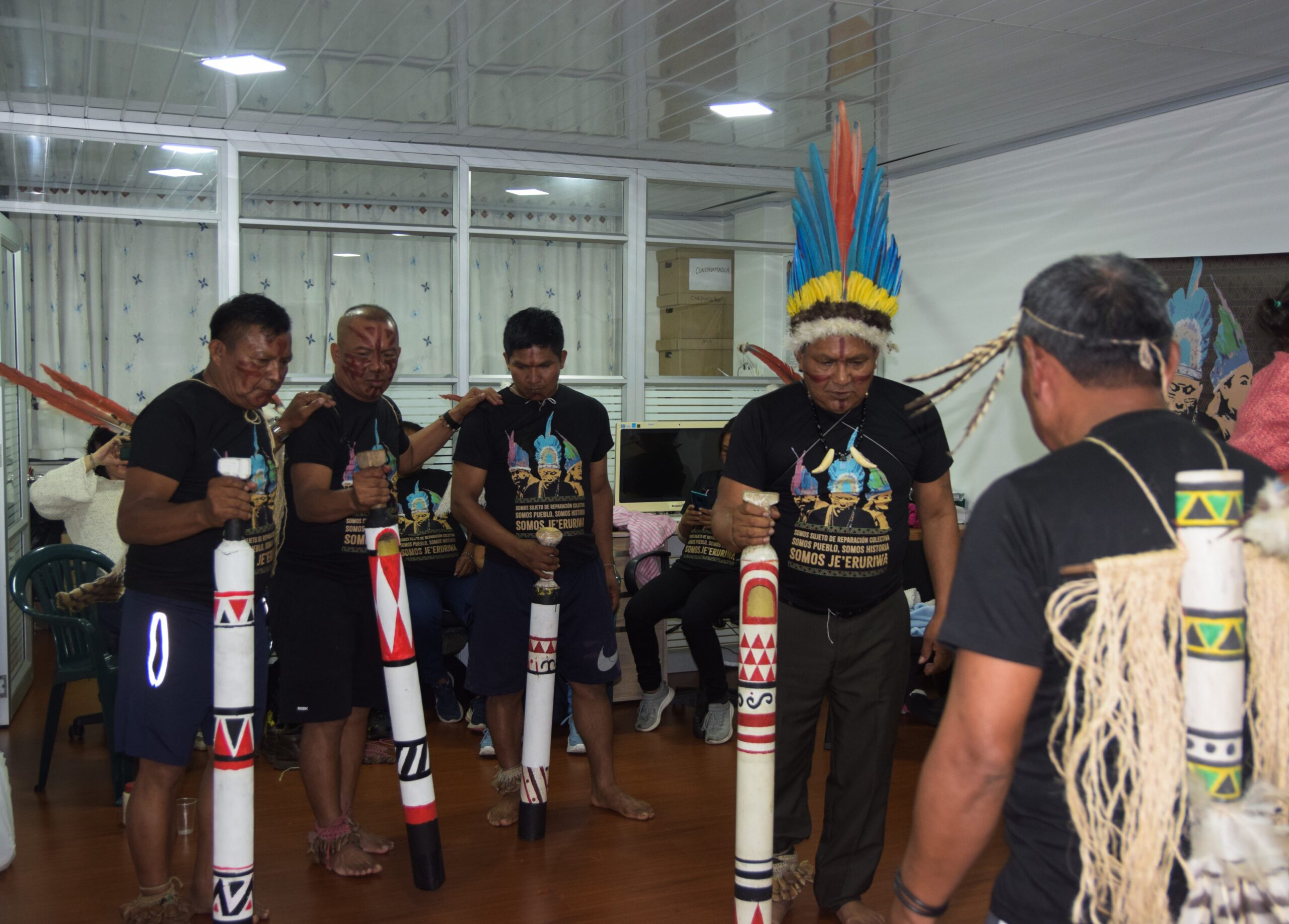
In 1986, the Je’eruriwa people, an Amazonian indigenous people from the sacred territory of Yuruparí, were forcibly displaced from their ancestral land due to an incursion of the Revolutionary Armed Forces of Colombia – People's Army (FARC-EP). In the blink of an eye, they were forced to leave behind their homes, belongings, history and collective roots. Although the Colombian state now claims to care for, protect and provide reparations to victims of the armed conflict, the reality for the Je’eruriwa people has been quite different.
Colombia’s armed conflict and socio-political violence have led to more than 8 million victims of displacement, making it the country with the highest number of internally displaced people in the world. Although the government and the Revolutionary Armed Forces of Colombia – People’s Army (FARC-EP) reached a peace and disarmament agreement in 2016, the State now faces the challenge of protecting the population in territories where illegal armed groups have re-emerged and are fighting for control of areas formerly held by the guerrilla group.
From the mountains of the Sierra Nevada, the Guajira desert, the Pacific coast and the Andean mountains to the Amazon rainforest, Colombia is home to more than 116 Indigenous Peoples. These peoples have been – and continue to be – victims of armed and socio-political conflict, and of the forced displacement it has caused. The impact on Indigenous communities is severe, as displacement brings uprooting and the breakdown of communal life according to their culture. It also increases their vulnerability and marginalisation within both urban and rural contexts of the Western world, where they face structural racism and discrimination.
In this context, the Je’eruriwa people have had to overcome numerous challenges. After experiencing the violence of armed conflict, they endured re-victimisation and the denial of their rights by the very entity responsible for their reparation and dignity – for nearly a decade. They then took their struggle to the Constitutional Court, where they finally won a favourable ruling. The Je’eruriwa people now gather and raise their voices in celebration, but the fight is far from over: the ruling must be enforced, and their ancestral land reclaimed.
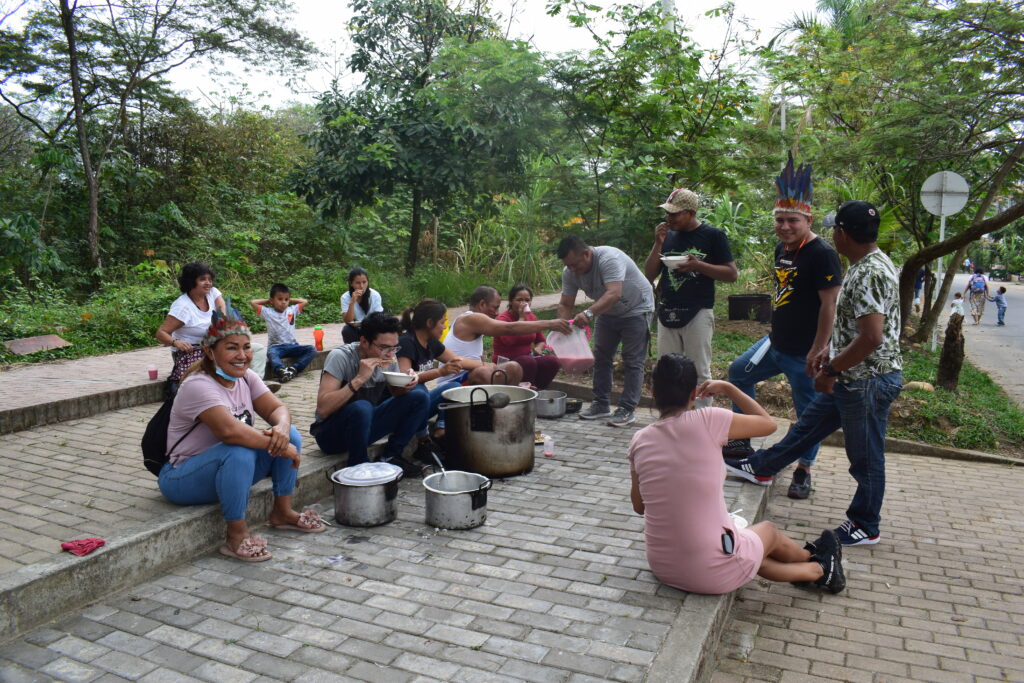
Guarantees That Do Not Reflect the Reality of Indigenous Peoples
On paper, the rights of displaced populations and Indigenous Peoples are clearly established—and supported by numerous public policies and favorable court rulings— nevertheless, the reality they face is quite different. The Constitutional Court of Colombia has repeatedly acknowledged the disproportionate impact of armed conflict and forced displacement on Indigenous Peoples. In Ruling T-025 of 2004, the Court declared the situation of forced displacement victims a “State of Unconstitutional Affairs.” This ruling was followed by several subsequent orders including Order 004 of 2009, specifically about the impact on indigenous peoples.
In these decisions, the Court drew attention to the risk of physical and cultural extermination facing forcibly displaced Indigenous Peoples, and denounced the State’s silence and inaction in the face of violence against them. In one of these follow-up rulings, the Je’eruriwa people were listed among the peoples at risk of physical and cultural extinction. As a result, the Court ordered the Ministry of the Interior to create a Pilot Safeguard Plan, and instructed the Victims’ Unit to prioritize this people in its reparation programs. Yet to this day, neither agency has complied with those orders.
Meanwhile, the Directorate of Indigenous, Rom, and Minority Affairs of the Ministry of the Interior claims to be overwhelmed with workload. It fails to respond to formal petitions (legal requests that must be answered within 15 days) and does not comply with its commitments. Without persistent follow-up over several weeks, it neither summons the other entities to inter-institutional meetings nor records and shares the meeting minutes. The Victims’ Unit claims to have prioritized our people, but no concrete results have been achieved to date.
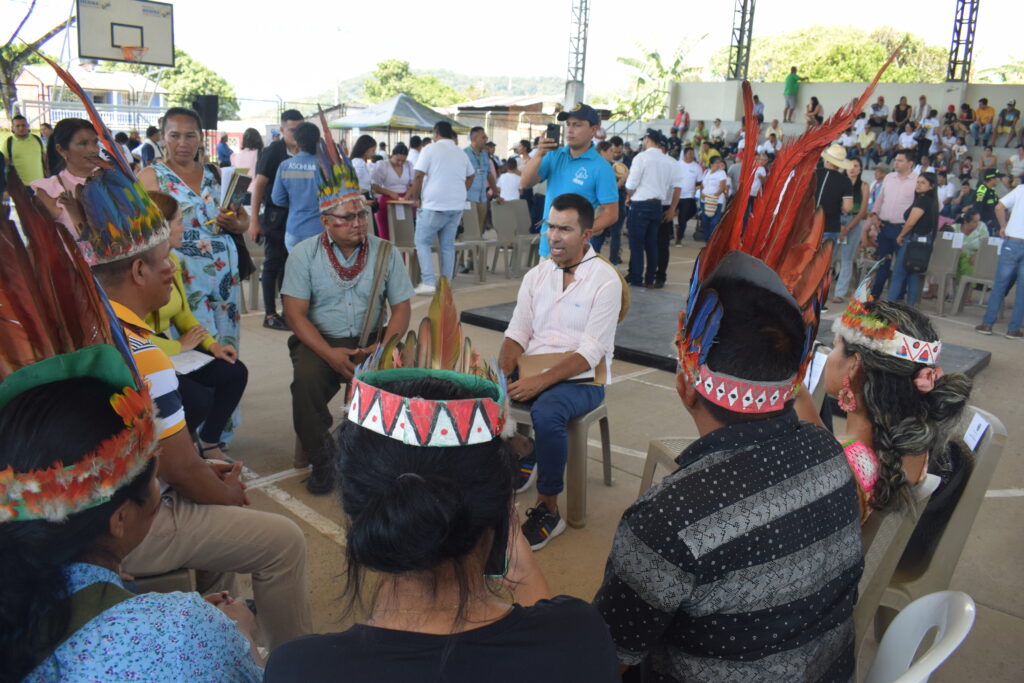
The People of Water and of the Jaguar
We, the Je’eruriwa people, are an Indigenous people from the Waniya stream, a small tributary of the lower Caquetá River, in the Amazonas department of Colombia. We were only officially recognised by the Ministry of the Interior in 2017, as a people with its own language, worldview, ancestral territory, and distinct customs and traditions.
We come from the sacred land of Yuruparí. We are people of the water and of the jaguar, grandchildren of the water boa (ide jĩno). Our ancestral practices and socio-cultural activities are closely tied to the cyclical rhythms of our ecological calendar and our Law of Origin, which has been passed down from generation to generation to ensure a healthy physical and spiritual coexistence with humanity, natural resources, Mother Earth, and the ayawaroa (spirits).
Throughout history, we have suffered from violent intertribal wars and the destructive forces of European colonisation. Earlier, following shamanic visions of the Spanish invasion, some of our ancestors retreated deep into the jungle, choosing isolation— now denominated as people in voluntary isolation. Of those who did not retreat, only two individuals survived, a man and a woman, who were taken in, but marginalised, by the Camejeya people. Later, the rubber exploitation and the arrival of Catholic missionaries, brought new waves of violence against our culture and spirituality.
Yet we, Je’eruriwas did not allow ourselves to be defeated—we fought for the survival of our people. In the early 1970s, we succeeded in reorganising and settling independently on a private land, which we purchased along the trail between the Mirití Paraná and Apaporis Rivers. There, we lived in harmony with nature and with neighbouring Indigenous Peoples. We hunted, fished, cultivated our chagras (traditional gardens), and healed ourselves with the medicinal plants of the rainforest. We had our maloca, where we welcomed other peoples to mambear (chew coca leaves), dance, and practise our spirituality according to the ecological calendar. It was there that our elders and wise ones passed on ancestral knowledge to the new generations.
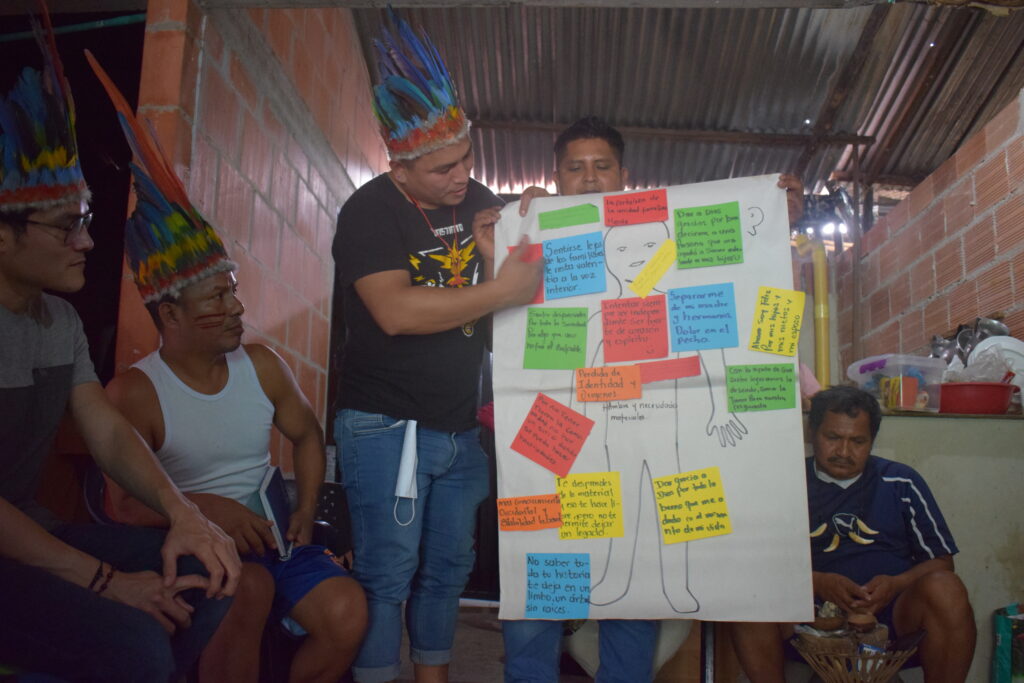
The Struggle to Rebirth
Everything changed forever in 1986, when our communal life was abruptly shattered by the arrival of around 35 armed members of the FARC-EP. They halted all community activities, held training sessions in the maloca, imposed their anthem, and conducted weapons drills with minors, which had been forcefully recruited. The guerrillas threatened us, warning that anyone turning out to be a snitch, would be executed immediately. Soon, they began seizing our food supplies and fuel. When they attempted to recruit some minors, our parents sent us away to a school run by the Capuchin Fathers.
After a period of occupation, the commanding officer ordered us to abandon our land immediately due to the threat of bombardment or confrontation of the Colombian army with the FARC-EP. It was a moment of deep uncertainty: we all fled with nothing but the clothes on our backs, leaving behind our lands, sacred sites and objects, crops, our roots, our present, and our future. Each family sought to survive as best they could—some in the jungle, others seeking refuge in municipal centres or Indigenous reserves belonging to other Amazonian peoples. Attempts were made to reunite, but they without success.
We had to be reborn: the separation we suffered due to the collective displacement has had a devastating and lasting impact on our cultural survival, Our childhool has been exposed to the white people’s world and we are in need to transmit our ancestral knowledge.
We had to be reborn: the separation provoked by the collective displacement and the individual flights had a devastating impact on our culture.
Between 2000 and 2016, we once again faced personal threats and forced displacement due to our leadership in defending the environment, Indigenous Peoples’ autonomy, and opposing forced recruitment. Gradually, we fled the Amazon towards the city of Villavicencio, other municipalities in Meta, and finally to Medina (Cundinamarca). Although this central-eastern region differs greatly from our ancestral territory, it shares some similarities in vegetation and has served as a refuge for other Amazonian peoples.
We had to start over from scratch. Our wise brother Pejriwaca purchased a plot of land, we reorganised ourselves, strengthened our family and community bonds, and sought new lands to establish a reserve and ensure our survival. We had to be reborn: the separation caused by collective displacement and individual flights to the cities had a devastating impact on our culture. Our children—our future—had been exposed to the ‘white world’, and we needed to create a new space to practise and pass on our ancestral knowledge and our own language.
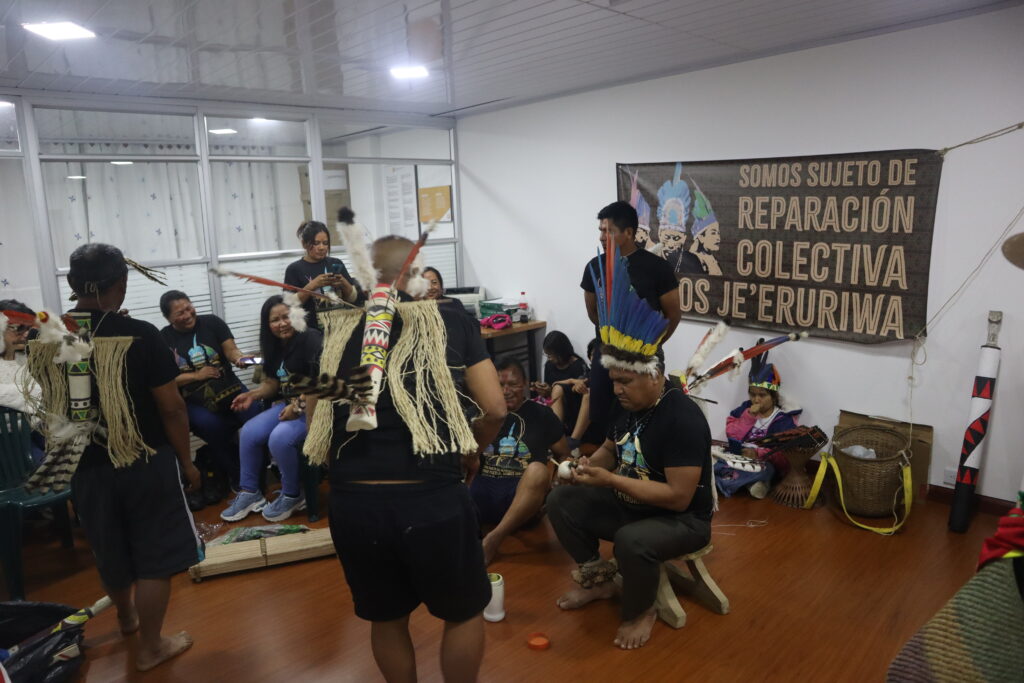
The Legal Victory
In 2018, we declared our displacement of 1986 in order to be recognised as a collective subject of reparation and to obtain a comprehensive response to the damage caused by being uprooted from our ancestral territory. The path was very long and despairing: we have been victims of persistent denial, based on false and unconstitutional arguments and a complete lack of differentiated approach by the Victims Unit. Paradoxically, the very institution created by the Colombian State to support us denied our existence, claiming that we had only come into being in 2017, when we were officially recognised by the Ministry of the Interior.
But we did not give up. We exhausted all legal remedies, filing motions for reconsideration, appeals, and requests for annulment, hoping for a shift with the arrival of Colombia’s first progressive government. Unfortunately, our plea went unanswered. In 2024, we filed a tutela action, the constitutional mechanism in Colombia used to report violations of fundamental rights. Once again, our case had to go through all judicial levels, revealing how the lower courts continue to ignore the rights and realities, the Indigenous Peoples face. Eventually, we appealed to the Constitutional Court to review our case and uphold our fundamental rights.
The Court accepted the case, reviewed it, and concluded that the Victims Unit had for years violated our rights to due process, cultural identity, and comprehensive reparation. In an exemplary ruling, the Court ordered the State to recognise our pre-existence, include us in the National Victims Register as a Collective Subject of Reparation, and implement reparation measures without imposing further barriers. As a pre-existing people, we celebrate this historic ruling and call on the Victims Unit and all relevant institutions to comply fully with the rulings and the rights established for Indigenous Peoples—especially those currently facing physical and cultural extermination.
In the meantime, we continue to raise our voices: “We are a collective subject of reparation. We are a people. We are history. We are the Je’eruriwa people.”
For more information about our case, please visit the website of the Corporación Jurídica Yira Castro and consult Constitutional Court Ruling T-185 of 2025.
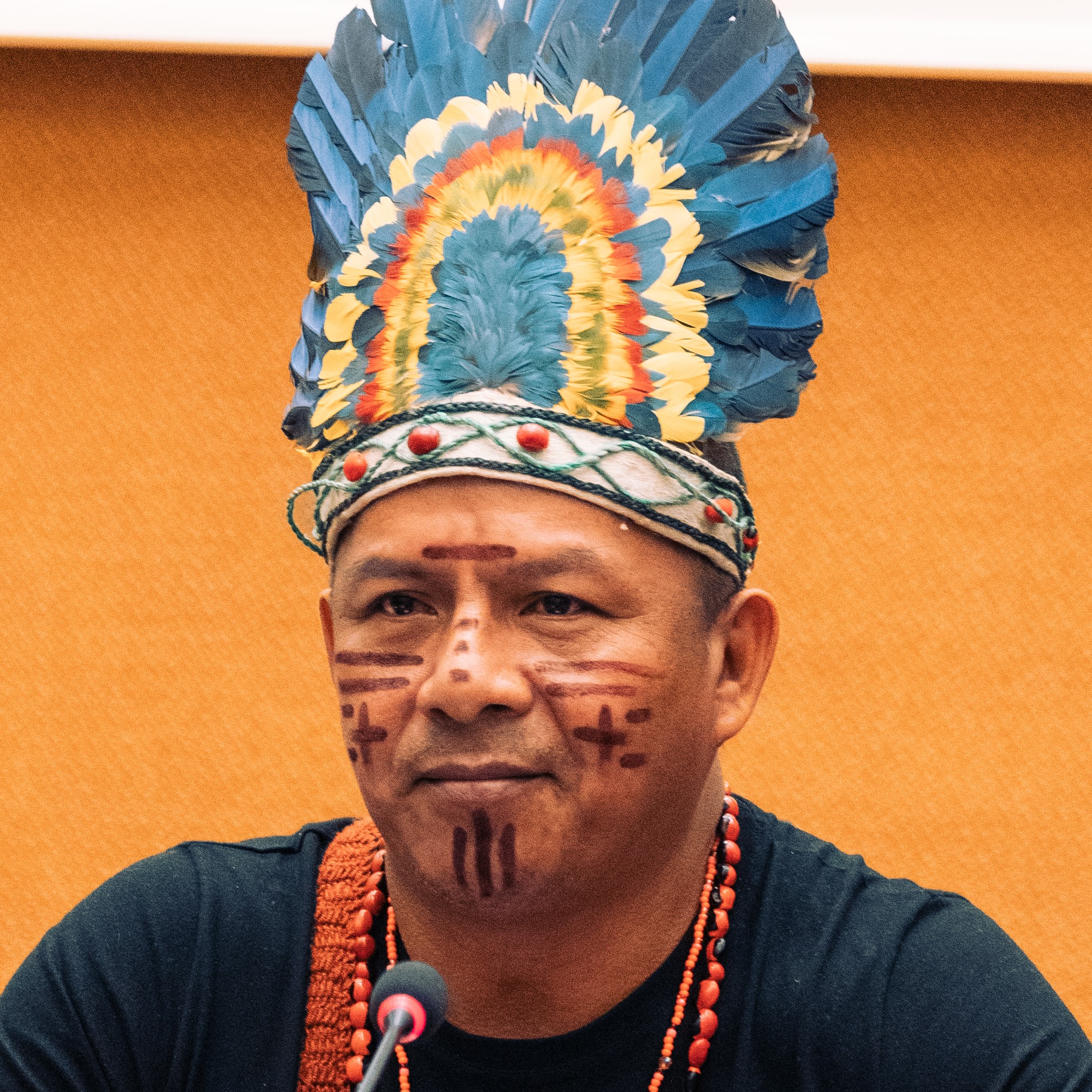
Ipurepi – Oswaldo Rodríguez Macuna is the traditional authority of the Je'eruriwa people. Over his 15-year trajectory, he has stood out for his tireless efforts to protect nature, defend Indigenous autonomy, and, above all, relocate his people to a land that guarantees their survival.
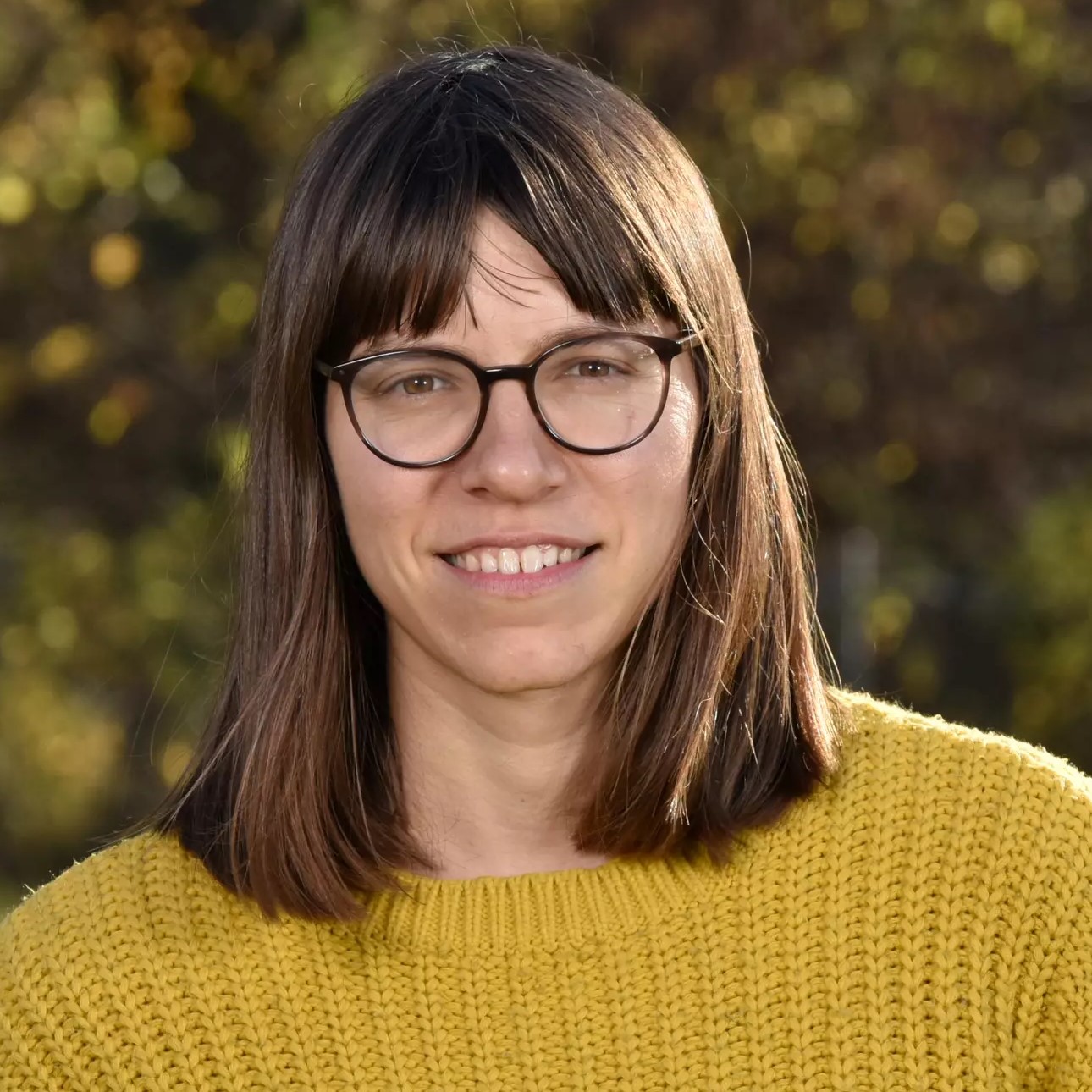
Laura Ann Kleiner is a lawyer specialised in human rights of Indigenous Peoples and migration. She currently works with Comundo at the Colombian organisation Corporación Jurídica Yira Castro.