
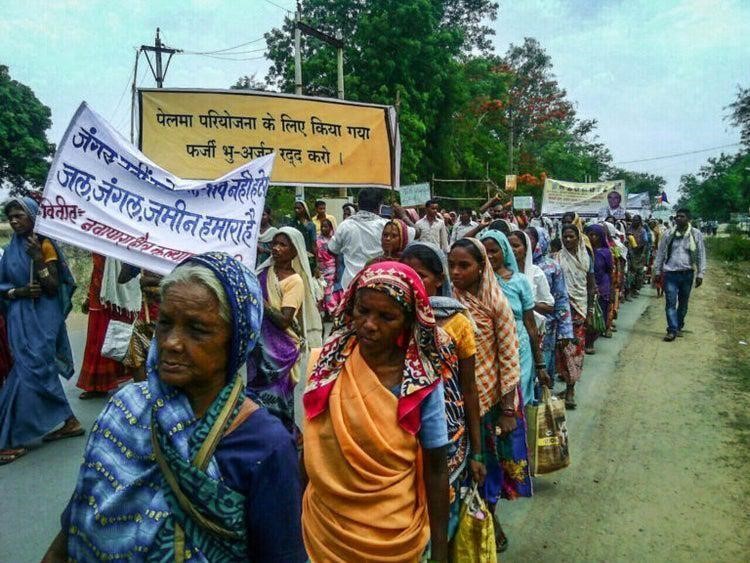
India’s growing energy demands and continued reliance on coal are disproportionately impacting Indigenous Peoples, effectively undermining their legal protections. In 2020, in the midst of the COVID-19 pandemic, India changed its policy to allow private companies to undertake commercial coal mining. By December 2024, a total of 113 coal mines had been auctioned under this new commercial mining regime. As a result, thousands of Indigenous Peoples face displacement, and existing legal safeguards are proving increasingly ineffective.
Coal occupies centre stage in India’s energy scenario and accounts for 55 percent of India’s energy needs. According to the Economic Survey, the demand for coal is expected to remain within the range of 1.3-1.5 billion tonnes by 2030, “considering the limited reserve potentiality of petroleum & natural gas, eco-conservation restriction on hydel project and geo-political perception of nuclear power, coal”. India experienced its highest coal production ever in the year 2023-2024. All-India coal production for this year was 997.826 Million Tonnes (MT) compared to 893.191 MT for the year 2022-23, with a growth of some 11.71%.
It is for this reason that land acquisition for coal mining continues unabated. From 01 January to 18 December 2024, a total of 16,838.34 acres were acquired under the Coal Bearing Areas (Acquisition and Development) Act, 1957, for subsidiaries of the state-owned Coal India Limited. In that same year, another 17,371 acres were vested in the company. The amount of land acquired for private commercial coal mining over the same period is not known.
It was only in 2014 that India changed its policy on coal mining to introduce auction-based allotment and to allow private sector participation, albeit only for captive usage in its own end-use plants. In 2020, in the midst of COVID-19, the policy was further changed, and India opened the door to commercial coal mining by private players. In the first-ever auction of commercial mining on 18 June 2020, some 20 coal mines were allocated to private companies. As of December 2024, a total of 113 coal mines had been auctioned under the commercial mining regime. Further, the Ministry of Coal has now also launched an 11th round of auctions, putting 27 coal mines up for grabs on 05 December 2024.
Impact on Indigenous Peoples and Forested Lands
Most of India’s coal lies beneath forested lands inhabited by Indigenous Peoples. These lands are being leased and acquired without proper respect for free, prior and informed consent, as mandated by the Forest Rights Act (FRA) 2006 and the Provisions of the Panchayats (Extension to Scheduled Areas) Act (PESA) 1996. Section 4 of PESA and Section 3(2) of the FRA make it mandatory to seek the consent of affected communities through the Gram Sabha or Panchayat for extractive projects. In practice, however, consent is too often sought only once the auctions are complete, thus reducing it to a procedural step focused on compensation and resettlement — a fait accompli that has sparked protests and serious human rights violations across the country.
I. Hasdeo Arand Forest, Chhattisgarh
This forest, located in the state of Chhattisgarh in central India, spans an area of 170,000 hectares and is home to the Gond, Lohar, and Oraon communities. These Indigenous Peoples have been opposing coal mining due to the loss of their livelihoods, forced displacement, and environmental destruction. The area, which comprises 23 coal blocks, was designated a “no-go” zone for mining in 2009 due to its ecological significance. In 2015, 20 Gram Sabhas (village assemblies) passed resolutions against the auction of coal mines but they were ignored.
A year later, the state government cancelled the community forest rights granted to Ghatbarra village, alleging that the villagers were “obstructing” mining operations, something for which there is no provision within the law. Despite initial protections, operations began in the Parsa East and Kente Basan (PEKB) blocks. In 2020 and 2021, the Parsa block received forest clearance permits and, in 2022, the state government gave its final approval. The project is operated by the state-owned Rajasthan Rajya Vidyut Utpadan Nigam Limited (RVUNL), in partnership with the private company Adani Mining, owned by Gautam Adani, one of the richest men in India and the world.
On 26 July 2022, the Chhattisgarh state assembly passed a unanimous resolution against mining in Hasdeo. However, in 2023, tree felling resumed for the expansion of PEKB. The protests were suppressed: on 22 December 2023, several Indigenous activists were detained and, in October 2024, a new demonstration ended in violent clashes with more than 400 police personnel deployed.
II. Deocha-Pachami-Dewanganj-Harinsingha coal-mining project, West Bengal
Located in the state of West Bengal, on the border with Bangladesh, this project is poised to become India’s largest (and the world’s second-largest) coal deposit, with estimated reserves of 2,100 million tonnes spread over 12.3 square kilometres. In the Birbhum district, the project is expected to displace some 21,000 individuals, predominantly from the Santhal tribal community. In February 2022, over 1,000 people gathered to protest against the forced land acquisition. The government responded with a compensation and rehabilitation package. In March, women blocked work at the project site by placing a charka (a stick with hay, a traditional symbol of resistance) to denounce the lack of dialogue and compensation.
III. Bijahan Coal Mining Project, Odisha
In the state of Odisha, on the Bay of Bengal, the Bijahan project, promoted by Mahanadi Mines & Minerals Pvt. Ltd., an Adani Group subsidiary, plans to clear 608 hectares of forest in order to extract 327 million tonnes of coal. It will cost an estimated US$310 million and will affect around 450 families from four villages, most of whom are Indigenous. In the Bhograkachhar community, only four households have been granted forest rights titles and, in Jharpalam, applications for titles remain unanswered. The situation is particularly distressing for those who face a second displacement, having first been displaced in the 1950s due to the Hirakud Multipurpose Hydro Electric Project. In January 2025, the villagers boycotted the Gram Sabha meeting called to approve the project.
IV. Gondalpara Opencast Coal Mining Project, Jharkhand
In the Hazaribagh district, this opencast coal mining project, initiated by Adani Enterprises, has been opposed by the affected Indigenous Peoples. The project is expected to affect between 500 and 1,950 households, including many from Indigenous communities. In August 2024, local villagers expressed their opposition to the project and, indeed, any industrial development in the area, citing threats to their fertile land and forests. In response, the government decided to establish a new police station in the area to protect Adani’s interests from local protests.
Coal’s Injustice: Indigenous Rights and India’s Energy Future
The struggles in Hasdeo Arand, Deocha-Pachami, Bijahan, and Gondalpara are not isolated incidents but symptoms of a systemic disregard for Indigenous rights amidst rising energy demands. The cancellation of recognised forest rights, dismissal of Gram Sabha resolutions, and use of state machinery to suppress protests highlights the deep power imbalance and erosion of democratic processes.
This approach not only perpetuates human rights violations but also endangers irreplaceable ecological and cultural heritage, as vast forested areas vital to biodiversity and Indigenous identity are sacrificed. These cases illustrate how coal mining destroys homes, livelihoods, ancestral lands, forests, and ways of life. Compensation in no way restores what has been lost and the communities continue to bear the cost of the nation’s economic ambitions.
Indigenous Peoples have been fighting back but this has often historically been a losing battle. India must find alternative energy sources in order to protect the Indigenous Peoples’ rich diversity, ensuring that the pursuit of national progress does not continue to burden them and decimate their unique way of life disproportionately.
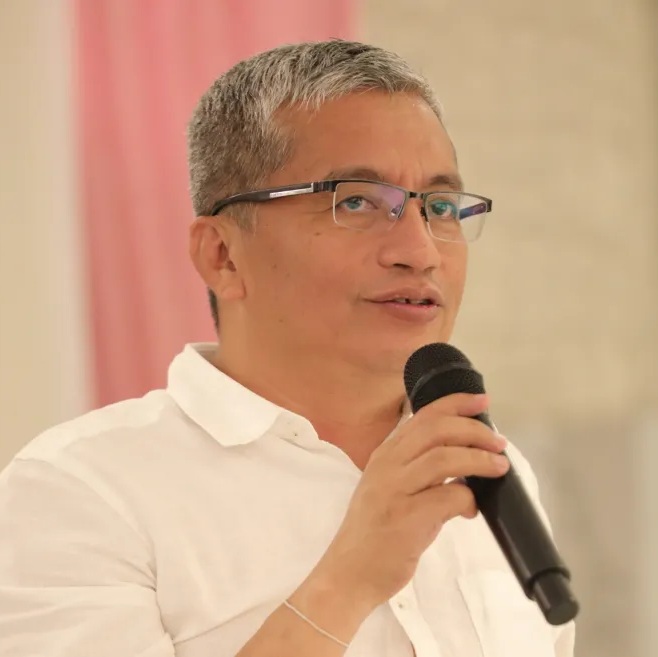
Suhas Chakma is an Indigenous person currently serving as Director of the Rights & Risks Analysis Group and also a member of the Core Group on Human Rights Defenders and NGOs of the National Human Rights Commission of India. He is a regular commentator on rights and conflict issues in print and electronic media.