
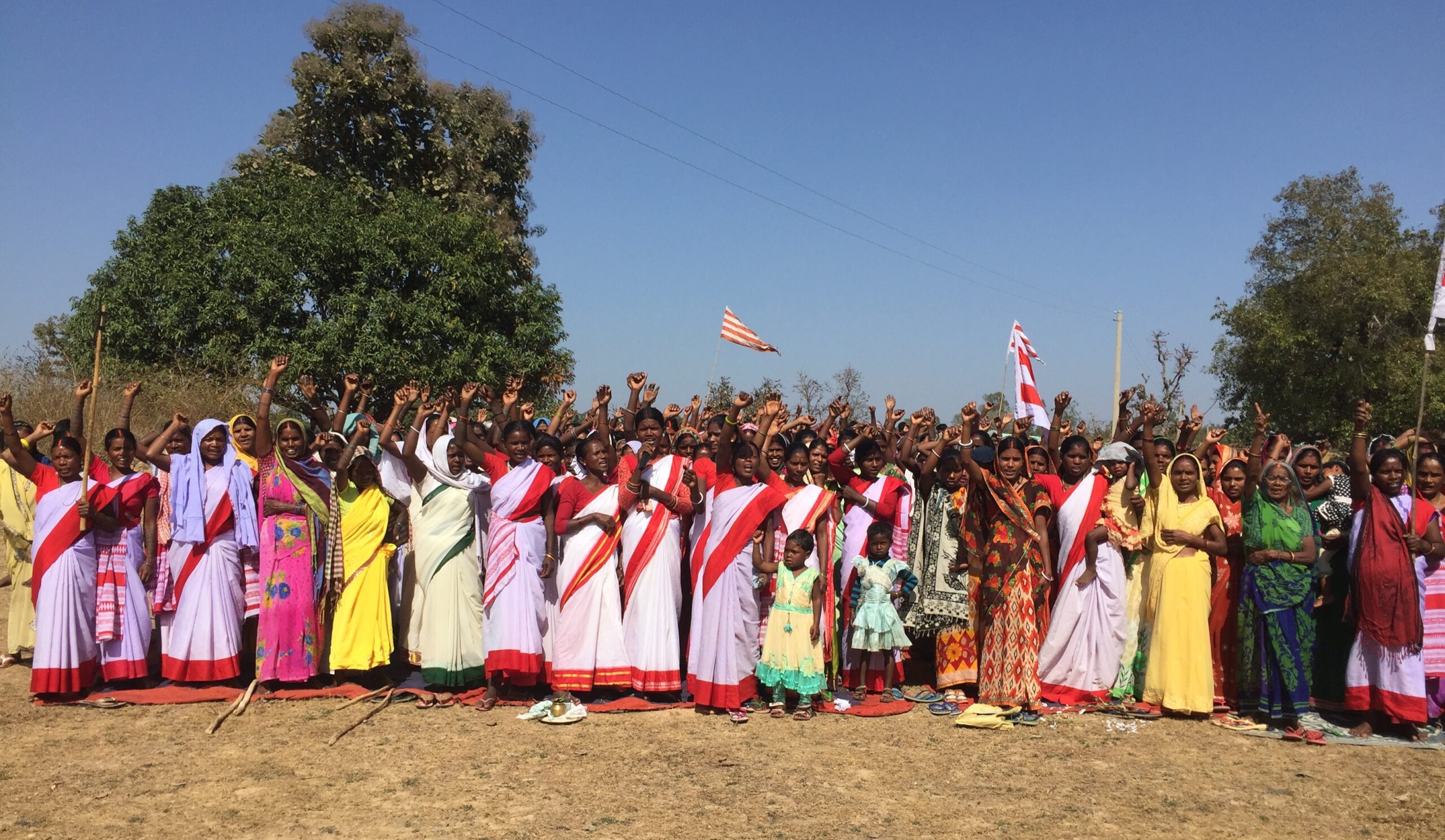
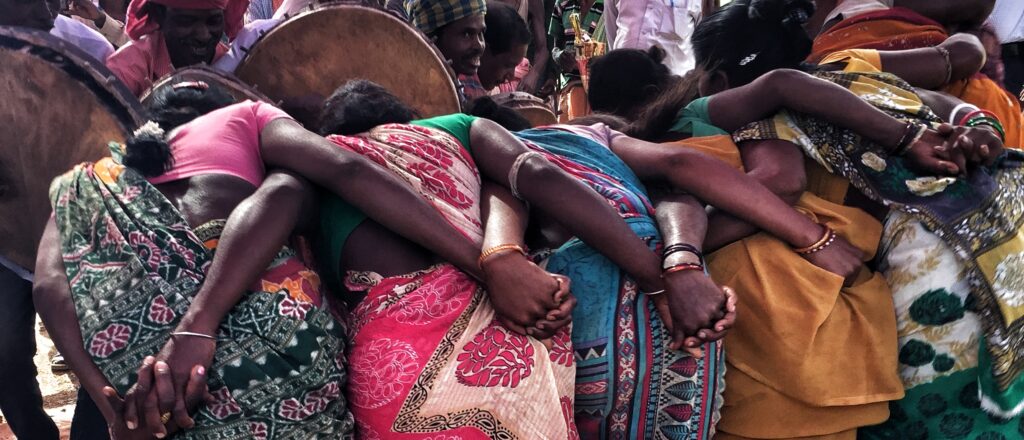
Indigenous women and girls face violations at the hands of the State, non-Indigenous society, their own society and males at home. In addition, they suffer gender discrimination, with inheritance being one of the most critical issues. Challenges in accessing justice for Indigenous women and girls are not confined to the formal justice system but can also be seen in customary systems, particularly in countries where the law recognises exceptions related to Indigenous Peoples’ customs and practices.
Indigenous women face serious human rights violations at the hands of the State agencies, and are often targeted because of their identity. The situation is significantly worse in the context of armed conflicts, where sexual violence, including rape and forced disappearances, become key issues. These types of violations have been witnessed in most conflict situations: the Northeastern States of India and the region affected by the Naxalite insurgency, the Chittagong Hill Tracts region of Bangladesh, the Maoist conflict in Nepal and Myanmar.
Indonesia’s Indigenous women experience disproportionate levels of discrimination. More than one in three Indigenous women is raped during their lifetime, with maternal mortality rates higher than the national average. In Nepal and India, Indigenous women face caste-based violence while, in Bangladesh, Indigenous women are often targeted because of their distinct physical features and religious beliefs.
Indigenous women are also the disproportionate victims of human trafficking. A study by the National Human Rights Commission of Nepal showed that 49 % of the women survivors of trafficking are Indigenous, followed by Dalit at 15 %. Madhesis account for 6 % and other ethnicities constitute the remaining 29 %. Indigenous Peoples, Dalits, and Madhesis are the most socially, politically, and economically marginalised and excluded communities in Nepal. Access to justice for victims of trafficking remains almost impossible.
State violations and access to justice
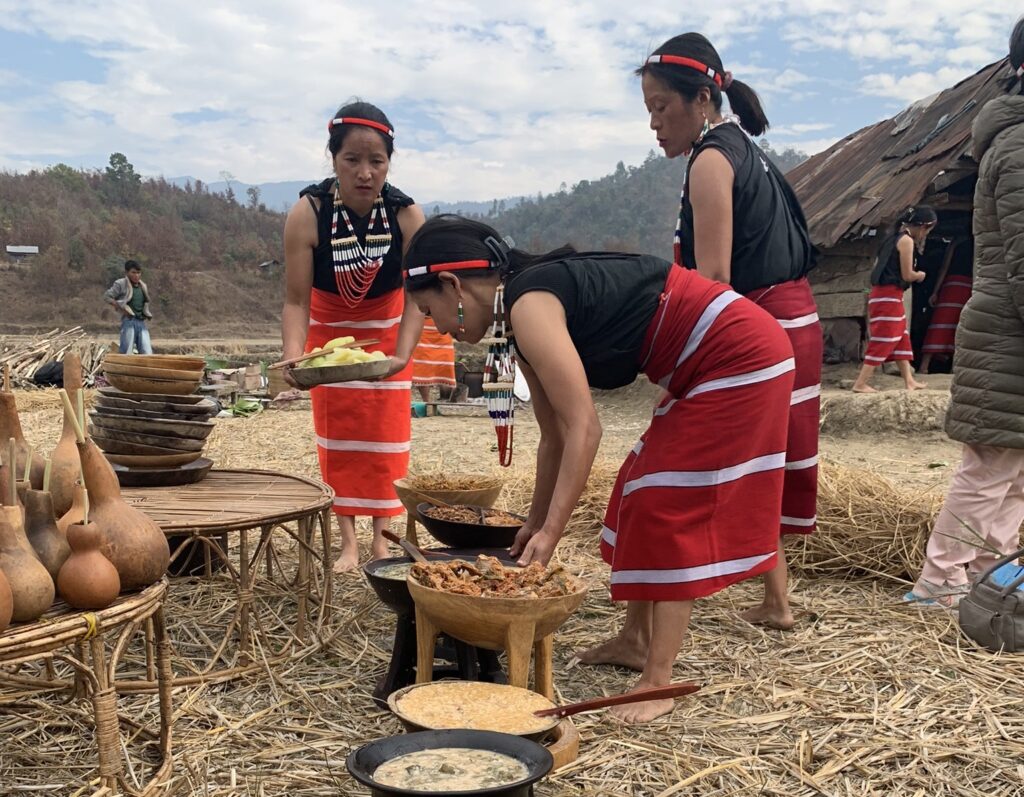
In some countries such as Bangladesh and Myanmar, there is simply no access to justice but rather absolute impunity. While courts are known for setting the jurisprudence in India, in cases of human rights violations, prosecution of the perpetrators requires prior authorization from the government. Under Section 197 of the Criminal Procedure Code and Section 6 of the Armed Forces Special Powers Act of 1958, prior authorization is required from the executive authorities for the prosecution of public servants and law enforcement personnel. In armed conflict situations, this authorization is often denied and access to justice thus effectively denied.
In Nepal, Indigenous women were the victims of sexual violence during the Maoist conflict. In 2019, the UN Human Rights Committee (HRC) issued a landmark decision in the case of an Indigenous girl who was the victim of rape, torture and forced labour in 2002. At the age of 14, she was arrested by the Armed Police and the Royal Army and forced to work in the barracks on the construction of a temple. Over that time, she was raped multiple times and subjected to other forms of sexual violence, torture and inhuman treatment. Following the rape, she was not able to urinate and was bleeding profusely and yet received no medical assistance. The Major who raped her threatened to kill her if she told anybody about what had happened.
In war-torn Myanmar, women have been targeted by the military. In March 2023, Free Expression Myanmar (FEM) reported that more than 300 women and girls, including nurses, students, teachers, activists, and others, had been killed since the coup. Further, the military had used sexual violence as a systematic weapon to punish pro-democracy protesters who were detained: 17 women and girls were raped and killed. In addition, the military junta had arrested 16,432 people, of whom 3,434 were women, and military prison staff often torture female political prisoners. As Myanmar is not party to most international human rights conventions, victims do not have access to justice.
Violence from the majority society
Across the Asian region, Indigenous women face violations from the majority non-Indigenous communities because of their distinct identities, cultural practices and religious beliefs. In most Asian countries, disaggregated data on violence against Indigenous Peoples is not collected, thereby making it impossible to understand the real scale of the violence. Specific laws are consequently not enacted to address access to justice.
India has enacted progressive laws by making sexual offences specific crimes under the 1989 Scheduled Castes and Scheduled Tribes (Prevention of Atrocities Act). Article 3 criminalizes “words, acts or gestures of a sexual nature towards a woman belonging to a Scheduled Caste or a Scheduled Tribe, knowing that she belongs to a Scheduled Caste or a Scheduled Tribe” with fines and prison terms of no less than six months and up to five years. However, the crimes continue to take place: 1,137 cases of rape of Indigenous women in 2020, 1,324 in 2021 and 1,347 in 2022. Nevertheless, there is no denying that the law does provide the basis for access to justice.
India ha promulgado leyes progresistas al tipificar los delitos sexuales como crímenes específicos en el marco de la Scheduled Castes and Scheduled Tribes (Prevention of Atrocities) Act de 1989. El artículo 3 criminaliza “palabras, actos o gestos de naturaleza sexual dirigidos contra una mujer perteneciente a una casta o tribu registrada, a sabiendas de que pertenece a una casta o tribu registrada”, con multas y penas de prisión no inferiores a seis meses y que pueden extenderse hasta cinco años. Sin embargo, los delitos continúan ocurriendo: 1.137 casos de violación de mujeres indígenas en 2020; 1.324 en 2021; y 1.347 en 2022. Aun así, no puede negarse que la legislación proporciona una base para el acceso a la justicia.
In Bangladesh, access to justice for sexual violence cannot be contemplated. Sexual predators are often posted to the Chittagong Hill Tracts region inhabited by Indigenous Peoples.
In Bangladesh, access to justice for sexual violence cannot be contemplated. Sexual predators are often posted to the Chittagong Hill Tracts region inhabited by Indigenous Peoples.
In Bangladesh, protesting rape committed by members of the majority Muslim community often leads to direct attacks from the State agencies upon the Indigenous Peoples. In 2025, three Indigenous youths were shot dead and four others injured by Bangladesh Army personnel in the upazila of Guimara, in the Chittagong Hill Tracts, while protesting the alleged gang rape of an Indigenous schoolgirl. After the shooting, many Indigenous shops were looted and set on fire at Ramesu while nearby houses were also vandalised.
In Bangladesh, under such circumstances, access to justice for sexual violence cannot be contemplated. Sexual predators are often posted to the Chittagong Hill Tracts region inhabited by Indigenous Peoples. On 25 February 2021, Abul Hasnat Mohammad Sohel Rana was jailed in a case filed of sexual harassment of an Indigenous student. After being released, he rejoined the school, which prompted protests. On 20 September 2024, Rana was beaten to death for allegedly raping an Indigenous student belonging to the Tripura community on the school campus but his killing led to another massive assault on Indigenous Peoples in the neighbourhood.
Violations within the community and Indigenous women’s access to justice
Indigenous women also face barriers to accessing justice within their own cultural practices. Inheritance is a critical issue.. As recently as 2025, the Supreme Court of India held that denying a female heir her right to property only exacerbates gender discrimination and that the law must eradicate this practice. Consequently, as per Article 14 of the Constitution relating to the right to equality, the Court determined that both a tribal woman and her legal heirs (her children) are entitled to an equal share in the ancestral property.
Among the Indigenous Chakma community, a Customary Law has been in place since 2014 by which certain people can be declared “Ek Goshchey”, meaning that no other members of the community are allowed to mix socially with the family. These “customs” are often invoked by self-proclaimed patriarchs to violate the rights of Indigenous women and girls. In several rulings, the Tripura High Court ruled the practice of declaring Ek Goshchey or the imposition of social boycotts by the Tripura Rejyo Chakma Samajik Parishad (Tripura State Chakma Social Council) to be unconstitutional.
Across the communities, Indigenous women face a systematic denial of access to power. In Nagaland, men opposed the 33% reservation for women in the local government bodies, preventing elections from being held for 20 years. Elections were finally held on 26 June 2024, in compliance with a Supreme Court Order.
Digital abuses against Indigenous women and girls
Violence in the real world is replicated on social media. As the digital space now plays an important role in modern society, Indigenous women and girls face increased risk of online hate and serious online harm at much higher rates than the general population. As many countries are still in the process of developing laws relating to cyber abuse, Indigenous women and girls remain largely beyond effective legal protection and access to justice.
The multiple forms of violence experienced by Indigenous women in Asia reveal a structural pattern of intersectional discrimination that combines gender, ethnic identity, tradition, religion and caste. Impunity, driven by a lack of political will, consolidates a context in which access to justice is the exception rather than the rule. Even where progressive legislation or landmark judicial rulings exist, their implementation faces deep resistance, both within state institutions and within the patriarchal structures of their communities.
In this context, it is essential to adopt comprehensive approaches that guarantee protection of the individual and collective rights of Indigenous women in Asia, while strengthening their political participation, economic autonomy and community leadership. This entails reforming discriminatory legal frameworks, collecting data on violence against Indigenous women, and ensuring culturally appropriate justice mechanisms. Without full recognition of their rights to land, inheritance, their bodies and their voices in the public sphere, it will not be possible to build democratic, plural and egalitarian societies.
Suhas Chakma is an Indigenous person currently serving as Director of the Rights & Risks Analysis Group and also a member of the Core Group on Human Rights Defenders and NGOs of the National Human Rights Commission of India. He is a regular commentator on rights and conflict issues in print and electronic media.