
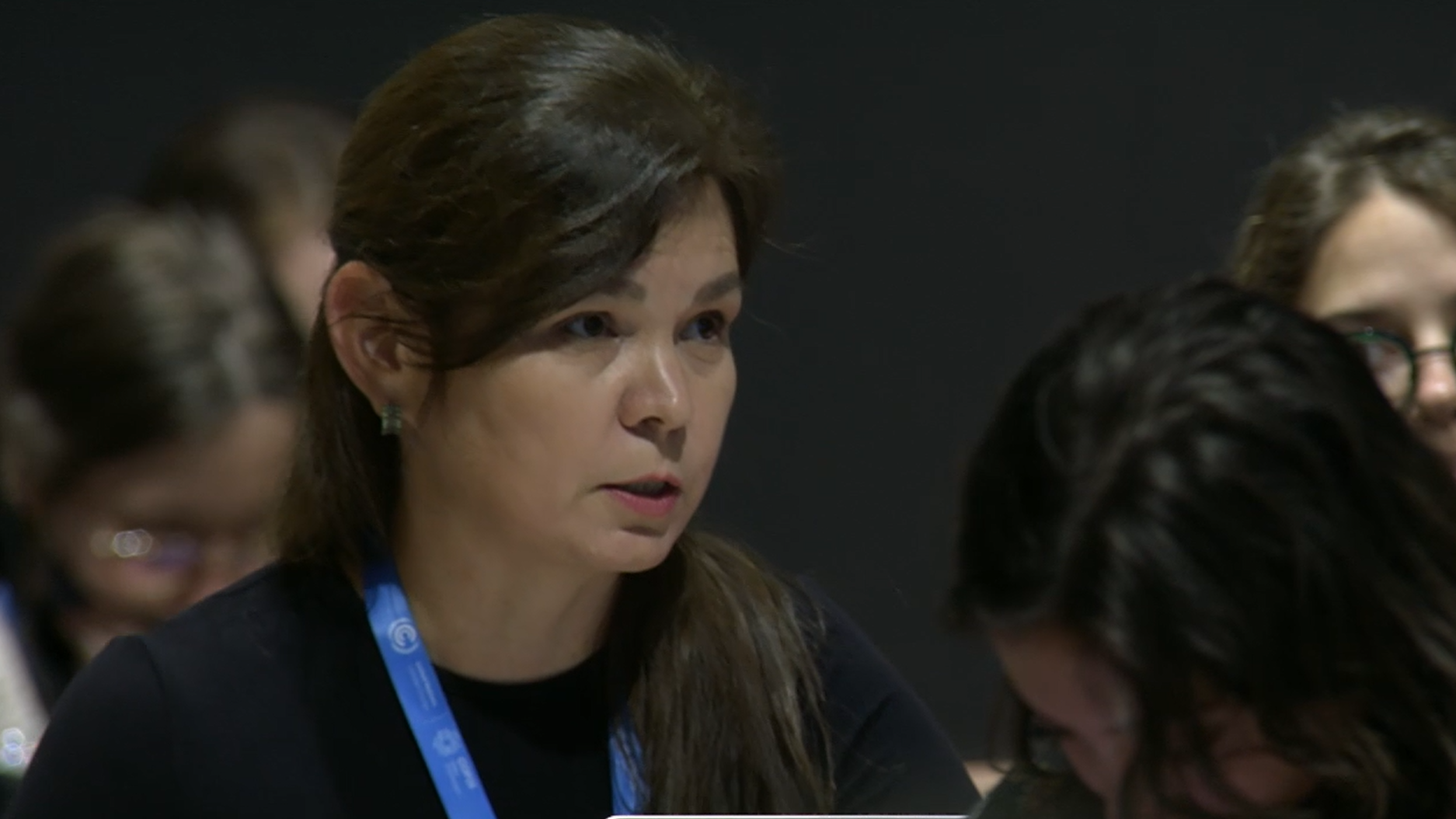
Carried out simultaneously, the December 17th raids represented one of the largest crackdowns on independent Indigenous activism in Russia's recent history. Thus, they became a significant step in the Russian authorities' strategy to silence any grassroots actor who refuses to align with the state's narratives. The case of Selkup rights defender Daria Egereva has shocked the international community.
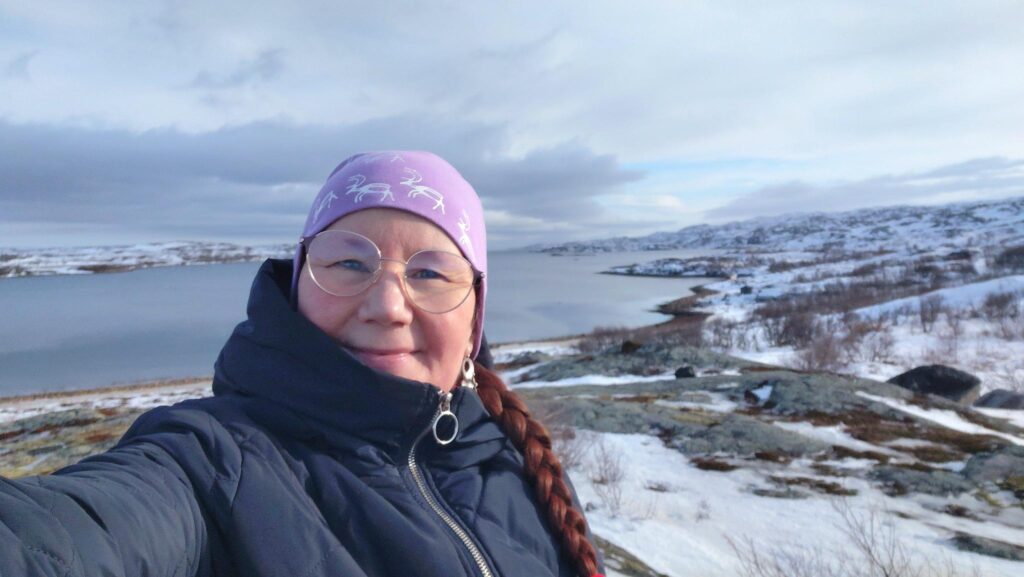
On December 17, 2025, Russian security services launched a coordinated operation against 17 Indigenous leaders in different regions of the country. Valentina Sovkina, a prominent defender of the rights of the Saami people of the Murmansk region and a member of the United Nations Permanent Forum on Indigenous Issues, was among those whose homes were raided. She recalls being woken up by knocks on the door of her apartment in Lovozero and, when she opened it, five men and two women (some with their faces covered) broke into her house without identifying themselves. Only after repeated insistence did they present a warrant and acknowledge that they were police.
When Valentina asserted her right to contact a lawyer, the officers dismissed the request, claiming that it was “not a search, but an inspection.” The raiders demanded passwords to access her electronic devices – phones, laptops, external drives – requests she refused. The operation lasted four hours and ended up with the confiscation of all her devices.
Valentina was among the fortunate ones: she avoided detention and managed to leave the country soon after. Since then she has been active in denouncing what she sees as a campaign of repression against Indigenous Peoples in Russia which echoes the prosecution of Indigenous leaders under Stalin’s dictatorship in the first half of the 20th century.
From Indigenous Peoples Rights Defender to Political Prisoner
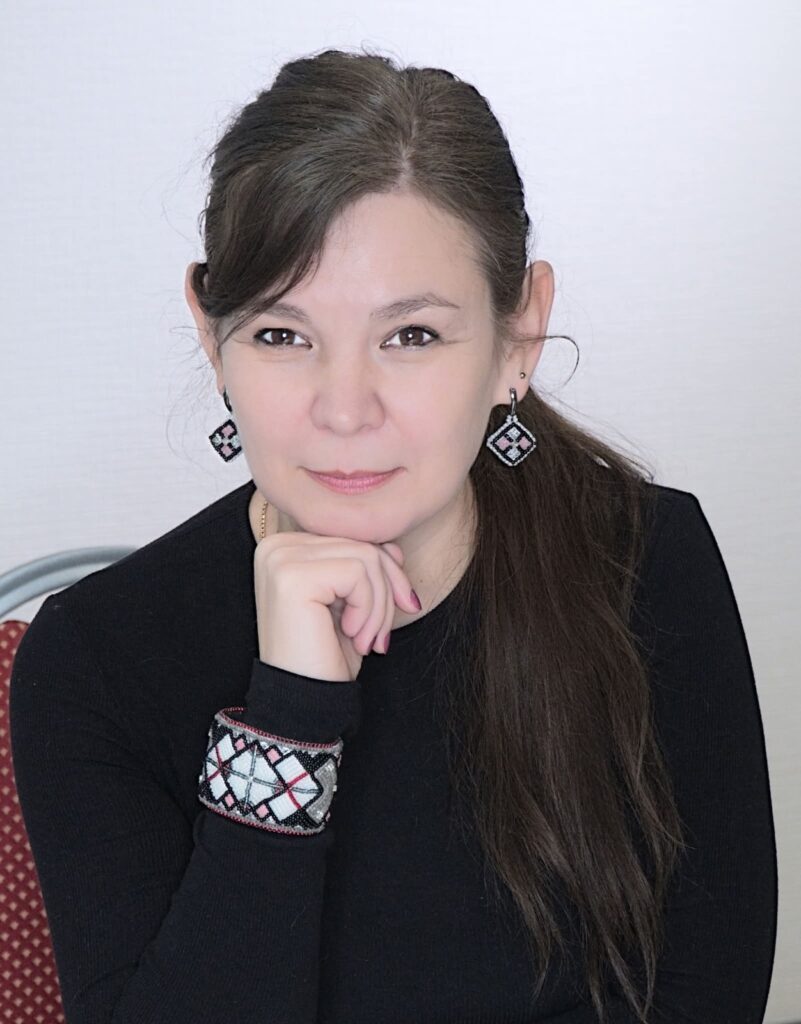
The raids ended in the arrest of two activists. One of them is Daria Egereva, a Selkup woman from western Siberia, whose case has stirred indignation across Indigenous networks internationally. Authorities accuse her of “belonging to a terrorist organization,” charges widely considered fabricated. By criminalizing peaceful activism, the authorities seek to erase narratives that depart from state-sanctioned discourse. If convicted, Daria faces up to 20 years in prison, a penalty that, given the widely documented brutality of the Russian prison system, could effectively amount to a life sentence.
Daria has a long history in the defense of Indigenous Peoples’ rights. Following in her mother’s footsteps, she began to get involved in this field when she was a university student. For more than two decades, she worked tirelessly to empower Selkup and other Indigenous youth across Russia: she encouraged them to be proud of their cultural heritage, to understand and claim their rights, and to participate in the global Indigenous movement. For many young activists, Daria became a role model and mentor – an example of leadership rooted in the community.
In the last decade, Daria has established herself as one of Russia’s most recognized Indigenous representatives in global climate and biodiversity processes. As a technical expert on climate change, she held leadership roles in the International Indigenous Peoples’ Forum on Climate Change (IIPFCC) and, from 2023 served as one of its co-chairs. She also contributed actively to the Local Communities and Indigenous Peoples Platform (LCIPP) under the UNFCCC, the Convention on Biological Diversity (CBD), the Expert Mechanism on the Rights of Indigenous Peoples (EMRIP), and the UN Permanent Forum on Indigenous Issues (UNPFII).
The arrest of Daria Egereva signals a worrying trend: the use of Russia’s anti-extremism and anti-terrorism legislation to crack down on independent civil society, including the Indigenous movement.
Daria’s arrest signals a worrying trend: the use of anti-extremism and anti-terrorism legislation to stifle independent civil society.
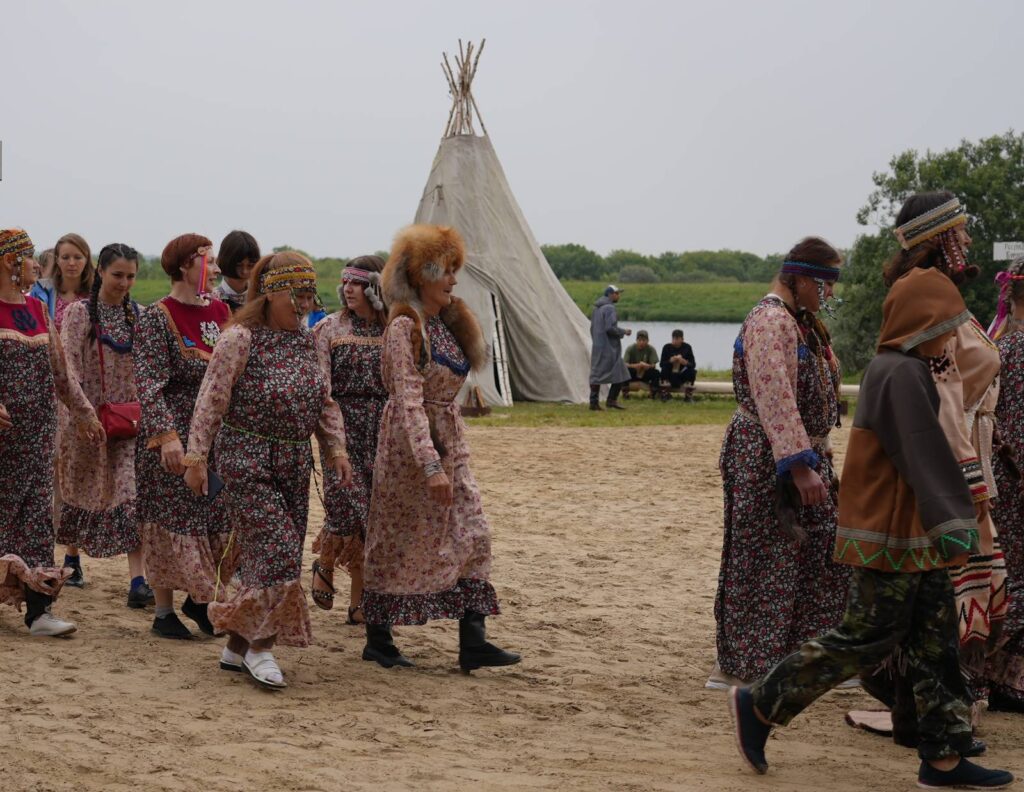
Despite her extensive work internationally, Daria remained deeply connected to her own community. For years, she has been a strong advocate for the protection of Selkup culture and the implementation of Indigenous Peoples’ rights recognized in Russian law. Her efforts included promoting the use of the endangered Selkup language as the language of instruction in schools, supporting networks of Indigenous women entrepreneurs, and strengthening community involvement in decisions that affect their territory, culture and livelihoods.
Nothing in Daria’s activities suggests promotion of violence or subversive actions. On the contrary, she engaged constructively with authorities at the local level, and internationally she spoke in the very same UN mechanisms and processes in which the Russian government itself participates. The critical difference is that Daria represented an independent voice – one that challenged the idyllic image of Indigenous well-being promoted by Russian authorities and their proxies. Her arrest signals a worrying trend: the use of Russia’s anti-extremism and anti-terrorism legislation to crack down on independent civil society, including Indigenous movements.
When the only voice is that of the State
The December raids were not an isolated event, but part of an ever-escalating architecture of repression against Russia’s Indigenous Peoples. After a brief period of liberalization and democratization from the late 1980s through the early 2000s – during which an independent Indigenous movement flourished – authorities began tightening control in the 2010s. This shift accelerated dramatically after President Putin’s decision to invade Ukraine, a move that has had devastating consequences for Indigenous communities, many of which lost large proportions of their young men to frontline mobilization.
In this increasingly authoritarian climate, independent Indigenous activists face surveillance, legal harassment, and constant pressure to disengage from international human rights mechanisms. It is not coincidental that the 17 December raids followed shortly after Daria Egereva and several other Indigenous activists returned from the UN Climate COP in Brazil. The scale, timing, and coordination of the operation point to a deliberate effort to eliminate the last remaining spaces for autonomous Indigenous organizing. The result was immediate. Many activists are keeping a low profile or leaving the country. Those who remain are forced into an impossible choice: silence and compliance with state authorities, or criminalization.
The president of the Russian Association of Indigenous Peoples of the North (RAIPON) explicitly refused to show solidarity with the activists whose homes were raided and repeated the official line that insinuates their alleged involvement in extremist activities.
The president of RAIPON refused to show solidarity with the raided activists and repeated the official line that insinuates their alleged involvement in extremist activities.
As independent Indigenous voices are silenced, the Russian Association of Indigenous Peoples of the North (RAIPON), controlled by the Russian government, emerges as the dominant voice or, rather, the only officially permitted voice of the country’s Indigenous Peoples. The leadership of RAIPON, selected since 2013 under government supervision, maintains close ties with large extractive companies, including Nornickel, one of the world’s most polluting industrial conglomerates whose activities have long been contaminating Indigenous lands and waters, and destroying Indigenous livelihoods in Russia.
In line with the government, RAIPON never criticizes state policies or corporate abuses that affect Indigenous communities. In a statement released six weeks after the December raids, the president of RAIPON explicitly refused to show solidarity with the activists whose homes were raided and repeated the official line insinuating their alleged involvement in extremist activities, a move that shocked many Indigenous leaders internationally.
The final blow?
For those who saw their homes invaded, their devices seized and their loved ones detained, this was more than a legal operation – it was a message. As noted by Saami leader Valentina Sovkina, the Russian authorities have opted for particularly harsh methods to silence Indigenous rights activists who peacefully defend their ancestral environment, livelihoods and culture.
The December 17 raids might well be remembered as the moment when the independent Indigenous movement in Russia was brought to the brink of extinction. However, the courage of those who continue to speak out, whether from exile or under threat in their own country, reminds us that the struggle for the rights of Indigenous Peoples in Russia is not over. Their voices, though persecuted, remain a vital part of the global human rights community.