
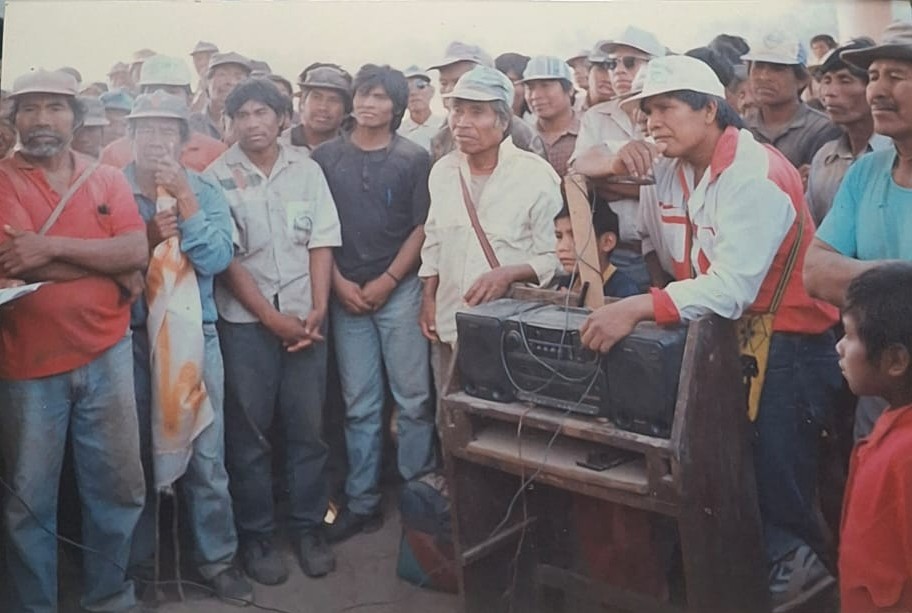
The Argentine State has yet to comply with the judgment of the Inter-American Court of Human Rights requiring it to delimit, demarcate and grant title to the territory traditionally used by the Lhaka Honhat Association, composed of five Indigenous Peoples who are the historical occupants of the Salta Chaco region. The total area claimed was surveyed on the basis of a toponymic map identifying areas of traditional use. Following a lengthy judicial process initiated in 1998, on 6 February 2020 the Court found the Argentine State responsible for violating the rights to Indigenous communal property, cultural identity, a healthy environment, adequate food and access to water.
On 6 February 2020, the Argentine Republic was, for the first time, found responsible by the Inter-American Court of Human Rights for violations of Indigenous rights. Thirty-six years earlier, in 1984, a group of leaders of the Qom, Nivakle, Iyojwaja, Tapi’ and Wichi peoples, inhabitants of the Gran Chaco region, requested that the provincial government of Salta grant them title to their ancestral territories: “We know that, under the law, we have this right because it is the land of our ancestors. They lived here many centuries before the first criollo settlers arrived from the south, between 1902 and 1903.”
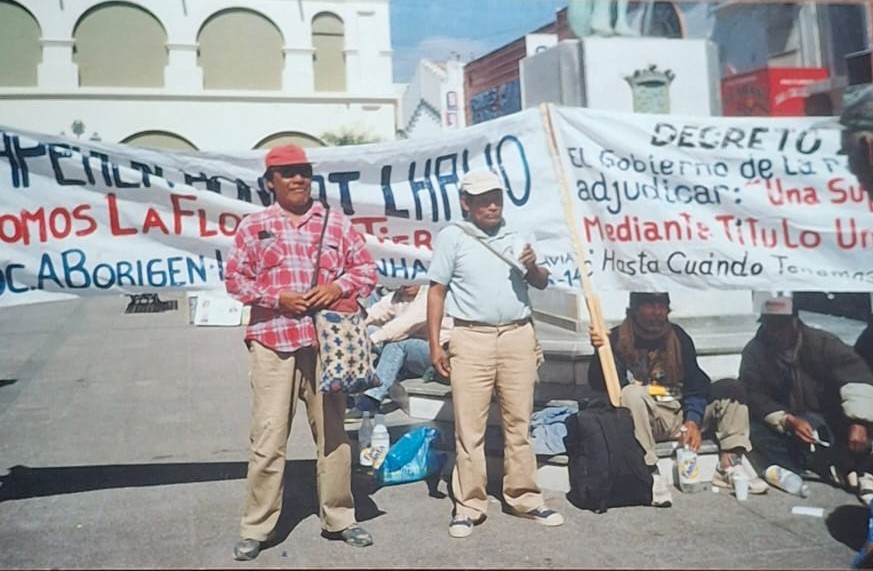
This claim marked the emergence of the Lhaka Honhat organisation (“our land” in the Wichi language), which brings together all the communities of the five peoples sharing the same territory. The petition made clear that they were not seeking individual titles for each community but a single, undivided title in the name of all. The Lhaka Honhat struggle formally began in 1991 with the submission of a toponymic map reflecting areas of traditional occupation, covering 530,000 hectares. The claim was grounded in a historical and legal framework based on international law and applicable domestic norms concerning Indigenous Peoples.
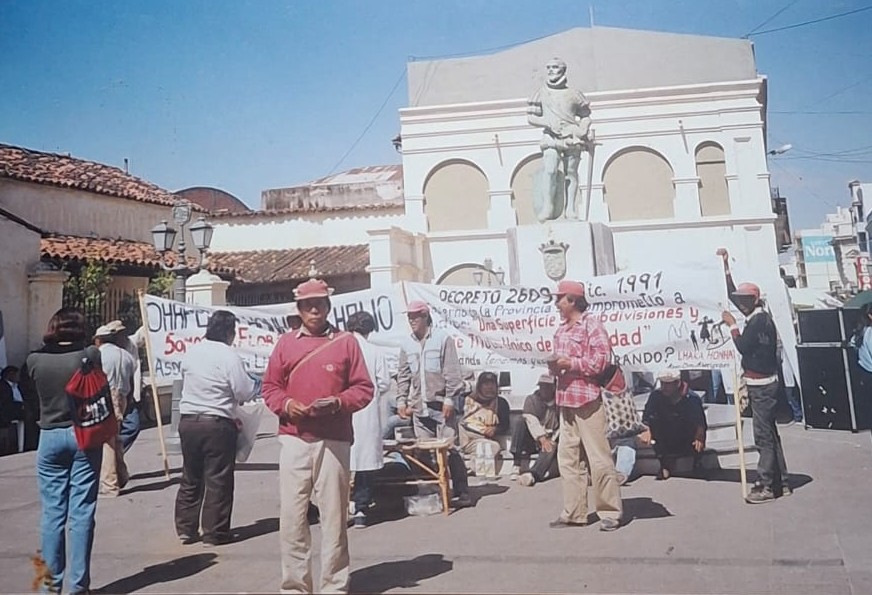
The area, known as Fiscal Lots 55 and 14, had been occupied since the early 20th century by non-Indigenous cattle-ranching families. This led to severe environmental degradation, exacerbated by the ongoing clearing of native forest. Since then, the communities have strengthened their demands for State protection. In 1992, Lhaka Honhat obtained legal personality, a requirement imposed by the Salta government as a condition for land titling under Decree No. 2609/91. The regulation provided for the allocation of land to both groups, without taking into account the Indigenous claim, supported by arguments submitted to the authorities alongside the map of the territory of traditional use.
Defending the territory: the judicial route
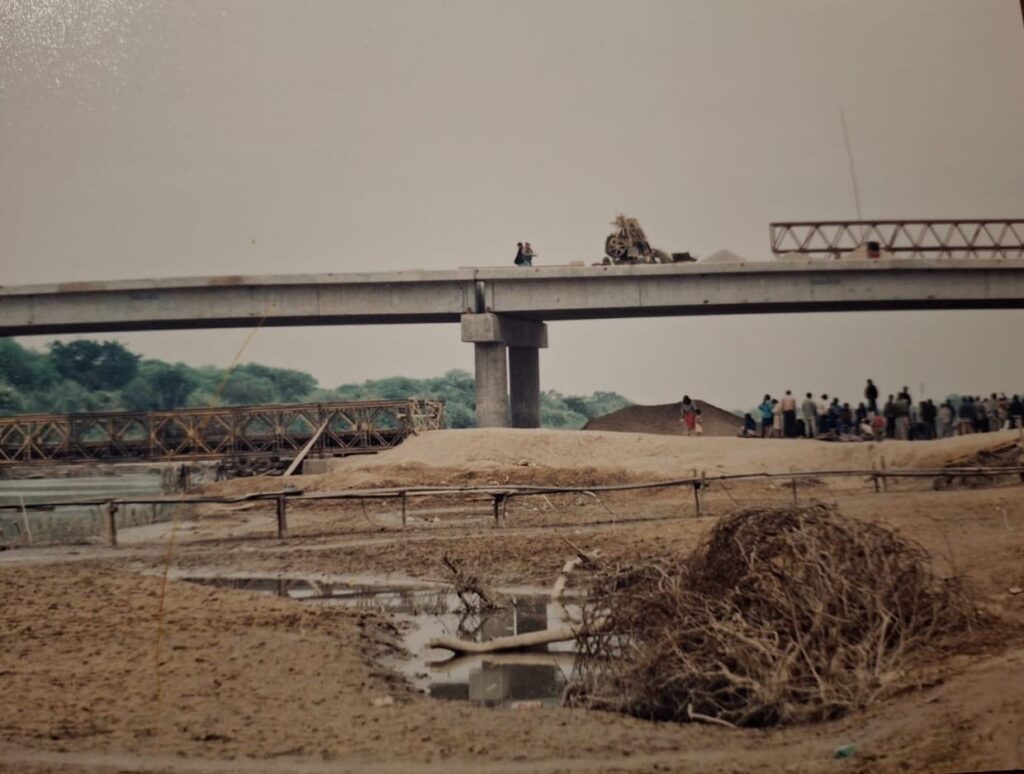
The decree was repealed as work progressed on the implementation of the so-called “bioceanic corridor”, intended to link Argentina with Paraguay and, at a later stage (2026–2027), with Brazil and Chile, with the aim of facilitating international trade between Mercosur and Asia. The first phase involved the construction of an international bridge between the community of Misión La Paz (Argentina) and Pozo Hondo (Paraguay). In response to this development, Lhaka Honhat filed an amparo (a constitutional remedy) before the local courts to protect natural resources and to require environmental impact assessments.
In 1996, for 23 days, more than a thousand Indigenous people occupied the bridge to publicly protest against the lack of free, prior and informed consultation. They also warned of the impact that the movement of people would have on the territory of traditional use and on the communities of the five Indigenous Peoples, who have been its custodians since time immemorial. The protest ended with the signing of an agreement under which the Salta provincial government undertook to grant title to the communities.
From the total area of the territory of traditional use, Lhaka Honhat agreed to set aside 130,000 hectares that were not being intensively used, for titling in favour of criollo families.
From the total area of the territory of traditional use, Lhaka Honhat agreed to set aside 130,000 hectares that were not being intensively used, for titling in favour of criollo families.
Once again, the Salta provincial government failed to honour its commitment, and Lhaka Honhat decided to pursue international legal action. In 1998, the Centro de Estudios Legales y Sociales (CELS), acting as the association’s representative, lodged a petition before the Inter-American human rights system setting out the claim for the titling of its territory. In addition to its submission, CELS attached an anthropological report describing, from an historical perspective, the social, political and economic organisation of the communities. It also submitted an environmental report, endorsed by the National Parks Administration, on the condition of Fiscal Lots 55 and 14.
A friendly settlement process was initiated before the Inter-American Commission on Human Rights (IACHR), between the State and Lhaka Honhat, leading to substantive changes to the original claim. On the one hand, the communities agreed to include non-Indigenous families in the discussions—not as parties to the case but as part of a pragmatic strategy to advance a solution. From the total area of the territory of traditional use, Lhaka Honhat agreed to set aside 130,000 hectares that were not being intensively used, for titling in favour of criollo families.
Hearing of the parties and judgment of the Inter-American Court
In 2006, the IACHR issued its Admissibility Report on the petition and, subsequently, in 2012, its Merits Report, in which it recognised violations of the communities’ rights and ordered the Argentine State to provide appropriate reparations within a time frame that was extended on 23 occasions. Ultimately, in light of the State’s continued non-compliance, the IACHR referred the case to the Inter-American Court of Human Rights (IACtHR) in 2018.
In 2019, the Court convened a hearing in Costa Rica, bringing together the parties (the State and Lhaka Honhat) to hear from the organisation’s representatives and officials from both national and provincial governments, who presented their arguments and responded to questions from the judges. The Court also commissioned expert, legal and anthropological reports, which were incorporated into its final deliberations.
The Court ordered the Argentine State to “delimit, demarcate and grant title, in the name of all the communities, to a unified area, without internal divisions, under a single title” within a maximum period of six years (2020–2026).
The Court ordered the Argentine State to “delimit, demarcate and grant title, in the name of all the communities, to a unified area, without internal divisions, under a single title” within a maximum period of six years (2020–2026).
As a result of this hearing, on 6 February 2020 the Court found the Argentine State responsible for violations of Indigenous rights. The Inter-American Court of Human Rights (IACtHR) held that the Argentine State had: (1) violated the right to Indigenous communal property, as well as the rights to cultural identity, a healthy environment, adequate food and water; (2) failed to comply with its obligation to respect and ensure the rights set out in the American Convention on Human Rights, in particular Article 21 (right to property), in relation to the rights to judicial guarantees and judicial protection, Article 23(1) (political rights), and Article 26 (economic, social, cultural and environmental rights); and (3) breached Article 8(1) due to undue delays in judicial proceedings and failure to adopt effective measures to halt activities harmful to these rights.
With regard to the merits, the Court ordered the Argentine State to “delimit, demarcate and grant title, in the name of all the communities, to a unified area, without internal divisions, under a single title” within a maximum period of six years (2020–2026). It also ordered a number of reparations: to refrain from carrying out acts, works or projects without free, prior and informed consultation (FPIC); to submit a report on critical situations involving lack of access to safe drinking water or food to the Court; and to adopt an action plan to ensure permanent access to safe drinking water and establish a community development fund.
A notable aspect of the judgment was the Court’s decision to include criollo families, without undermining the protection of Indigenous rights. To that end, it ordered that families residing within Indigenous territory should agree, together with the Indigenous communities, on their relocation to areas not subject to traditional occupation.
Disappointing results
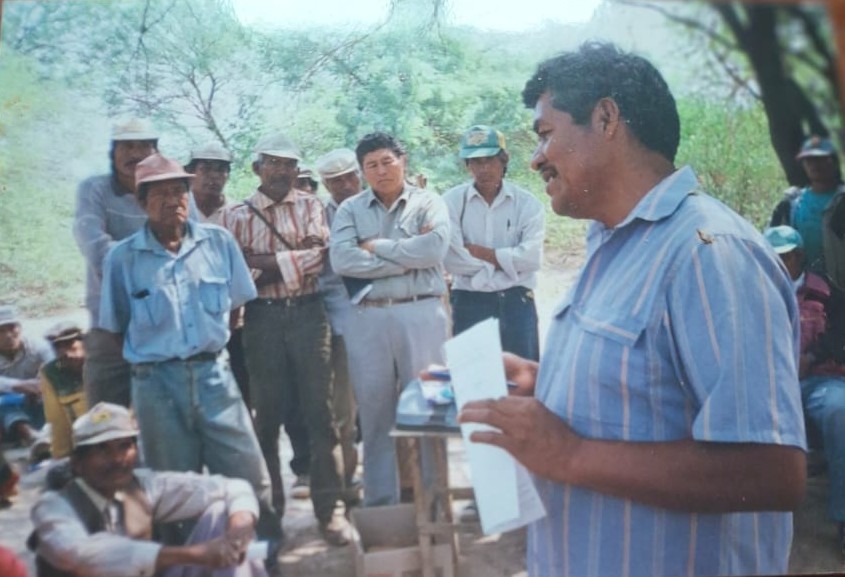
In 2020, the provincial government established a Provincial Implementing Unit tasked, alongside a team of territorial experts, with defining boundaries. The work was carried out under a Work Plan, with the participation of one Indigenous and one criollo representative. The following year, the Ministry of Justice and Human Rights created the Temporary National Implementing Unit for the Execution of the Judgment (UENT) with the aim of “coordinating the implementation of joint initiatives with national, provincial and municipal authorities in order to comply with the reparations ordered by the judgment”.
In 2023, the UENT was dismantled and the activities it had been mandated to carry out in order to implement the reparations were suspended. Under the new national administration, responsibility for Indigenous affairs was transferred from the Secretariat of Human Rights to the Ministry of the Interior; within it, the National Institute of Indigenous Affairs (INAI) was restructured as the Secretariat for Indigenous Affairs. The Court will monitor full compliance with the judgment and will close the case once the State has complied with all the measures ordered. As of 6 February 2026, six years after the judgment, implementation has yielded limited and discouraging results for the communities.
Between 2020 and 2026, the Indigenous territory continues to be occupied by non-Indigenous settlers, ranchers’ fences have not been removed, and the clearing of native forest continues to increase unchecked.
Between 2020 and 2026, the Indigenous territory continues to be occupied by non-Indigenous settlers, ranchers’ fences have not been removed, and the clearing of native forest continues to increase unchecked.
Objective 1, which aims to delimit the territory of traditional use, is dependent upon dialogue between both groups. At present, the most recent map agreed in 2023 indicates that further meetings are still required to determine the boundaries between criollo family settlements and Indigenous territory. This is compounded by uncertainty as to who holds direct responsibility for the task, given the institutional changes within INAI and the difficulties of carrying out fieldwork during the summer rainy season. As for Operational Objective 2, concerning the provision of safe drinking water and adequate food, the initiatives launched through agreements between the National Implementing Unit and other state bodies (such as the National Institute of Agricultural Technology) were discontinued under the new administration of President Javier Milei.
Meanwhile, between 2020 and 2026, the Indigenous territory continues to be occupied by non-Indigenous settlers, ranchers’ fences have not been removed, and the clearing of native forest continues to increase unchecked. This is compounded by renewed interest among Mercosur governments in advancing the bioceanic corridor project, reviving concerns highlighted in the judgment regarding violations of the right to consultation and access to free, prior and informed information. All of this goes beyond the worsening environmental degradation, once again undermining recognition of the traditional use of resources vital to the five Indigenous Peoples.
Importance of the Judgment for Indigenous Peoples in Argentina
The Court extended the scope of this judgment to all Indigenous Peoples in the country, emphasising that Argentina lacks an adequate legal framework to effectively guarantee the right to collective property. According to the Court, this implies that Indigenous communities are not afforded effective protection of their property rights.
Case No. 12094, Asociación de Comunidades Aborígenes Lhaka Honhat v. Argentina thus stands as a landmark in the Indigenous struggle in the country, with implications for all communities. However, strikingly, it remains little known in Argentina. In this context, the Court recommended that the State publish the judgment through official print media. This constitutes a measure of considerable importance in light of the legal uncertainty faced by many communities due to the absence of legislation or other measures necessary to ensure legal security for Indigenous collective property rights.
Meanwhile, the voices of Indigenous leaders continue to be heard persistently asking: “What can we do now? How much longer must we continue waiting?”

Morita Carrasco is an anthropologist and holds a PhD in Philosophy of Law from the University of Buenos Aires (UBA). Since 1981, she has been researching and teaching about indigenous peoples, their rights, indigenous policies, indigenous politics, and access to indigenous justice. Contact: carrascomorita@gmail.com