
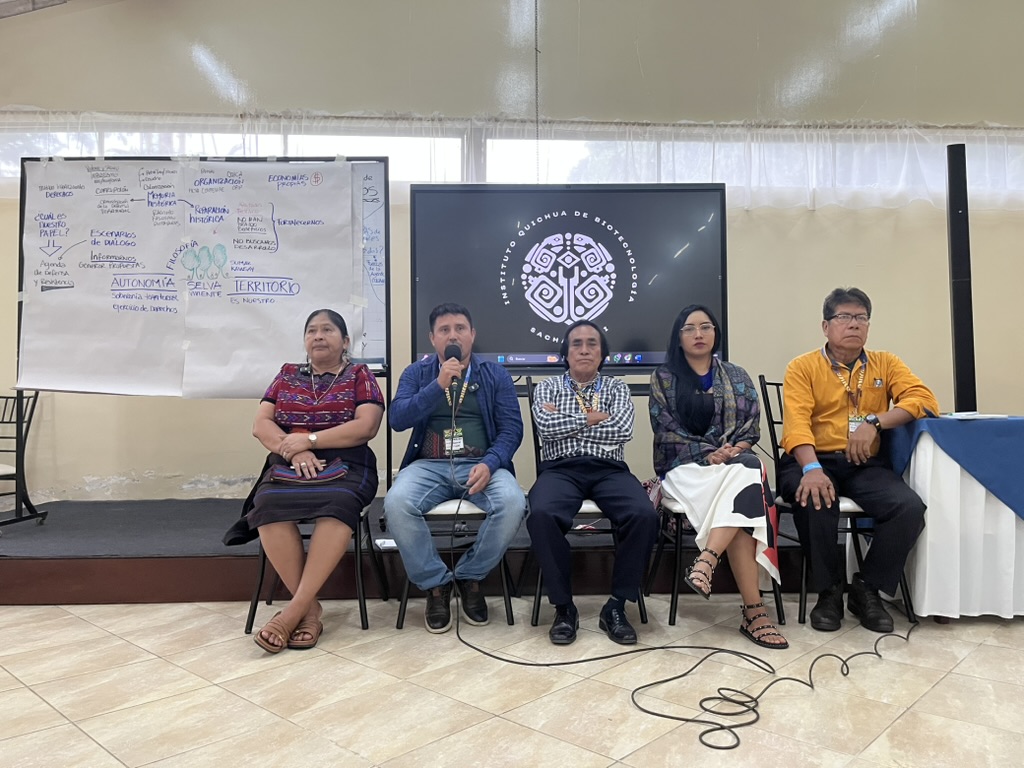
At an international workshop held in the Ecuadorian Amazon, Indigenous leaders from across the region came to the conclusion that carbon markets are emerging as a key mechanism for reshaping control over nature. Such an emergence is also impacting access to natural resources and decision-making processes. The gathering provided an opportunity to compare experiences, identify risks and develop a shared understanding of these processes. The debate must move beyond technical considerations and be situated within the broader context of historical dispossession and ongoing struggles for territorial rights. What is at stake are Indigenous Peoples’ territories, rights and self-determination.
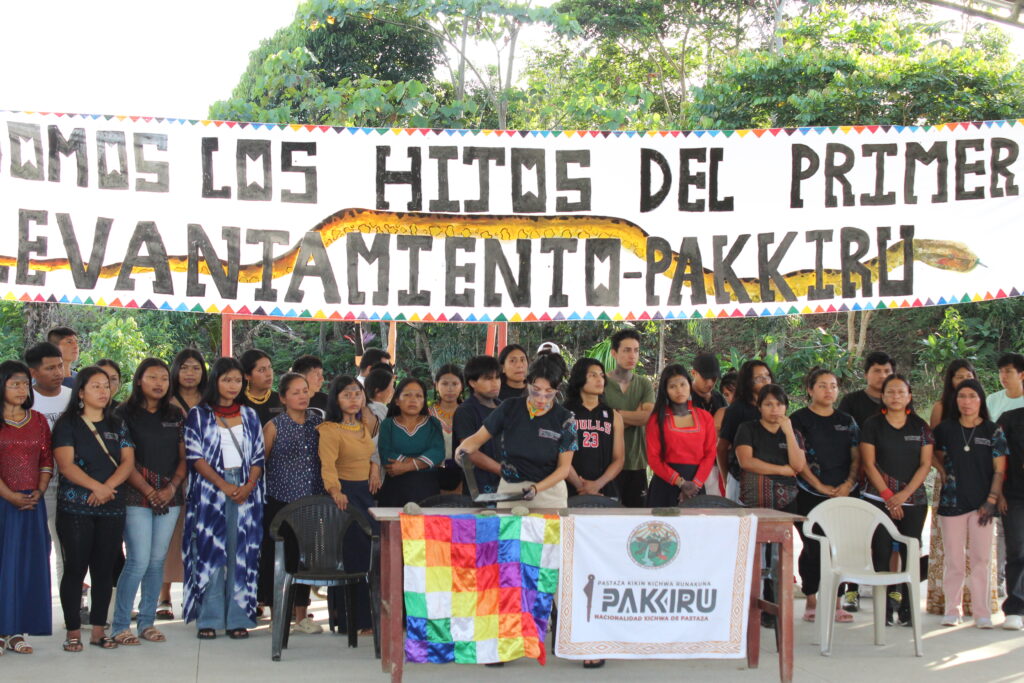
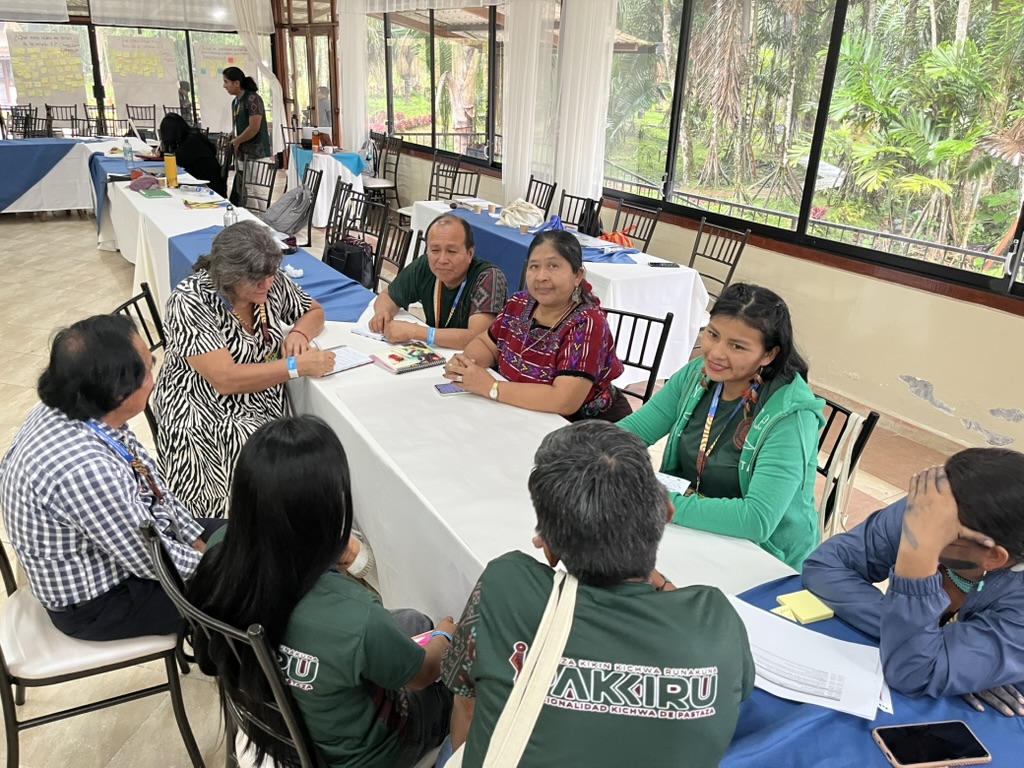
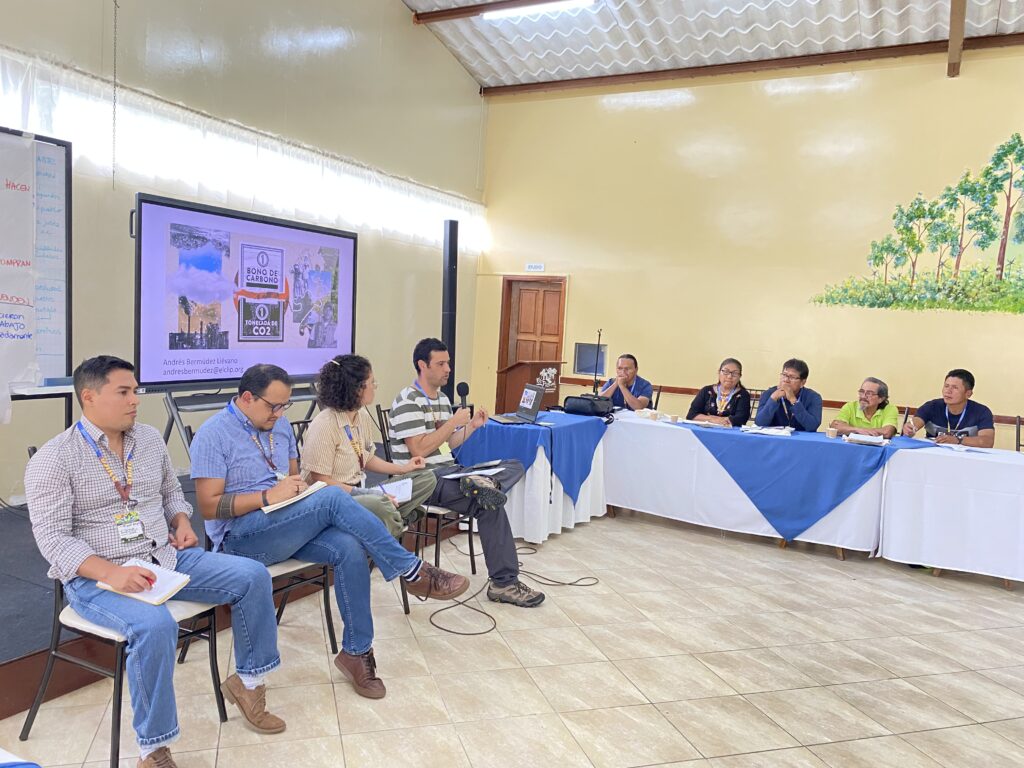
In Puyo, Ecuador, the International Workshop on Indigenous Rights and Carbon Markets was held from February 19th to February 21st, 2026, bringing together more than 80 leaders from Indigenous nations of the Ecuadorian Amazon. The event also featured presentations by representatives from Colombia, Bolivia, Peru, Brazil, Guatemala, Ecuador and Costa Rica, who shared a common concern: that new forms of intervention and control over Indigenous territories are emerging under the banner of conservation and climate finance.
Throughout the workshop, one message resonated strongly: carbon markets cannot be understood in isolation, but rather as part of a longer history of interventions in Indigenous territories. Participants drew a line connecting different historical periods, from colonization to the rubber boom and the expansion of oil extraction and mining, with contemporary climate initiatives. In each of these processes, Indigenous territories have become the focus of external interests, while the Peoples who inhabit them have had little decision-making power.
The New Face of Extractivism
From this perspective, carbon has become a new element within a familiar pattern. The issue is not simply about conserving forests or reducing emissions, but about who has the power to determine how territories are used and under what conditions. For many participants, these mechanisms serve global interests by helping to sustain prevailing economic models, allowing companies and corporations to continue polluting while claiming to offset their environmental impacts. In doing so, responsibility is increasingly shifted onto Indigenous Peoples, who have long protected and cared for their ancestral territories.
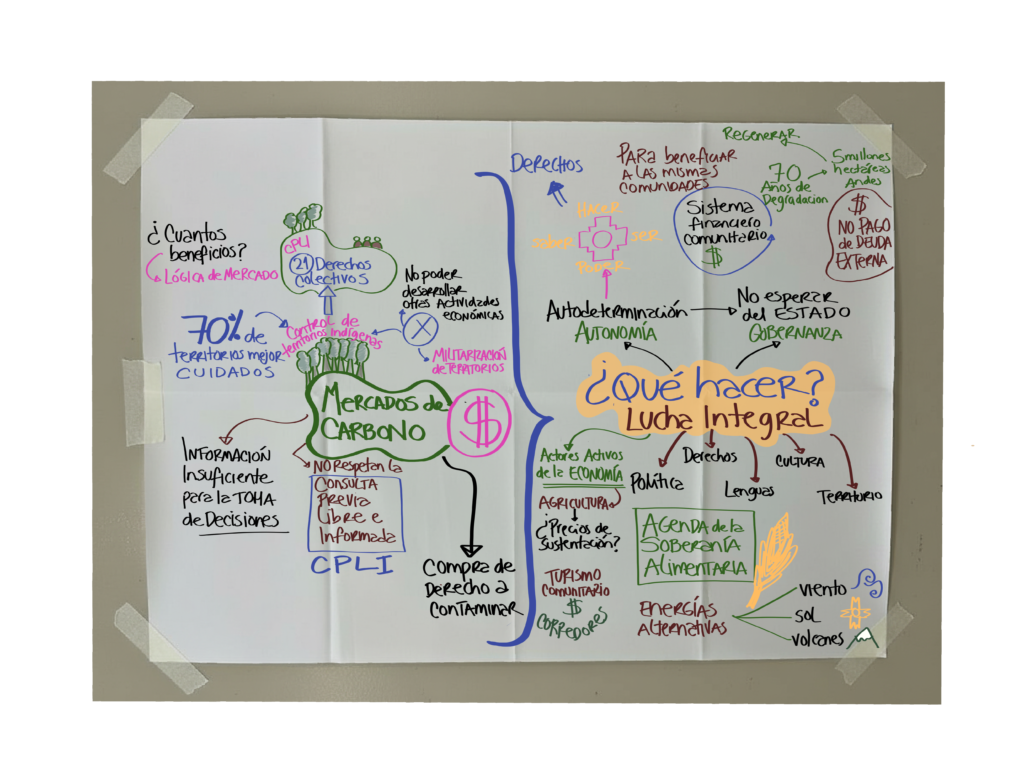
The experiences shared during the workshop reinforced this conclusion. Participants cited examples of conservation projects that have restricted the customary use of Indigenous territories. These restrictions include limiting traditional practices such as hunting, fishing and gathering. In other cases, protected areas or carbon projects were implemented in Indigenous territories without adequate consultation processes, giving rise to conflicts that continue to this day. These experiences also highlighted how conservation agendas can operate as mechanisms of control.
The problem is not only carbon markets. The language changes, but relationships of power remain intact. For this reason, beyond the technical discussion, this issue was highlighted as a political struggle over territory, autonomy, and rights.
The problem is not only carbon markets. Language changes, but relationships of power remain intact.
These processes do not occur in isolation. They are accompanied by narratives that promise economic benefits, local development and so-called “improvements in quality of life”, often reduced to health and education. These are basic rights that states should already be fully guaranteeing. Several participants recalled that similar promises have long been part of the story, particularly in the context of oil extraction, where the outcomes failed to match the expectations that had been created. This collective memory provides an important historical lens through which current carbon-related proposals are understood.
In this sense, the problem is not only the carbon market as an instrument, but also the way it is being introduced into territories marked by histories of dispossession. The language has changed, but the underlying power relations remain. For this reason, the issue was framed not simply as a technical debate, but as a political struggle over territory, autonomy, and rights. Through such disputes, Indigenous Peoples seek to avoid repeating the experiences of the past.
Unequal Decision-Making and Internal Conflicts
Another key theme was how decisions are made within these processes, given the profound power imbalances between the actors involved. While companies, NGOs and governments possess technical expertise, financial resources and institutional backing, local communities often engage in these processes with limited access to information and under starkly unequal conditions. In many cases, external actors arrive with pre-designed proposals and seek to secure rapid agreements that do not align with community timelines or decision-making processes. Negotiations are frequently conducted without going through collective mechanisms such as community assemblies, generating tensions and divisions within communities.
One of the issues most frequently highlighted was the lack of clear and accessible information. Communities do not always have access to complete information about the benefits, obligations and long-term implications of carbon projects. This problem increases the risk of decisions being made under pressure or on the basis of incomplete information, undermining the ability of Indigenous Peoples to fully exercise their right to self-determination.
The importance of free, prior, and informed consent was highlighted with the recognition that there exists a necessity to go beyond its formal application. For this, there was an emphasis on the need to strengthen community-owned decision-making mechanisms.
Decisions are made outside of territories and then they are taken to local communities to receive approval, many times, under fraudulent pretenses.
The role of the State was also called into question. Cases documented in countries such as Colombia and Bolivia showed that state laws and regulations do not necessarily guarantee transparent or equitable processes. In some instances, governments themselves have promoted the aforementioned mechanisms without ensuring the effective participation of Indigenous Peoples. This suggests that decisions are often shaped outside Indigenous territories and only later brought to communities for approval, in many cases under fraudulent pretenses.
In light of this information, participants highlighted the importance of free, prior and informed consent (FPIC), while stressing the need to move beyond a merely procedural application of this right. Particular emphasis was placed on strengthening Indigenous decision-making institutions. Such institutions include community assemblies, local statutes, and territorial governments, fortifying each as essential spaces for the assurance of collective decision-making processes and the prevention of imposed or even fragmented decision-making.
Autonomy, Memory and Indigenous-Led Alternatives
The discussions converged on a key point: decisions concerning Indigenous territories cannot be subordinated to external agendas. Autonomy and self-determination are not abstract principles but concrete conditions that enable Indigenous Peoples to decide under what terms they accept and reject decisions. Historical memory is central to this position. Experiences with oil extraction, mining and “conservation and development” policies have left enduring scars such as broken promises, damaged territories and casualties. Consequently, carbon markets are not viewed as isolated opportunities but as part of a broader continuum of external interventions imposed on Indigenous lands and peoples.
Rather than adopting a purely reactive stance, Indigenous leaders emphasized that viable alternatives are already being implemented. These include community forest management, Indigenous production systems, traditional medicine, community-based tourism and Indigenous knowledge systems. Far from being mere aspirations, these are living practices that sustain life in Indigenous territories. Strengthening these alternatives points towards a future that differs fundamentally from the offsetting schemes promoted by external actors.
In this regard, the workshop ended not only with critical reflections but also with a clear direction: strengthening Indigenous-led agendas. The emphasis is on consolidating territorial processes—including organization, economic initiatives, communication and political coordination—that can sustain autonomous decision-making over time. Rather than adapting to carbon markets, the goal is to advance an Indigenous path in which territory is not treated as a tradable asset but recognized as the foundation of collective life.
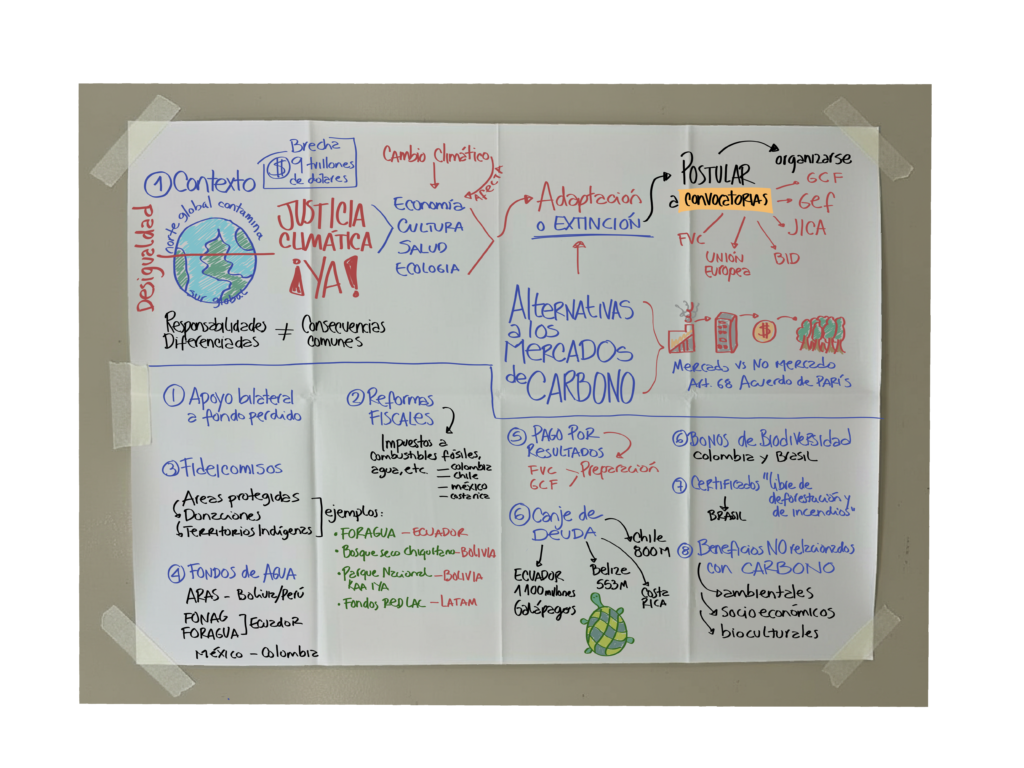
Communication, Coordination and the Struggle over Narratives
The discussions held during the workshop highlighted the need to contest not only what happens in Indigenous territories, but also the narratives through which these processes are understood and represented. Carbon markets do not advance solely through economic agreements or legal frameworks; they are also promoted through narratives that portray them as the only solution to the climate crisis. In this context, communication becomes a field of strategy, as there is a significant gap between how these projects are presented in international forums and how they are experienced in Indigenous territories. At the global level, they are described as mechanisms for sustainable conservation, yet within communities they are often experienced as processes that generate uncertainty, restrictions, conflict and violations of rights.
This disconnect reinforces the need for Indigenous Peoples to develop and disseminate their own narratives. Participants stressed the importance of strengthening Indigenous communication networks that can facilitate the sharing of information, the visibility of experiences and the production of analyses rooted in territorial realities. The aim is not merely to inform, but to build an autonomous voice capable of responding to narratives imposed from outside. In this way, communication becomes a key tool for territorial defense and political advocacy.
All in all, the debate regarding carbon markets is not only material, but also symbolic and political. It deals with who defines the problem, who proposes the solutions, and under whose terms such decisions are made.
The debate regarding carbon markets is both symbolic and political: who defines the problem, who proposes solutions, and under whose terms such decisions are made.
Coordination among Indigenous Peoples was another key theme. Although national contexts differ, many of the challenges they face are shared across the region. Exchanging experiences, lessons learned, and strategies helps strengthen collective positions and prevents these conversations from unfolding in isolation. Such coordination extends beyond local and national spaces to international arenas, where decision-making directly affects Indigenous territories.
Participants also highlighted the importance of identifying allies and mapping the actors involved in this landscape, recognizing that not all share the same interests. Such mapping enables more informed decision-making and helps Indigenous Peoples identify efforts to draw them into agendas that have not been shaped by their own realities. Taken together, the struggle surrounding carbon markets is not only material but, above all, political and symbolic. At stake are questions of who defines the problem, who proposes the solutions and on whose terms such decisions are made. In this context, communication and coordination are essential tools for sustaining processes of resistance and for building alternatives emerging from Indigenous territories.
A Contested Horizon: The Future of Indigenous Territories
The workshop did not result in a definitive conclusion; rather, it confirmed that a new arena of debate is emerging around Indigenous territories. Carbon markets have become one component within a broader global dynamic in which forms of control over nature, access to nature and decision-making power are being reconfigured. This is no longer solely a matter of direct extraction, but of more complex mechanisms that operate through regulations, certification schemes, financial instruments and climate-related discourses.
In this context, Indigenous Peoples face not only technical or economic challenges, but profoundly political ones. At stake are their territories, rights and autonomy. The discussions made clear that these processes are not being passively accepted. Instead, they reflect a critical reading that identifies in carbon markets a reconfiguration of earlier forms of dispossession, albeit expressed through new languages and justifications. At the same time, the debate went beyond outright rejection, opening space for reflection on what it means to care for and defend territories, how the climate crisis should be addressed, and what kind of future Indigenous Peoples seek to build.
What is at play is not simply a mechanism, but also the sense and feeling over the territory. Here, the message is clear: life, self-determination, and sovereignty of Indigenous Peoples cannot be negotiated.
The climate crisis cannot be resolved simply by placing responsibility in the hands of those who have historically stewarded and cared for the forests.
Against a global narrative that turns forests into market assets, it is necessary to adopt a different perspective in which territory is not a resource, but a space of life, relations and community. This contrast defines the current moment. For those who took part in the meeting, carbon markets do not represent a solution, but rather a new form of intervention in Indigenous territories that, under the language of conservation and climate action, reconfigure long-standing logics of control and seek to determine the use of spaces that do not belong to them.
In this context, the position is clear: territories are not for sale, nor can they be turned into compensation instruments to sustain economies that continue to pollute. The climate crisis will not be solved by shifting responsibility onto those who have historically cared for forests. What is at stake is not only a mechanism, but the very meaning of territory itself. At this point, the message is clear: life, self-determination and the sovereignty of Indigenous Peoples cannot be negotiated or debated.

Pamela Troya is an LGBTIQ+ and human rights activist, an expert in political advocacy, and a spokesperson for marriage equality in Ecuador. She holds a Bachelor’s degree in Organizational Communication (Universidad San Francisco de Quito) and a Master’s degree in Communication and Political Marketing (Universidad Internacional de La Rioja).

Sara Gómez holds a Bachelor’s degree in Social Communication and a Master’s degree in Applied Ecology. She also holds diplomas in Ecofeminism and in Gender, Diversity and Inclusion. She is an international consultant on gender, environment, interculturality and education (including popular education and education communication), with a focus on social innovation and knowledge management.