
Carbon markets, promoted by governments, corporations and international conservation NGOs, are expanding rapidly across Indigenous territories in Africa, Asia, and Latin America. For many Indigenous Peoples, these mechanisms represent a familiar pattern of external control over their lands, now falsely justified under a green flag. Rather than addressing the root causes of climate change, mechanisms such as REDD+ reframe Indigenous territories as "carbon reservoirs" intended to offset pollution produced elsewhere — a form of climate colonialism that reshapes power over land and governance while allowing extractive economies to continue operating.
Carbon markets transform greenhouse gas emissions into tradable units. In theory, each carbon credit represents one tonne of carbon dioxide (or its equivalent) either averted or removed from the atmosphere through activities such as forest conservation, reforestation, altered agricultural practices, or technological carbon capture. Governments, corporations or individual consumers can then purchase these credits to compensate for their own emissions and support claims of being “carbon neutral” or “net zero.” Over time, tropical forests have become one of the primary frontiers of this expanding carbon economy.
REDD+ (Reducing emissions from deforestation and forest degradation and the role of conservation, sustainable management of forests and enhancement of forest carbon stocks in developing countries), an approach originally developed within the UN climate negotiations as a mechanism to reduce emissions from deforestation and forest degradation, has gradually evolved into a complex system involving private developers, conservation NGOs, certification bodies, financial intermediaries and state agencies.
This expansion is unfolding within a profoundly unequal global political economy. While international institutions warn of a massive “climate finance gap”, fossil fuel subsidies still amount to trillions of dollars annually, and wealthy countries continue to fall short of their historical responsibility and climate finance commitments. Within this context, carbon markets are promoted as a way to “mobilise private finance” without challenging the economic structures driving the climate crisis in the first place.
For Indigenous Peoples, the implications are enormous. Indigenous Peoples collectively steward vast areas of the world’s remaining biodiversity and carbon-rich ecosystems. Research consistently shows that forests under Indigenous governance tend to experience lower rates of deforestation and better ecological outcomes than state-managed protected areas. However, in many countries, Indigenous land rights, including customary land rights, remain weak, incomplete or entirely unrecognised. This creates the conditions for governments and private actors to claim authority over “forest carbon” while bypassing Indigenous Peoples’ governance and rights over their land and territories.
From Safeguards to Dispossession
While international safeguards are supposed to protect Indigenous Peoples’ rights in the context of carbon projects, in practice, these protections are frequently weak, non-binding or easily circumvented. In multiple regions, Indigenous Peoples’ organisations report recurring patterns: incomprehensible contracts, rushed consultation processes, unequal access to information, uninformed decisions, and growing restrictions over customary land tenure.
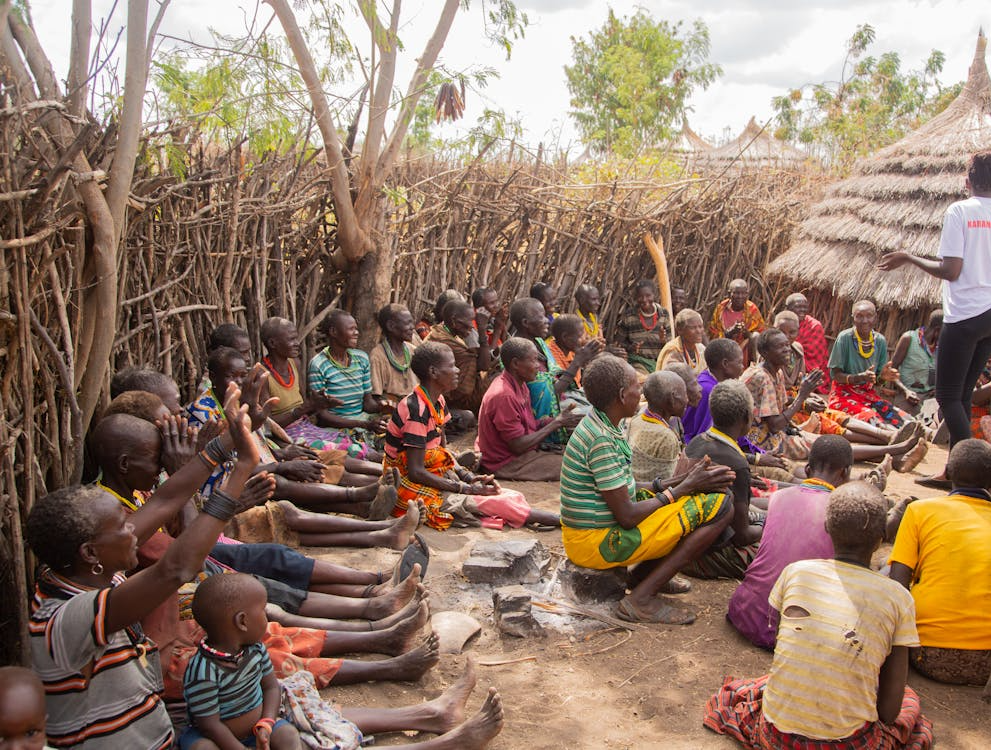
Free, Prior and Informed Consent (FPIC) is often reduced to a procedural formality or a simple verification requirement. Communities are approached through isolated meetings, technical presentations, or consultations conducted in foreign languages and under significant pressure. Contracts frequently involve highly complex legal and financial arrangements spanning decades, yet communities receive little independent legal or technical support to assess the long-term implications. This information gap leaves room for intermediaries — sometimes described as carbon pirates or cowboys — to secure exploitative contracts.
In many cases, the asymmetry of knowledge and power is profound. Carbon project developers, intermediaries, and certification bodies operate with specialised expertise, legal teams, and access to international finance. Communities, by contrast, are often compelled to make decisions about abstract financial instruments and future territorial-use obligations with limited information about pricing structures, contractual risks, or revenue distribution. The result is an environment in which Indigenous Peoples’ territories become incorporated into volatile global carbon markets without the rights-holders exercising informed and meaningful engagement over the process.
REDD+ pilot projects in sub-Saharan Africa have imposed strict controls on shifting cultivation and forest grazing, while communities report that conservation benefits fail to offset lost livelihoods, leading many to disengage.
REDD+ pilot projects in sub-Saharan Africa have imposed strict controls on shifting cultivation and forest grazing.
Restrictions imposed in the name of carbon conservation impact practices such as shifting cultivation, grazing, hunting, gathering or small-scale forest use. In some contexts, carbon projects replicate old models of “fortress conservation,” in which Indigenous people’s presence is viewed as a threat to environmental protection. For instance, REDD+ pilot projects in sub-Saharan Africa have imposed strict controls on shifting cultivation and forest grazing, while communities report that conservation benefits fail to offset lost livelihoods, leading many to withdraw from these programs. Research into a failed REDD+ initiative in Tanzania found that “wilderness” narratives were used to justify coercive enforcement, forced evictions, and the treatment of Indigenous residents as intruders in their own territories. In the Colombian Amazon, carbon offsetting has similarly been described as a “subtle green grab” that creates “de facto enclosures” on Indigenous lands and disciplines forest communities.
Furthermore, carbon projects reshape local governance systems, exacerbate internal inequalities and generate conflicts regarding representation, benefit-sharing and territorial authority. Benefit-sharing is often unclear, delayed, and minimal, with communities receiving only a small fraction of total revenues. Women, youth and traditional authorities are frequently excluded from negotiations — despite bearing much of the social and environmental burden — while project revenues, when they do materialize, may be captured by local elites or external intermediaries. As the “carbon rights” or the benefit share are often defined together with the land ownership, the carbon market has become another weapon for eliminating customary land rights of Indigenous Peoples due to the non-recognition of customary land rights by many governments. Recurring demands have included access to culturally appropriate and translated information, as well as independent facilitation of FPIC processes.
Phantom Credits and the Logic of Offsetting
Investigations into voluntary carbon markets have found that large numbers of forest-based credits — particularly within REDD+ schemes — are effectively “phantom credits”: credits issued for emissions reductions that either did not occur or cannot be reliably verified. Inflated baselines, weak additionality rules and the displacement of deforestation from one area to another undermine claims that these projects generate meaningful climate mitigation. Yet, these same credits are routinely used by major corporations to support “net zero” claims while they continue fossil fuel extraction and high-emission business models. Therefore, carbon offsetting does not function as a pathway beyond fossil fuels, but rather as a mechanism that allows emissions to continue elsewhere.
This contradiction highlights one of the central problems of carbon markets. There is simply not enough land on Earth to offset current levels of fossil fuel consumption while maintaining existing patterns of extraction and economic growth. The idea that ongoing emissions in the Global North can be balanced indefinitely through conservation projects in the Global South rests on increasingly unsustainable ecological assumptions.
The problem is also epistemic. Carbon markets benefit systems of measurement, verification and monitoring rooted in technocratic and financial logics: satellite imagery, biomass calculations, carbon accounting methodologies and digital registries.
The problem is also epistemic. Carbon markets benefit systems of measurement, verification and monitoring rooted in technocratic and financial logics.
For many Indigenous Peoples, this is not merely a technical failure but a continuation of colonial relations. Territories in the Global South become spaces tasked with absorbing the environmental costs of industrial economies – i.e., greenhouse gas emissions – generated elsewhere. Forests are reduced to carbon stocks registered in distant databases, while Indigenous Peoples are expected to shoulder the burden of climate mitigation for economies that remain dependent on oil, gas and mining.
The problem is also epistemological. Carbon markets benefit and prioritize systems of measurement, verification and monitoring rooted in technocratic and financial logics: satellite imagery, biomass calculations, carbon accounting methodologies and digital registries. These frameworks often marginalise Indigenous conceptions of territory grounded in reciprocity, relationality and responsibilities between human and non-human life.
Between Rejection and Strategic Engagement
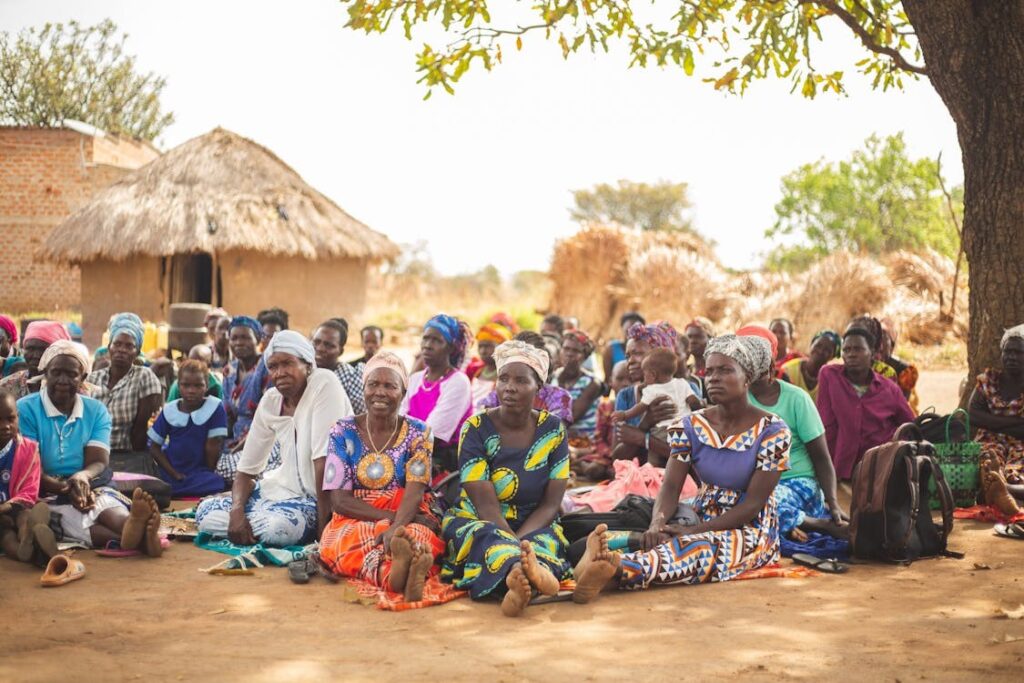
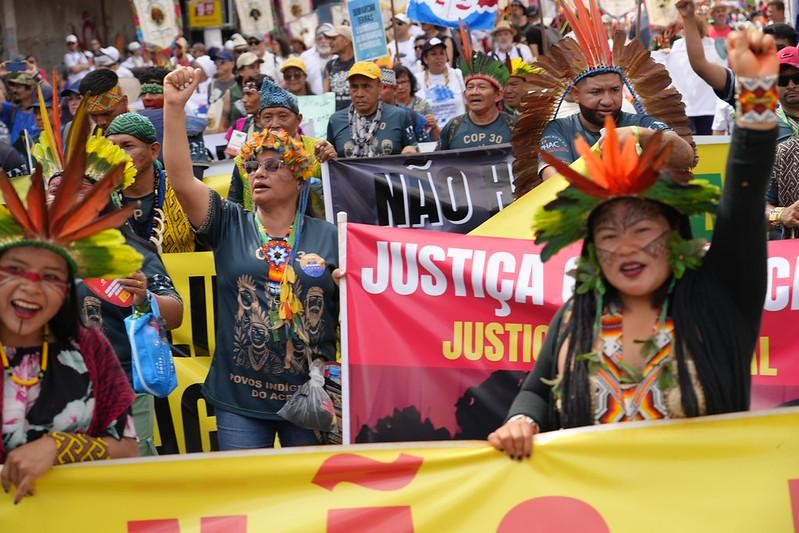
Indigenous Peoples’ responses to carbon markets are neither uniform nor static. In various regions, numerous organisations and territorial movements reject carbon markets outright, arguing that they are false solutions that commodify nature while allowing major polluters to avoid meaningful emissions reductions at source.
At the same time, the reality on the ground is often more complex. Carbon markets are already expanding rapidly across Indigenous Peoples’ territories, frequently in contexts marked by simultaneous pressures from mining, agribusiness, logging, infrastructure expansion, and organised crime such as drug trafficking. For some communities, participation in carbon projects emerges not from endorsement, but rather from the need to navigate an increasingly restrictive political and economic environment.
Indigenous Peoples’ organisations are demanding stronger territorial protections, transparent contracts, independent legal support, community-controlled benefit-sharing mechanisms and prior consultation processes designed according to Indigenous Peoples’ governance systems.
Indigenous Peoples’ organisations are demanding stronger territorial protections, transparent contracts, independent legal support, community-controlled benefit-sharing mechanisms and prior consultation processes.
In certain cases, communities view carbon initiatives as a lesser threat compared to other forms of extractive development. Others seek to engage strategically in order to secure territorial recognition, strengthen collective governance or gain leverage within negotiations that are likely to proceed regardless of Indigenous Peoples’ opposition. In this sense, participation may function less as acceptance than as a strategy of defence and political survival.
This has given rise to forms of cautious, rights-based engagement focused on strengthening Indigenous Peoples’ decision-making power rather than legitimising carbon markets themselves. Across various regions, Indigenous Peoples’ organisations are demanding stronger territorial protections, transparent contracts, independent legal support, community-controlled benefit-sharing mechanisms and consultation processes designed according to Indigenous Peoples’ governance systems rather than project timelines.
Beyond Carbon Markets
Despite the diversity of Indigenous Peoples’ positions on carbon markets, one demand remains constant across contexts: self-determination. Whether communities choose rejection, negotiation, or selective engagement, the central issue is the right of Indigenous Peoples to determine what happens within their territories according to their own institutions, knowledge systems and political priorities. Secure collective land tenure must be a precondition for any legitimate form of engagement.
Increasingly, Indigenous Peoples’ organisations are advancing alternative approaches centred on territorial rights, direct access to climate finance and non-market forms of climate action. These proposals emphasise Indigenous governance and protocols, collective land rights, food sovereignty, ecological restoration and the defence of living territories.
The expansion of carbon markets suggests that the global economy is still searching for ways to manage the climate crisis without confronting the structures that produced it in the first place. Indigenous critiques expose the limits of that approach.
The expansion of carbon markets suggests that the global economy is still searching for ways to manage the climate crisis without confronting the structures that produced it in the first place.
These approaches also challenge the broader political economy underpinning carbon markets. Addressing climate change requires far more than new financial instruments. It demands a radical structural transformation of society and the economy, facilitating a rapid fossil fuel phase-out, strict regulation of extractive industries and supply chains linked to deforestation, cancellation of illegitimate debts, and large-scale public investment in Indigenous and community-led initiatives.
The expansion of carbon markets suggests that the global economy continues to seek ways to manage the climate crisis without confronting the structures that created it in the first place. Indigenous critiques expose the limits of that approach. They remind us that forests are not simply carbon reservoirs, and that climate justice cannot be reduced to accounting exercises conducted in distant financial centres.
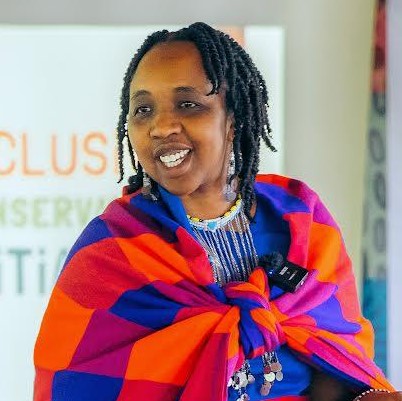
Paine Eulalia Mako is a Maasai Indigenous woman and the current Executive Director of the Ujamaa Community Resource Team. She has worked with them for over ten years serving in different capacities.
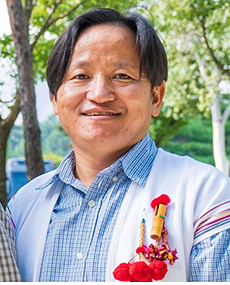
Tunga Bhadra Rai belongs to the Rai Indigenous Nationality of Nepal. He is an Indigenous researcher and anthropologist currently working as the Director of the Climate Change Program of the Nepal Federation of Indigenous Nationalities (NEFIN). He participates at the UNFCCC, GCF, FRLD and in other national and international fora.

Gideon Sanago is a Tanzanian Maasai Indigenous person, born in Maasai land in Simanjiro District, Manyara Region, Tanzania. He holds a Bachelor's Degree in Environment and Climate Change and is working with Pastoralists Indigenous Non-Governmental Organizations (PINGO’s Forum).

Rosario Carmona holds a PhD in Anthropology and works as programme consultant on climate with the International Work Group for Indigenous Affairs (IWGIA).

Stefan Thorsell is Climate Advisor at the International Work Group for Indigenous Affairs (IWGIA) and a contributing author to the annual article on Indigenous Peoples’ advocacy at the UNFCCC, published in The Indigenous World.