
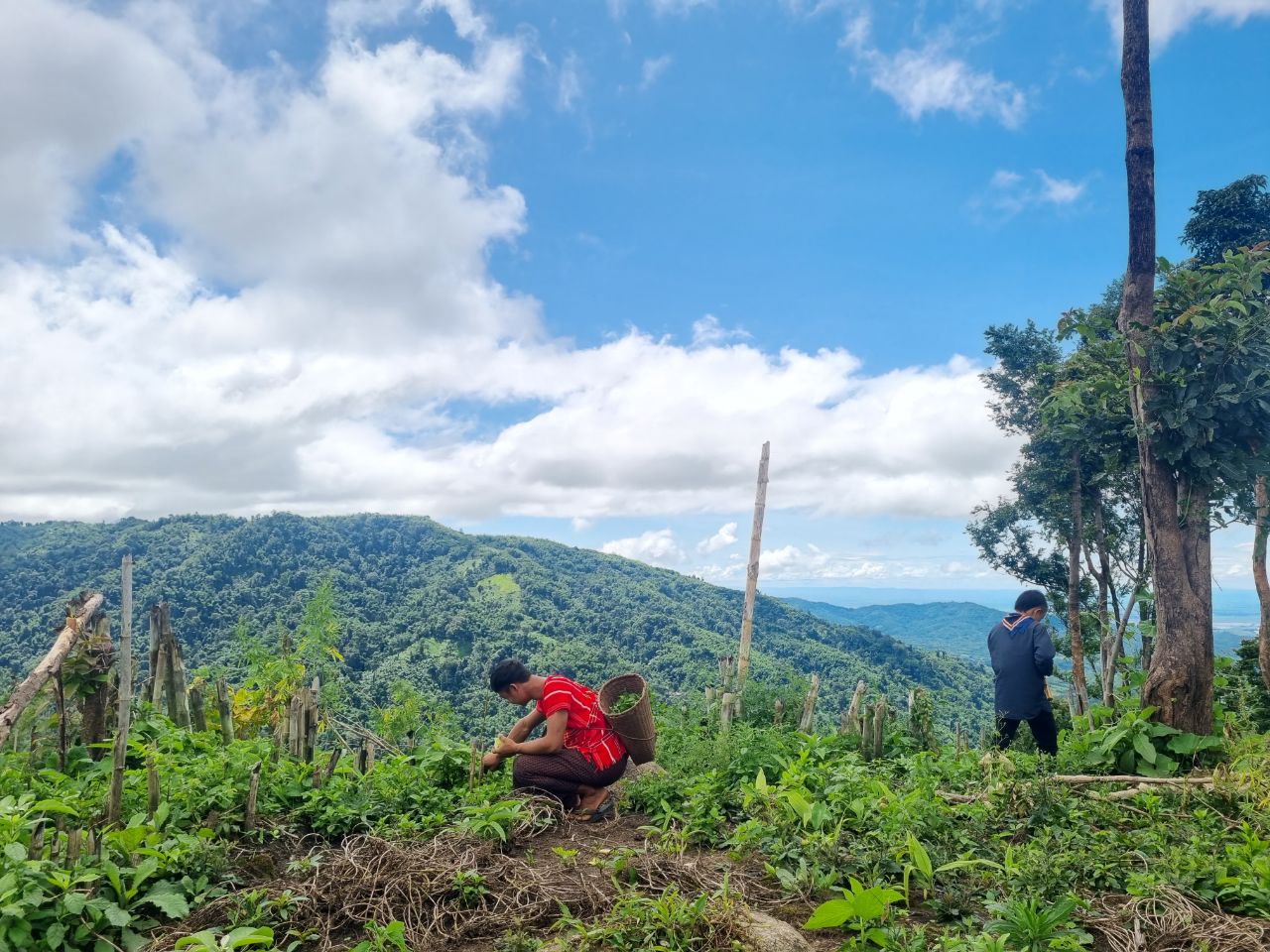
The survival of the planet's most resilient tropical forest ecosystems depends on the recognition of the Indigenous Peoples who have stewarded them for millennia. In Myanmar’s tropical forest corridors, the international mandates under the UN Convention on Biological Diversity and its Kunming-Montreal Global Biodiversity Framework (KMGBF) are not abstract ideals; they are a matter of immediate survival. Indigenous-led documentation by the Gheba Karen community demonstrates how customary systems maintain ecosystem integrity amidst complex crises. By examining the lived experience, Indigenous knowledge, and land stewardship of the Gheba Karen community in Taung Pat Lal (Khlo Do) village, located in Thandaunggyi Township, Kyauk Htagar village tract, a clear picture emerges: protecting biodiversity requires securing Indigenous rights and honoring customary tenure.
Sheltered within the mountainous tropical forest landscapes of Kayin (Karen) State, Taung Pat Lal (Khlo Do) is a historical Indigenous Gheba Karen village. This village was formed through the historic unification of two ancestral settlements named Du Plo Kho (Ywa Soe Kone) and Za Wa Loe Poo (Kee Kan Kyauk Khaung). Today, the community comprises 60 households with a population of 245 residents (124 males and 121 females) and operates under traditional self-governance, where leadership is selected based on community dedication, respect, and influence rather than inherited succession.
The territorial boundaries of Taung Pat Lal are demarcated by natural geographical landmarks, including the Tho Doe The Loe creek, Chein Loe Yo (Tiger Creek), El Bra Loe Chee, Chein Loe Htit (Tiger Rock), Thaw Kha Loe Chee, and the ridges of Yae Ka Hday and Kyar Mwe mountains. Within these boundary markers, the community manages a sophisticated zoning system that seamlessly integrates food production, biodiversity conservation, and spiritual protection such as rotational agricultural lands (Shwe Pyaung Taung Ya), family-managed perennial agroforestry orchards, and communal and sacred lands including protected watershed areas and sacred sites including the Prayer Mountain (Su Taung Taung), a Marian Grotto (Mae Taw Gu), and community cemetery grounds.
Customary land tenure is governed equitably. Inheritance of family orchards and land is granted equally between daughters and sons without gender discrimination. Land boundaries are respected through customary oral agreements and natural landmarks. To safeguard ancestral territories from external land-grabbing, customary rules prohibit selling inherited lands to outsiders from distant areas. If a family must transfer land, it must remain with relatives or community members. Dispute resolution is overseen by village elders, local leaders, and religious figures, terminating in traditional reconciliation practices, such as symbolic handshakes and collective prayers.
Indigenous Knowledge and Ecosystem Conservation
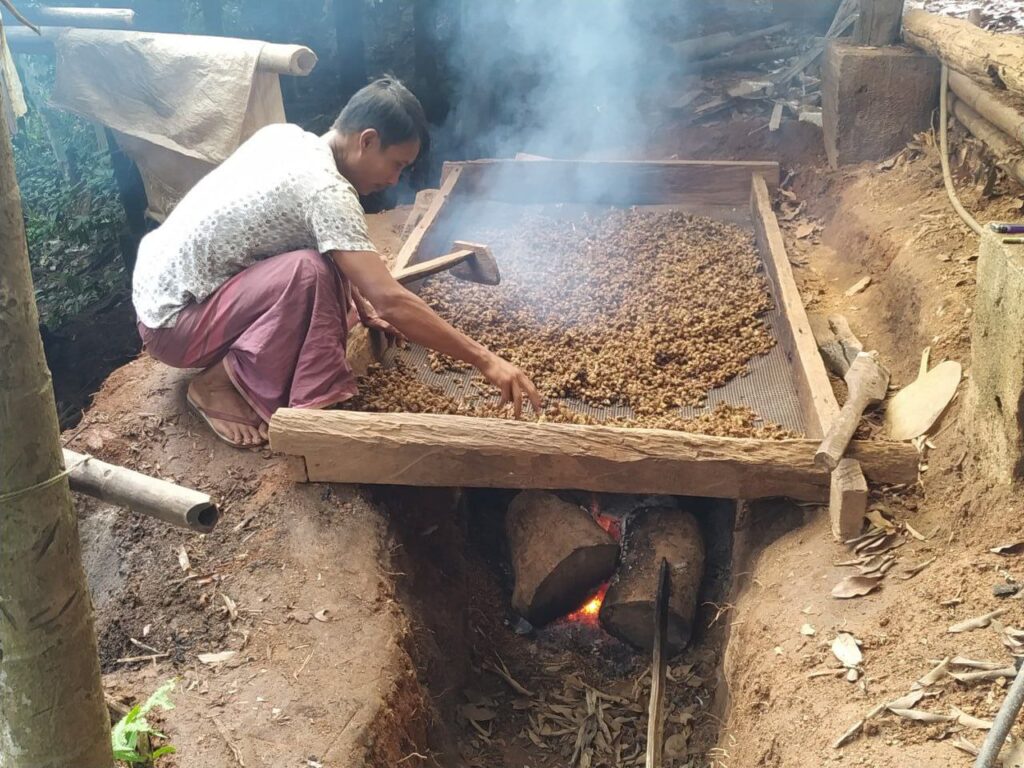
The conservation value of Indigenous lands comes directly from deep-rooted Indigenous ecological knowledge passed down across generations. In Taung Pat Lal, customary resource management contains mechanisms that regulate extraction and protect forest fauna and flora.
1. Agro-biodiversity and biological pest control
In rotational rice plots, Gheba Karen farmers practice agro-farming by planting Phor Li Phor Par (cockscomb flowers) along rice field margins. Under customary knowledge, these vibrant flowers attract insects away from the rice, providing natural biological control that minimizes crop damage without chemical pesticides. Furthermore, rotational plots host a diverse mix of food crops, preserving a genetic bank of resilient local plants and species.
2. Seed-keeping and leadership of Indigenous women
Women (Maetaw Thami) play a crucial role in maintaining agro-biodiversity. Following harvest, women carefully select, sun-dry, and smoke inherited seeds over kitchen households to protect them from insects, storing them safely for the next planting season. Customary rituals reinforce seed purity. When transferring harvested grain to the family granary, a handful of rice and a bouquet of flowers are tied to the main house post throughout the year, ensuring that the spirit of the crops (Saba Leik Pyar) remains tied to the land and is replanted in the spring.
3. Sustainable harvesting rules
The community enforces strict seasonal and biological guidelines for harvesting Non-Timber Forest Products. Bamboo shoots (Myit) are vital for living and livelihoods, with families harvesting bamboo shoots seasonally while maintaining root stock integrity. Medicinal plants such as Bhon Ma Ra Za roots and wild orchids are extracted selectively to prevent depletion.
4. Indigenous herbal heritage and practice
The Gheba Karen Affairs Committee and local youth documented a comprehensive collection of medicinal plants. Local healers rely on species like Dwi Yin Kaung (a wild forest fern), which is crushed into a poultice with sesame oil, turmeric, and local binders to treat severe bone fractures and tissue injuries. Other wild forest species, such as Yae Yin Pyar leaves, wild jackfruit leaves, and ginger roots, are used for post-natal care and treating physical trauma.
Increasing Threats: Conflict, Destruction, and Climate Vulnerability
Despite these sustainable practices, Indigenous Peoples in tropical forest regions face escalating structural threats that endanger both their rights and their ecosystems.
1. Escalating conflict and human rights violations
The operational environment in Kayin (Karen) State is defined by intense military conflict and displacement. Across Thantaunggyi Township and neighboring Leiktho, civilian populations endure frequent airstrikes, heavy artillery shelling, and village burnings by military regime resulting in thousands displaced across the Thantaunggyi / Leiktho regional corridor. Reports document severe casualties, including regime airstrikes on April 29, 2026 in Thantaunggyi that killed 20 civilians, alongside widespread destruction of homes. Thousands of residents remain internally displaced in forest zones, unable to return to burned villages. These conditions prevent regular agricultural cycles and threaten human security. Moreover, Indigenous Gheba Karen communities are also bearing the burden of sheltering and accommodating other internally displaced people from Bago Region, further straining their resources and resilience. The ongoing violence not only devastates lives and property but also hinders long-term development and stability in the region. Urgent international attention and support are needed to address these crises, protect civilian lives, and promote sustainable peace and recovery efforts.
2. Loss of biodiversity and Indigenous knowledge
Deforestation and habitat destruction intensified by historical commercial exploitation which have caused severe decline in biodiversity, including a rising threat against rare medicinal plant species. As elder medicinal plant experts die without proper record-keeping, generations of Indigenous healthcare knowledge risk permanent extinction. Documenting these practices is critical to prevent the loss of Indigenous knowledge and ensure that future benefit-sharing mechanisms respect community ownership.
3. Climate shocks and rodent crises
Tropical forest communities are on the frontlines of climate change. In 2024, extreme monsoon rains triggered severe landslides across Taung Pat Lal, destroying upland hill rice fields, turmeric crops, and valuable customary cardamom agroforest systems. This vulnerability is intensified by cyclical ecological crises. In 1975 and 2016, mass bamboo flowering (Mautam cycles) caused rodent population explosions that destroyed upland rice fields, forcing communities into prolonged economic recovery.
4. Top-down conservation and policy exclusion
Historically, state-driven conservation frameworks and top-down initiatives have ignored customary tenure, treating Indigenous Peoples as threats to forests rather than their primary guardians. Modern market-driven conservation mechanisms such as carbon and biodiversity credits and offsets risk replicating “fortress conservation” models if implemented without Indigenous Peoples right to Free, Prior and Informed Consent (FPIC), threatening to displace communities from their ancestral lands.
The Need to Align Global Biodiversity Goals with Local Realities
The evidence from Taung Pat Lal (Khlo Do) demonstrates that global biodiversity goals cannot be achieved through top-down mandates or corporate offsetting strategies. As CBD Parties negotiate the operationalization of the Kunming-Montreal Global Biodiversity Framework (KMGBF) at COP17 in Armenia, the experience of Myanmar’s Indigenous communities’ points to fundamental policy priorities:
1. Implementing Safeguards and Free, Prior and Informed Consent
All conservation, climate mitigation, and offset projects must enforce Section C of the Kunming-Montreal Global Biodiversity Framework (KMGBF) safeguards. Protected area expansion, green infrastructure projects, or carbon and biodiversity credit schemes should only proceed after obtaining the Free, Prior and Informed Consent (FPIC) of Indigenous Peoples over their ancestral lands and resources. Furthermore, conservation and carbon- and biodiversity credit schemes that drive dispossession of Indigenous Peoples should be eliminated.
2. Direct Recognition of Indigenous Territories
Target 3 (30×30) must not be interpreted purely as the expansion of state-managed protected areas or exclusive national parks. CBD Parties must formally recognize and legally protect Indigenous Territories as distinct, self-governed conservation designations. Systems like Taung Pat Lal’s customary fallow management and communal forest protection are effective conservation models that directly maintain tropical forest territories and biodiversity. For example, customary zoning (sacred areas, orchards, watersheds) successfully conserves intact forest canopy without state enforcement.
3. Protection of Environmental Human Rights Defenders
Ensure the full, equitable and meaningful participation of Indigenous Peoples in decision-making and uphold complete land tenure rights. Robust, direct legal protection and funding mechanisms for Indigenous environmental human rights defenders operating in conflict zones should be ensured. In conflict-affected tropical forest zones, Indigenous land stewards act as the final defense against illegal logging, extraction, and ecosystem collapse. Implementing Target 22 requires operational mechanisms to protect environmental human rights defenders operating in high-risk conflict environments, shields local guardians facing violent conflict, airstrikes, and land grabbing.
4. Direct Climate and Biodiversity Financing
Despite safeguarding crucial carbon sinks and biodiversity hotspots, Indigenous Peoples organizations face systemic barriers to direct funding. International financial mechanisms must establish direct, accessible funding streams for grassroots Indigenous Peoples organizations, bypassing centralized state channels to support community-led mapping, traditional knowledge preservation, and climate resilience interventions.
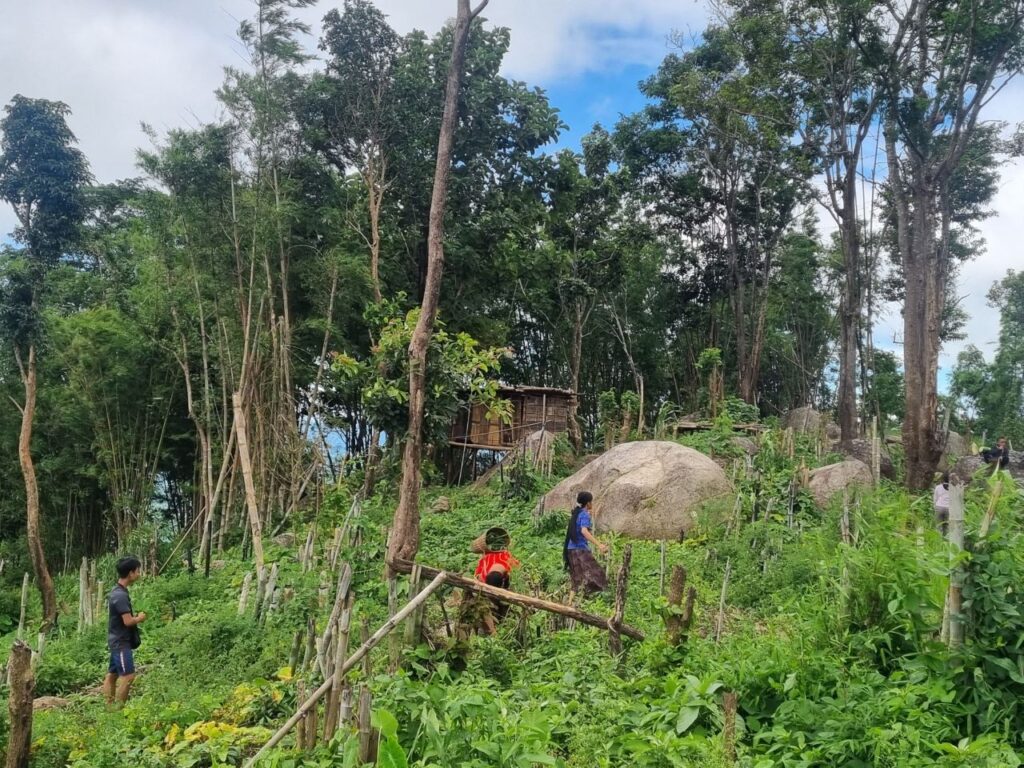
Resilient Stewardship in the Tropical Forests
Myanmar’s tropical forests endure because of the Indigenous Peoples who steward and safeguard them. The customary land governance, agro-biodiversity practices, and Indigenous herbal heritage and practice of Gheba Karen community in Taung Pat Lal (Khlo Do) offer convincing proof that biodiversity conservation and human rights are fundamentally linked. As international leaders gather at COP17 in Armenia to evaluate progress under the Kunming-Montreal Global Biodiversity Framework (KMGBF), international policy must be grounded in these local realities. Fully realizing the goals of the KMGBF demands formal recognition of Indigenous territories, legal protection for customary tenure, investment in Indigenous-led monitoring, and robust safeguards for frontline environmental defenders.
Due to the sensitive nature of the issues addressed in this article, Indigenous Debates prefers to keep the author or authors anonymous.