
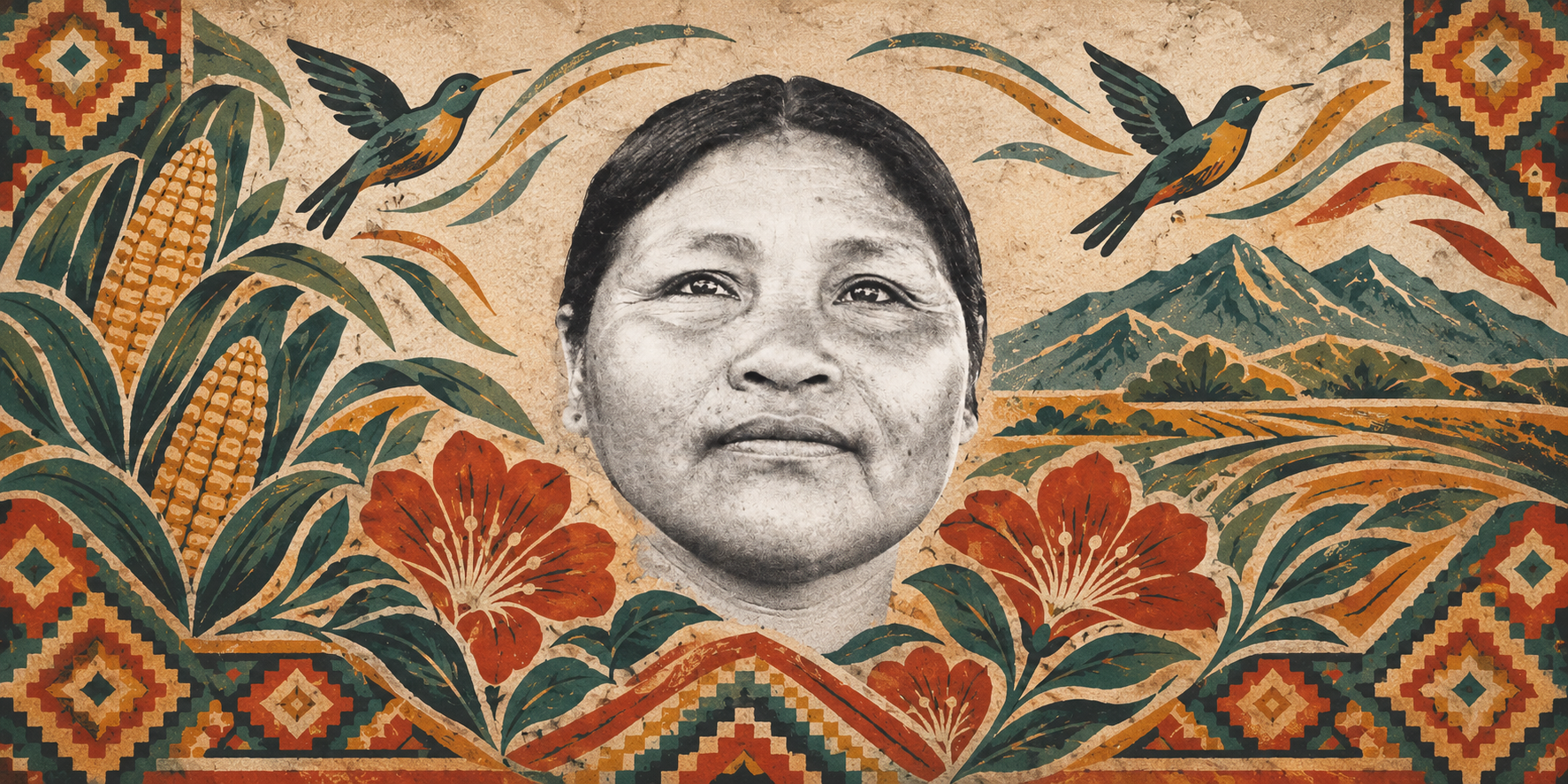
The impunity surrounding the death of Ernestina Ascencio Rosario must be understood within a broader context of militarisation, discrimination, and unequal access to justice. In Mexico, Indigenous women have been subjected to unequal power relations and sexual violence. From an intersectional perspective, the case of Ernestina reveals how gender, ethnicity, age, poverty, and language barriers intersected to restrict Ernestina's access to justice. Nearly two decades later, the ruling of the Inter-American Court of Human Rights against the Mexican State sets an important precedent: the violence experienced by Indigenous women must no longer be rendered invisible by official historical narratives.
The case of Ernestina Ascencio Rosario is an emblematic example of the tensions between security, human rights and access to justice during Mexico’s so-called ‘war on drugs’. Ernestina, a 73-year-old Nahua Indigenous woman, lived in the community of Tetlatzinga, in the municipality of Soledad Atzompa, Veracruz. In 2007, the Mexican Army established an operational base in the area as part of the Federal Government’s militarisation strategy.
On 25 February 2007, Ernestina was found seriously injured near a military camp. Her family identified signs of physical and sexual violence but faced geographical barriers and difficulties in accessing medical care. When Ernestina was admitted to Río Blanco Regional Hospital, significant language barriers also became apparent. As a monolingual Nahuatl speaker, she had no access to interpreters or translators to facilitate communication with medical staff. She died a few hours later.
Initial investigations and forensic examinations revealed evidence consistent with sexual assault. Nevertheless, the Federal Government concluded that her death was due to natural causes and closed the investigation. This decision raised questions about the impartiality of the institutions responsible for establishing the facts. In response, Ernestina’s family and civil society organisations requested access to the case file, but the authorities restricted access for years, citing security concerns and the protection of personal data.
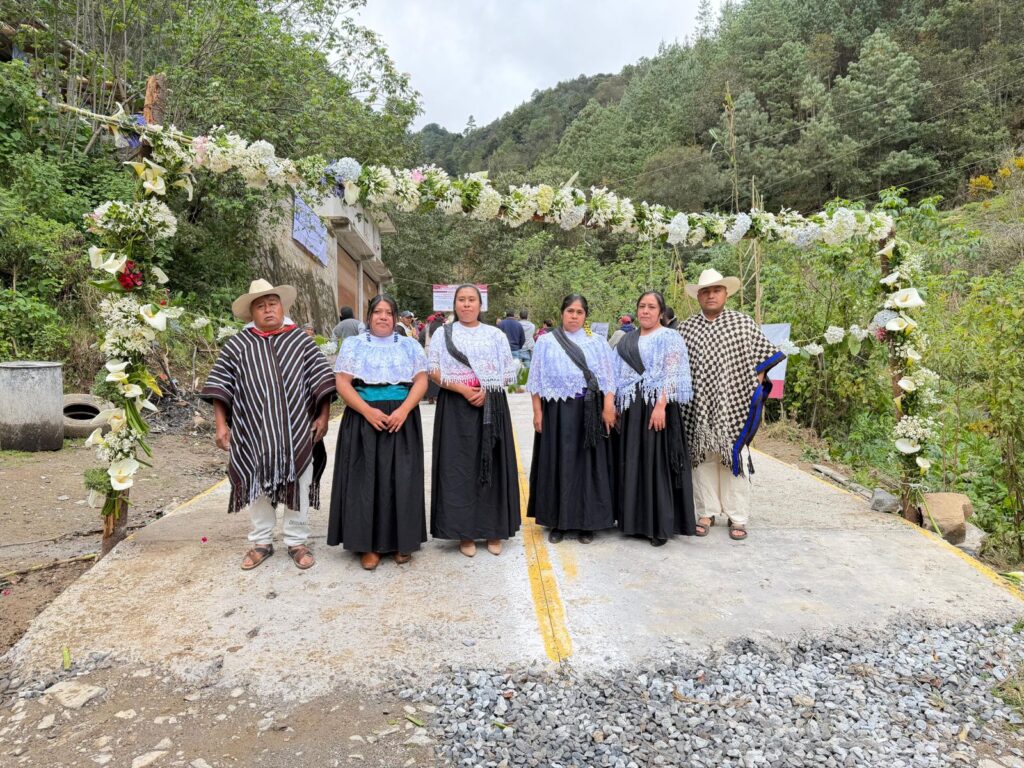
A Victim of Intersectional Discrimination
Ernestina’s case reached the Inter-American Human Rights System on June 11th, 2023, raising concerns about violations of the right to access information, inadequate medical care, the absence of interpreters, and irregularities in the investigation. In September 2025, the Inter-American Court of Human Rights ruled against the Mexican State, recognising the importance of the right to truth in cases involving possible serious human rights violations.
This landmark ruling also sheds light on the multiple forms of discrimination faced by Indigenous women in Mexico. From an intersectional perspective, the case illustrates how gender, ethnicity, age, poverty and language barriers intersected to heighten Ernestina’s vulnerability and restrict her access to intercultural justice. It also exposes the persistence of structural racism within state institutions.
The Inter-American Court emphasised the obligation to conduct independent, impartial, and thorough investigations whenever there are indications of sexual violence or possible involvement of state agents. It also reiterated that sexual violence could constitute torture due to the physical and psychological suffering it causes. Nearly two decades later, Ernestina Ascencio’s case remains a powerful example of the consequences of militarisation, the need to combat institutional racism, and the importance of ensuring truth, justice, comprehensive reparations, and guarantees of non-repetition for Indigenous women in Mexico.
Militarisation in Mexico
According to the Office of the United Nations High Commissioner for Human Rights, militarisation in Mexico can be understood as a process characterised by the increasing involvement of the Armed Forces in functions traditionally performed by civilian institutions. This particularly pertains to areas of public security and the fight against organised crime. This phenomenon is not limited to the deployment of military personnel in urban and rural areas but also encompasses their involvement in public administration.
This historical perspective helps place the case of Ernestina Ascencio Rosario within a broader context. Her death occurred during the first months of the federal militarisation strategy associated with the fight against drug trafficking. The Inter-American Court subsequently noted that the region was marked by poverty, marginalisation, historical discrimination, and incidents of violence against Indigenous women linked to this context of militarisation.
For Indigenous women, the military presence further highlights inequalities related to gender, ethnicity, language, age, poverty, and territory, as reflected in numerous human rights violations and the judgments in Fernández Ortega v. Mexico and Rosendo Cantú v. Mexico. In Ernestina’s case, several factors combined to increase her vulnerability in relation to state power. Ernestina was a woman, Indigenous, an older person, a monolingual Nahuatl speaker, and a resident of an area characterised by high levels of marginalisation. [1]
The Importance of Intersectionality
Political, economic, and legal constraints are compounded by patriarchal practices. It is also important to consider the impact of colonisation, a process that was profoundly violent for Indigenous Peoples and had particular consequences for women. Their bodies were subjected to sexual violence, exploitation and subjugation, becoming sites of domination. From this perspective, intersectionality helps explain how inequalities based on gender, ethnicity, and class intersect and perpetuate the specific barriers faced by Indigenous women in Mexico.
Intersectionality provides a particularly useful framework for examining how power relations operate. This approach shows that the different forms of oppression arising in societies shaped by patriarchal, racial, and economic structures do not affect everyone in the same way. Indeed, certain systems of oppression operate simultaneously, giving rise to experiences that cannot be understood by examining each category in isolation. It is not simply a matter of stating that a person experiences discrimination because she is a woman. Additionally, because she belongs to a particular ethnic or racial group.
This approach is particularly relevant to analysing the case of Ernestina Ascencio Rosario. Her heightened vulnerability, her status as a resident of a rural community, and the context of military presence introduce different dimensions of inequality that interact with one another, shaping both the violence she may have experienced and her actual opportunities to access justice.
Memory, Truth and Justice
The right to truth is an essential aspect of human rights protection, particularly in cases of serious violations involving state agents. This right ensures that victims and their families can fully understand what happened, the circumstances surrounding the events, those involved, and the motives behind the violations. It is also closely linked to states’ obligations to conduct effective investigations, guarantee effective remedies, and provide reparations to victims.
The violence experienced by Ernestina cannot be understood solely as an isolated incident, but must be considered within a broader structure in which gender, Indigenous identity, age, social inequality, and military presence intersect. Preserving her memory also means questioning the historical conditions that have allowed certain forms of violence against Indigenous women to be minimised, normalised or excluded from public debate.
In this way, memory can be understood as a form of resistance to institutional forgetting. When institutions fail to investigate adequately, when victims receive no answers or when an official account seeks to close off further discussion of an event’s significance, memory can keep the demand for clarification alive. Memory prevents forgetting, truth helps establish the facts, and justice seeks to ensure legal accountability and provide redress for the harm caused. The ultimate aim of this interconnected process is to guarantee non-repetition.
Ernestina’s Case in the Light of International Human Rights Law
The judgment delivered by the Inter-American Court of Human Rights in Ascencio Rosario et al. v. Mexico on September 30th, 2025 marked a milestone in international human rights law by addressing sexual violence perpetrated by military personnel, the absolute prohibition of torture, and the rights of Indigenous women. Furthermore, there were advancements in access to healthcare, discrimination, access to justice and the right to truth.
The Court concluded that state agents had subjected Ernestina to acts of torture, including sexual violence, and serious physical injuries. The case was examined from an intersectional perspective. The violence Ernestina experienced cannot be considered separately from her status as a woman, an Indigenous person, an older person and a resident of a historically marginalised community. These factors operated together, shaping both her exposure to violence and her subsequent opportunities to obtain state protection.
When there are indications of sexual violence against a woman, the authorities must conduct an investigation that is immediate, impartial, and exhaustive, and that complies with international standards applicable to the situation.
When there are indications of sexual violence against a woman, the authorities must conduct an investigation that is immediate, impartial, and exhaustive, and that complies with international standards.
Similarly, the Court found that the Mexican State had failed to fulfil its obligation to investigate the events with heightened due diligence and to guarantee Ernestina’s family equal access to justice. When there are indications of sexual violence against a woman, the authorities must conduct an immediate, impartial and thorough investigation in accordance with the relevant international standards. When the victim belongs to an Indigenous People, investigative procedures must also take intercultural considerations into account.
Perhaps one of the most significant aspects of the case is the tension between the State’s construction of an official narrative of events and the requirements arising from the right to truth. During the investigations, various public authorities made statements questioning the accounts of the victim and her family and attributing her death to natural causes. This highlights the distinction between the ‘official truth’ and the truth established through legal evidence and an investigation that complies with human rights standards.
A Precedent for Indigenous Women
The publication of the judgment in the case of Ernestina Ascencio Rosario in the Official Gazette of the Federation goes beyond mere formal compliance with a measure ordered by the Inter-American Court of Human Rights. Its significance lies in bringing into the public and institutional sphere a truth that had been undermined for years by a flawed investigation and official narratives that downplayed the violence normalised in contexts of militarisation.
Reopening the investigation entails confronting the institutional conditions that made impunity possible. The absence of interpreters, shortcomings in medical care, the premature closure of investigations, and the obstacles faced by her family demonstrate that discrimination did not operate in isolation. These each operated in convergence of different structures of inequality.
For Indigenous women in Mexico, this case sets a fundamental precedent. Indigenous women’s testimonies, their bodies, and their experiences of violence can no longer be rendered invisible or erased by official history.
For Indigenous women in Mexico, this case sets a fundamental precedent. Indigenous women’s testimonies, their bodies, and their experiences of violence can no longer be rendered invisible.
The Ernestina Ascencio case highlights the close relationship between memory, truth and justice. Publishing the judgment restores Ernestina’s memory in the face of an official narrative that questioned the circumstances of her death for years. In addition, reopening the investigation provides a means of upholding her family’s right to truth. Identifying those responsible represents the outstanding task of delivering justice. Finally, guarantees of non-repetition require the State to address the institutional conditions that allowed her rights to be violated.
The judgment marks the beginning of a new phase in the pursuit of accountability. The efforts of civil society and the use of strategic litigation were vital in bringing the case before international human rights bodies. Effective implementation of the judgment will determine whether international recognition of these violations translates into substantive justice or remains merely a legal declaration. For Indigenous women in Mexico, the case sets a fundamental precedent. Indigenous women’s testimonies, their bodies, and their experiences of violence must never again be rendered invisible or erased from official history.

Flor de Magdalena Vargas Ortiz holds a PhD in Law and is responsible for the permanent seminar ‘Intercultural Justice’ at the Institute of Legal Research of the Universidad Veracruzana.