
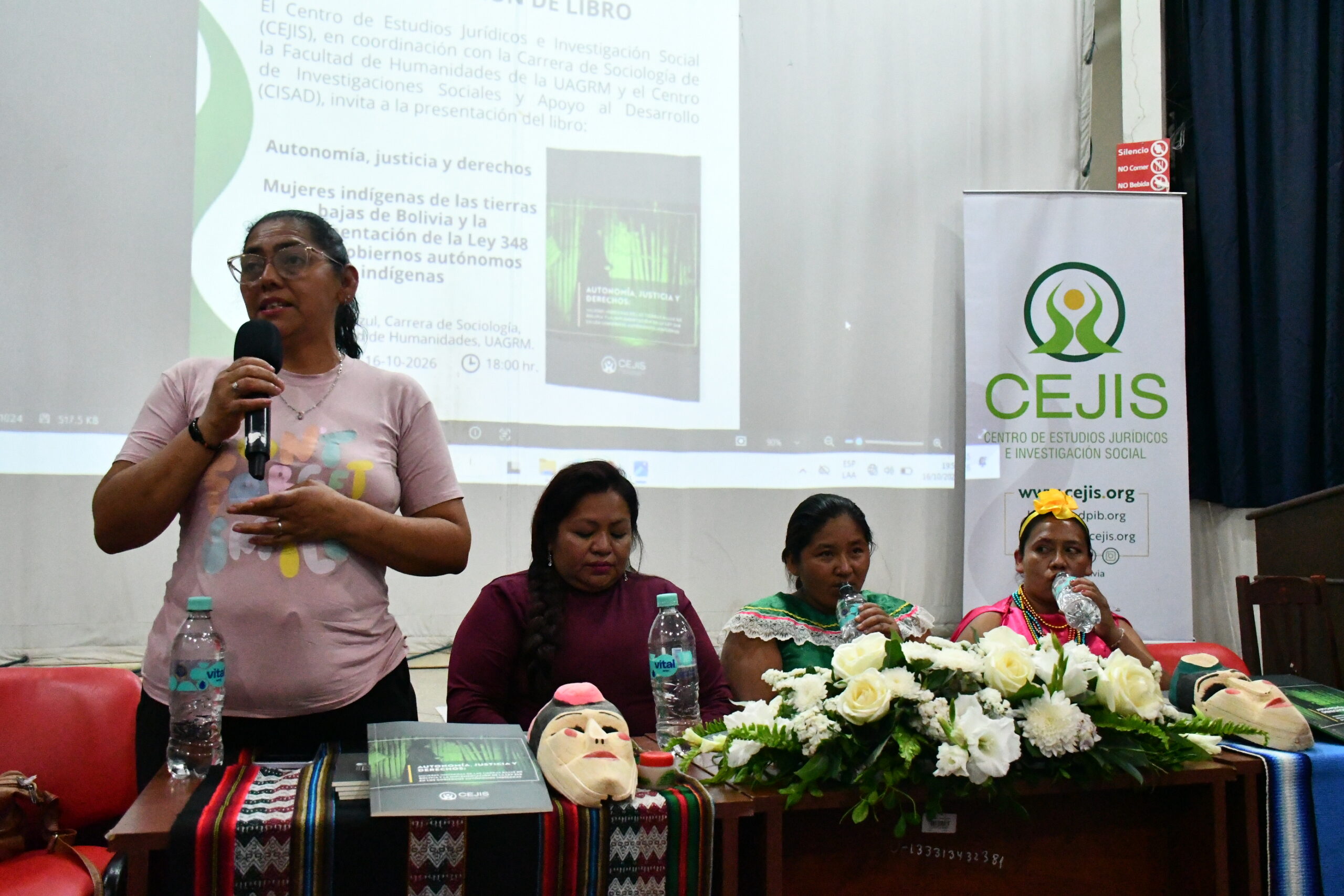
Although Indigenous Peoples have succeeded in consolidating their autonomous governments, the rights of Indigenous women remain far from being fully guaranteed. Alongside structural gender-based violence, Indigenous territories face a lack of judicial institutions and poor coordination between the state justice system and communities’ own legal systems. In response, Indigenous organisations are advocating for ongoing training for authorities, greater participation of Indigenous women, the establishment of clear pathways for reporting violence, the enactment of legislation within Indigenous autonomies, and increased funding for Indigenous governments to address violence against women.
The recognition and consolidation of Indigenous Native Peasant Autonomies represent a historic achievement for Bolivia’s Indigenous Peoples. However, despite the progress made since the adoption of the Political Constitution of the State, significant challenges remain. One of these concerns the specific demands of women, particularly in relation to violence, which have not always received the attention they deserve. This highlights the need to consider how Indigenous autonomies can be strengthened while ensuring that women can fully exercise their rights.
In this context, access to justice remains one of the main challenges, particularly for women living in rural and Indigenous territories. Institutional bureaucracy, geographical distances, the limited availability of specialised services, and linguistic and cultural barriers can make seeking protection a difficult and, at times, traumatising experience that exposes women to further victimisation. These challenges are exacerbated when state institutions lack effective mechanisms for coordination with Indigenous authorities.
Women’s right to a life free from violence requires us to examine not only the State’s response but also the capacities, challenges, and responsibilities of Indigenous autonomies themselves. The development of the Plurinational State and its system of autonomies remains an ongoing process, and its consolidation requires ensuring that self-government and territorial defence go hand in hand with the effective protection of the rights of all Indigenous people.
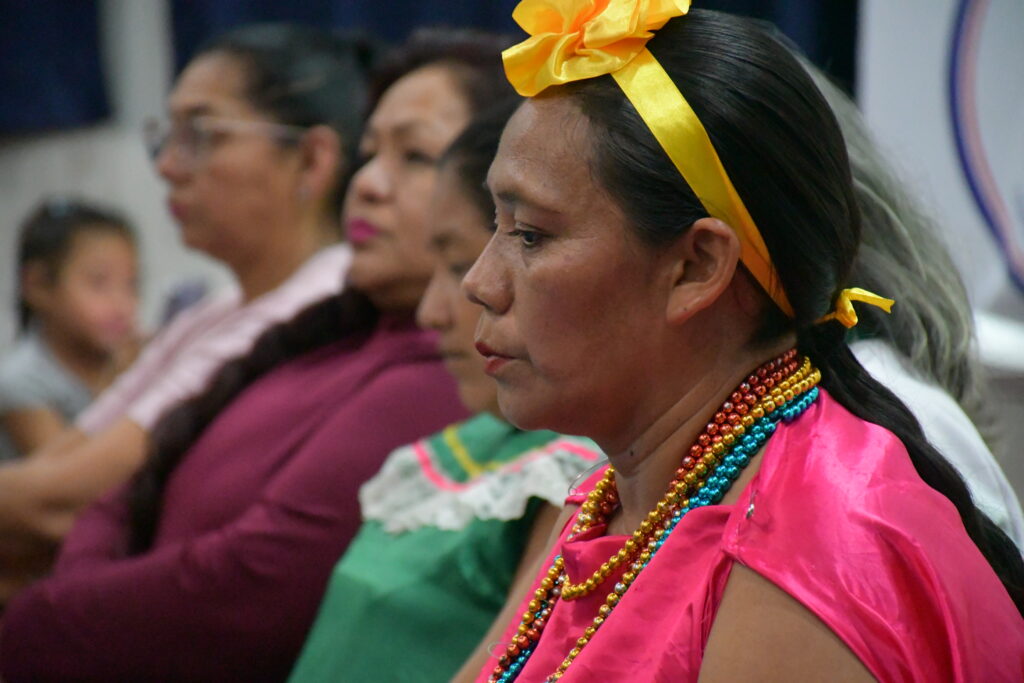
Indigenous Women and Justice in Indigenous Autonomies
The exercise of Indigenous autonomy is a demanding process of continuous learning that poses significant challenges in ensuring the protection of rights. Law No. 348, the Comprehensive Law to Guarantee Women a Life Free from Violence, establishes mechanisms for prevention, assistance, protection, and punishment aimed at eradicating violence against women and safeguarding their right to live free from violence.
As a key strategy for eradicating violence, the law provides for specific mechanisms and institutions, including the Municipal Comprehensive Legal Services (SLIM), specialised units that offer support and protection to women experiencing violence. Meanwhile, the Children and Adolescents Code establishes Offices for the Defence of Children and Adolescents, whose implementation is the responsibility of autonomous municipal governments. However, no equivalent institution has been established within Indigenous autonomies to address violence against women.
How is Law No. 348 applied within indigenous autonomous territories? In what ways do indigenous women understand, interpret, and internalize this law, based on their own realities, needs, and cultural contexts?
How do Indigenous women understand, interpret, and appropriate this law, based on their own realities, needs, and cultural contexts?
In this context, several fundamental questions arise. What happens to these services when an Indigenous group consolidates its autonomy? How is Law No. 348 implemented within Indigenous autonomies? How do Indigenous women understand, interpret, and take ownership of this law in light of their own realities, needs, and cultural contexts? These questions invite reflection on the challenges of ensuring effective access to protection and justice services within the framework of Indigenous self-government.
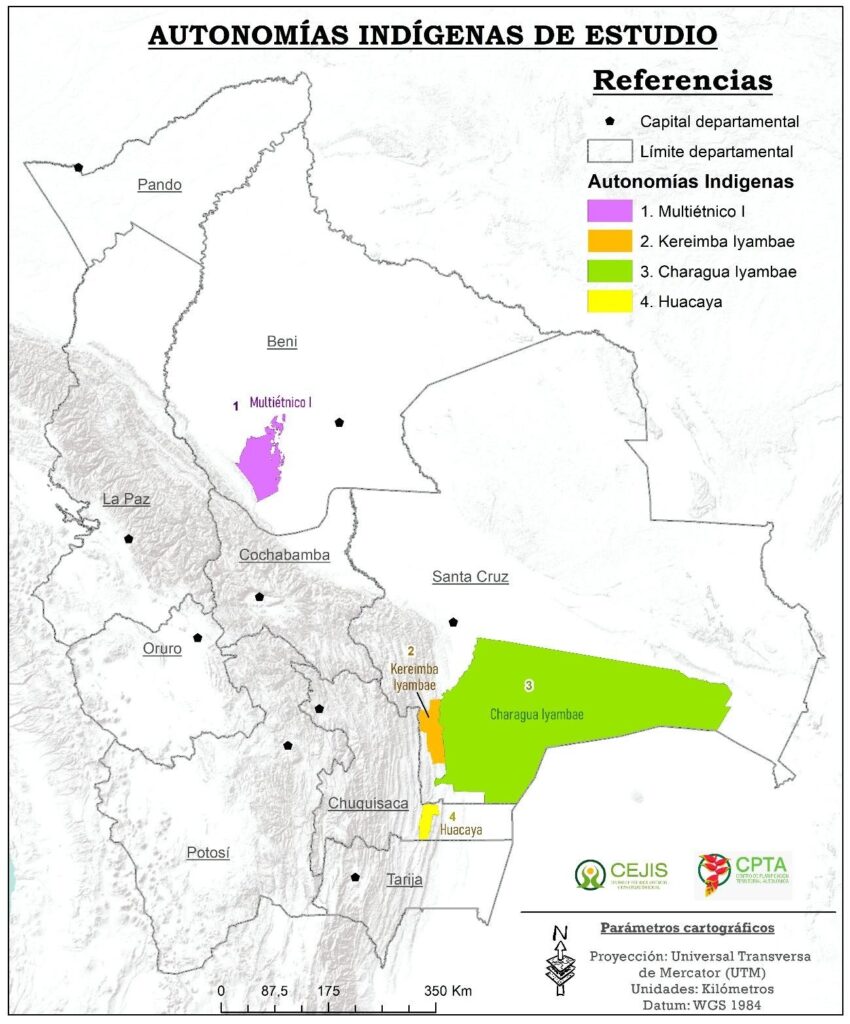
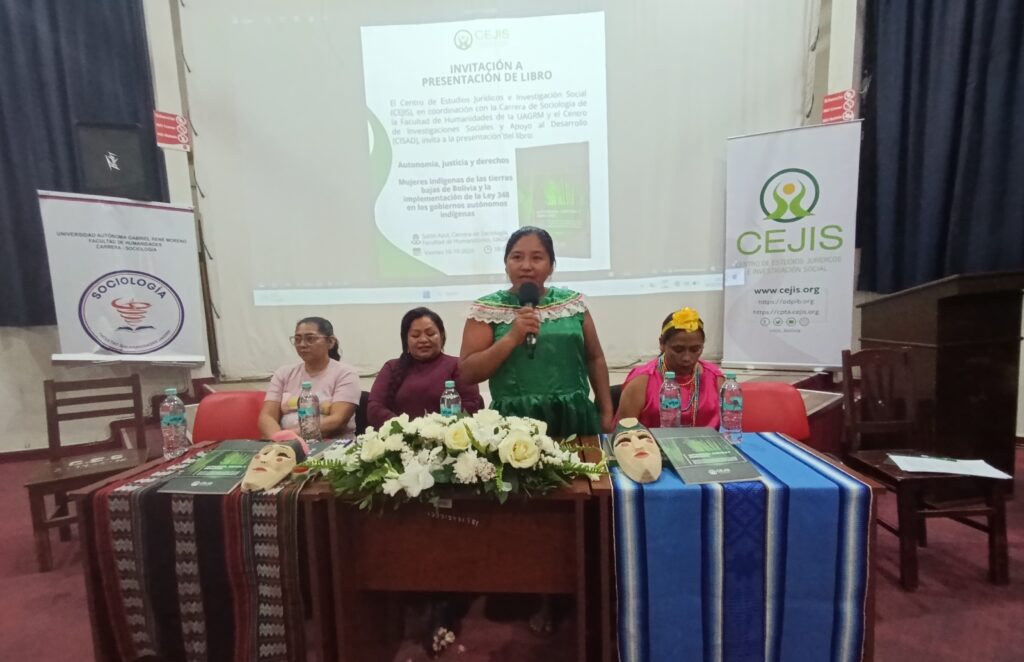
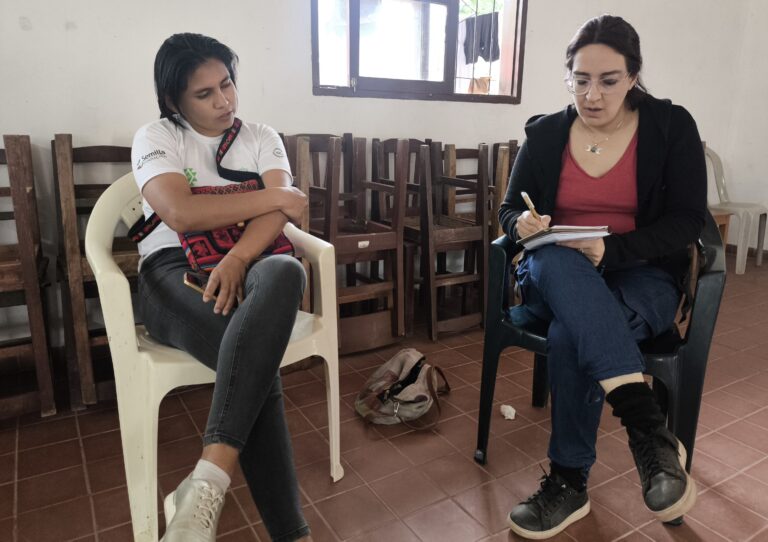
At the Centre for Legal Studies and Social Research (CEJIS), we conducted an assessment of the implementation of Law No. 348 in the autonomous governments of Charagua Iyambae, Kereimba Iyambae, Huacaya and the Multiethnic Indigenous Territory (TIM I). We completed a documentary analysis of key legal frameworks, including the statutes of Indigenous autonomies and lowland Indigenous women’s organisations. This includes national and international legislation on women’s rights and the right to a life free from violence. We worked with two groups comprising women leaders from different generations, authorities from Indigenous Native Peasant Autonomous Governments (GAIOC), grassroots women and representatives of the National Coordination of Indigenous Native Peasant Autonomies (CONAIOC). Finally, a dialogue and validation session was held with the participants to discuss and confirm the findings.
Structural Violence in Indigenous Territories
Direct violence and the cultural factors that contribute to its perpetuation are intertwined with forms of structural violence, reflected in the absence, or inadequacy of basic services, healthcare facilities, protection mechanisms, and effective access to justice. These conditions exacerbate existing inequalities and limit women’s ability to fully exercise their rights and obtain timely support and protection when faced with violence.
The main findings of the assessment contribute to the debate on eradicating violence against women, highlighting the need to strengthen established Indigenous governments and develop intercultural justice systems grounded in a rights-based approach. Three key issues emerge:
– Tensions between justice systems: Coordinating the state justice system with communities’ own norms and procedures to address cases of gender-based violence remains a complex challenge.
– Structural violence: Barriers to accessing justice are not merely legal but are also shaped by racism, discrimination, and geographical and economic exclusion.
– Bureaucratic centralisation: Women living in Indigenous territories perceive Law No. 348 as an external legal framework that is difficult to navigate due to the lack of judicial institutions in their regions.
The responses identified include coordination protocols between the Indigenous Native Peasant Jurisdiction (JIOC) and the ordinary justice system, developed in Charagua Norte; the establishment of reporting pathways in Huacaya and Kereimba Iyambae; and the referral of cases to municipal authorities in TIM I. These experiences demonstrate how Indigenous autonomies have developed their own approaches to addressing women’s needs through their existing organisational structures.
A Comprehensive Agenda from the Perspective of Indigenous Women
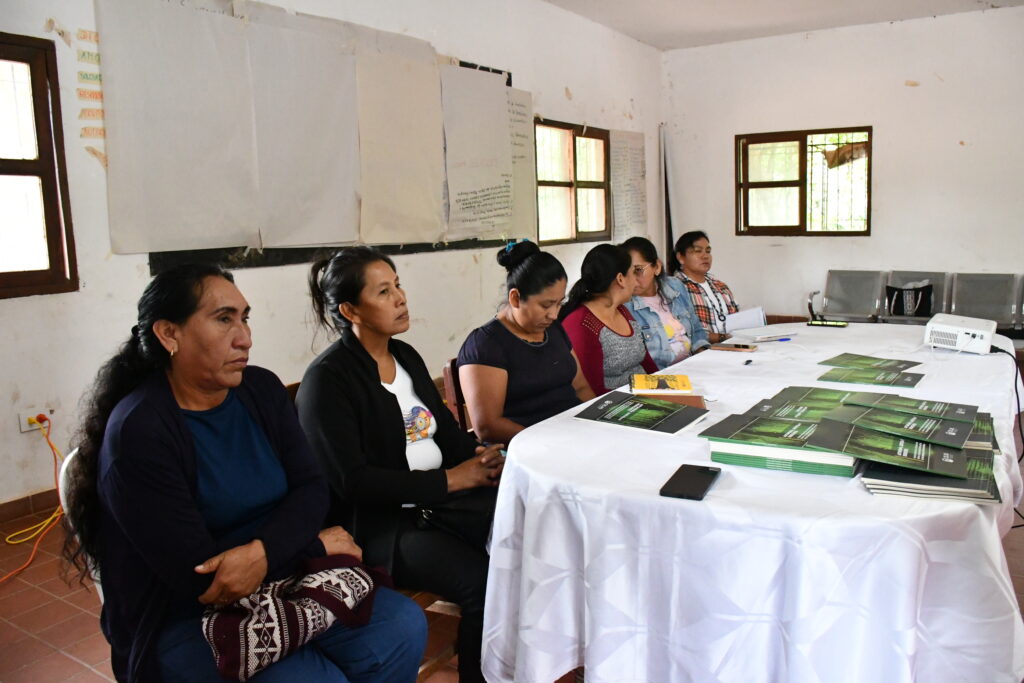
Through collective analysis, women leaders developed proposals aimed at strengthening the prevention of violence against Indigenous women, as well as the provision of support and protection. Although these proposals reflect the specific circumstances of each autonomy, several common priorities can be identified, as outlined below.
First, ongoing training and awareness-raising are essential. Women leaders from Charagua, Huacaya, Kereimba Iyambae, the Multiethnic Indigenous Territory and Lomerío emphasised the importance of ensuring that women are aware of their rights and can report incidents of violence. They then proposed establishing ongoing training programmes for women and men, Indigenous authorities, public officials and communities.
These initiatives should cover Law No. 348, the Political Constitution of the State, autonomy statutes and legislation protecting women’s rights. The leaders also highlighted the need to improve understanding of how to prevent violence and political harassment against women. Ensuring the continuity of these initiatives is particularly important given the regular turnover of authorities and representatives. They stressed the importance of institutionalising training to prevent knowledge from being lost when administrations change and to establish a solid legal and organisational framework.
Reporting Pathways and Coordination with the State
Second, developing and strengthening pathways for reporting violence and accessing support emerged as a key priority. Indigenous authorities emphasised the need for clear procedures that enable women to report incidents of violence, receive guidance and access protective measures. In particular, women leaders from TIM I proposed developing and implementing a pathway to facilitate access to justice.
This pathway should provide safe spaces where women can be heard and supported, enable the identification of the problems they face, establish which authorities or institutions should intervene, and ensure timely responses. It should also safeguard the confidentiality and safety of women reporting violence.
Coordination between the Indigenous, Native, and Peasant Jurisdiction and the ordinary justice system must be strengthened, and working mechanisms must be established with the Municipal Comprehensive Legal Services, health centers, and other entities.
In Charagua, the importance of strengthening community promoters and coordinating with the autonomous government’s gender-related unit and with support services was highlighted.
Third, the women leaders agreed that protecting women’s rights requires coordinated efforts involving community authorities, women’s organisations, Indigenous territorial authorities and relevant public institutions. Coordination between the Indigenous Native Peasant Jurisdiction (JIOC) and the ordinary justice system must be strengthened, alongside the establishment of mechanisms for cooperation with the Municipal Comprehensive Legal Services (SLIM), healthcare centres and other support and protection services. Such coordination should clearly define responsibilities, prevent women from being referred from one institution to another without receiving adequate assistance, and ensure that each case is addressed appropriately.
Given the specific characteristics of each Indigenous autonomy, the proposals varied. In Charagua, emphasis was placed on strengthening the role of community advocates and improving coordination with the autonomous government body responsible for gender issues and relevant support services. In TIM I, the proposal was to involve the TIM Indigenous Subcentral, the Indigenous Autonomous Government, community authorities, community advocates, women’s organisations, healthcare centres, and the municipally administered SLIM in developing and implementing the support and referral pathway.
Women’s Participation, Autonomous Legislation and Resource Allocation
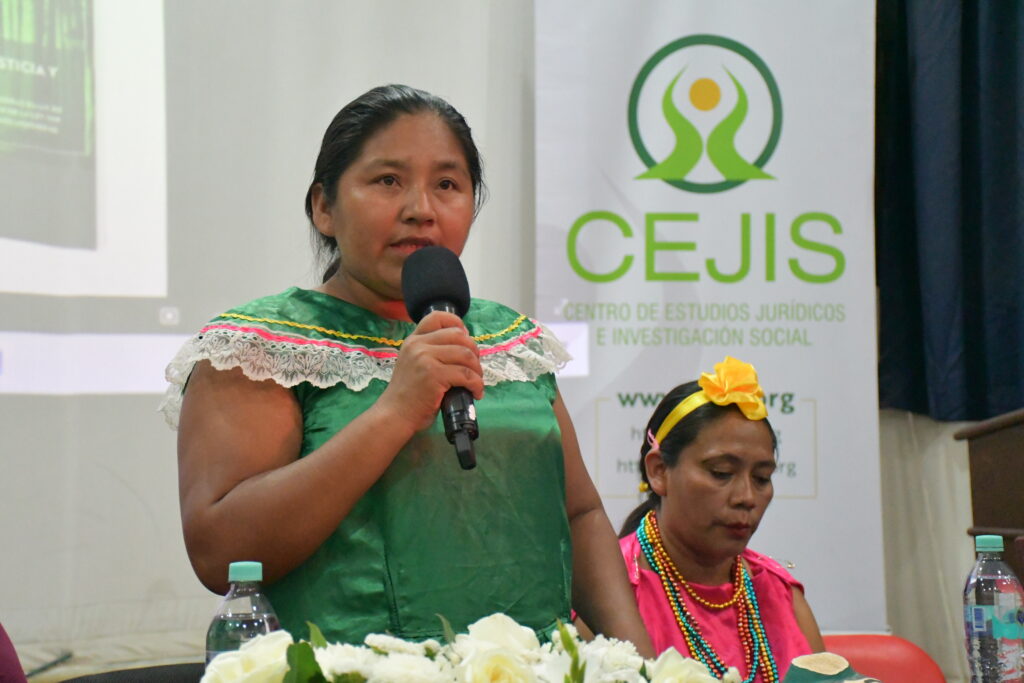
Fourth, the proposals emphasised the need to involve women’s organisations, grassroots communities, Indigenous organisational authorities, and the wider community. Women leaders from Huacaya and Lomerío stressed the importance of ensuring that women are heard and respected, strengthening their knowledge of their rights and creating safe spaces where their needs can be addressed. In Kereimba Iyambae, the proposal focused on promoting grassroots initiatives involving women and authorities committed to defending human rights.
Fifth, autonomous legislation should be developed and adopted within the powers granted to Indigenous autonomies by the Political Constitution of the State. Such legislation would aim to prevent and address violence against Indigenous women and protect their rights by establishing comprehensive reporting and support pathways, strengthening the Indigenous Native Peasant Jurisdiction and introducing mechanisms to facilitate Indigenous women’s access to justice, taking into account their cultural contexts and the barriers they face. The establishment of shelters for women experiencing violence was also proposed to ensure timely protection and support.
Finally, implementing these proposals requires adequate financial resources to ensure that initiatives can be sustained over time. The women leaders identified several funding options, including allocating resources through the annual operational plans (POAs) of autonomous governments, developing specific projects and seeking support from state institutions and international cooperation agencies. Women from Charagua highlighted the need for dedicated funding for prevention and support initiatives, as well as greater commitment from the legislative and representative bodies of the Indigenous autonomy. In Huacaya and Lomerío, the possibility of using resources from their respective annual operational plans was explored, while in Lomerío, the reallocation of municipal budget funds was also considered.
Conclusions
Indigenous women seek to ensure access to justice by strengthening their own organisational structures and Indigenous justice systems. However, significant challenges remain in overcoming patriarchy and sexist attitudes within their own Indigenous autonomies, as well as in developing autonomous legislation to protect Indigenous women from violence.
The most effective immediate strategy for addressing violence is prevention, with a strong emphasis on awareness-raising, education, and ensuring that Law No. 348 is fully understood and embraced within Indigenous territories. In terms of providing support, traditional cultural practices that offer therapeutic and emotional support could be promoted and shared through an intercultural approach to help survivors of violence build resilience.
The central challenge is to raise awareness of the structural violence experienced by Indigenous women as a result of their gender, Indigenous identity, and vulnerable circumstances. Addressing this challenge requires not only implementing Law No. 348 but also strengthening it through Indigenous autonomies’ own legislation, incorporating cultural practices for conflict resolution and the restoration of community harmony. This means moving beyond the perception of Indigenous justice as merely a stepping stone towards the ordinary justice system and addressing the structural roots of violence.

Micaela Maya Noriega Villagómez is a researcher specialising in human rights at the Research and Advocacy Unit of the Centre for Legal Studies and Social Research (CEJIS). She holds a law degree from the Bolivian Catholic University of San Pablo and a master’s degree in Agrarian Law from the Federal University of Goiás, Brazil.