
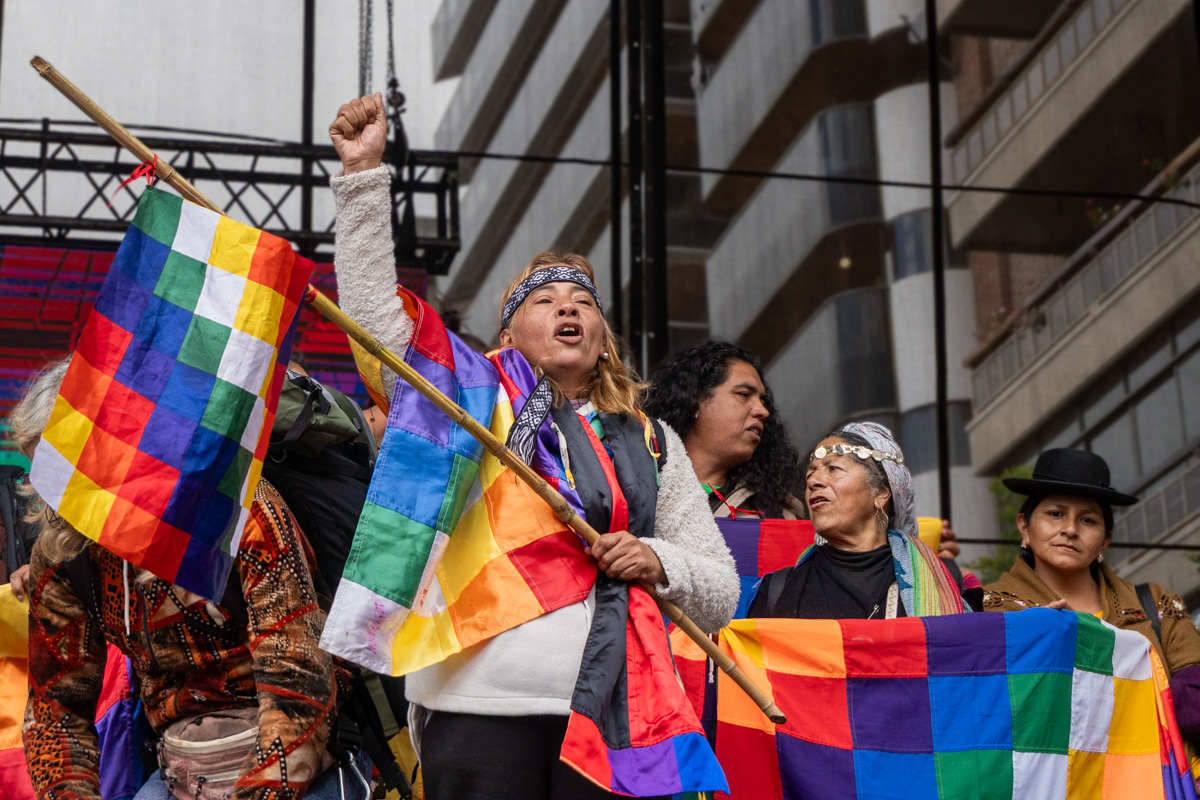
In Argentina, Indigenous Peoples are facing legislative, administrative, and judicial setbacks that are deepening territorial dispossession and threatening their rights. The failure to recognise their pre-existence and the expansion of a development model incompatible with their ways of life have led to evictions and threats that jeopardise communities’ ability to remain on their ancestral lands. However, these setbacks should not be seen as irreversible. The resistance and collective organisation of Indigenous communities keep open the possibility of building alternative futures in a more favourable political context.
For decades, international legal instruments recognising Indigenous rights have upheld the autonomy of Indigenous Peoples. In particular, the United Nations Declaration on the Rights of Indigenous Peoples enshrined their right to self-determination. Nearly two decades after its adoption, this right continues to be the subject of debate, now further complicated by deep-seated ideological biases that obscure the most important issues at stake.
Autonomy, as an expression of self-determination, requires a territorial basis on which it can be exercised. The interdependence of rights, recognised by the Inter-American Court of Human Rights, underscores the close relationship between the various Indigenous rights recognised by States. The eviction of an Indigenous community violates more than a single right. Such eviction also entails the denial and infringement of other rights, including the right to cultural identity, the right to water, and the right to adequate food. Consequently, it also prevents Indigenous Peoples from exercising their rights to autonomy and self-determination.
In Argentina, autonomy and self-determination remain distant prospects. Against a backdrop of legislative, administrative, and judicial setbacks that directly affect the daily lives of Indigenous communities, a succession of evictions and attempted evictions stands in stark contrast to the rights previously recognised by the State itself, at least on paper. This discrepancy exposes a state model that continues to refine its methods. Rooted in extractivism and the ongoing promotion of foreign investment through the Incentive Regime for Large Investments (RIGI), which encourages the foreign acquisition of land, this model depends on dispossessing Indigenous communities of their territories.
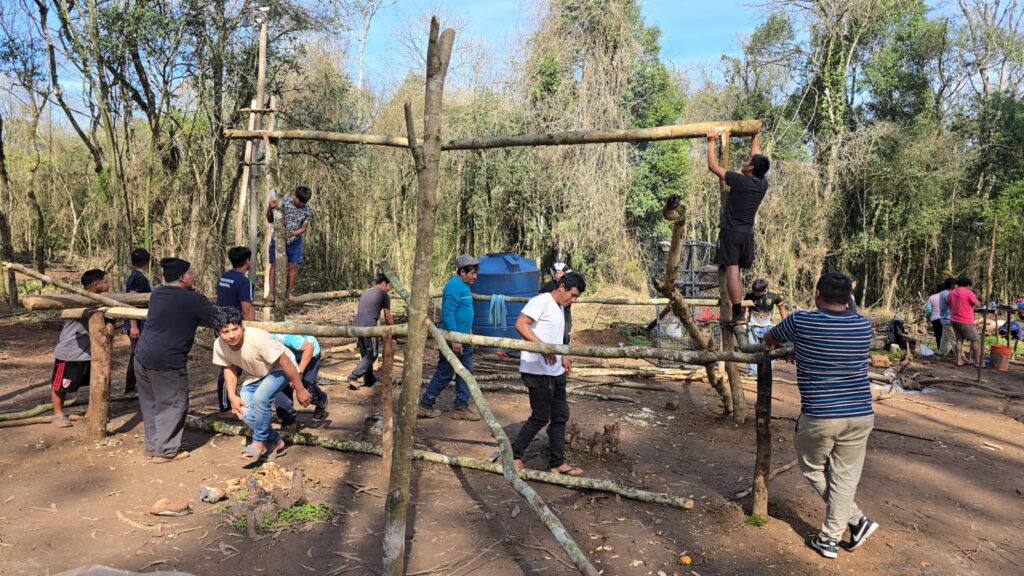
The Distant Prospect of Indigenous Self-Determination and Autonomy
It is difficult to speak of respect for self-determination and autonomy when public policy denies the very existence and pre-existence of Indigenous Peoples in Argentina. This denial directly contributes to evictions. It is shocking that judges across the country are ordering Indigenous communities to leave their territories.
Beyond individual judicial decisions, these measures must be understood within a broader context that is increasingly hostile to Indigenous rights. The promotion of extractive activities, economic interests in Indigenous territories, and the current government’s failure to recognise Indigenous rights combine to create a situation that is increasingly difficult to address.
Yet evictions are not carried out solely through court orders. Intimidation, threats and fear are also used to force communities from their territories. The balance of power is deeply unequal, leaving Indigenous communities vulnerable to security forces that do not hesitate to enforce eviction orders.
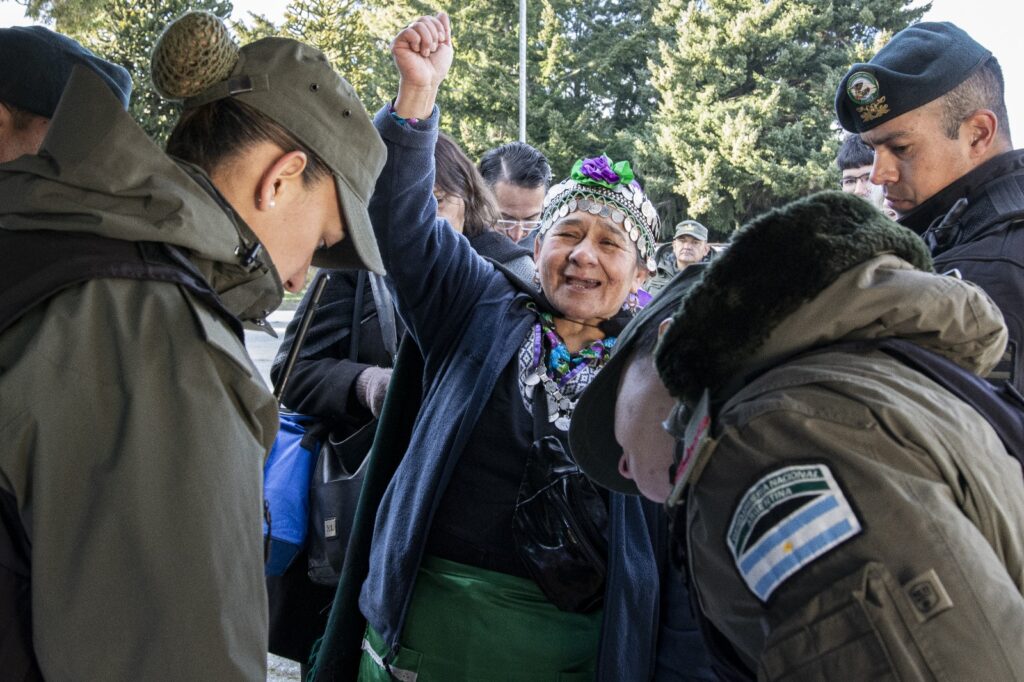
Legal Insecurity Facing Indigenous Peoples in Northern Argentina
Several cases of eviction illustrate the points made above. In July 2026, in the town of Garuhapé, Misiones Province, the judiciary carried out an illegal eviction of the Mbya Guaraní community of Puente Quemado II. During the operation, around 50 police officers presented an eviction order marred by numerous irregularities and forcibly removed community families through threats and violence. Although the community has since returned to its ancestral lands, its long-standing dispute with Arauco, one of Latin America’s largest forestry companies, continues to intensify.
This eviction must be understood as part of a broader process of territorial transformation driven by a production model based on monoculture and agribusiness. The complaint lodged by the businessman that triggered the eviction of Puente Quemado II is a clear indication of the gradual displacement of Indigenous Peoples by economic interests rooted in a model that is incompatible with their ways of life.
Indigenous communities find themselves caught between business interests and the State, which has taken sides and shows contempt for the ways of life maintained by Indigenous Peoples.
The contradictions between different ways of life, reflected in opposing economic models, are not only deepening but also revealing who stands to lose the most.
In Salta Province, the Diaguita Kalchakí community of Las Pailas, in Cachi, suffered a violent eviction carried out through irregular procedures, forcing women, children and older people from their territory. The government’s official narrative seeks to undermine Indigenous identity by setting it against the claims of registered landowners, whom state officials regard as the rightful owners. The tension between Indigenous communities’ territorial claims and private property rights continues to resurface.
The situations in Misiones and Salta offer a glimpse of the bigger picture. The contradictions between different ways of life, reflected in opposing economic models, are not only deepening but also revealing who stands to lose the most. Indigenous communities find themselves caught between business interests and the State, which has taken sides and shows contempt for the ways of life maintained by Indigenous Peoples.
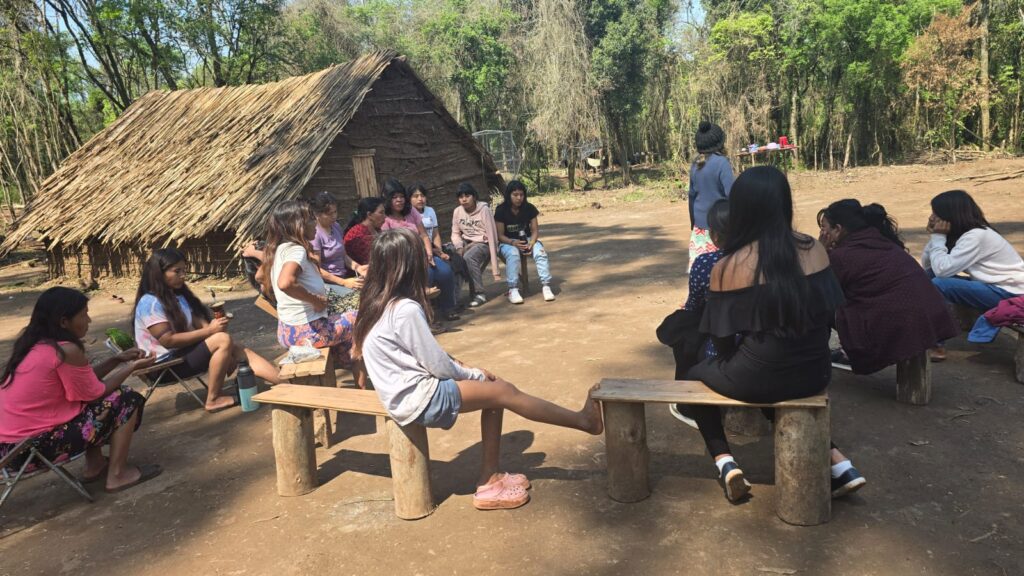
Dispossession in Southern Argentina
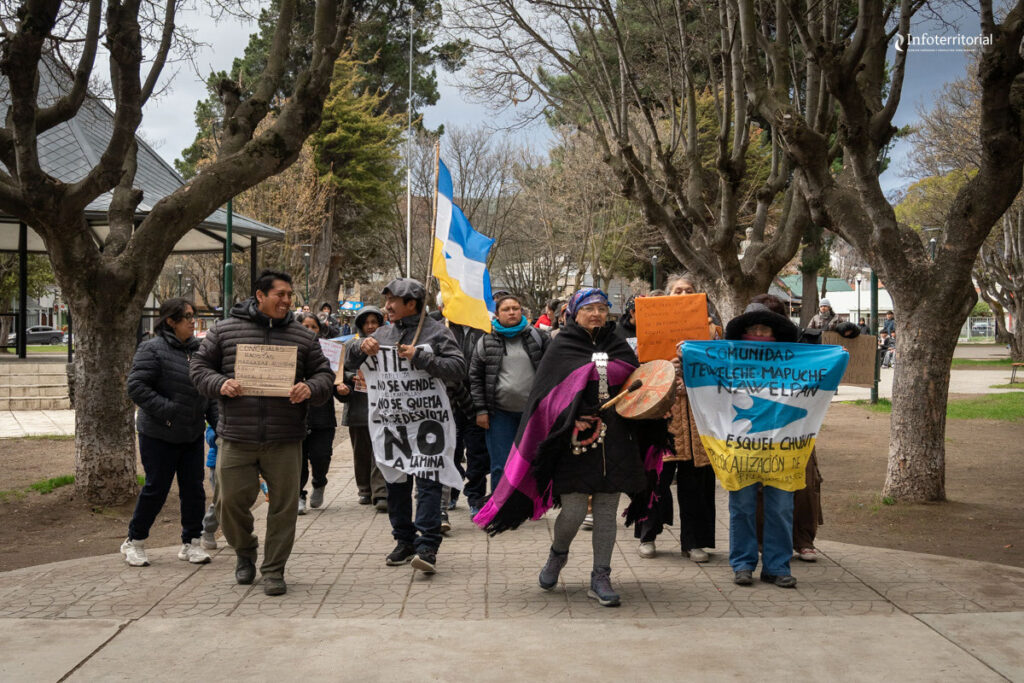
In Patagonia, evictions and attempted evictions are commonplace, creating a persistent climate of fear, uncertainty and violence within Indigenous communities. The cases of the Mapuche communities of Quintriqueo and Melo, in Villa La Angostura, Neuquén Province, are clear examples, particularly given the high property values driven by tourism in the area. The eviction order issued in favour of a woman of Belgian origin, who reportedly holds property titles dating back to the 1970s (which the community considers irregular or fraudulent and which were allegedly transferred to private companies). This stands in contrast to documents and anthropological studies establishing the community’s presence in the area since the late 19th and early 20th centuries. This includes a recent resolution by the National Institute of Indigenous Affairs confirming its traditional occupation of the land.
Given the sensitivity surrounding foreign ownership of land, the eviction of these communities prompted expressions of support from organisations and local residents. The Lof Melo community is currently facing renewed threats of eviction, creating a climate of considerable tension. Both communities have legal status and possess technical documentation resulting from a cadastral survey conducted by the State itself. Therefore, it is difficult to understand how the same State that formally acknowledges their public and traditional occupation of the land can simultaneously disregard Indigenous communal property rights and rule in favour of a private individual.
One need only travel across the country and speak to Indigenous communities to understand the difficulties they face and the insecurity they endure under the constant threat of eviction.
One need only travel across the country and speak to Indigenous communities to understand the difficulties they face and the insecurity they endure under the constant threat of eviction.
There is a clear connection between judicial actions, the orders issued to security forces by the executive branch, and the demands of private individuals and companies, both domestic and foreign. Violations of Indigenous Peoples’ constitutional rights and the protections enshrined in international legal instruments are becoming increasingly evident. One need only travel across the country and speak to Indigenous communities to understand the difficulties they face and the insecurity they endure under the constant threat of eviction.
There is a clear link between the State’s drive to extract natural resources, policies that treat Indigenous territories as empty land, the succession of evictions, the denial of Indigenous rights, and incentives for companies to establish operations in Argentina. Together, these processes reveal the continuity of a trajectory that began with the conquest and persists today, well into the 21st century, through a cultural assault that amounts to a blatant violation of rights.
Nothing Changes: Current Challenges and the Crisis of Extractivism
The expansion of extractivism has had a profound impact on Indigenous communities. Today, the new right-wing movements are advancing a political agenda that is far removed from Indigenous rights. Policies hostile to all forms of diversity, combined with economic policies centred on the exploitation of natural resources, are increasingly pushing Indigenous Peoples to the margins of a political agenda that has always paid them scant attention. In short, the disregard for Indigenous rights is becoming ever more apparent, as decisions concerning their territories are made without respecting those rights.
One example is the Incentive Regime for Large Investments (RIGI), introduced by the current government, which facilitates the entry of companies seeking to exploit lithium and hydrocarbon resources. Tax exemptions granted to those seeking to invest in Argentina effectively subordinate all other rights, including the constitutional recognition of Indigenous Peoples’ pre-existence. The ongoing debate surrounding the Land Law, which restricts foreign ownership of land and which Javier Milei’s government sought to repeal through an Emergency Decree (DNU 70/23) shortly after taking office, has become a renewed source of conflict following two recent rulings by Argentina’s Supreme Court of Justice.
The crisis generated by the prevailing model of development and production, and the energy system that underpins it, does not bode well for those who live on and depend on the land.
There are pockets of resistance and proactive efforts to protect territories and nature, alongside attempts to engage with institutions and other actors more willing to support their struggles.
By leaving the constitutionality of Decree 70/23 unresolved, even Argentina’s highest court has shown itself unwilling to uphold the Constitution. This situation also raises alarm among Indigenous communities, which are witnessing mounting threats to their territories and the implementation of a nationwide eviction policy that is far from coincidental. In practice, evictions serve as a barometer of the economic policies being pursued.
The crisis generated by the prevailing model of development and production, and the energy system that underpins it, does not bode well for those who live on and depend on the land. Nevertheless, there are pockets of resistance and proactive efforts to protect territories and nature, alongside attempts to engage with institutions and other actors more willing to support their struggles. Political cycles are long, and Indigenous Peoples have survived all manner of attacks for more than five centuries.
Prospects and Future Horizons
Developments at both local and global levels point to turbulent and violent times ahead. The tensions between Indigenous Peoples’ ways of life, a capitalist system increasingly revealing its darkest side, and States that fail to protect rights while persecuting those who demand them are becoming ever more pronounced. These are all manifestations of setbacks that should not be regarded as irreversible. Rather, they form part of an ongoing process marked by significant milestones that may, under more favourable circumstances, open up new horizons.
The Inter-American Human Rights System, for all its strengths and shortcomings, continues to support Indigenous Peoples in their struggle for their rights. Despite difficulties in implementing its judgments, as illustrated by the Lhaka Honhat case, its rulings remain authoritative legal precedents that can be invoked in defence of Indigenous rights. The changes required by these judgments can provide a basis for efforts to transform existing realities.
Constitutional reform would also be important, although the current political climate is hardly conducive to such an undertaking.
Constitutional reform would also be important, although the current political climate is hardly conducive to such an undertaking.
At the local level, despite widespread distrust of a judiciary that has consistently aligned itself with the political interests of those in power, there are exceptions that make it worthwhile to continue pursuing legal action. This path is fraught with obstacles, but it must be pursued to explore every available avenue within the framework of the rule of law. Nevertheless, recourse to the courts must remain subordinate to a broader political strategy defined by Indigenous organisations and communities.
Ultimately, the goals are clear. In Argentina, legislative changes are needed. One example is a specific law on Indigenous communal property rights, which has never even been debated in Congress. Constitutional reform would also be important, although the current political climate is hardly conducive to such an undertaking. Constitutional amendments, debates on new legislation and institutional reforms all remain distant prospects. More than five centuries after the conquest, Indigenous Peoples continue to demand the effective implementation of their rights. Fortunately, political cycles also change.

Silvina Ramírez is a lawyer and holds a PhD in Law. She also teaches postgraduate courses at the University of Buenos Aires (UBA) and the Latin American Faculty of Social Sciences (FLACSO Argentina). She is a member of the Association of Lawyers for Indigenous Rights (Asociación de Abogadxs de Derecho Indígena - AADI) and a member of the Board of Directors of the Center of Public Policies for Socialism (Comisión Directiva del Centro de Políticas Públicas para el Socialismo - CEPPAS).