
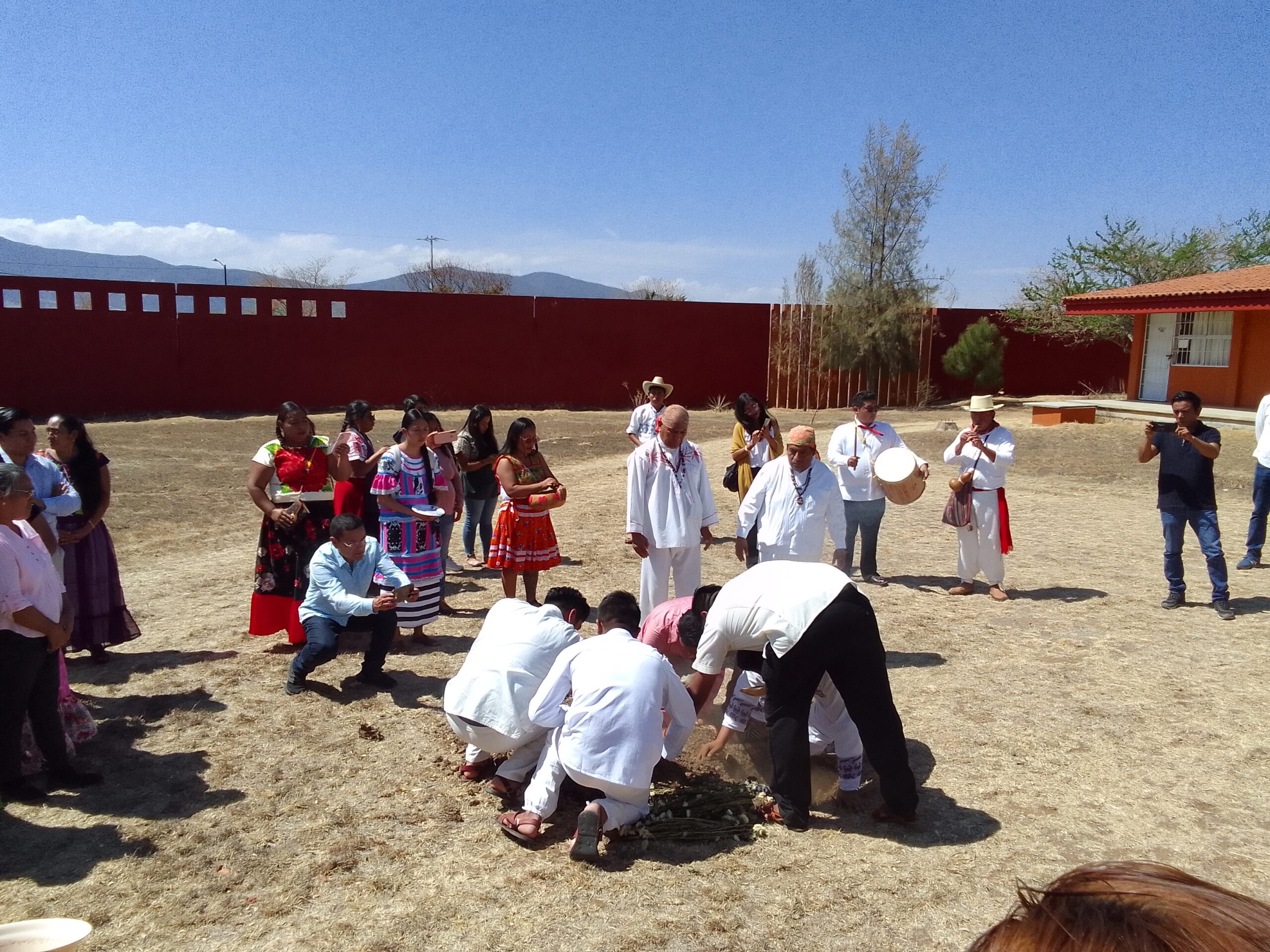
Today, intercultural bilingual education promoted by Indigenous Peoples is engaging in dialogue with Afro-descendant communities and other forms of diversity. The key challenge is to build synergy between initiatives led by the State and those driven by civil society. The New Mexican School, the National Collective of Intercultural Bilingual Teacher Training Colleges, and the Zapatista experience offer promising paths forward. The broader goal is to interculturalize education and build bridges to revitalize Indigenous languages.
Debates surrounding intercultural education in Mexico have intensified, now addressing not only the situation of Indigenous Peoples but also related issues involving Afro-descendant communities, sexual diversity, migration, and racism.
Intercultural bilingual education, in particular, is generally associated with formal schooling in Indigenous contexts or in areas with Indigenous language-speaking populations. In this regard, intercultural bilingual education is increasingly engaging with other dimensions of broader intercultural debates.
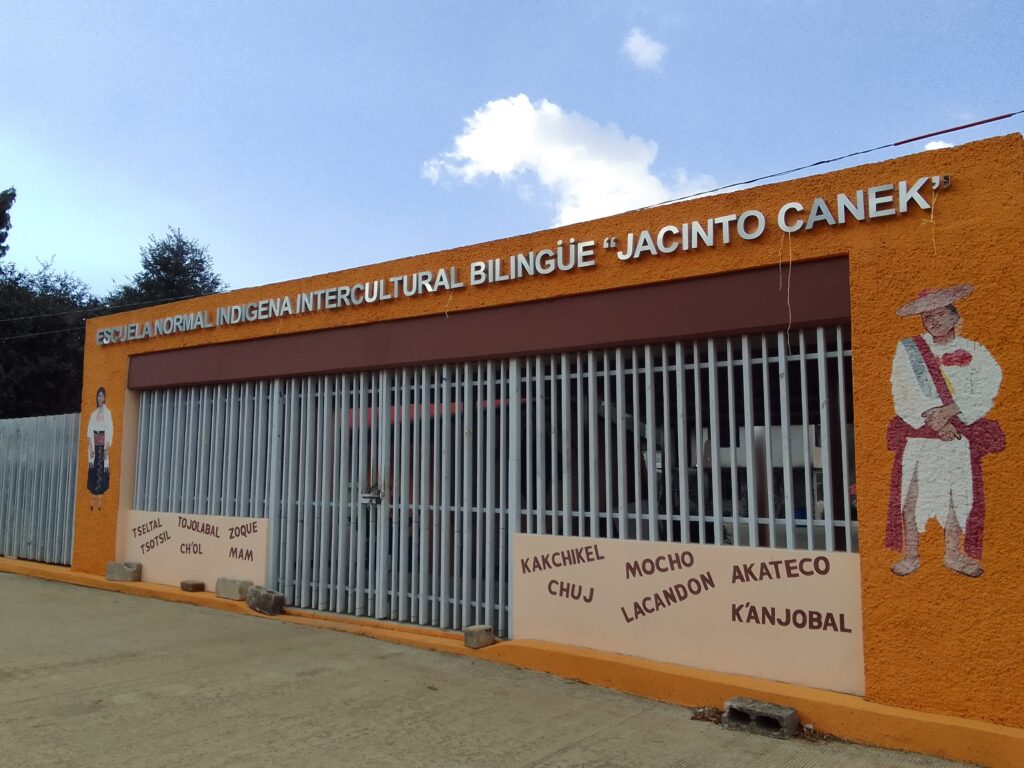
Building on milestones such as the First Inter-American Indigenist Congress held in Pátzcuaro in 1940, the signing of international treaties in the second half of the 20th century, the Zapatista uprising of 1994, and the demands of Indigenous organizations in the 1990s, intercultural bilingual education has gained national prominence. This is evident in the establishment of the General Directorate of Intercultural and Bilingual Education and the creation of several Intercultural Teacher Training Colleges (Escuelas Normales Interculturales), all under the oversight of the Ministry of Public Education.
Within this context, two main currents shape the actions aimed at advancing intercultural and bilingual education: those driven by the Mexican State and those developed by civil society actors. While these initiatives may at times be in opposition, they also offer opportunities for dialogue, convergence, and mutual transformation. As such, they can involve both direct confrontation with state education policies and ongoing critical reflection on them.
The New Mexican School
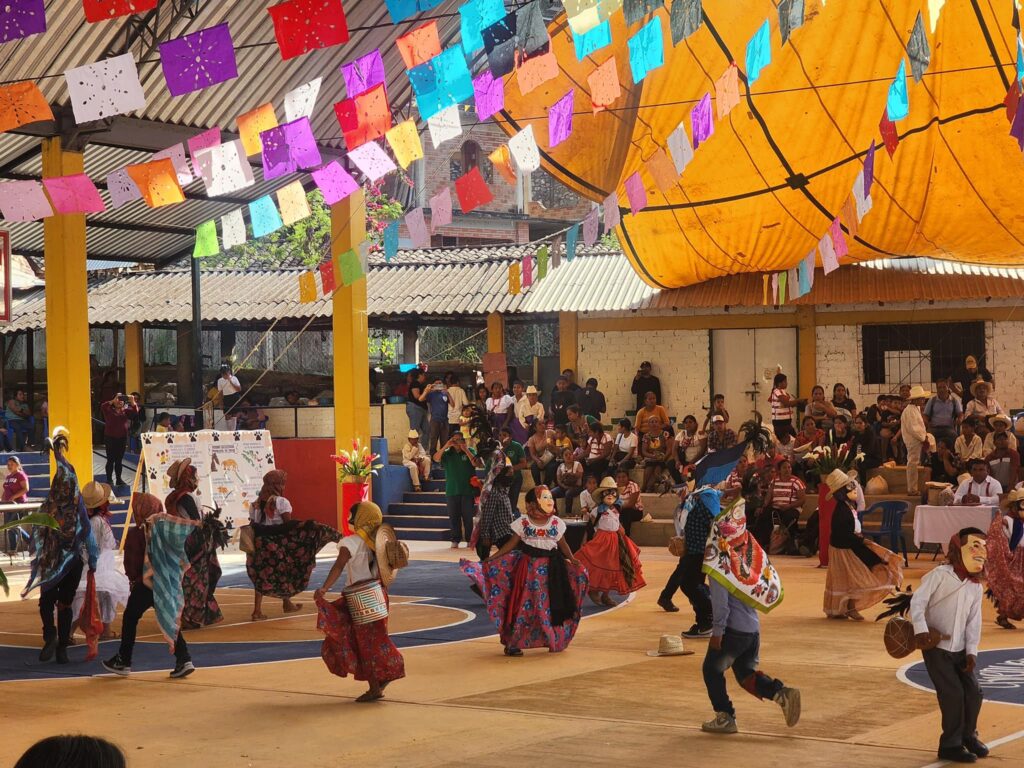
A compelling example can be found among the teachers of Section 22 of the National Coordinating Committee of Education Workers (CNTE) in the state of Oaxaca. Although they are state employees and teach in schools under the Ministry of Education, many of the intercultural and bilingual educational practices they implement are based on their own pedagogical model. This Plan for the Transformation of Education in Oaxaca (PTEO) is not philosophically grounded in interculturality, but rather in communality—the Indigenous way of life in Oaxaca, which encompasses cultural and linguistic diversity as a central axis.
Intercultural bilingual education policies promoted by the State have shifted from being mere instruments of cultural assimilation to embracing a critical intercultural perspective, as reflected in what is known as the New Mexican School. The current national curriculum explicitly positions critical interculturality as a core principle: “An ongoing dialogue with reality beyond the classroom, within school spaces and in the community.” In this framework, interculturality refers to the interaction, dialogue, mutual questioning, and co-construction of knowledge among diverse linguistic, cultural, social, and territorial identities—within contexts marked by structural inequalities.
Despite the many challenges that persist in applying an intercultural bilingual approach to classroom practice, the current Mexican curriculum urges teachers to “develop formative processes and pedagogical relationships that enable students, throughout basic education, to understand the colonial logic embedded in our everyday human experience.” Established in 2019, the National Collective of Intercultural Bilingual Teacher Training Colleges is working on a curriculum proposal for initial teacher education grounded in interculturality. This initiative is aligned with the principles of the Mexican Constitution and the foundational goal of the New Mexican School: to close historical gaps in equity and ensure recognition of the educational rights of Indigenous Peoples.
Intercultural Universities and Community-Based Practices
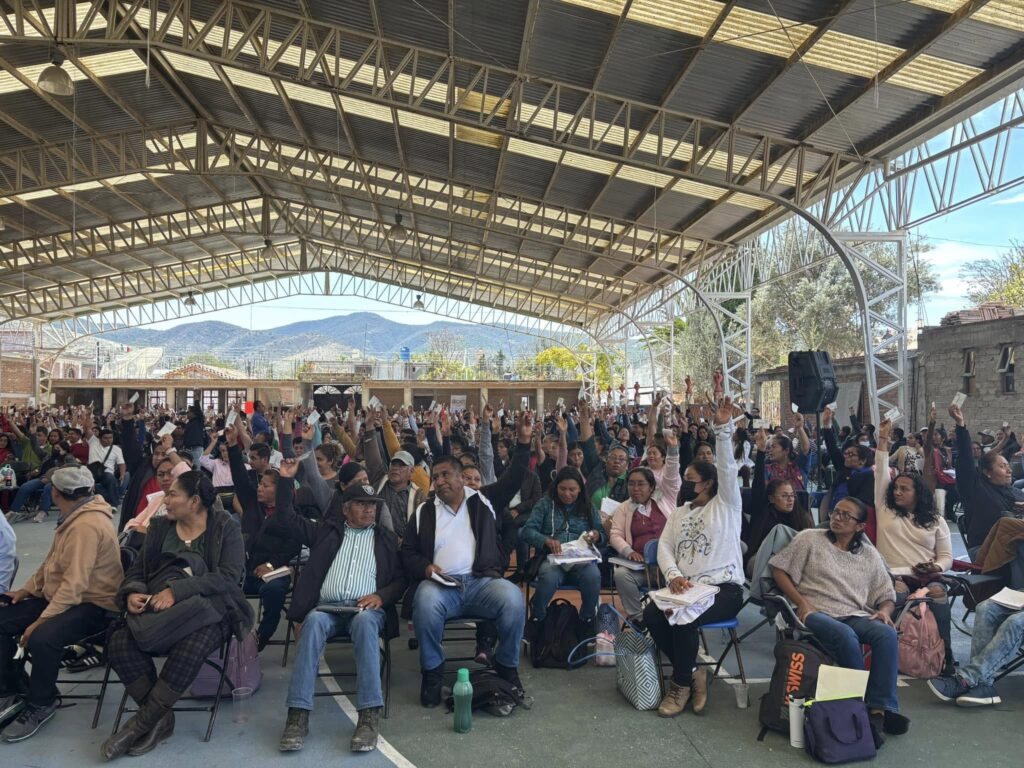
At the higher education level, intercultural universities supported by the Mexican State began to emerge in 2003. While official discourse emphasizes their academic quality and cultural and linguistic relevance, in practice, these institutions often reflect a convergence between neoliberal multiculturalism and experimentation with intercultural and decolonial educational innovations. Each university’s educational experience is distinct, highlighting tensions and contradictions, but also generating diverse responses that allow for differentiated approaches to intercultural education.
Alongside these institutions, there are important efforts led by cultural organizers, Indigenous communities, academic researchers, civil society organizations, and Indigenous educators who promote practices aligned with intercultural bilingual education. These initiatives foster territorially-grounded knowledge and pedagogies that are culturally relevant and centered on Indigenous languages. Particularly noteworthy is the intergenerational transmission of knowledge within Indigenous communities, which has sustained native languages, traditional rituals, systems of self-governance, sociopolitical organization, and relationships with ancestral territories.
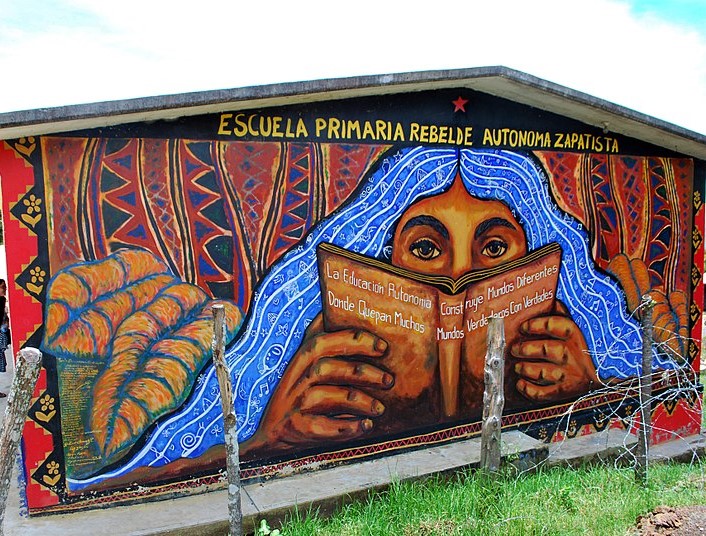
Although such community-based practices often go unrecognized in academic discourse, they represent some of the most robust and meaningful efforts toward culturally and linguistically relevant education. Additionally, there are more widely known experiences—such as the autonomous Zapatista education system in Chiapas, community-based education in Cherán (Michoacán), and education initiatives in the Sierra Norte of Oaxaca—that are more structured and involve broad participation from a range of educational actors. In some cases, they have formed alliances with scholars and activists interested in supporting and strengthening local educational models.
Intercultural Universities and Community-Based Practices
At the higher education level, intercultural universities emerged in 2003 as initiatives promoted by the Mexican State. While official discourse emphasizes their academic quality and cultural and linguistic relevance, in practice these institutions reveal a convergence between neoliberal multiculturalism and experimentation with educational innovations grounded in intercultural and decolonial approaches. Each university’s experience is distinct, exposing both tensions and contradictions, as well as diverse responses that contribute to differentiated forms of intercultural educational practices.
In parallel, there are significant efforts led by cultural organizers, Indigenous communities, academic researchers, civil society organizations, and Indigenous educators who develop educational practices aligned with intercultural bilingual education. These initiatives promote knowledge and pedagogies that are territorially rooted, culturally relevant, and conveyed through Indigenous languages. Particularly vital is the intergenerational transmission of knowledge within Indigenous communities, which sustains native languages, ceremonial practices, self-governance systems, sociopolitical organization, and relationships with their ancestral territories.
Although community-based educational practices often go unnoticed by mainstream academic research, they represent some of the most consistent and grounded efforts toward culturally and linguistically appropriate education. Moreover, there are well-known cases such as the Zapatista autonomous education system in Chiapas, community education in Cherán (Michoacán), and similar initiatives in the Sierra Norte of Oaxaca. These efforts are more systematized and involve broad participation from various educational actors. In some cases, they form alliances with academics or activists interested in supporting and strengthening local educational practices.
Four years after the signing of the Declaration, it is clear that the situation of Mexican Indigenous languages has not improved. Their displacement continues to progress, and there are still no concrete, targeted actions addressing each language individually. On the contrary, the genuine efforts are still being led by the speakers themselves, most often without the financial support necessary to strengthen these processes.
Former president Andrés Manuel López Obrador’s discourse has brought Indigenous peoples and languages into the national spotlight. However, his approach has often been diluted with folkloric elements, and despite good intentions, cultural and linguistic aspects have been trivialized, used merely as symbolic gestures for national celebrations or political events. This situation has exposed the racist undertones of Mexican society, evident in discriminatory comments directed at Indigenous cultures on social media. It underscores the urgent need to interculturalize education and institutions in order to foster a more dialogical society.
Building Bridges to Revitalize Languages
While progress has been made both in discourse and practice, particularly in relation to intercultural educational practices, much remains to be done to strengthen Indigenous languages. Bilingualism still tends to favor Spanish at the expense of the dozens of Indigenous languages and their variants. It is crucial that both state-led efforts and individual initiatives build bridges for collaboration and dialogue, in ways that are considered appropriate, with a common goal in mind: the strengthening and revitalization of our Mexican languages and cultures.
Furthermore, it is important to highlight the role played by teachers working in Indigenous contexts, particularly those who take an autonomous, self-managed approach. An example of this is the graduates of the Bilingual and Intercultural Teacher Training College of Oaxaca. During the 25th anniversary of the educational institution, they reflected on their teaching trajectories and emphasized the lack of educational materials in Indigenous languages. However, they also pointed out various strategies they had developed on their own, such as puppet shows, bingo games, audiovisual materials, books, games, and songs. This reflects a deep commitment from the teachers to Indigenous children.
Finally, we must acknowledge that the efforts at the primary school level to implement intercultural bilingual education are often hindered because at the secondary level, there are virtually no educational models with an intercultural bilingual perspective (except in some cases, such as Indigenous community secondary schools). The same situation applies at the higher secondary education level. For this reason, there is a need to develop an integrated education system in which an intercultural framework prevails, ensuring the reinforcement of these practices throughout the students’ entire academic journey.
Edgar Pérez Ríos holds a PhD in Science, specializing in Educational Research (Cinvestav-IPN). He is a member of the National System of Researchers, a Full Member of the Mexican Council of Educational Research, and a member of the Network of Educators and Interculturality in Latin America.