
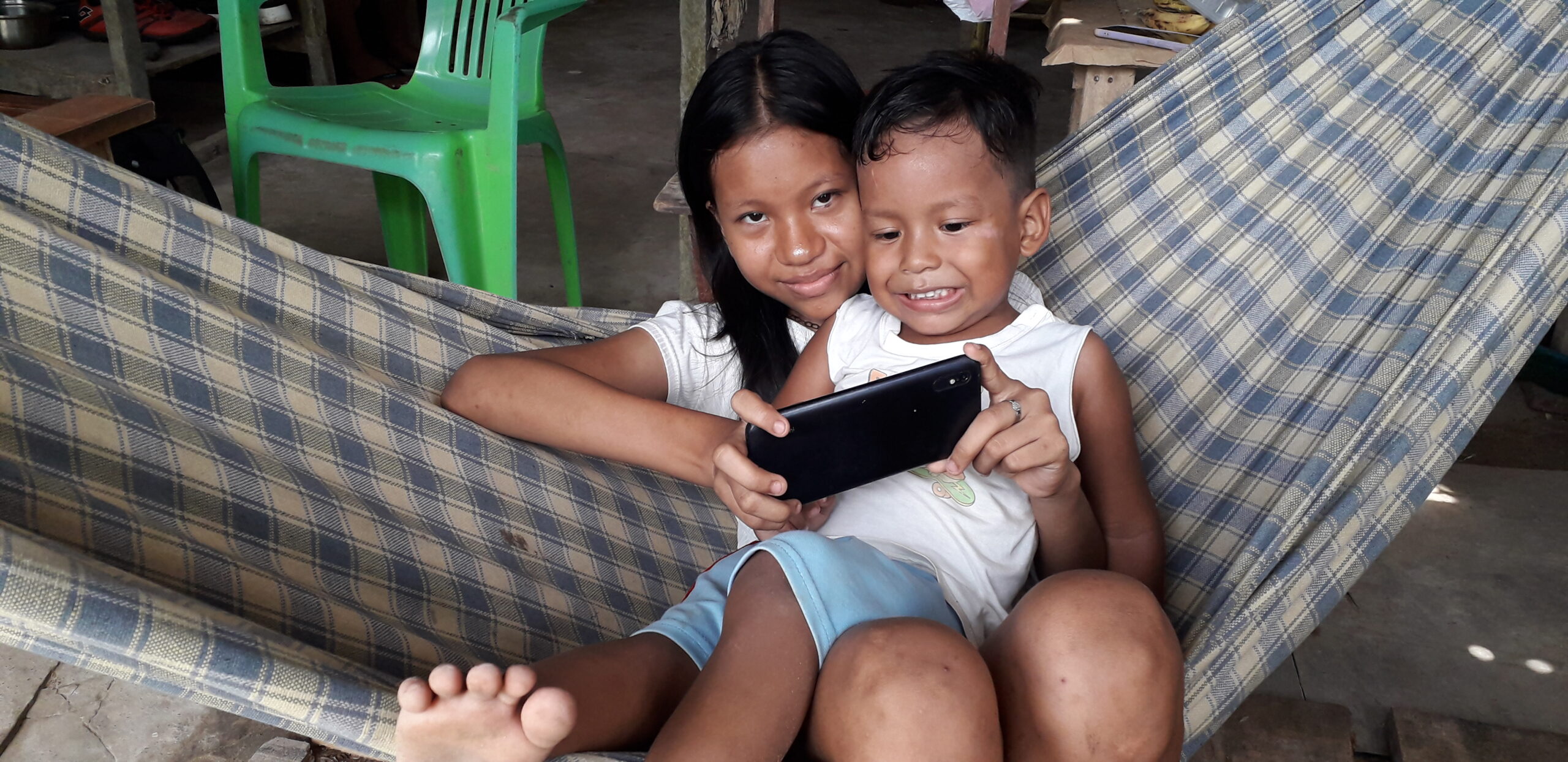
For more than 30,000 years, the ancestors of the Indigenous Peoples of Amazonia have subsisted utilizing the resources of the forests and bodies of water without degrading them or reducing their biodiversity. In addition to their spiritual connections and respect for nature, this tradition of surviving without overexploiting nature is based on extensive ancestral knowledge about ecology and resource management. Faced with the challenge of revitalizing their language, the Kukama people have developed a series of cell phone games for teaching their language to new generations.
Surviving in the Amazon rainforest is not easy. However, by relying on their ecological knowledge, Indigenous Amazonians do not just survive, they live plentiful and fulfilling lives. A problem arises, however, when this knowledge is not passed on, and the next generation is forced to overexploit their resources for commercialization, and allows petroleum and logging companies, palm oil monoculture plantations, and coca growers to enter their territories. Caught between a rock and a hard place, some end up moving to the cities to find work, leaving their ancestral lands without their protectors.
The Kukama people number approximately 36,000 and compose one of the largest indigenous ethnic groups the Peruvian Amazon. Kukama communities are located on the banks of the upper Amazon River and its tributaries, including the Marañón, Ucayali, Nanay, Itaya, and Huallaga Rivers. While the majority of the communities are located in Perú, there are also some communities in Colombia and Brazil.
The Kukama were one of the first Indigenous Peoples of the Peruvian Amazon to be contacted by Europeans, specifically in 1557 by the expedition of Juan Salinas de Loyola. In more recent times, due to discrimination, most Kukama sought to hide their Indigenous identity and stopped teaching their children the language so that they would not suffer discrimination. Nevertheless, over the past two decades, many Kukama have begun to revalue their Indigenous culture and identity, and increasing numbers of young people are expressing their desire to learn the Kukama language.
The challenge of recovering a language
Amazonia is one of the most linguistically diverse places in the world. Forty-four indigenous languages are spoken in the Peruvian Amazon, but most of these languages are obsolescent or in danger of extinction because children are not learning their mother tongue. The ability to speak one’s ancestral language is an important element for affirming identity, a source of pride, and empowers Indigenous Peoples to demand respect for their collective rights. Since language constitutes one of the principal social and cultural institutions of an Indigenous society, the Peruvian State considers the ability to speak an indigenous language one of the objective criteria for identifying an Indigenous society and for granting them titles to their ancestral territories.
In this sense, revaluing the ancestral culture is a crucial element for linguistic revitalization. Unfortunately, not all Kukama villages have residents who remember the language; the few elders who can teach the language are elderly, and there are few materials available for learning the Kukama language. Furthermore, learning a second language requires a great deal of motivation and a significant investment of time. Therefore, revitalizing a moribund language is a great challenge, but this does not mean it is impossible if the people are willing and have the support of allies.
Taking these factors into account and observing the considerable amount of time Indigenous children spend playing on mobile phones, the NGO Acate Amazon Conservación has developed electronic games in the Kukama language and other indigenous languages of Peru, designed for language learning and simultaneously as tools for the intergenerational transmission of ancestral ecological knowledge.

From ancestral knowledge to the screen
The latest app produced by Acate Amazon Conservación and financed by the International Work Group for Indigenous Affairs (IWGIA) is called “Memoria Kukama.” It is based on the classic board game, but in the context of an expedition through the rainforest and along rivers, lakes, and streams. The game features 40 levels, medals, drawings of ecological scenes, and interactive elements that make it fun and competitive. “Memoria Kukama” helps learn both the pronunciation and writing of the names of animals, fish, trees, plants and the ecosystems in which they are found.
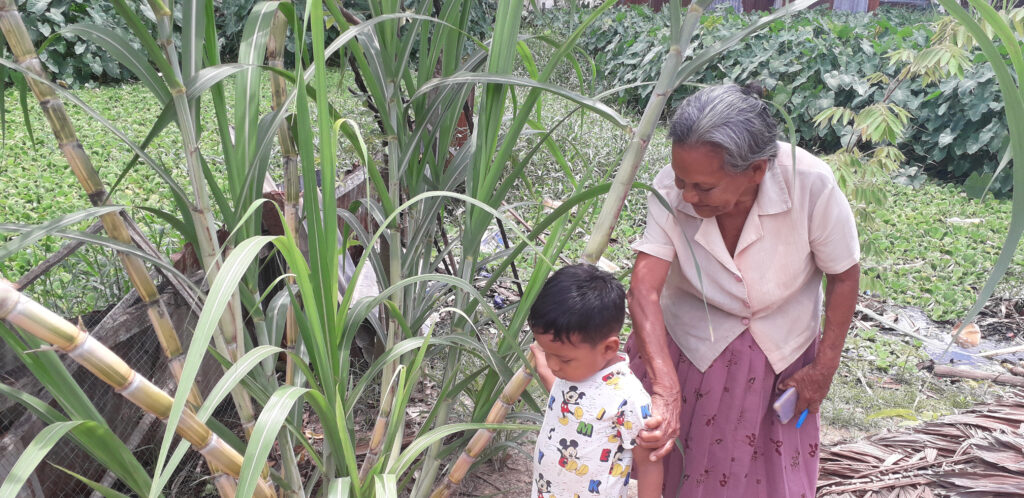
The creation of the app would not have been possible without the teachings of the Kukama elders Rosa Amías Murayari and María Ricopa Aricari. These keepers of ancestral knowledge taught us the names of animals, plants, and ecosystems in the Kukama language, specified the habitats in which they occur, and provided the voice recordings that play when the images are tapped.
The images were drawn by Guillermo Nëcca Pëmen Mënquë, an artist of the Matsés ethnic group. In addition to being talented with the brush, he possesses a profound understanding of Amazonian rainforest ecology and animal natural history, which makes his drawings realistic and engaging.
Revitalizing a Language: Desire and Creativity
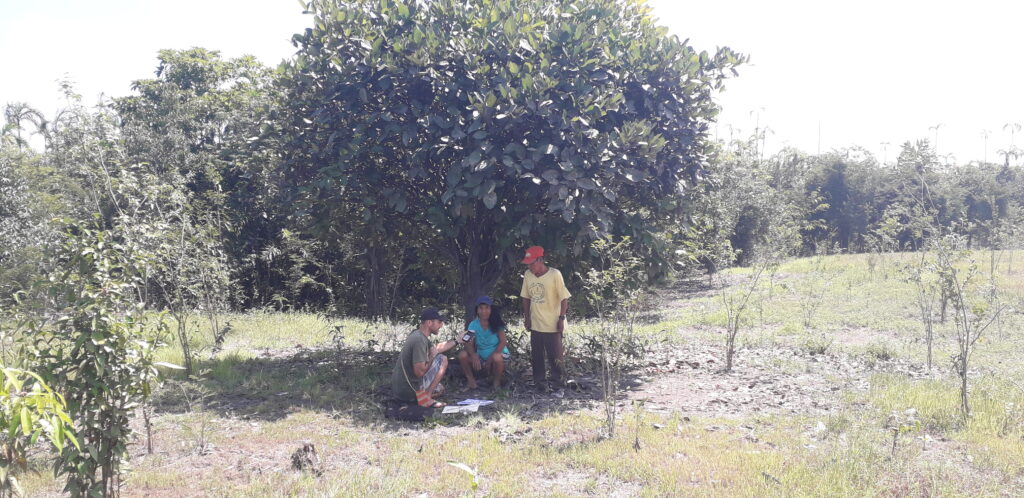
Of course, we do not expect that cell phone applications alone can revitalize a language, but in combination with Intercultural Bilingual Education, videos created by the Kukama themselves, and Radio Ukamara, which broadcasts from the city of Nauta, electronic games can be a significant component for enabling the Kukama to revitalize their native language and ancestral culture.
Ten years ago, it appeared that the Kukama culture and language were on the road to extinction, as has happened with so many other Amazonian societies. But today, a strong, united, and proud Kukama federation is on the horizon. This is so especially because the revaluation of their indigenous identity and their desire to revitalize their ancestral language have emerged from the Kukama people themselves. This is an opportunity for their allies to offer their support in this great endeavor to rescue their language and culture.
In addition to helping learn the Kukama language and to transmit traditional ecological knowledge, mobile phone apps show the young Kukama people that their culture is compatible with the new technologies of the 21st century. Acate Amazon Conservacíon is committed to continuing to seek funding to help the Kukama create more apps, following the teachings of the wise men and wise women and the innovative ideas of the children.
The applications can be downloaded for free by clicking here.

David Fleck is a project coordinator for the NGO Acate Amazon Conservación and a professor at the National University of the Peruvian Amazon. He also holds a Master's degree in Zoology and a PhD in Linguistics, and has worked with the Matsés people of the Peruvian Amazon.