
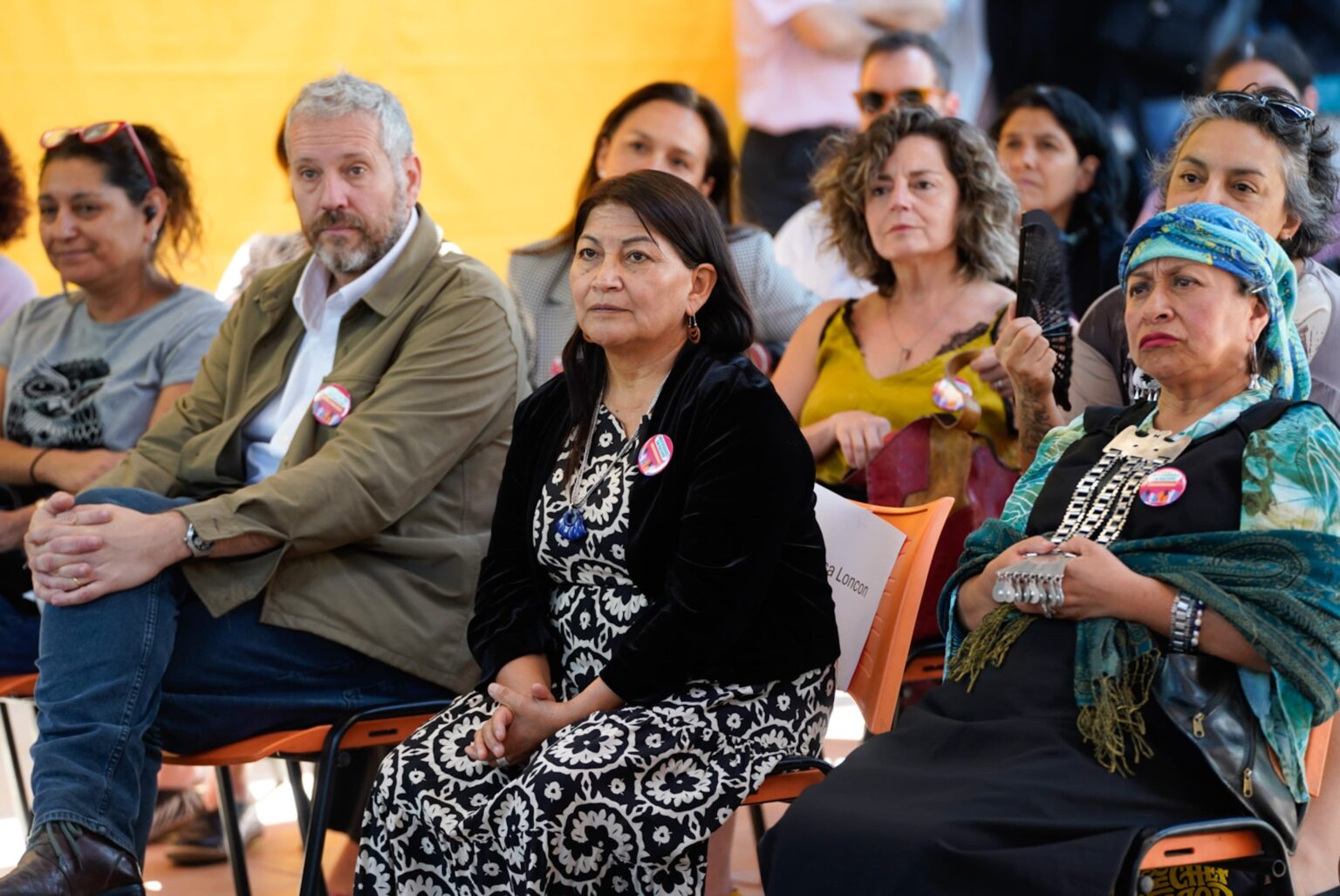
In our country, Bilingual Intercultural Education (EIB) emerged as a response to the need to address Chile's cultural and linguistic diversity, where Indigenous Peoples coexist with a rich historical, social, and linguistic heritage. Its origins stem from the demand for an education that respects and values their cultures and languages, as recognized in Indigenous Law No. 19.253/1993. While undeniable progress has been made, the lack of political will in its implementation persists, alongside anti-Indigenous rhetoric propagated by mainstream media.
In 2009, the Chilean State committed to protecting and promoting Indigenous languages through the incorporation of Bilingual Intercultural Education (EIB) into the General Education Law and the ratification of ILO Convention No. 169. This resulted in the creation of the “Bilingual Intercultural Education Program” by the Ministry of Education and the introduction of Indigenous Language instruction from 1st to 8th grade for four Indigenous peoples: Aymara, Quechua, Rapa Nui, and Mapuche, in schools where more than 20% of students were Indigenous.
Since 2021, they are taught subjects in Language and Culture of the Ancestral Indigenous Peoples programs from 1st to 6th grade, maintaining enrollment conditions for the four previously mentioned Peoples. However, for the peoples that were later added to the program—the Lickanantay, Colla, Diaguita, Kawésqar, and Yagán—no enrollment percentage is required for its implementation. Additionally, the subject can also be taught as part of the Intercultural Study Program, developed alongside specific programs for each Indigenous people.
The EIB experience extends to urban areas in schools that offer the Language and Culture of the Ancestral Indigenous Peoples subject in the city. This will contribute to the revitalization of languages, as the program’s focus on language, oral traditions, iconography, and reading and writing practices allows learning to be adapted to the sociolinguistic context of the school. In this sense, language teaching can be approached through awareness-raising, recovery, revitalization, and the development and strengthening of the Indigenous language.
The Indigenous Population in Chile
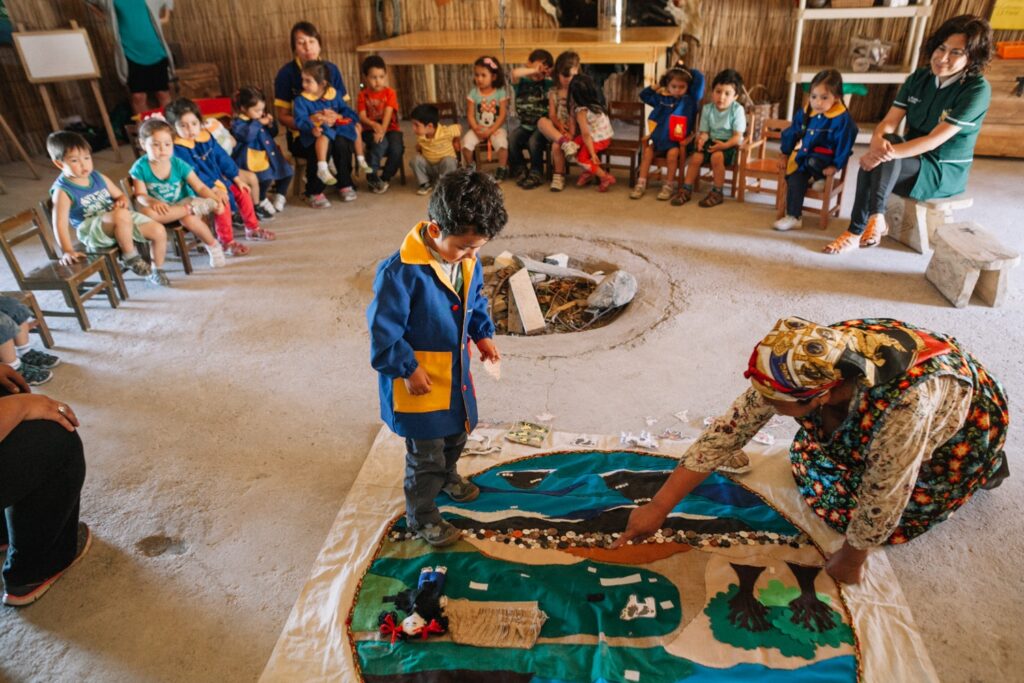
According to 2017 Census data, the Indigenous population in Chile represents 12.8% of the national population. This group includes the Aymara, Quechua, Rapa Nui, Likan Antay, Colla, Chango, Diaguita, Mapuche, Yagan, Selknam, and Kawescar peoples. The Mapuche constitute a majority, representing 79.8% of the Indigenous population, with 1,745,147 individuals. While many Indigenous children live in rural areas, an increasing migration to urban centers has diversified their geographical distribution.
In terms of the Indigenous population that speaks its own language, the 2013 National Socioeconomic Characterization Survey shows that only 10.9% of the population speaks an Indigenous language. The 2016 survey by the Center for Public Studies reveals that only 6% of respondents in the regions where data was collected speak Mapuzugun alongside Spanish. The survey also notes an increase in the percentage of people who do not speak the language, rising from 56% in 2006 to 67% in 2016.
Despite undeniable progress in Bilingual Intercultural Education (EIB), significant challenges remain, requiring in-depth analysis and renewed commitment from the Chilean state to Indigenous peoples and their languages. At the same time, persistent limitations date back to the early stages of the program. Below, we highlight some of the problems and challenges of EIB for Indigenous languages.
The Role of the Traditional Educator
Although the General Education Law (LGE) mandates Bilingual Intercultural Education in schools with an Indigenous population exceeding 20% of enrollment, its implementation has remained largely voluntary for families. This is because the 2020 Curriculum Bases Decree No. 97 for the subject of Language and Culture of Ancestral Indigenous Peoples allows parents and guardians to decide whether they want the subject for their children or wards.
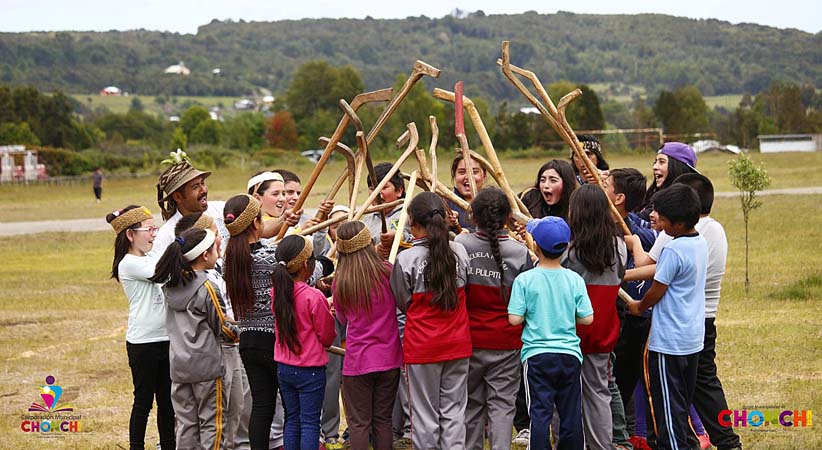
Due to the shortage of teachers fluent in Indigenous languages, the system has introduced the role of the traditional educator, who can work alongside a classroom teacher. These educators are members of Indigenous communities with in-depth knowledge of their language, culture, and philosophy, although these qualifications are not always met. Their role includes teaching Indigenous language, transmitting cultural values, and reinforcing Indigenous identity among students.
Despite their importance in the development of EIB, traditional educators often face challenges such as a lack of formal pedagogical training, low salaries, and limited recognition within the school system. Currently, due to Decree No. 301, traditional educators may work solo in the classroom without a pedagogical partner. This is already happening in many cases.
Lack of Training and State Racism
Interculturality is not a transversal principle in the Chilean education system, despite being established by General Education Law. Efforts have been made to include elements of Indigenous Peoples’ cultures in subjects such as History, Geography, and Social Sciences, but this integration is often superficial and depends on the teacher’s interest and training. The Textbooks that have been produced do not always reflect the cultural particularities of local communities and lack follow-up for their implementation.
In some schools, materials are discarded on the grounds that they do not reflect the local territorial variant. It is also true that teachers often lack the methodological skills to apply them effectively. Moreover, the EIB program lacks robust evaluation and monitoring mechanisms to validate these materials or measure the actual impact of the program, such as an increase in the number of Indigenous language speakers or improvements in students’ appreciation of Indigenous culture.
On the other hand, the discourse and practices of EIB schools regarding the revitalization of Indigenous languages and cultures are threatened by state racism and media stigmatization. In Chile, stigmatization and prejudice against Indigenous peoples persist. Children and teachers witness daily mistreatment of the Indigenous condition in the media, which discourages efforts, particularly among younger generations, from valuing, learning or using the languages.
Demands, Challenges, and Proposals to Strengthen Indigenous Languages
Addressing the problems outlined here requires a perspective rooted in cultural and linguistic rights, social justice, and reparations. It was not the Indigenous peoples who voluntarily abandoned their languages and cultures; it was the Chilean education system that led to this abandonment. The state must strengthen the Bilingual Intercultural Education program and enable the normalization of Indigenous language use in society, so that schools and state institutions no longer participate in cultural dispossession.
In this context, the needs and demands of Indigenous peoples are clear: to expand coverage and funding for EIB to ensure that all schools with Indigenous students have access to the subject of Language and Culture of Ancestral Indigenous Peoples; to address the needs for the training and recognition of traditional educator and to provide EIB teachers with intercultural and Indigenous language training; to produce relevant materials that not only reflect the cultural and linguistic particularities of Indigenous communities but are also appropriate to the students’ language proficiency levels; and to strengthen community participation in the design, implementation, and evaluation of EIB actions to ensure their relevance and effectiveness.
The power dynamics between languages are unequal. Spanish is the only language with social prestige, and this does not contribute to the recognition of Indigenous peoples or their languages. Society, as a whole, needs to value Indigenous languages.
Spanish is the only language with social prestige, and this does not contribute to the recognition of Indigenous peoples or their languages. Society, as a whole, needs to value Indigenous languages.
An additional program outside of education is necessary to stop the loss of Indigenous languages because the school system alone is insufficient to instill their value in society. Currently, the power dynamics between languages are unequal. Spanish is the only language with social prestige, and this does not contribute to the recognition of Indigenous peoples or their languages. Society, as a whole, needs to value Indigenous languages. A campaign to enhance the prestige and legitimacy of Mapuzugun and other Indigenous languages in society is needed, reaching beyond Indigenous communities, combined with their integration into public spaces and the media.
This involves creating standards in collaboration with the communities, ensuring respect for the linguistic reality of the territories, and making decisions on writing systems, dialectal diversity, and the strengthening of unified, distinctive, and robust languages. These elements would not only improve the impact of Bilingual Intercultural Education (EIB), but would also contribute to the cultural and linguistic empowerment of Indigenous peoples. Furthermore, the full integration of Indigenous languages into both formal and informal spaces of daily life remains an ongoing challenge. In the case of Mapuzugun, which lacks standardization, there have been internal debates within the Mapuche community about which variant should be taught in schools and used in official documents. Therefore, a national literacy campaign would help facilitate these decisions.
Conclusion
Although Bilingual Intercultural Education represents a step forward in the recognition of the educational and linguistic rights of Indigenous peoples in Chile, its implementation still faces numerous challenges including learning to read and write in Indigenous languages, establishing their public use in society to foster intercultural skills among non-Indigenous Chileans, and overcoming the denial and racism that have persisted for centuries through colonialism, hate speech, and the fear generated towards Indigenous peoples.
Consequently, a more comprehensive, intercultural, and collaborative approach to education for all of Chilean society remains necessary. Both the state and civil society must ensure, not only the teaching of Indigenous languages, but also their legitimization as an essential part of the country’s cultural and educational fabric.
Bilingual Intercultural Education offers an opportunity to build a fairer and more inclusive educational system that values the cultural wealth of Indigenous peoples. Through sustained state and social commitment it is possible to transform education into a tool of empowerment for Indigenous communities and their future generations. Indigenous languages are not just forms of communication; they are also vehicles for ancestral knowledge, philosophies, and unique traditions. The loss of each language represents a cultural and spiritual loss for all of humanity.
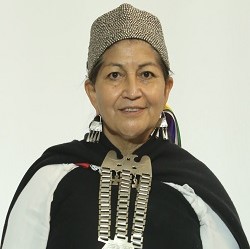
Elisa Loncon Antileo is a Mapuche activist, professor, and researcher at the University of Santiago, Chile. She holds a Ph.D. in Humanities from Leiden University (Netherlands) and was the first president of Chile's Constitutional Convention.