
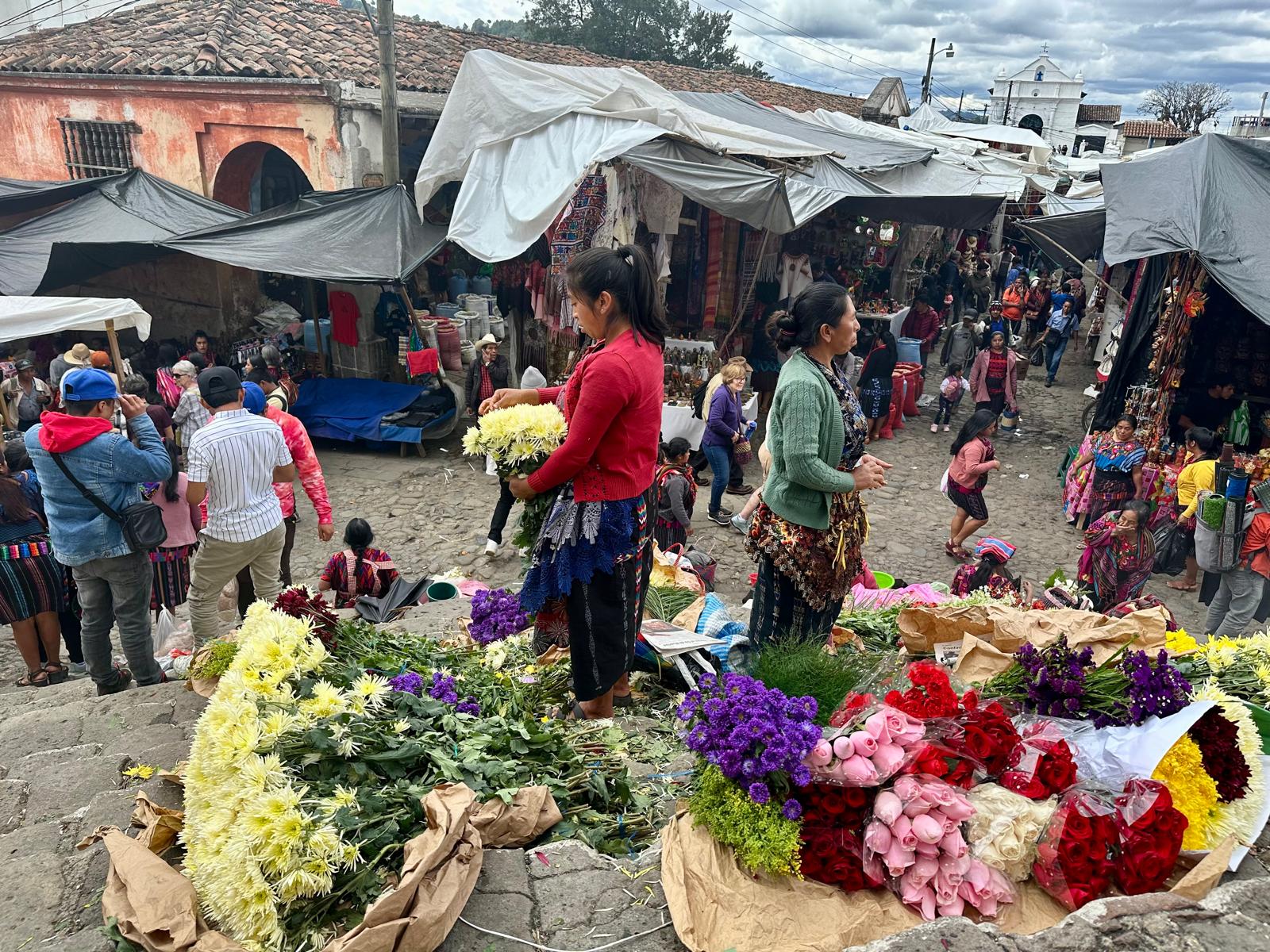
With 43.6 percent of its population self-identifying as Indigenous, Guatemala is the most culturally diverse country in Latin America. Toward the end of the internal armed conflict which claimed the lives of thousands of Maya and campesinos, the country began developing Bilingual Intercultural Education (BIE), initially supported by USAID and later by European cooperation. Eventually, the Guatemalan state assumed responsibility for it. Only in recent years have Indigenous organizations begun to assert this right as political subjects. With the new administration, a renewed sense of hope is emerging.
As in much of Latin America, the implementation and development of BIE in Guatemala takes place within a context marked by a widening gap between legal, political, and academic discourses and social and pedagogical practices that continue to be shaped by a monocultural and monolingual ethos still deeply embedded in Guatemalan society. Despite this, Maya leaders and intellectuals continue to demand an education that is culturally and linguistically appropriate for Indigenous students, their families, and their communities.
Guatemala is also arguably the country in Latin America where Indigenous languages remain most vibrant. At the same time, it has some of the highest rates of illiteracy in the region, particularly among Maya-speaking women. What’s more, the number of people aged three and older who speak an Indigenous language is beginning to decline across nearly all of the country’s 24 Indigenous linguistic communities.
Finally, racism and discrimination against the knowledge systems, values, and social structures of Indigenous Peoples remains widespread. Guatemala’s entrenched racism continues to be a key factor influencing the strength—or weakness—of Bilingual Intercultural Education. In this context, any analysis of the current state of BIE in Guatemala must address four dimensions: the conceptual, the programmatic, implementation, and community engagement.

Conceptual Framework
Guatemala has a broad and well-established legal framework regarding the education of Indigenous peoples. This framework dates back to 1985, when Bilingual Intercultural Education (BIE) was constitutionally recognized and began to be implemented with support from the United States Agency for International Development (USAID), in the midst of the internal armed conflict. Years later, following the signing of the Peace Accords, other international cooperation agencies, especially from Europe, joined these efforts.
Currently, the country has an official Bilingual Intercultural Education Model and a National Base Curriculum for each level of education. This curriculum mandates the teaching of Indigenous languages across the national education system, alongside Spanish and English. Since 2009, Guatemala has also developed “Currículos por Pueblo” (People-Specific Curricula)—differentiated programs rooted in Indigenous worldviews, intended to complement the unified and Eurocentric National Base Curriculum.
For Maya intellectuals, Guatemala’s multicultural reality must first be acknowledged and reaffirmed until more equitable relations between Indigenous and Ladino sectors can be achieved.
Indigenous languages are used only until students have mastered Spanish well enough to function proficiently in both its oral and written forms.
As is evident, Guatemala has not yet embraced the paradigm of Bilingual Intercultural Education (BIE), as historical demands have emphasized bilingualism over interculturality. For Maya intellectuals, Guatemala’s multicultural reality must first be acknowledged and reaffirmed until more equitable relations between Indigenous and Ladino sectors can be achieved. Only then can genuine progress toward interculturality take place. This perspective was formally established during the discussions of the Joint Commission (comprising Indigenous Peoples and the State), which developed the Educational Reform Proposal stemming from the Peace Accords.
In general, BIE is still perceived by many government officials and significant segments of Guatemalan society as a remedial or compensatory measure. Indigenous languages are used only until students have mastered Spanish well enough to function proficiently in both its oral and written forms. Consequently, BIE remains largely transitional in nature, underpinned by an ideology that continues to be focused on Hispanicization, integration, and assimilation.
Programmatic Plan
Although national regulations mandate that Indigenous students receive a bilingual, multicultural, and intercultural education, and that students nationwide learn three languages throughout their schooling (their mother tongue, a second national language, and a foreign language), this aspiration is only partially fulfilled, with significant limitations, and continues to be one of the biggest challenges within the national education system. Nearly 30 years after the creation of the General Directorate of Bilingual Intercultural Education (Digebi) and 20 years after the establishment of the Vice Ministry of Bilingual Intercultural Education, as well as the enactment of the National Languages Law and the Law on the Generalization of Bilingual Intercultural Education (EBI), vertical and horizontal cover of EBI remains limited.
Regarding vertical coverage, the system has yet to move beyond primary education, and in many cases, even the first two grades of this level are not fully covered. In the two cycles of secondary education, teaching is exclusively done in Spanish. As for horizontal coverage, EBI does not reach all territories with Indigenous populations, nor all schools classified as bilingual. A 2011 study by the Central American Institute for Fiscal Studies (Icefi) and Save the Children found that the coverage of EBI stood at 18.5 percent. In addition, there are numerous issues with the implementation of Indigenous language education, particularly in urban areas.
To promote the effective application of Bilingual Intercultural Education, the country has identified four sociolinguistic scenarios based on the degree of bilingualism within individual communities. Additionally, a bilingualism bonus has been established, which is received by about 11,500 of the more than 47,000 bilingual teachers working in the education system. Practically speaking, there are no bilingual schools with a full staff that speaks the local language, except for some one-room, one teacher schools and multigrade schools. Typically, those serving all six grades of primary education have both bilingual and monolingual Spanish-speaking teachers.

Implementation Plan
As may be deduced, the implementation of Bilingual Intercultural Education fundamentally relies on the central government, headquartered in Ciudad de Guatemala. As a result, the scope of action of departmental entities is limited, and their leaders are waiting for specific directives from the capital. In this context, what happens in schools and classrooms largely depends on the willingness and motivation of school directors and teachers.
Just over 7,000 rural primary schools have been classified as EBI schools, but this does not mean that Indigenous languages are the primary medium of instruction; rather, it means that the majority of students are Indigenous and that there is at least one bilingual teacher. There is no clear consensus among teachers about how much time and in what manner Indigenous languages should be used, and these languages are often reduced to a single subject—Maya, Xinca, or Garífuna—with limited weekly hours. These languages are used for communication with students and to help them understand lesson content, often requiring translation.
An evaluation of teachers applying for the bonus found that only 49.53 percent achieved scores above 60 points; less than 50 percent self-assessed their fluency in the Indigenous language as “fluent,” and only 40 percent had adequate written proficiency.
An evaluation of teachers applying for the bonus found that only 49.53 percent achieved scores above 60 points.
What happens at the school level seems to be the result of disorganized teacher training, where the focus is placed on theoretical aspects and the worldview of Indigenous languages rather than on consolidating both oral and written proficiency in Indigenous languages and Spanish. This is also true as well in methodologies and teaching practices for these languages in their dual role as both languages of instruction and taught languages. The reality is that the bilingualism bonus does not guarantee the use of Indigenous languages in the classroom, nor their teaching: an evaluation of teachers applying for the bonus found that only 49.53 percent achieved scores above 60 points; less than 50 percent self-assessed their fluency in the Indigenous language as “fluent,” and only 40 percent had adequate written proficiency.
Disorganized bilingual education leads to a situation where EBI textbooks are not always used in classrooms and instead accumulate in school offices and storerooms, while teachers work with conventional materials in Spanish. Moreover, these texts are designed from a middle-class, Spanish-speaking Ladino cultural perspective, even when their authors are Maya speakers. As is the case in other countries, the logic of translating a version conceived in a foreign language has not been overcome and the production of educational materials from Indigenous perspectives and languages remains a distant goal.
Community Participation Plan
The existence of more than 7,000 rural primary schools characterized as bilingual education centers brings us to the key factor of community participation in the development of this educational modality, a variable included specifically in the Maya’s advocacy agenda since the negotiation of the Peace Accords. Despite efforts, the establishment of EBI advisory councils within schools was not achieved, nor did it surpass the traditional parent associations.
In 1994, the Maya movement created the National Maya Education Council (CNEM), recognized by the Ministry of Education in 1997 and now part of the National Education Council (CNE). The relationship between these entities and the Ministry of Education depends on the openness of the current Ministries; and while, from politically correct positions, authorities may receive and listen to their proposals, the progress of national education is still guided by the directives emanating from the central level of this ministry.
The constitutional injunction set an important legal precedent in a country where EBI had been introduced in schools through international cooperation and state efforts—meaning it came from the top down, rather than as a demand from the communities.
The constitutional injunction set an important legal precedent in a country where EBI had been introduced in schools through international cooperation and state efforts—meaning it came from the top down, rather than as a demand from the communities.
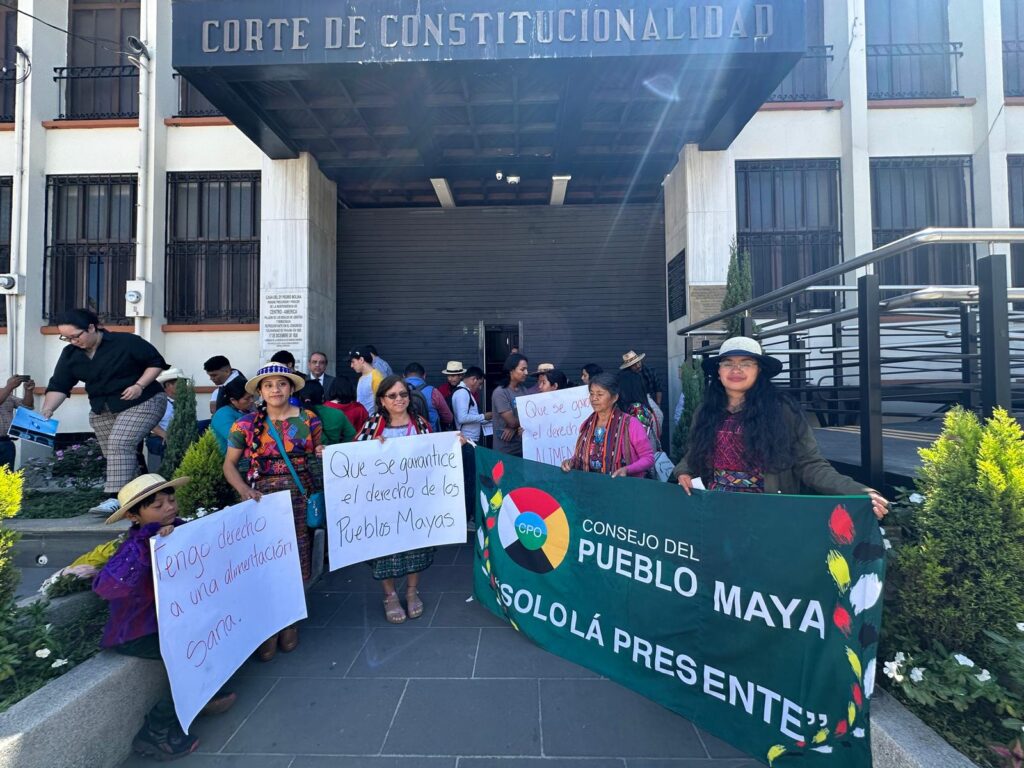
In 2012, a group of Maya authorities and leaders from the community of Antigua Santa Catarina Ixtahuacán filed a legal action before the Supreme Court of Justice, arguing for the right of Indigenous children to receive bilingual education (EBI). After an unfavorable ruling, they filed a lawsuit against the Minister of Education before the Constitutional Court, accusing her of violating their rights to preserve their K’iche’ language, culture, and worldview. In 2016, the Court granted a first-degree injunction and gave the Ministry of Education six months to ensure that EBI was implemented according to the established legislation and international standards. Additionally, the Court urged the Ministry to implement Maya bilingual education in all centers with indigenous student populations.
Only at the end of 2019 was the “Implementation Plan for the Bilingual, Multicultural, and Intercultural Education Model of Antigua Santa Catarina Ixtahuacán” approved, which included orders for the renovation of schools and the provision of computers and scholarships for children in grades one through six. The constitutional injunction set an important legal precedent in a country where EBI had been introduced in schools through international cooperation and state efforts—meaning it came from the top down, rather than as a demand from the communities. Today, however, Indigenous peoples are no longer viewed merely as objects of public policy, but as actual collective rights holders. It is these rights holders who are now demanding that national legislation and international standards be upheld.
Final Reflections
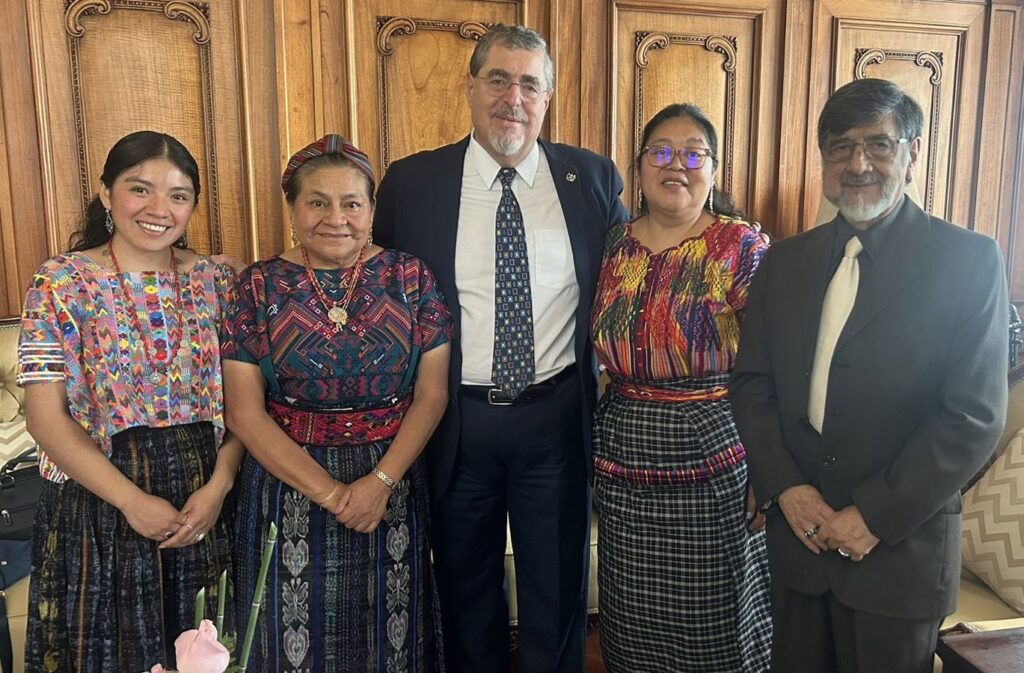
In January 2024, a new government took office in a politically complex and polarized context, characterized by corruption, impunity, and the violation of fundamental human rights. President Arévalo’s election was largely supported by the Maya movement and the international community. In the year since his administration began, there has been little progress on bilingual education (EBI) and its implementation. The Ministry of Education has focused its efforts on other issues, such as the balance of power between the state and the teachers’ union, gaining support from the Congress of the Republic, and improving school infrastructure.
Given the experience of both the current Minister of Education and the Vice Minister of EBI in interculturality and bilingualism, there have been announcements of plans to transform or reform EBI, starting with a comprehensive review of the EBI model that has been in place since 2009, the national curriculum, initial and ongoing teacher training, and primary education textbooks. These initiatives should begin to take shape soon.
A new agreement must center on the urgent need for interculturalization and decolonization of all Guatemalan education. From this foundation, the goal should be to interculturalize society as a whole and build the new intercultural citizens needed.
Overcoming the polarization in the country, achieving reconciliation among Guatemalan society, and establishing lasting peace requires a fundamental rethinking of the national education system.
In reality, the reinvention of EBI cannot be delayed any longer. The principles that guide it date back to the late 1980s. While new regulations and complementary strategies have been introduced since then, Guatemalan EBI is still largely conceived for Indigenous populations who are monolingual in a Maya language and live in rural and remote areas. The national education system has not undergone the intercultural transformation it requires, and its focus remains unchanged, still directed outward, despite the challenges outlined in the Peace Accords, which demand a localized and decolonized education.
Overcoming the polarization in the country, achieving reconciliation among Guatemalan society, and establishing lasting peace requires a fundamental rethinking of the national education system. Moreover, the pandemic exposed numerous inequalities and inequities that widen the gaps between Ladinos and Indigenous people. Consequently, the challenges are many: recovering historical memory, redefining the sense of nation, and calling for a national agreement on education. A new agreement must center on the urgent need for interculturalization and decolonization of all Guatemalan education. From this foundation, the goal should be to interculturalize society as a whole and build the new intercultural citizens needed for the 21st century.

Luis Enrique López is a sociolinguist, Peruvian educator, and Coordinator of the Ibero-American Institute of Indigenous Languages. Between 2007 and 2020, he lived in Guatemala, where he led the Educational Reform Support and Education for Life and Work (Eduvida) programs for the German Technical Cooperation (GIZ).