
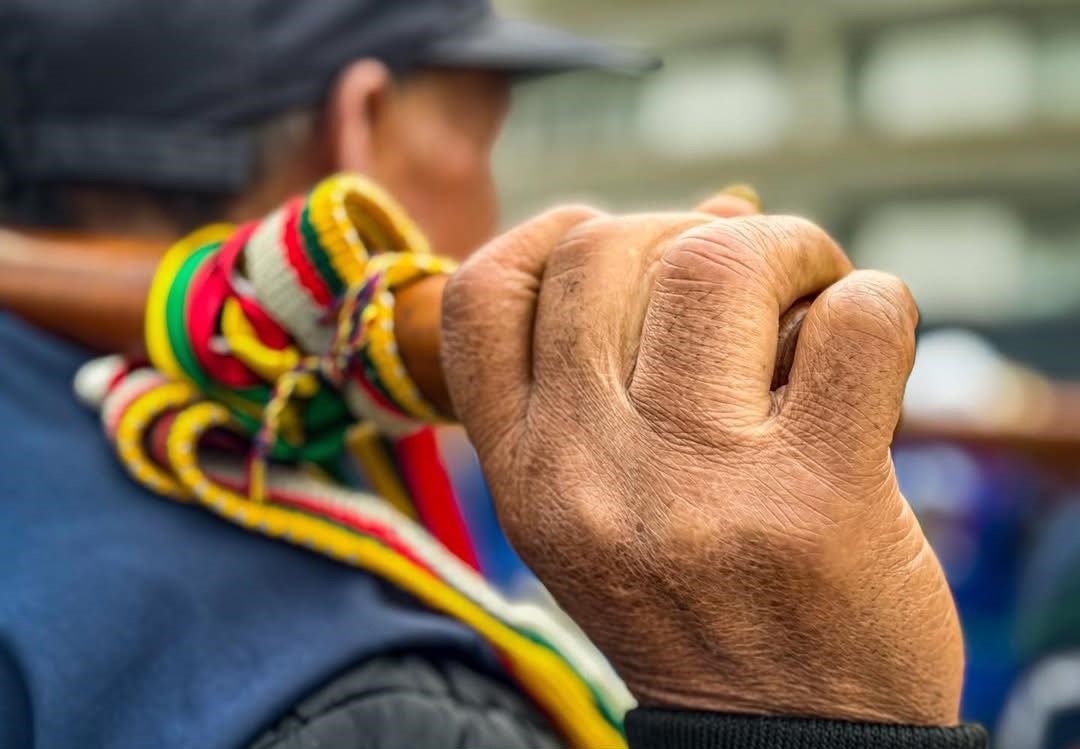
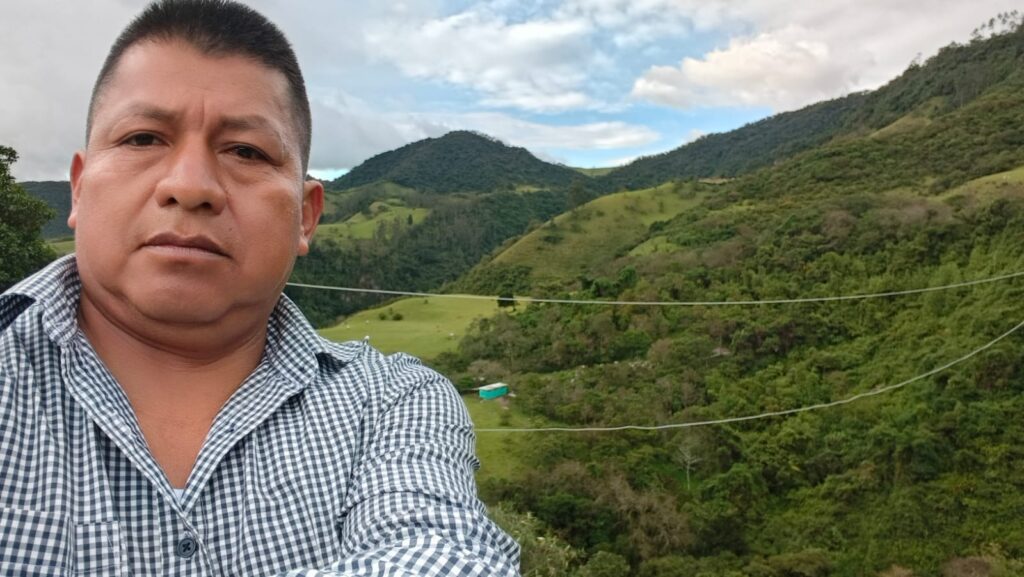
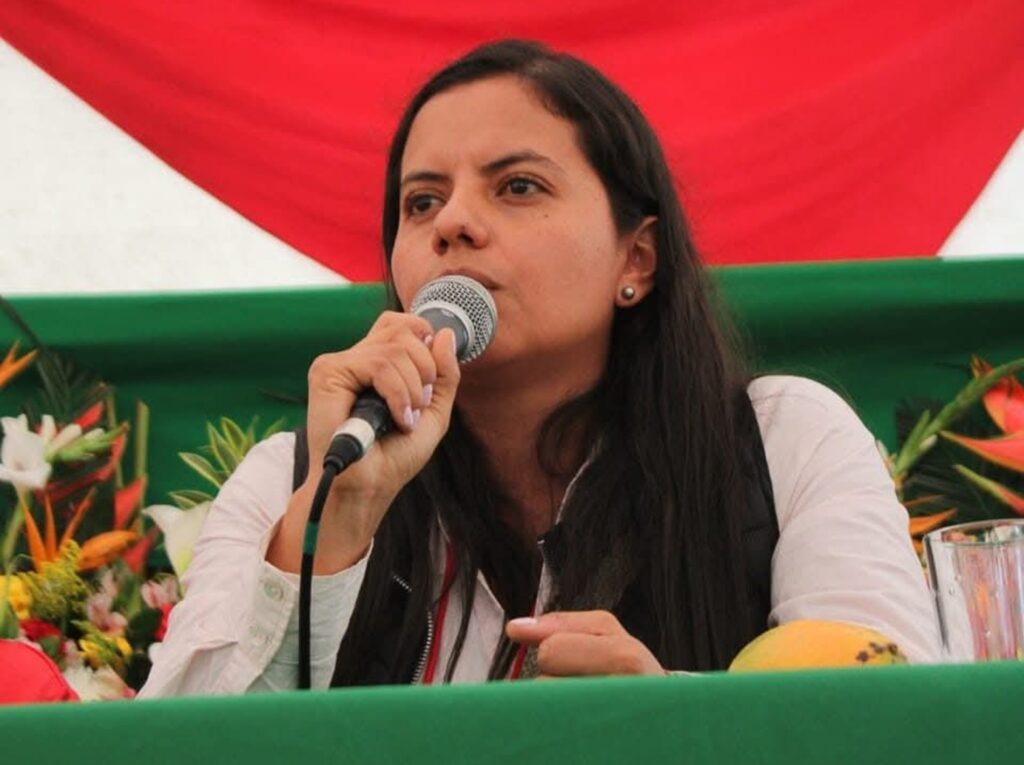
Recognised for its crucial role in protecting rights and resolving conflicts, Colombia’s justice system is one of the most advanced in the region in implementing Indigenous Peoples’ own justice systems. To delve deeper into the topic, we spoke with Nelson Cucuñame, lawyer for the Regional Indigenous Council of Cauca (CRIC) and a key driver behind national advances in Special Indigenous Jurisdiction, alongside Sofía Campos, criminal lawyer in the CRIC’s Customary Justice Programme.
Indigenous Debates: What Does the Concept of Special Indigenous Jurisdiction (JEI) involve?
Nelson Cucuñame: We can understand the Indigenous Customary Justice system through three fundamental components. First, the Law of Origin or Natural Law, which refers to the natural rules established by nature itself. Second, Derecho Propio —the so-called people’s constitution—which addresses all acts of disharmony and offences against the Law of Origin. Third, the wisdom and knowledge held by each community, organisation, or institution, reflected in their justice practices. These three elements form the legal foundation underpinning the entire administration of Customary Justice systems.
DI: What are the scope and limitations of the Special Indigenous Jurisdiction?
NC: The only limitation established by the Constitutional Court concerns crimes against humanity. Article 246 of the Political Constitution recognises the jurisdictional authority of Indigenous Authorities without imposing further restrictions—even regarding serious crimes such as drug trafficking, armed conflict activities, recruitment, or femicide. Therefore, within the framework of Customary Justice, there are effectively no other limits.
DI: What is the main barrier to implementing the JEI?
Sofía Campos: The greatest obstacle is the judiciary’s lack of understanding of Indigenous legal frameworks. Generally, Special Indigenous Jurisdiction is excluded from legal education because it is seen as “an Indigenous matter.” This ignorance originates in academia failing to grant it the recognition it deserves, which is a serious issue. Another challenge is that, although the 1991 Constitution established the JEI, no guarantees or funding were provided for its practical implementation. The Special Jurisdiction for Peace has existed for eight years and benefits from infrastructure, funding, organisation, and operational capacity. In contrast, the Special Indigenous Jurisdiction has functioned for 34 years without equipment, stationery, offices, or archives. It remains largely symbolic, recognising only Indigenous Authorities.
DI: How does the Special Indigenous Jurisdiction function in practice?
NC: Indigenous Authorities also act as judicial authorities and collaborate closely with a legal team and the Indigenous Guard, who conduct the technical work of investigating cases and collecting evidence, always respecting the rights of victims, and accused alike. Based on the evidence gathered, the Indigenous Authority enforces decisions made collectively by the community through its Assembly.
DI: How is the Special Indigenous Jurisdiction (JEI) implemented within the context of the internal armed conflict?
SC: First and foremost, it is essential to acknowledge the violence inflicted upon Indigenous communities. Article 246 of the Political Constitution grants Indigenous Authorities jurisdictional powers. This was a major achievement secured through the advocacy of the three Indigenous constituents and serves as a safeguard, empowering Indigenous Authorities judicially against armed actors. Undoubtedly, Article 246 recognises territorial security through Indigenous Authority; it protects Indigenous guards and provides a form of self-defence that, legally, has facilitated territorial control against armed groups’ influence.
DI: What principles guide the JEI in addressing situations of “disharmony”?
NC: For Indigenous Peoples, there is a principle called collectivity, which means that if an individual causes disharmony within their community, it affects the community collectively. Therefore, when examining a case, the focus is not solely on the individual but on the community as a whole. When applying sanctions—or remedies or sentences—we aim to involve the entire community in the process to support the person concerned.
DI: Why don’t you refer to it as a “crime”?
NC: We don’t speak of crime, but rather of illness: the offender is seen as someone who is unwell and needs to be supported and surrounded by the community to help them overcome that error, that illness, so they can, through their own actions, repair the harm caused within the community. In other words, there is a collective responsibility to help correct the damage done. Sanctions or remedies may include community service, restitution of property, educational or political training within the community, and can also entail the loss of political rights within the territory.
DI: Which has been the path towards establishing Special Indigenous Jurisdiction?
NC: The Customary Justice System has always existed among Indigenous Peoples. In 1991, public policy was formulated to protect this jurisdictional practice as a constitutional right. Since then, we have established bodies such as inter-jurisdictional and departmental councils, which bring together the entire sectional judiciary branch, all judicial auxiliaries nationwide, and Indigenous national organisations to design policies, strategies, and actions aimed at strengthening Indigenous Jurisdiction in Colombia. Despite numerous challenges, we have proposed alternatives and pathways that ultimately secure tangible guarantees for Indigenous Peoples: not only institutional and legal guarantees but also budgetary ones to implement justice—something that remains lacking.
SC: CRIC’s advocacy has succeeded in making Special Indigenous Jurisdiction a lived reality, going beyond mere legal and constitutional formalities. To achieve this, it facilitated dialogue between institutions and Indigenous communities to foster a shared understanding of the vision underpinning Customary Justice.
DI: What criteria has the Constitutional Court established for a case to be dealt within the Special Indigenous Jurisdiction?
SC: Indigenous Customary Justice and Special Indigenous Jurisdiction are related but distinct concepts. The JEI forms part of the Constitutional Ordinary Law that recognises the applicability of Customary Justice. Since 1993, the Constitutional Court has developed jurisprudence requiring Indigenous Authorities to establish four limiting elements: an objective element, a subjective element, a territorial element, and an institutional element. In other words, these four criteria must be met for a criminal case under the authority of a judge or prosecutor to be transferred to the Special Jurisdiction. While these criteria are quite restrictive, they have not prevented Indigenous community members from being exempted from other legal responsibilities. Furthermore, coordination means that an arrest warrant issued by Indigenous Authorities must be recognised and acted upon by the Prosecutor’s Office.
DI: How is coordination between the Special Indigenous Jurisdiction and the Ordinary Justice system carried out?
SC: Currently, Article 246 of the Political Constitution mandates that the law determines how coordination between the Special Indigenous Jurisdiction and the National Judicial System should be carried out. This has led the Constitutional Court to affirm that the constitutional recognition of Indigenous Peoples’ Customary Justice constitutes a jurisdiction in its own right, and that coordination with other jurisdictions must respect decisions issued by Indigenous Authorities.
DI: Was the Special Indigenous Jurisdiction a model for developing the Special Jurisdiction for Peace?
NC: The Special Jurisdiction for Peace (JEP) was established following the 2016 Peace Agreements between the Colombian State and the FARC-EP. It’s important to understand that this transitional justice system has incorporated many elements from the Special Indigenous Jurisdiction. These restorative elements facilitate reconciliation, forgiveness, and renewed harmony in the territories of both victims and perpetrators. As such, the JEP recognises the JEI as a justice-administering entity that should be protected and supported not only by the State but also by human rights organisations, both nationally and internationally.
DI: Could Colombia’s plural jurisdictional model work in other countries and regions where migrant populations are accustomed to different justice systems?
NC: Yes, it could be developed in a respectful and reciprocal manner that embraces pluriethnicity and plural jurisdiction. Educational efforts are crucial, focusing on interculturality and plural jurisdiction, involving academia, lawyers, political scientists, sociologists, and also public officials. It is essential to recognise that alternative systems can exist and function effectively, without imposing a single legal order over the entire territory. There are peoples with different ways of life and justice systems, whose authorities continue to support them wherever they reside. Such systems must be acknowledged and respected within the frameworks of human dignity and national and international human rights.

Laura Ann Kleiner is a lawyer specialised in human rights of Indigenous Peoples and migration. She currently works with Comundo at the Colombian organisation Corporación Jurídica Yira Castro.
Tullio Togni is an anthropologist specialised in self-protection, international humanitarian law, and human rights. He currently works with Comundo at the human rights observatory of the Regional Indigenous Council of Cauca (CRIC).