
Carbon markets transform pollution, conservation and territories into assets for certification, offsetting and trade. While framed as solutions to the climate crisis, in Indigenous territories they generate disputes over the control, use and meaning of nature. Appropriation now extends beyond land, oil, minerals and timber to encompass the capacity of forests to absorb carbon. This constitutes a more sophisticated form of dispossession, in which the language of climate action and finance masks new forms of intervention in these territories.
In Ecuador, the debate on carbon markets cannot be reduced to a technical discussion about climate finance, emissions reduction or offsetting mechanisms. At its core, it is a political dispute over who controls territories, who defines the value of nature and who benefits from the climate crisis. From a critical perspective, carbon markets represent a strategy advanced by governments, international organisations and large corporations to preserve the very structures that drive pollution, under the guise of “offsetting” or “neutrality”.
Rather than delivering genuine emissions reductions at source, these mechanisms enable major polluters to continue their activities while purchasing carbon credits generated elsewhere, particularly in forested and biodiverse regions. Under this logic, forests, rivers and territories inhabited by Indigenous Peoples are no longer treated as spaces of life, memory and self-determination, but are instead reframed as tradable climate assets within a global market.
This process entails a renewed form of commodification of nature, whereby the carbon stored in these territories is assigned an economic value, typically determined outside the communities themselves. International studies on Ecuador warn that, alongside programmes such as Reducing Emissions from Deforestation and Forest Degradation (REDD+) and results-based payment schemes, a range of mechanisms has taken shape that draws territories into systems of control, monitoring and carbon-related conditionalities, without addressing the underlying structural drivers of deforestation and the climate crisis.
A sophisticated form of dispossession
Although framed as opportunities for conservation or finance, carbon credits tend to generate unequal power relations, opaque contractual arrangements, restrictions on customary territorial use and new pressures on community governance. Ecuador’s rapid opening to these markets has unfolded in a context marked by regulatory gaps, limited public debate and clear state contradictions—such as the persistence of fossil fuel subsidies alongside the promotion of climate offsetting mechanisms. This tension reveals that the aim is not to transform the model that drives territorial destruction, but rather to render it compatible with emerging “green” business opportunities.
In recent years, the Ecuadorian government has been putting in place a series of instruments to position the country within carbon market and climate offsetting frameworks. Notably, this includes the creation of the Ecuador Zero Carbon Programme (PECC) through a ministerial agreement, designed as a voluntary scheme enabling companies and institutions to measure, reduce and offset their carbon footprint. In parallel, the State maintains an official system for certifying carbon footprint reductions and has reinforced its technical framework through specific regulations governing the programme’s implementation, as well as the establishment of a Strategic Committee on Carbon Footprint.
Appropriation now extends beyond land, oil, minerals and timber to encompass the capacity of forests to absorb carbon. This represents a more sophisticated form of dispossession, in which the language of climate action and finance masks new forms of intervention in these territories.
Carbon markets do not constitute a just response to climate change, but rather an extension of the same colonial and extractive model.
This trend is further reinforced by the promotion of REDD+ mechanisms and results-based payments in forest areas, alongside regulatory steps enabling the national authority to register mitigation projects that generate carbon credits under market-based mechanisms linked to Article 6 of the Paris Agreement. From a critical standpoint, these measures suggest that the State is not only advancing climate governance policies, but also reconfiguring its institutional framework to facilitate the country’s integration into a carbon market that turns pollution, conservation and territories into objects of certification, offsetting and trade.
From this perspective, carbon markets do not constitute a just response to climate change, but rather an extension of the same colonial and extractive model. Appropriation now extends beyond land, oil, minerals and timber to encompass the capacity of forests to absorb carbon. This represents a more sophisticated form of dispossession, in which the language of climate action and finance masks new forms of intervention in these territories. For this reason, the debate on carbon must move beyond the economic benefits it promises and instead centre on its impacts on the autonomy, self-determination, collective rights and territorial sovereignty of Indigenous Peoples, who have historically safeguarded these ecosystems.
Debating carbon markets from the territory
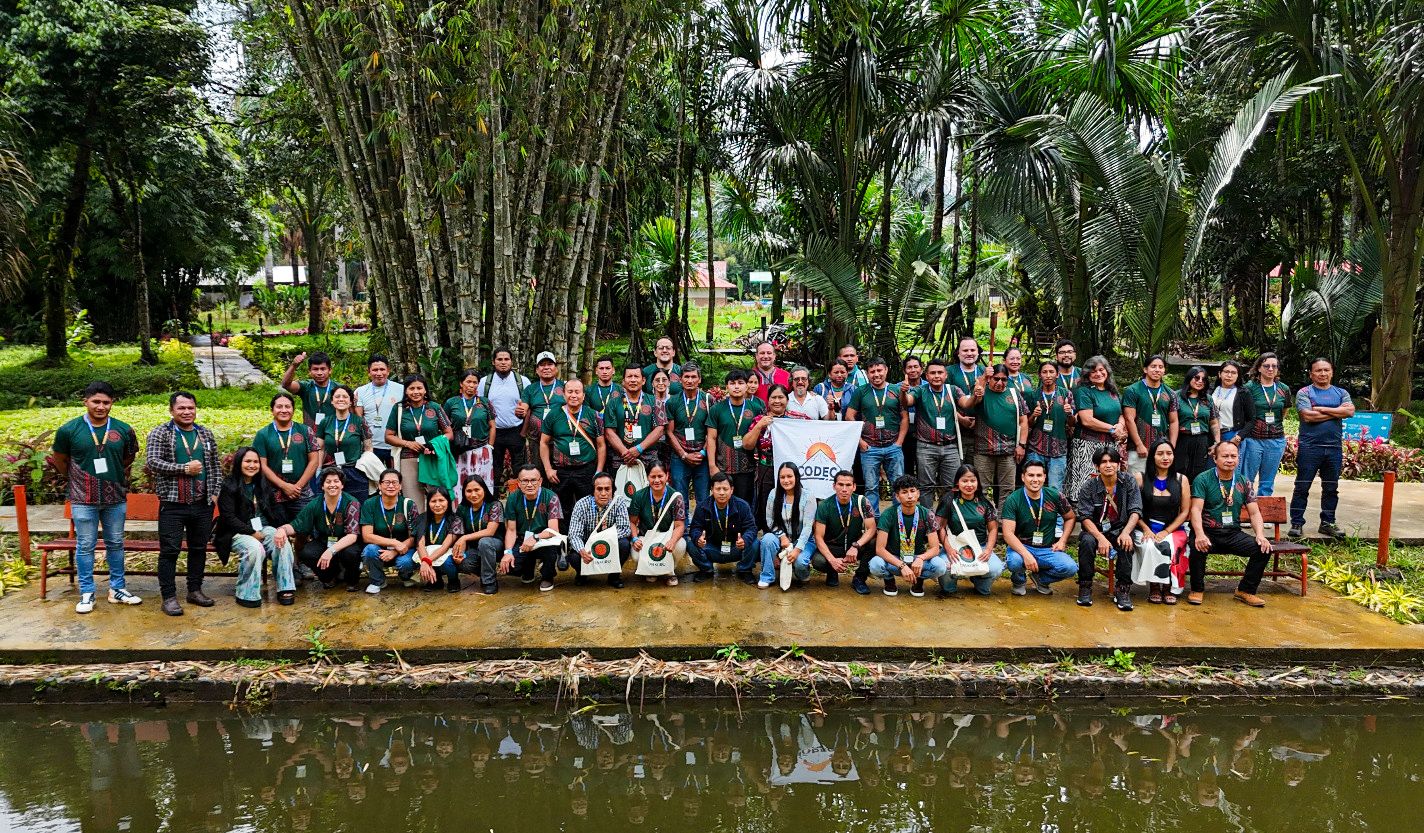
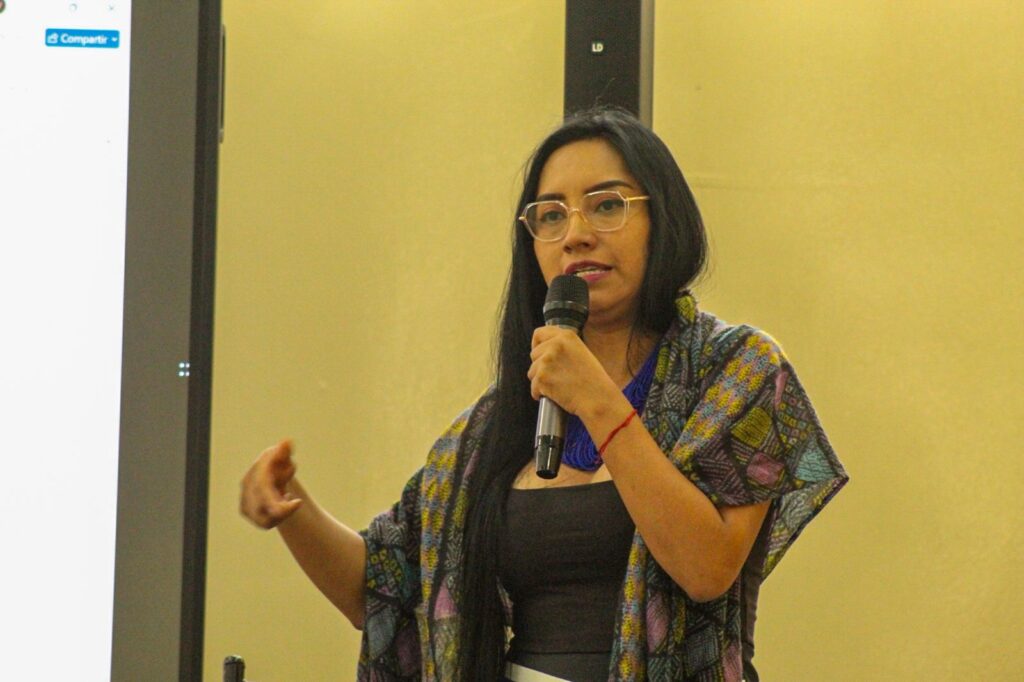
These global dynamics take on concrete form within territories, where their impacts and tensions become increasingly visible. Although the issue features prominently in international climate forums—such as the Conferences of the Parties (COPs) and other spaces linked to the Convention on Biological Diversity (CBD)—very little, if anything, is discussed at the territorial level, particularly with the communities that mitigate greenhouse gas emissions on the front lines. In response to this gap, in February 2026 representatives of grassroots communities from the Kichwa Nation of Pastaza convened a space for critical reflection on carbon markets in the city of Puyo, Pastaza Province, in the central Ecuadorian Amazon.
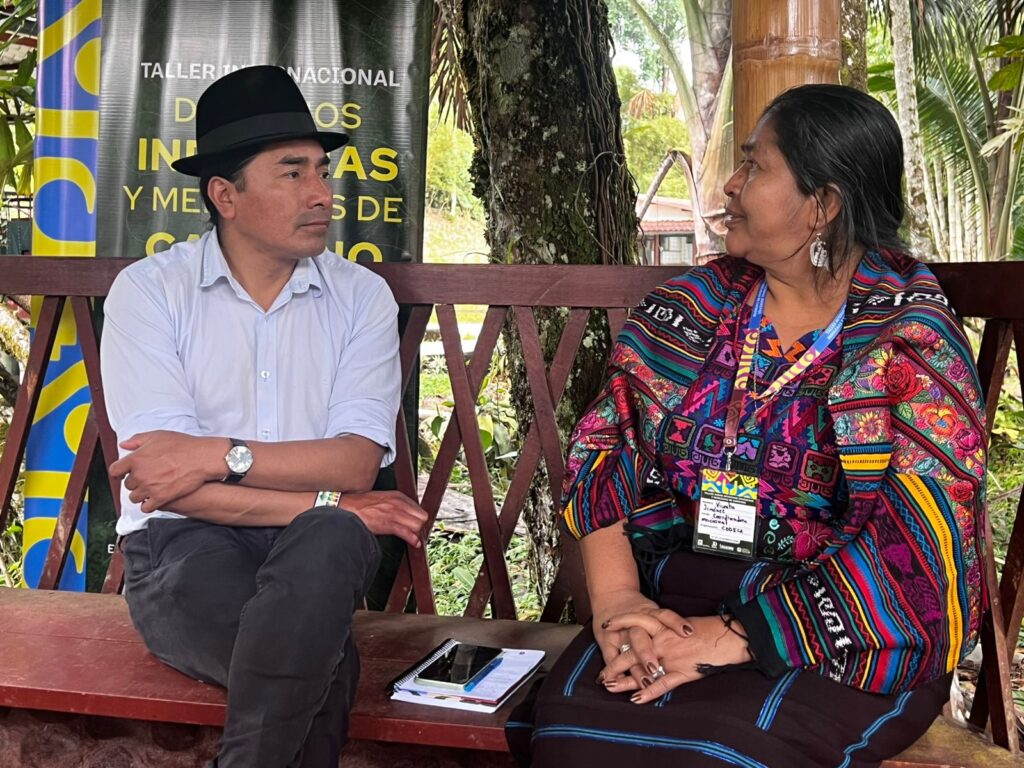
This international event was convened by Pastaza Kikin Kichwa Runakuna (PAKKIRU) and the Kichwa Institute of Biotechnology Sacha Supai (IQBSS), in coordination with the International Work Group for Indigenous Affairs (IWGIA) and Paz y Solidaridad, and brought together Indigenous leaders who shared experiences from Bolivia, Guatemala, Costa Rica and Colombia. Through this exchange of knowledge among Indigenous Peoples and organisations from Mesoamerica and South America, the initiative sought to strengthen capacities to build and exercise sovereignty, while resisting alignment with colonial agendas that impose policies in contexts shaped by unequal power relations.
Carbon markets are seen as a form of contemporary extractivism that threatens forests, where more than 25,000 Kichwa inhabitants sustain an ancestral system of control and stewardship over the Amazonian lowlands.
Carbon markets are seen as a form of contemporary extractivism that threatens forests, where more than 25,000 Kichwa inhabitants sustain an ancestral system of control and stewardship over the Amazonian lowlands.
Among the key premises emerging from the meeting—which brought together more than 80 Indigenous leaders from across the territories—participants concluded that carbon markets constitute capitalist and hegemonic strategies that undermine territories and Indigenous ways of life. In the case of Ecuador, carbon markets are seen as a form of contemporary extractivism that threatens forests, where more than 25,000 Kichwa inhabitants sustain a long-standing, ancestral system of control and stewardship over the Amazonian lowlands. This perspective is politically and ideologically grounded in the philosophy of Sumak Kawsay and its four pillars: Sumak Ayllu [harmonious community life], Sumak Allpamma [balanced relationship with the land], Sumak Mirachina [collective flourishing] and Sacha Runa Yachay [forest-based knowledge].
This position brings into focus at least three central tensions: the struggle over territorial control, the imposition of market logics on Indigenous ways of life, and the persistence of power asymmetries in climate governance. Convened as a space for reflection to critically examine carbon markets and other forms of climate finance affecting territories, the meeting underscored the central role of Indigenous Peoples and organisations in strengthening and sustaining autonomous territorial agendas.
Indigenous voices
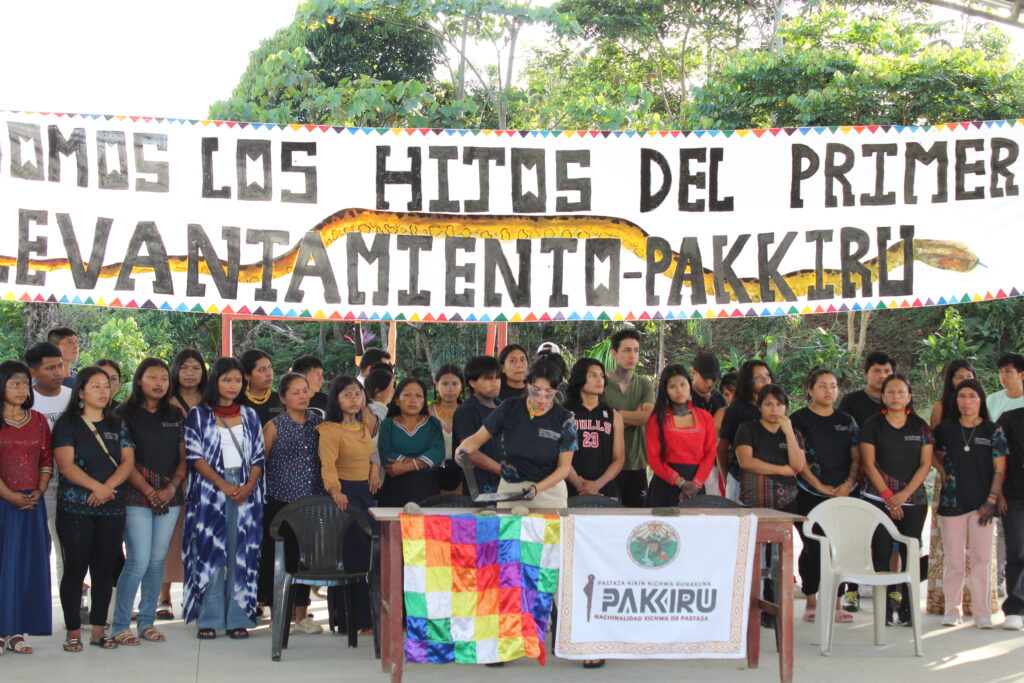
In Ecuador, agendas around carbon markets are being shaped through participatory processes grounded in ancestral knowledge and the philosophy of Sumak Kawsay. The Yanapak Kuraka (Vice-President) of the Kichwa Nation of Pastaza, Pashpanzhu Vitery, reflected at the close of the workshop: “It is essential, as our ancestors have done, to create spaces for dialogue where we can inform ourselves and listen to technical experts, in order to develop positions against these extractivist policies that seek to control and manage the resources of Indigenous territories.”
Linking current carbon market proposals to historical cycles of dispossession, and highlighting the continuity of extractive patterns in new forms, Pashpanzhu Vitery concluded: “Members of our ayllukuna [Indigenous kinship-based communities] have long heard how our grandparents had to survive, struggle and sustain resistance in the face of successive waves of plunder. I recall many stories of exploitation—from rubber to mining and oil—and we hope that carbon markets will not become a new strategy of neo-colonisation.”
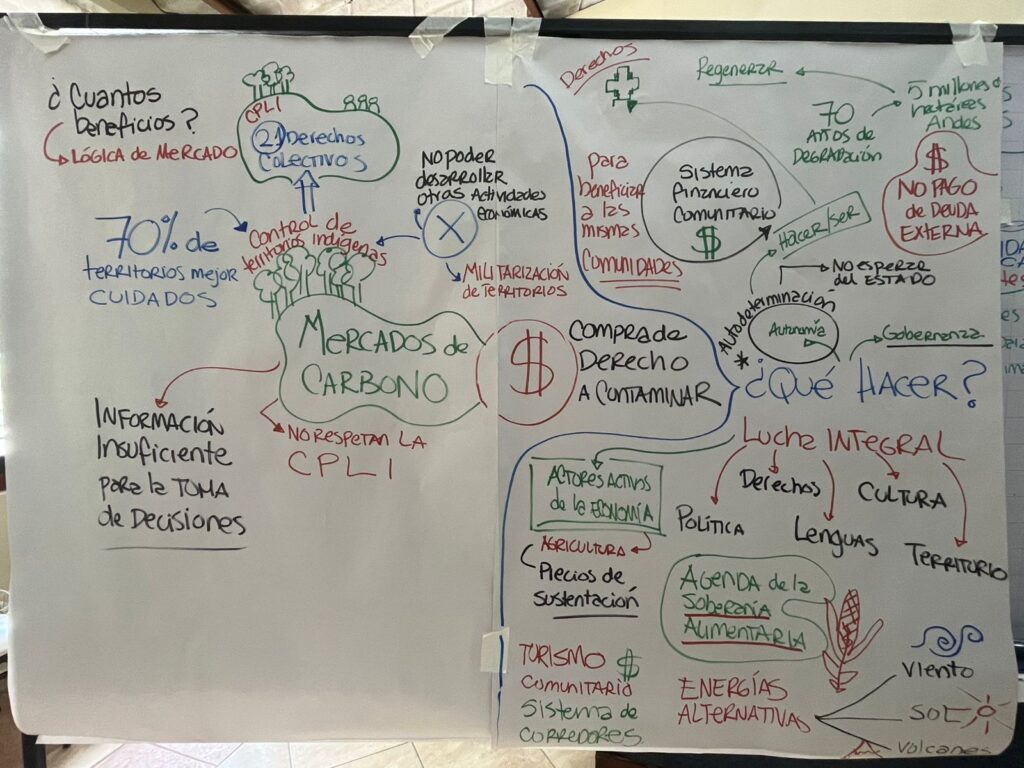
“While 70 per cent of the best-preserved lands are Indigenous territories, the resources generated for climate change mitigation do not reach Indigenous Peoples”, said Leónidas Iza.
“While 70 per cent of the best-preserved lands are Indigenous territories, the resources generated for climate change mitigation do not reach Indigenous Peoples”, said Leónidas Iza.
Among the invited speakers and high-level participants was Leonidas Iza, former president of CONAIE and current president of Ecuarunari, the Andean regional branch of the Indigenous Movement representing Kichwa peoples of the highlands. “Those behind carbon markets are the very same industries responsible for pollution; it therefore becomes a closed circuit controlled by the same companies,” the leader stated, echoing the concerns raised by participants.
Throughout his intervention, Leonidas Iza underscored the contradiction between the central role of Indigenous Peoples in conserving territories and their exclusion from the economic benefits generated by climate mechanisms: “While 70 per cent of the best-preserved lands are Indigenous territories, and grassroots communities are those who best understand the care and protection of nature, the resources generated for climate change mitigation do not reach Indigenous Peoples. We are now discussing how to access financial resources and losing sight of the broader horizon of our struggles. We are no longer debating our collective rights, such as self-determination, but rather market logics imposed by capital.”
Beyond carbon: challenges for territorial autonomy
After three days of debate, a set of strategic lines emerged which, rather than forming a closed agenda, reflect evolving horizons shaped from within the territories: the need to strengthen community dialogue, political advocacy, organisational coordination, self-sustained economies and Indigenous communication.
Firstly, participants underscored the importance of sustaining spaces for dialogue rooted in community assemblies as the primary arenas for deliberation and decision-making, incorporating culturally grounded tools that ensure understanding, participation and ownership at the territorial level. At the same time, the need to reinforce alliances and coordination processes across different scales was emphasised, in order to consolidate shared positions among peoples and organisations, as well as to expand networks of collaboration beyond national borders.
The challenge lies not only in accessing the economic benefits of climate mechanisms, but in defining the conditions under which these do not undermine self-determination.
The challenge lies not only in accessing the economic benefits of climate mechanisms, but in defining the conditions under which these do not undermine self-determination.
In the sphere of political advocacy, participants emphasised the urgency of expanding Indigenous Peoples’ participation in decision-making spaces, both nationally and internationally, in order to advance their own agendas and demand compliance with collective rights recognised in international instruments. At the same time, the importance of consolidating self-sustained economies rooted in territorial practices—such as chakras (traditional Indigenous agroforestry system), community-based tourism and ancestral medicine—was reaffirmed as a foundation for self-governance and effective autonomy, independent of conditional financing schemes.
Finally, the need to strengthen Indigenous communication systems was highlighted, enabling the articulation of networks across territories, the visibility of key issues, and the continuity of processes of analysis and decision-making within Indigenous organisations themselves. In this context, the challenge lies not only in accessing the economic benefits of climate mechanisms, but in defining the conditions under which these do not undermine the autonomy, self-determination and the distinct ways of life of Indigenous Peoples.

Paul Andrés Sabando Mosquera is a Geographic Technician at the Quichua Institute of Biotechnology Sacha Supay (IQBSS). The IQBSS’s main objectives are the conservation of ecosystems and biodiversity in Kichwa territories of the southeastern Ecuadorian Amazon, through socio-environmental research and management plans.

Andrés Tapia is a Media Technician (Härnösand), holds a degree in Biological Sciences (UCE) and a Master’s in Biodiversity (UIMP). He is currently a PhD candidate at the University of Research and Innovation of Mexico and serves as Political Advocacy Coordinator for the Latin American Coordinator of Indigenous Peoples’ Film and Communication (CLACPI).