
On 26 March, the Plurinational Assembly approved Bill of Law No. 157, authorising the conversion of small-scale agricultural holdings into medium-sized properties, and forwarded it to the Executive for promulgation. This is a plainly unconstitutional measure, as it both undermines and distorts one of the agrarian categories expressly protected by the Constitution. The law therefore represents a change that calls into question the structural guarantees of Bolivia’s agrarian regime and directly affects the material foundations of peasant life.
The bill, still pending promulgation, would allow plots classified as small-scale holdings to be converted into medium-sized properties through a simple request by the owner, within short timeframes and without checking its Social and Economic Function (FES). In public debate, the initiative has been framed as a way of facilitating access to rural credit and stimulating the agrarian economy. However, this explanation is insufficient without recognising that small-scale property in Bolivia is not merely another form of private ownership; it is a constitutionally protected category whose purpose is not capital accumulation but the subsistence and reproduction of the peasant family unit.
The passage of this law comes in a political context marked by the advance of conservative forces which, from within the state, are seeking to reorient the agrarian model in favour of agro-industrial and corporate interests. It is significant that the bill has been promoted by figures such as Branko Marinković, a leading representative of the Santa Cruz business elite and a long-standing advocate of more flexible land ownership regimes. In this context, the measure forms part of a broader offensive aimed at dismantling the limits that Bolivia’s agrarian framework has historically placed on the commodification of land.
Reactions have been swift. Various peasant and Indigenous organisations have declared a state of emergency and announced mobilisations in defence of land, drawing on a long history of struggle that recognises this measure as a direct threat to hard-won gains. Small-scale property is not simply a legal category; it is a safeguard designed to sustain livelihoods and prevent dispossession. Weakening it would entail dismantling the protective nature of the current agrarian regime. This is therefore not an isolated development but the first step in a broader strategy which, driven by the same centres of power, also targets communal property and Indigenous peasant territories.
Small-scale property in Bolivia’s agrarian regime
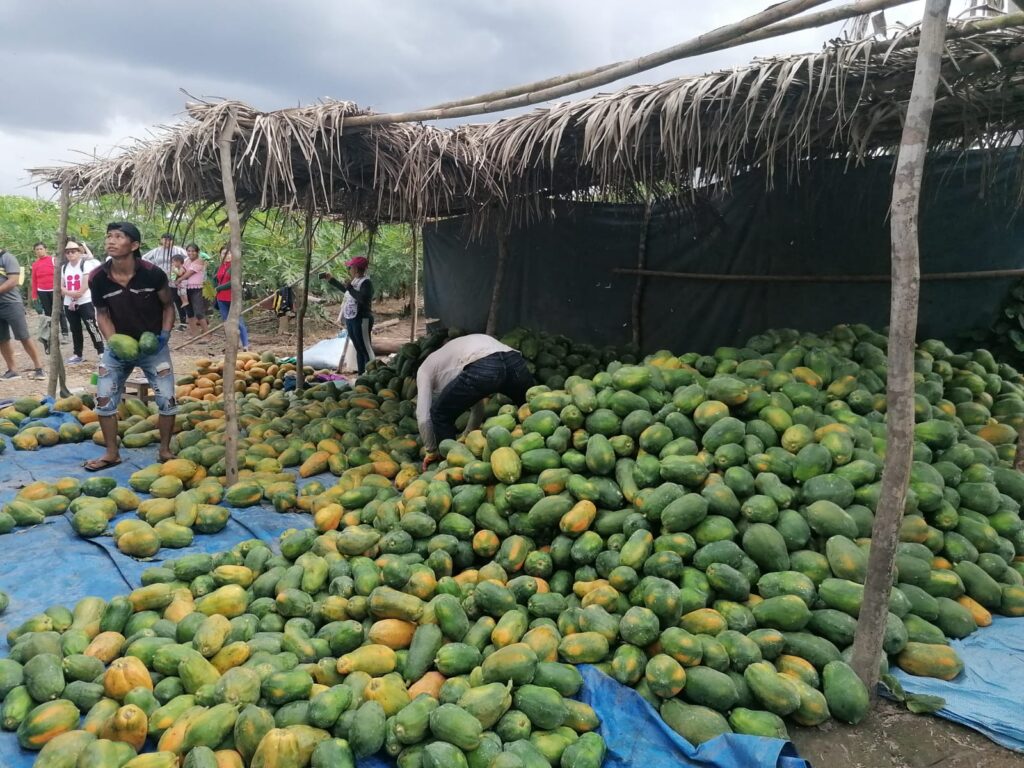
Within Bolivia’s agrarian regime, small-scale property is a form of individual agricultural ownership whose purpose is the subsistence and reproduction of the peasant family unit. The National Institute for Agrarian Reform Law (INRA) defines it as the source of subsistence resources for the holder and their family, while Article 394 of the Constitution protects it as indivisible, non-seizable family patrimony and exempt from taxation. This configuration reflects a clear political choice: to exclude small-scale property from market logic. It is not conceived as an asset to be traded, mortgaged or integrated into processes of capital accumulation but rather as a material foundation intended to sustain peasant life and shield it from indebtedness, dispossession and the reconcentration of land.
In Bolivia, small-scale property is not a concession to individual smallholders but an agrarian institution of social protection forged in the context of the struggles surrounding the 1953 Agrarian Reform, which sought to dismantle the latifundio system and secure the livelihoods of rural men and women. Its constitutional recognition in 1967 reaffirmed this logic by establishing a framework aimed at preventing peasant plots from once again being drawn into cycles of seizure, loss and reconcentration. The 2009 Constitution renewed this protection within a new plurinational order, situating it within an agrarian regime that coexists alongside other collective forms of property.
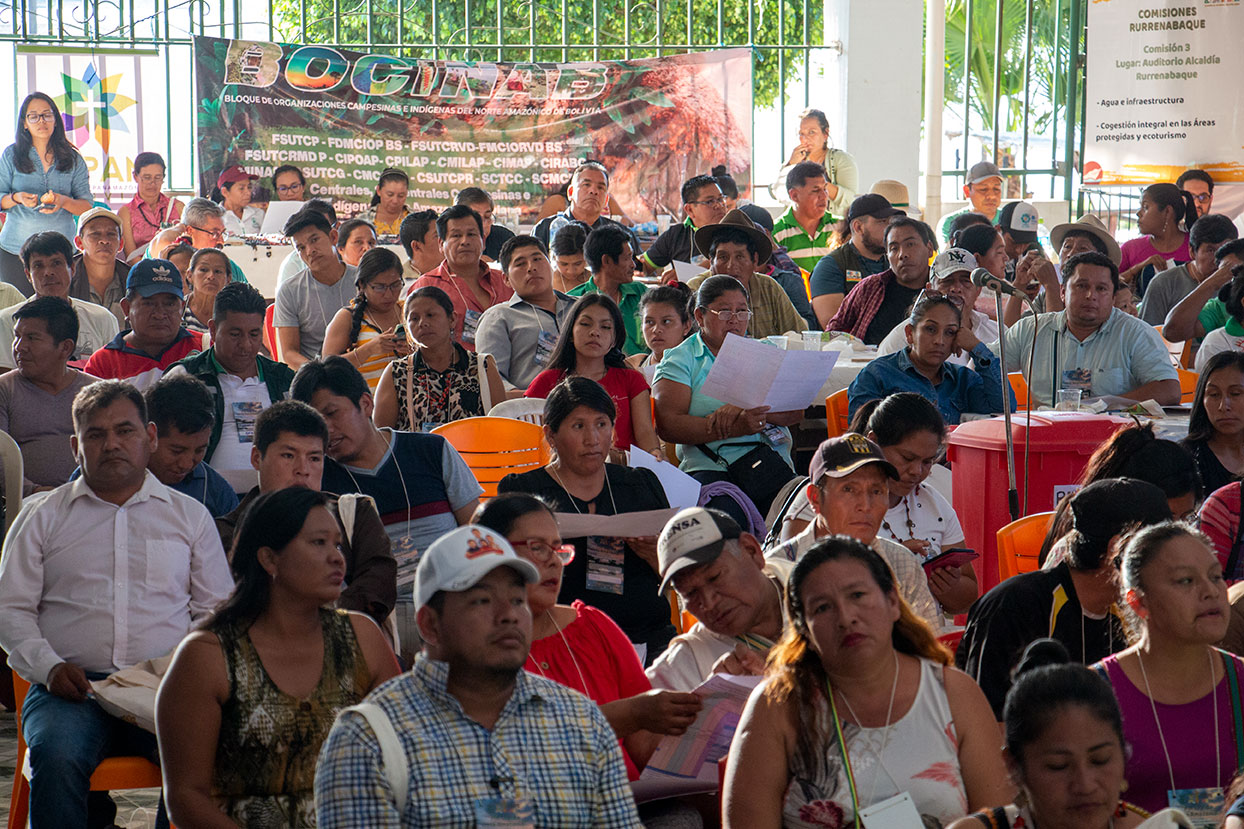
The subject of this form of property is the peasant, understood not as an isolated owner but as part of a broader collective political organisation. Small-scale property constitutes the material basis upon which organised peasantry is structured, expressed through bodies such as the Confederación Sindical Única de Trabajadores Campesinos de Bolivia and the Confederación Sindical de Comunidades Interculturales Originarias de Bolivia. In this framework, land is not merely a means of production but a key element that underpins organisation, political representation, territorial control and the defence of rights. Its protection therefore safeguards not only an individual asset but a social fabric historically built by the peasant movement.

A conversion that strips away constitutional protection
Article 394 of the Constitution expressly states: “Small-scale property is non-seizable, constitutes family patrimony and is exempt from taxation.” This means that small-scale property is protected in order to prevent peasants from losing their material basis of life as a result of debt or market pressures. It should also be recalled that its original basis lies in land allocation — that is, the free granting of land by the state to ensure dignified living conditions. It is not an asset acquired on the market for speculative purposes but a space assigned to sustain peasant livelihoods.
By allowing the conversion of small-scale property into medium-sized holdings, Bill of Law No. 157 is clearly unconstitutional as it effectively removes this protection. The land ceases to be non-seizable and becomes liable for use as collateral. In such circumstances, if a peasant is unable to meet their obligations, they may lose their property. This is not a side effect; it is the direct outcome of the model being advanced: to open the door for peasant land to enter financial circuits and become exposed to appropriation by actors with greater economic power. In this way, the law reintroduces conditions for the reconcentration of land and the reconfiguration of the latifundio, in clear contradiction with Article 398 of the Constitution.
The law opens the door to a financial model that requires land as collateral and, in cases of default, enables its loss. Far from promoting rural development, the measure thus forces the commodification of peasant living spaces.
The law opens the door to a financial model that requires land as collateral and, in cases of default, enables its loss. Far from promoting rural development, the measure thus forces the commodification of peasant living spaces.
More troubling still, the approved text establishes a ten-year grace period during which compliance with the Social and Economic Function (FES) will not be subject to verification. This is a cornerstone of Bolivia’s agrarian regime, as the FES legitimises property on the basis of its use and productive purpose. By suspending its verification for a decade, the law is effectively dismantling one of the principal oversight mechanisms, allowing converted plots to remain idle or to be redirected towards purposes unrelated to their social function, thereby entrenching a logic of accumulation that the Constitution was designed to restrain.
The main justification advanced for the measure is that conversion will enable peasants to access credit and, in turn, improve production. In practice, however, it opens the door to a financial model that requires land as collateral and, in cases of default, enables its loss. Far from promoting rural development, the measure thus forces the commodification of peasant living spaces and deliberately weakens an agrarian regime specifically designed to protect them.
An irregular legislative process with no social participation
The legislative handling of Bill of Law No. 157 was marked by significant irregularities that call its validity into question. The bill was initially approved by the Chamber of Deputies during the previous legislative term but was subsequently amended in the Senate by the committee chaired by Branko Marinković, introducing substantial changes to its content. Despite this, the amended version was not returned for detailed scrutiny but was instead approved directly in plenary, securing its passage. As a result, the text as adopted has not been subject to sufficient or proper deliberation, despite altering key elements of the agrarian regime.
The issue lies not only in how the bill was passed but also in what was passed. The original draft already proposed converting small-scale property into categories subject to market dynamics. The Senate, for its part, removed references to corporate ownership but failed to address the underlying problem. On the contrary, it streamlined the conversion procedure, reduced oversight and introduced an expedited ten-day timeframe for processing requests. In practical terms, this has facilitated and accelerated a mechanism through which constitutionally protected property can lose that protection. This is not a correction but a redesign aimed at making the transformation of the small-scale property regime more rapid and effective.
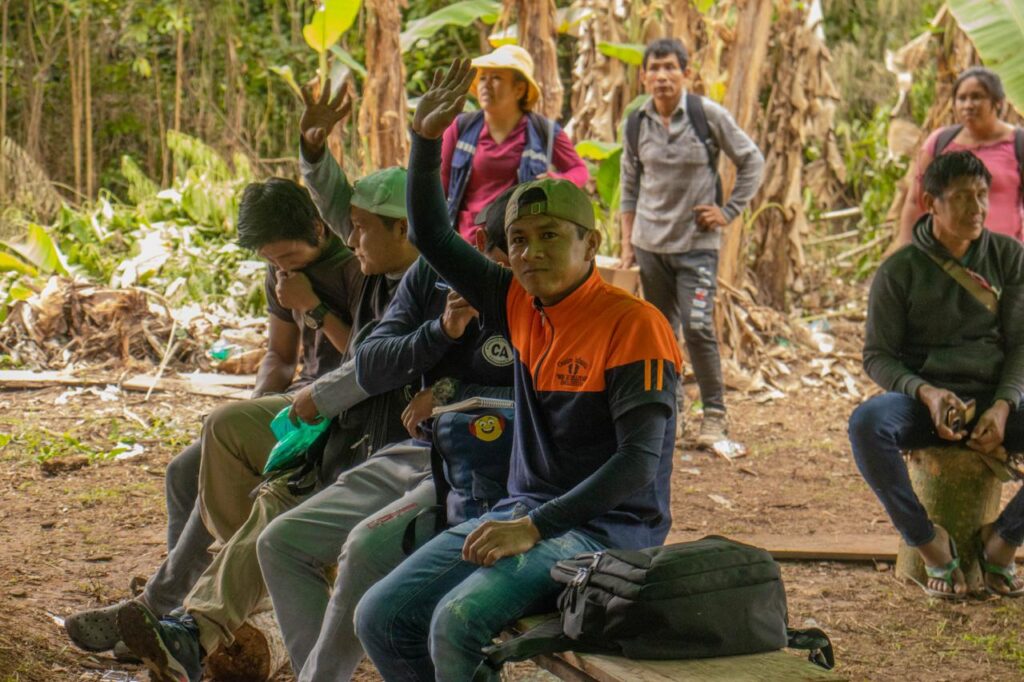
An even more serious omission must be noted: the absence of consultation and participation on the part of peasant and Indigenous organisations on a matter that directly affects their land. This is not merely a technical issue; legislation is being enacted on the material basis of peasant life without hearing from those who depend on it. The request for legislative reconsideration submitted on 31 March by Patricia Helen Patiño raised these concerns but failed to secure the required two-thirds majority. As a result, a law lacking sufficient debate and adopted without the participation of those most directly affected has been pushed through.
Land and territory are not for negotiation
The approval of Law No. 157 has prompted an immediate response from peasant and Indigenous movements across the country. Various organisations have declared a state of emergency and issued statements rejecting a law they deem unconstitutional and aligned with the interests of agro-industrial actors, large landowners and private banks. They have also announced mobilisations and the filing of constitutional challenges should the law be promulgated, signalling the beginning of an open confrontation over a measure that directly affects the material basis of their existence.
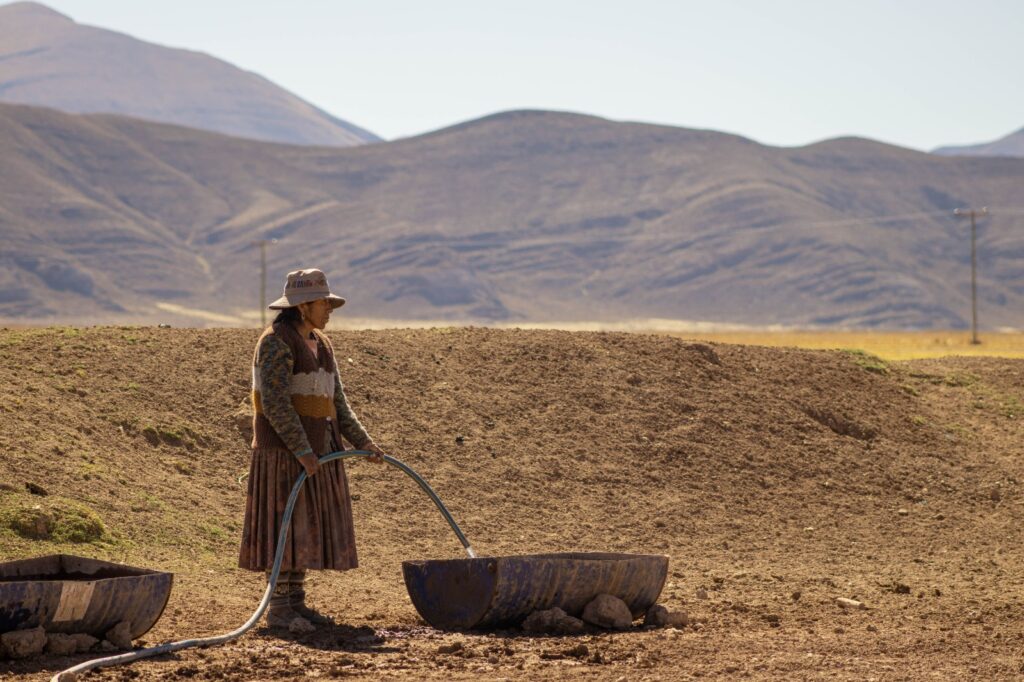
This rejection rests on a clear understanding of what is at stake. Small-scale property is not merely a legal category; it is a historic achievement. Its constitutional protection was not a concession but the outcome of struggles aimed at securing an autonomous material base for peasant families. To alter its legal framework is therefore to reshape fundamental conditions of access to and control over land while opening up the possibility of its renewed concentration in the hands of powerful groups.
In this context, Law No. 157 does not stand as an isolated development but as the starting point of a broader offensive. Weakening small-scale property opens a pathway that could extend to other forms of tenure, particularly communal property and Indigenous peasant territories. What is at stake is not only a category of ownership but the protective nature of Bolivia’s agrarian regime as a whole. The mobilisation now being announced thus constitutes a pre-emptive defence against a process that is seeking to reconfigure land as a market commodity rather than as the foundation of life.

Fátima Monasterio Mercado is a lawyer and researcher at Fundación Solón and coordinates the Working Group on Indigenous Peoples, Autonomies and Collective Rights at the Consejo Latinoamericano de Ciencias Sociales.