
The Sámi Indigenous People inhabit Norway, Sweden, Finland and Russia’s Kola Peninsula. Given the limited number of researchers, as well as geographical dispersion and isolation, cooperation plays a key role in fostering academic exchange and disseminating research. In-person symposia also bring researchers together, strengthening collaboration and building synergies. At the same time, such collaborative initiatives contribute to more ethical approaches to research on Indigenous issues.
Academic cooperation and networking are essential for early-career researchers, as they enhance career opportunities while also providing personal and social support within academia. This is particularly important for early-career researchers in Sámi Studies, who benefit from engaging in networks that extend beyond their own institutions. There are three main reasons for this.
Firstly, there are often only one or a few early-career researchers within Sámi Studies at a given institution, which can limit opportunities for scholarly exchange, feedback, and peer support in the immediate academic environment. Secondly, research within Sámi Studies may encounter limited support within academic environments, which can influence opportunities for collaboration, visibility, and professional development. Thirdly, the dispersion of researchers across different institutions both inside and outside Sápmi means there are long physical distances between people working within Sámi Studies.
These three factors can contribute to experiences of isolation among early-career researchers in Sámi Studies. Faced with this situation, building a research community is a key strategy with which to address these challenges, and would be of benefit to both Indigenous and non-Indigenous researchers.
These special conditions are not unique to Sámi Studies but reflect broader structural features of Arctic Indigenous research environments.
The case of NorrSam
This sense of isolation can have consequences for the academic careers of early-career researchers in Sámi Studies. They do not know researchers at other institutions, they do not get information about events, research or seminars going on at other institutions, and they experience a lack of support. In addition, this shortcoming also makes it harder to do research communication, especially in a field like Sámi Studies where outreach can result in negative comments from the public. In this context, it becomes harder to support each other and help each other to find jobs and publishing opportunities.
One concrete example of the potential for cooperation in the field of Sámi Studies is the NorrSam network, created by early-career researchers some 15 years ago. One of NorrSam’s initiators, Anna-Lill Drugge describes how a network such as NorrSam could influence the field by challenging structures, methods and theories based on cooperation across departments and institutions. In the context of the network, NorrSam members also cooperated on research and writing, including on the ethics of Indigenous research. As the members of NorrSam continued their academic careers after their doctoral studies (many of them are still working in academia, and even supervising their own doctoral candidates nowadays), the network faded out.
There were many early-career researchers interested in becoming part of the network and its activities but a lack of structural, institutional and financial support made it difficult to continue organising activities.
There were many early-career researchers interested in becoming part of the network but a lack of structural, institutional and financial support made it difficult to continue organising activities.
In 2020, Paulette van der Voet and other new doctoral candidates at Ubmejen universitiähta (Umeå University) tried to revitalise the network. At the start, NorrSam grew rapidly as an online network because of the pandemic. Although there were certainly benefits to online networking during the pandemic, the first real feeling of connectedness came when hybrid colloquia were organised and members started to meet each other face to face in other contexts. There were many early-career researchers interested in becoming part of the network and its activities but a lack of structural, institutional and financial support made it difficult to continue organising activities.
Organising this type of activities does require a lot of planning, both for the activity itself and for finding funding for the activities. In a context where doctoral students face strong expectations to complete their theses within a limited timeframe, allocating time to network-building and the organisation of activities that do not directly contribute to their dissertation may be difficult to justify.
A symposium in Sámi territory
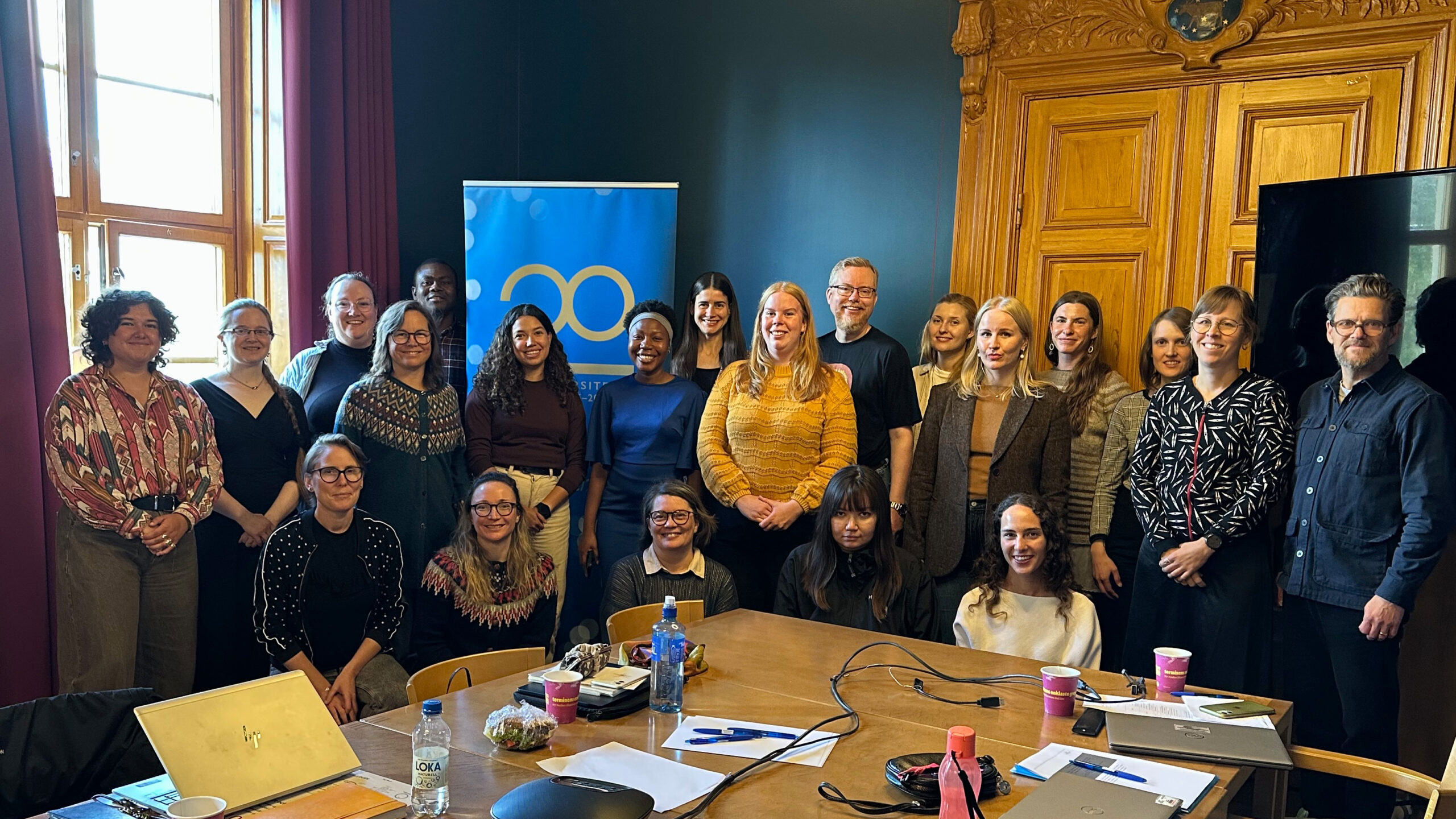
This interest in and need for networking opportunities were also reflected in the first symposium for early-career researchers working on Sámi issues at Gaskeuniversiteete (Mid Sweden University), organised by the post-doctoral researcher Ekaterina Zmyvalova. The ambition is to create a hub for early-career researchers working on Indigenous issues at this university, which is located in the South Sámi area.
The organisation of such symposia is challenging in the absence of dedicated and sustained funding. At the same time, there are funding opportunities that need to be actively sought, in a context in which the university and the subject of law support this type of research and cooperation. In this context, the subject of law is supporting organisational efforts and, in 2026, Ekaterina secured funding for another symposium with financial support from the Barents Secretariat and Stiftelsen Lars Hiertas Minne.
Symposia can serve as important platforms for building lasting academic relationships. The continued organisation of these events may further support early-career researchers in establishing strong and supportive research networks.
The continued organisation of these events may further support early-career researchers in establishing strong and supportive research networks.
It is hoped that this initiative will continue to develop and that the symposium can be consolidated as an annual event in which to connect and support early-career researchers. The first symposium resulted in concrete academic outcomes: contributions to both the Yearbook of Polar Law, Current Developments in Arctic Law, and the Arctic Yearbook 2025, whichaddress the need for strengthened cooperation among researchers in the field. In addition, the researchers Oila Mirkka and Ekaterina Zmyvalova have submitted a full-length article to the International Journal on Minority and Group Rights.
Beyond these outputs, several participants have initiated further collaboration and supported each other. These developments illustrate how such symposia can serve as important platforms for building lasting academic relationships. The continued organisation of these events may further support early-career researchers in establishing strong and supportive research networks.
An investment in strengthening Indigenous studies in the Arctic
Research networks and collaborative initiatives can contribute to more ethical research on Indigenous issues. Participation and collaboration between researchers and Indigenous communities are crucial to Indigenous research ethics. Many early-career researchers come to research on Indigenous issues with the aim of communities being able to benefit from their research. However, it may sometimes be difficult to work in a context of Indigenous research ethics when not many other nearby colleagues understand this, which makes participating in research networks all the more important.
In addition, as collaborative and participatory research become increasingly important, research fatigue amongst Indigenous communities also increases. Research networks can also be the answer to this problem. Instead of Indigenous communities repeatedly getting asked the same questions, the researchers can cooperate and coordinate. All in all, this kind of research network, made up of Indigenous and non-Indigenous early-career researchers, can contribute to more ethical research.
Initiatives such as networks and symposia create spaces for collaboration, visibility, and mutual support, and they can contribute to the long-term development of the field.
Initiatives such as networks and symposia create spaces for collaboration, visibility, and mutual support, and they can contribute to the long-term development of the field.
To conclude, the examples of NorrSam and the symposia at Mid Sweden University show that organising and maintaining such initiatives is not without its challenges. It requires continuous effort, strong personal commitment, and the ability to actively seek funding. The need to repeatedly apply for financial support can be both time-consuming and uncertain, and it places an additional burden on early-career researchers who are already navigating demanding academic environments.
Nevertheless, initiatives such as networks and symposia create spaces for collaboration, visibility, and mutual support, and they can contribute to the long-term development of the field. In this sense, the work invested in sustaining such cooperation should be understood by institutions as an investment in future research opportunities and the strengthening of Indigenous Studies in the Arctic.

Paulette Birgitte van der Voet (voet.paulette@umu.se) is a doctoral student in Language Teaching and Learning at Umeå University. Her research interests include Indigenous language education, multilingualism, minoritised languages, and research ethics.

Ekaterina Zmyvalova (ekaterina.zmyvalova@miun.se) is a postdoctoral researcher in law at Mid Sweden University. Her primary research interests concern Indigenous peoples’ rights, particularly language rights and issues related to migration.