
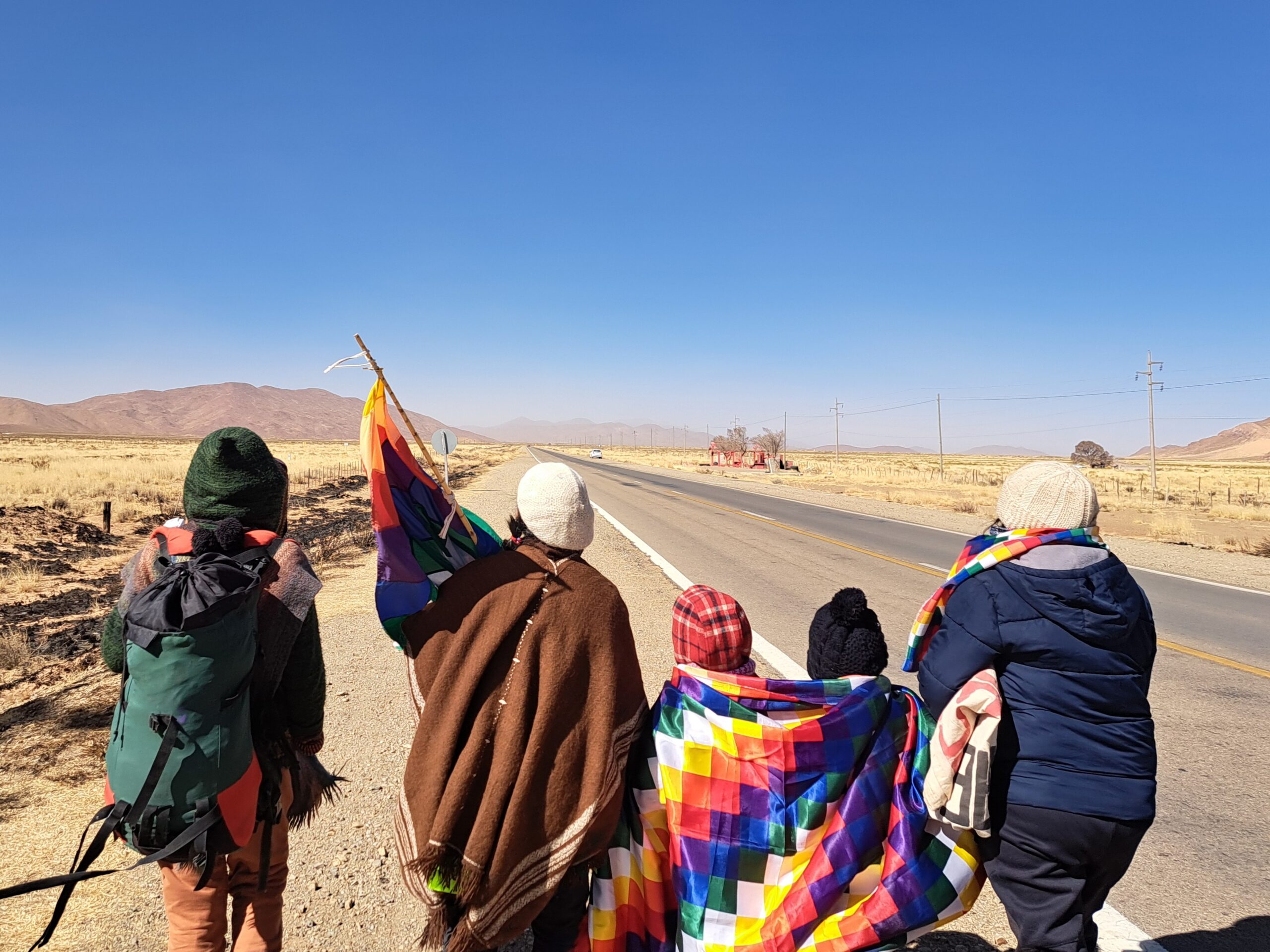
In north-western Argentina, lithium mining, viticulture and tourism are expanding into Indigenous territories and peasant communities. Faced with a new wave of dispossession, the physical presence of communities on their lands has become their foremost means of defence. The Indigenous and peasant communities of Jujuy invite us to imagine alternative ways of inhabiting the land and relating to nature. Territory thus emerges as a living fabric of histories and relationships, resisting reduction to the logic of the market.
Projects framed around “modernisation” and “development” often promise solutions to poverty and improved access to education, healthcare and public infrastructure in territories far removed from urban centres. In the province of Jujuy, however, these same projects have transformed such territories into sites of property speculation and sacrifice zones for extractivism. In this context, these processes should not be analysed solely in terms of poverty, employment or literacy, but rather through the lens of control over territories and vital resources such as water, memory, their meanings and their traditional uses.
Located in north-western Argentina, Jujuy has undergone a profound transformation in recent years. It is no longer simply a question of the historical mining of lead and zinc: in the era of electric vehicles and the so-called “energy transition”, the lithium rush in the salt flats and the search for rare earth minerals now coexist with an emerging wine industry and a tourism sector that places increasing pressure on local landscapes. These processes, driven by private investors and supported by reforms tailored to the interests of capital, are directly affecting Indigenous territories and peasant lands, where legal security of tenure is already fragile.
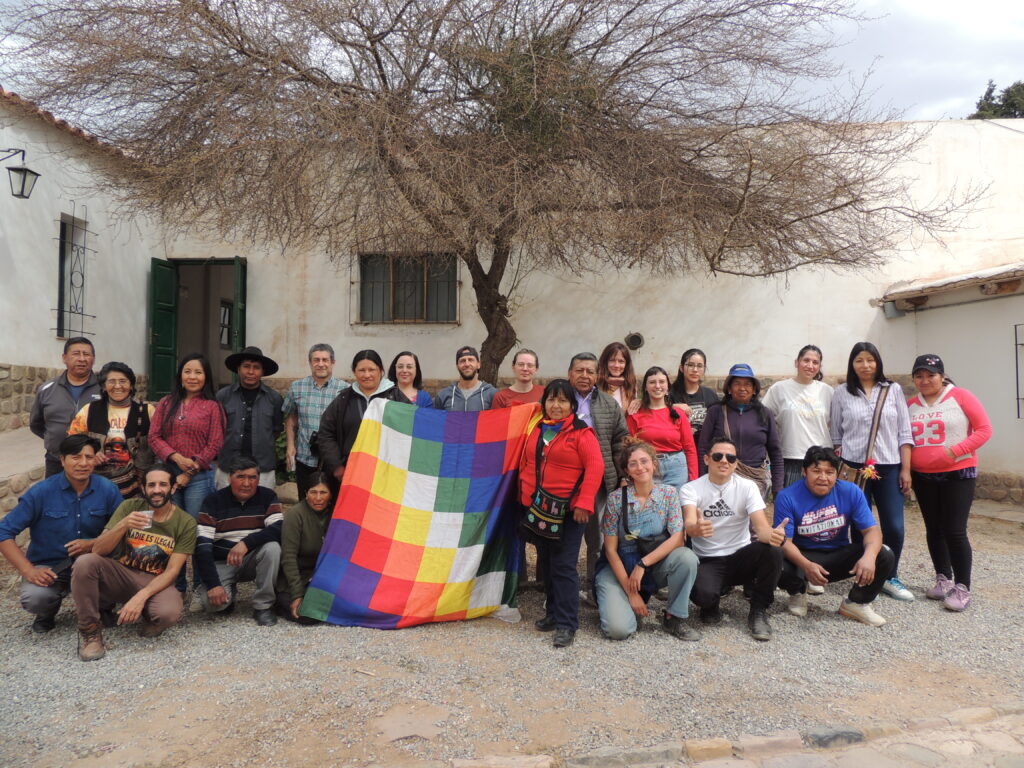
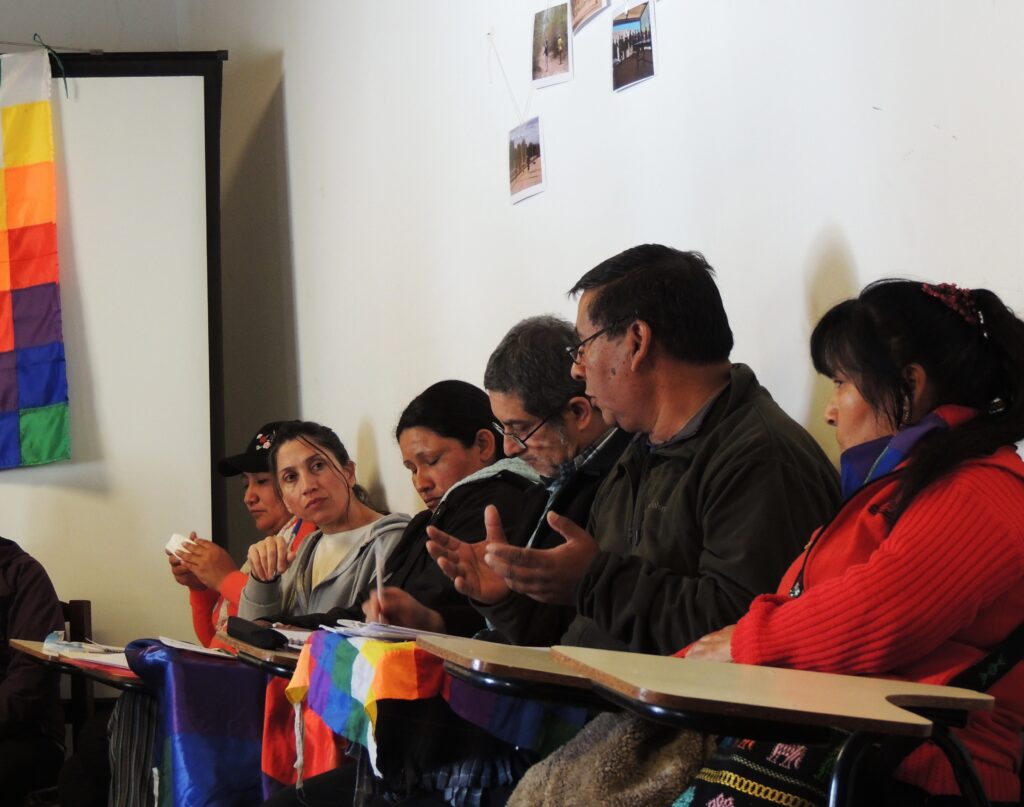
Against this backdrop, representatives of Indigenous and peasant organisations were invited to participate in the workshop “Policies and Strategies for the Defence of Indigenous Territories in Jujuy”, organised together with the Anthropology of Development and Territorial Policies Team at the Institute of Anthropological Sciences of the University of Buenos Aires (UBA). During the meeting, participants reflected on the socio-environmental conflicts affecting these territories, focusing on the tensions, contradictions and setbacks in national and provincial policies, as well as environmental issues and actions undertaken in defence of the land.
Law 26,160 in the Face of Market Expansion and State Neglect
Indigenous territories are increasingly coming under pressure from economic re-primarisation and extractivism. Decree 749/2024 regulates the Incentive Regime for Large Investments (RIGI), granting tax benefits and legal stability for 30 years to large-scale mining, hydrocarbon and energy projects. Between November 2006 and December 2024, Law No. 26,160 on Territorial Emergency acted as a legal truce in Argentina, suspending evictions and mandating the survey of Indigenous territories. However, in Jujuy, this policy has become a labyrinth of incomplete files and delays that leave territories in an extremely vulnerable position.
For David, from the Rodero community, the survey process has functioned for almost 20 years as a shield against a State that threatens dispossession whenever “there is no official document”. Faced with the perception that the law has lost its force, David stresses that resistance is rooted in identity and in the inhabitants’ historical attachment to the land: “Communities need to secure their territorial organisation and then obtain title deeds. If you do not have a document, they can take the land away from you.” This state debt is far from an isolated case.
In 2023, the Red Puna network denounced the fact that the legal-cadastral survey had never been completed. These delays tend to deepen in territories where land is becoming increasingly valuable to private interests. In Chucalezna, Florencia recounts how a neighbour’s attempt to expand vineyards and tourism projects onto a family house dating back to the nineteenth century ultimately blocked the delivery of their technical file: “That is why we do not have the file: the conflict emerged and the process was interrupted. But we did complete the survey!” The current situation reveals a critical paradox: while the State delays legal recognition, pressure from the mining, wine-producing and tourism sectors continues to intensify, forcing communities to defend their permanence on the land with their own bodies.
Free, Prior and Informed Consultation as a Simulation
Argentina possesses a strong legal framework for Indigenous Peoples, yet it lacks operative legislation on communal land ownership and prior consultation. This legislative vacuum turns ILO Convention 169 into a solitary tool of resistance. In theory, Free, Prior and Informed Consultation should grant communities a leading role; in practice, however, it has become an administrative simulation that companies and the State frequently ignore or delegate to private actors.
For participants in the workshop, the diagnosis is clear: the provincial State operates according to a logic of “selective presence”. It is absent when it comes to ensuring that consultation processes are legitimate, yet it intervenes swiftly to authorise mining exploration. This dynamic revives a colonial imaginary in which Indigenous territory is portrayed as a “sacrificial space” in the name of economic growth, reinforcing a form of discrimination that strips community knowledge and autonomy of their value.
The communities of Salinas Grandes and Laguna de Guayatayoc have created their own biocultural protocol: Kachi Yupi (“Footprints of the Salt”). This document affirms the sacred right to water and establishes that decisions must pass through the General Assembly of the Basin.
The communities of Salinas Grandes and Laguna de Guayatayoc have created their own biocultural protocol: Kachi Yupi (“Footprints of the Salt”).
Meanwhile, environmental impact assessments are financed by the very companies involved, and communities perceive them as documents designed to support external interests. Consultation processes are often carried out in ways that disrupt local practices: fragmented meetings are convened, the timing of community assemblies is ignored, and only limited information is provided. Daniel captures this sense of helplessness as follows: “We say that we are the owners of everything, but then a place is declared a World Heritage Site and nobody consults us about anything. No one defends us.”
In response to the state vacuum, the communities of Salinas Grandes and Laguna de Guayatayoc have created their own biocultural protocol: Kachi Yupi (“Footprints of the Salt”). This document affirms the sacred right to water and establishes that decisions must pass through the General Assembly of the Basin. However, Decree 7751/2023 reduces consultation to an “informational meeting” between companies and communities. For Flavia, president of Santuario Tres Pozos, the State ignores the community protocol: “Simply receiving them is considered consent. Everything is about negotiating quickly in exchange for a few small things: a projector, a generator.”
Snapshots of Dispossession: the State, Mining Companies and the Wine Industry
Socio-environmental conflict in Jujuy has ceased to be merely a dispute over land and has become a struggle for survival. In a context where water and territory are increasingly threatened by extractive, real-estate and state interests, Indigenous communities are deploying strategies that range from legal advocacy to direct action and territorial mobilisation. “The State handed the land over to multinational corporations with us still living on it,” summarises Débora, from the Casa Grande community.
In the area controlled by the El Aguilar mining company, the effects of extractivism are undeniable: tailings dams filled with toxic waste and a water shortage severe enough to threaten life itself. Anabella, from Abra Pampa, denounces what she describes as a “silent genocide”, including lead contamination affecting children within a dismantled public health system. Griselda, from Finca El Pongo, recounts how a model of family farming sustained across three generations was swept aside by medicinal cannabis ventures and lithium industrial parks. Here, the State is not absent; rather, it actively facilitates displacement: police guard Griselda’s home while machinery tears up the soil and the community is denied access to irrigation water.
When community institutions are co-opted by corporate interests, the response is often one of fission: communities split in order to create new organisational units and thereby recover autonomy in their struggle.
The real-estate pressure on Indigenous territories and communities has even fractured internal ties between relatives and neighbours.
In the Quebrada de Humahuaca, real-estate pressure disguised as “wine-producing development” is generating new forms of dispossession. In the Chucalezna community, the expansion of wineries and tourism-related property developments has altered the course of rivers: these topographical transformations are triggering mudslides that bury crops and homes. Florencia and Amalia denounce the privatisation of community water springs and highlight the unequal means being deployed: “They want to take our water away. We carried out the work with shovels and pickaxes; the businessman does it with machinery.”
This real-estate pressure on Indigenous territories and communities has even fractured internal ties between relatives and neighbours. When community institutions are co-opted by corporate interests — as in the case of delegates who are simultaneously employed by wineries — the response is often one of fission: communities split in order to create new organisational units (as occurred in Antigal de Moya) and thereby recover autonomy in their struggle, even when this entails a painful fragmentation.
“Sowing Water” and “Walking the Land”: Strategies of Resistance
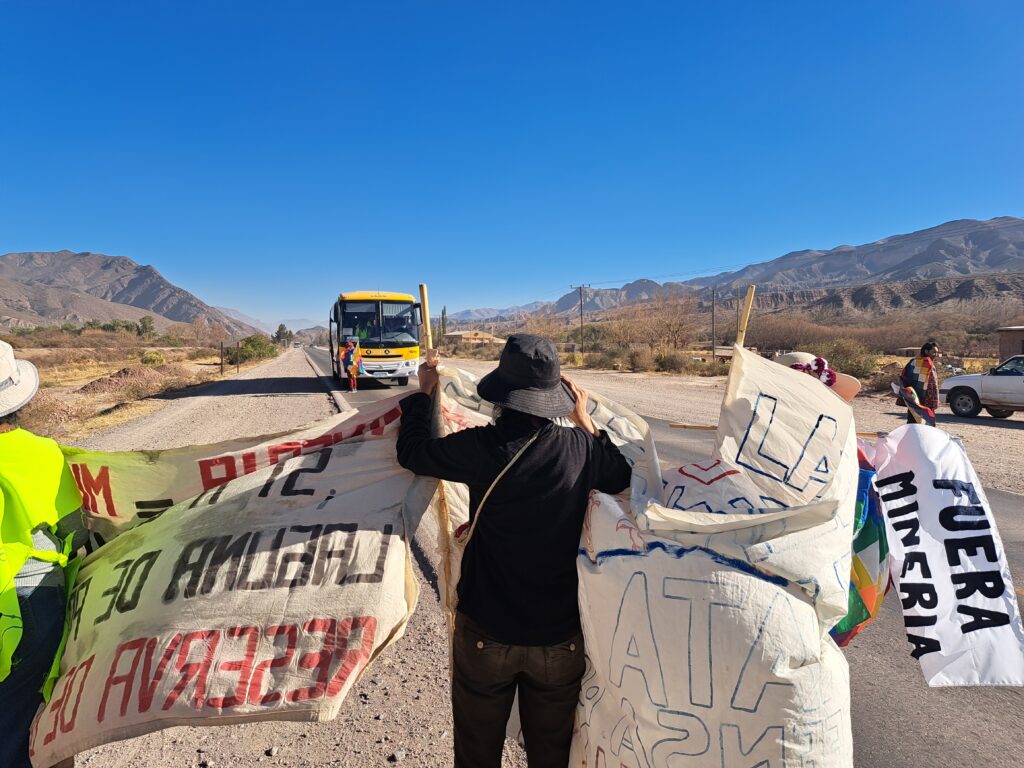
Faced with abandonment, communities have begun to build solutions from within. The struggle often starts on paper, through the filing of reports and complaints, and the forging of alliances with universities and NGOs. It is a process of collective learning in which communities must navigate bureaucratic labyrinths and identify potential allies. Yet when formal channels are exhausted, protest shifts to the body and the road: from hunger strikes and blockades to the seizure of heavy machinery. In the absence of justice, mobilisation and collective organisation become the most effective tools. “There is strength in being united within the Council,” remarks one community member.
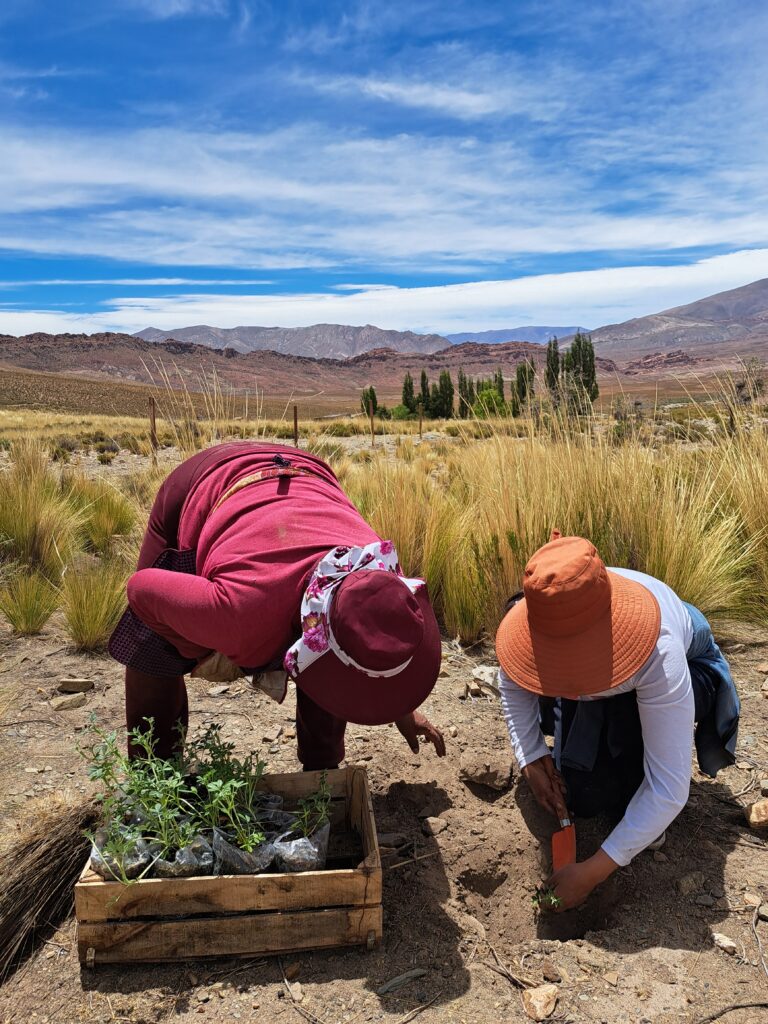
In the Puna, the Women Defenders of the Natural Habitat Group (from Casa Grande, Vizcarra and El Portillo) has redefined protest by transforming it into active environmental stewardship. Faced with the decline of the queñua — a native tree capable of storing large quantities of water and devastated by mining activities and road construction — these women have embarked on a process of environmental restoration and healing. “Sowing water for future generations” is the slogan under which they committed to planting 15,000 queñua trees during 2025. This process also required an internal “cleansing”: they had to seek leadership independent from the mining company, since, until 2017, their own representatives had been employees of the firm.
For Diego and David resistance is above all about remaining on the land. Community-based tourism and the strengthening of rural schools have emerged as strategies to prevent the exodus of young people.
For Diego and David resistance is above all about remaining on the land. Community-based tourism and the strengthening of rural schools have emerged as strategies to prevent the exodus of young people.
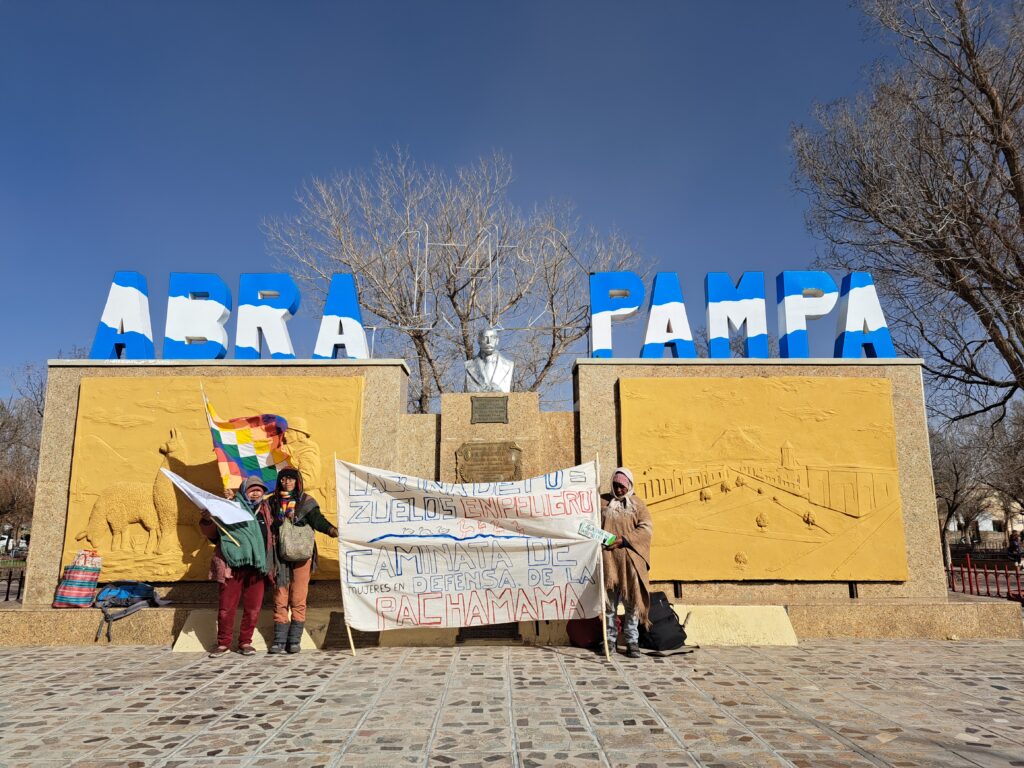
Another form of resistance was the “Women’s March in Defence of Pachamama”, held in August 2025. From Laguna de Pozuelos, women walked 282 kilometres to San Salvador de Jujuy to denounce how mining dismantles networks of life and traditional ways of living. This action was not merely an act of protest, but also a process of intercommunity weaving that reaffirmed the central role of women as guardians of the territory.
For Diego and David, from the Rodero community, resistance is above all about remaining on the land. In the face of tourism-driven gentrification and extractive pressure, community-based tourism and the strengthening of rural schools have emerged as strategies to prevent the exodus of young people: “I studied in Tucumán and came back because I missed the community. Being on the territory is the best form of defence. We work so as not to lose our identity.” David adds a demographic urgency to this vision: “We know the territory, but we need people to stay.” A territory that remains inhabited and sustained by people with a strong sense of identity is far more difficult to sacrifice than an “empty space” on investors’ maps.
Imagining Other Possible Futures
However, not all strategies are embraced unanimously. A growing phenomenon has emerged: the fragmentation of communities. Faced with internal tensions or political co-optation by companies, groups of community members — such as those of the newly formed Antigal de Moya community — have chosen to separate from their original organisations. While these ruptures seek to safeguard the autonomy of those committed to resisting, they also reveal the capacity of the extractive model to erode the cohesion of the Indigenous Peoples who inhabit north-western Argentina.
In sum, the report produced by the Anthropology of Development and Territorial Policies team at the Institute of Anthropological Sciences not only documents the conflicts and challenges that Indigenous and peasant communities face on a daily basis, but also opens a horizon of possibilities, inviting us to imagine other ways of inhabiting and relating to the environment. The experiences shared by Indigenous and peasant communities in Jujuy make clear that territory is not merely a resource for extractive planning, but a living fabric of histories that resists being reduced to the logic of the market.
By placing local and academic knowledge in dialogue, the report sheds light on practices, experiences, forms of resistance and territorial strategies that are often silenced: from the creation of autonomous biocultural protocols to the collective planting of queñua trees. The experience in Jujuy demonstrates that resistance is written through the body and through permanence on the land. It also underscores a shared certainty: in the face of a model that projects “empty spaces”, rooted identity and the effective occupation of territory constitute the strongest frontier against dispossession.
You can read the report by the Anthropology of Development and Territorial Policies team on the website of the Institute of Anthropological Sciences.

Natalia Castelnuovo Biraben holds a BA and a PhD in Anthropology from the University of Buenos Aires (UBA) and is based at the Institute of Anthropological Sciences within the Faculty of Philosophy and Letters. As a researcher with the National Scientific and Technical Research Council (CONICET), she studies Indigenous and Creole contexts in the Gran Chaco region.

Anabella Denuncio is a sociologist and holds a PhD in Social and Human Sciences. Based at the Institute of Anthropological Sciences at the University of Buenos Aires (UBA), she conducts postdoctoral research with the National Scientific and Technical Research Council (CONICET) on Indigenous Peoples and access to justice in the Argentine Gran Chaco.

Natalia Boffa holds a PhD in History from the National University of the South. As a lecturer and researcher with the Anthropology of Development and Territorial Policies team, she studies Indigenous socio-territorial struggles in north-western Argentina, the expansion of the agricultural frontier, extractivism, and climate change mitigation policies.