

In Norway, Sweden and Finland, the Sámi language, culture and society are linked to the States’ legal obligations. In this way, the Sámi people’s right to self-determination is implicitly embedded in constitutional provisions, as its realization necessarily depends on the active participation and agency of the Sámi themselves. At the same time, constitutional recognition does not, in itself, entail full decision-making authority. The central question is the extent to which this recognition is translated into legislation, budgets and administrative practice.
The Sámi people inhabit Sápmi, an ancestral territory that stretches across the northern parts of Norway, Sweden and Finland, plus the Kola Peninsula in today’s Russian Federation. Sámi society has been shaped by mobility, seasonal use of land and waters, kinship systems and local organization. The Sámi people’s cultural identity is deeply rooted in a longstanding presence in these lands and is sustained through traditional livelihoods such as reindeer herding, fishing, hunting, gathering, agriculture, and handicrafts. While no definitive data exists, the Sámi population is estimated to fluctuate between 50,000 and 100,000 people.
Contemporary Sámi political organization is structured into two main layers. The first consists of State-established representative institutions, above all the Sámi parliaments in Norway, Sweden and Finland. The second consists of Sámi civil society, including the Saami Council, national associations, reindeer herding organizations, cultural institutions, youth organizations, media and academic institutions.
Norway, Sweden and Finland have each recognized the Sámi in constitutional or quasi-constitutional terms. In Norway, the Constitution (Article 108) requires the State authorities to create conditions enabling the Sámi, as an Indigenous People, to preserve and develop their language, culture and way of life. In Finland, the Constitution protects the right of the Sámi, as an Indigenous People, to maintain and develop their own language and culture, and provides for linguistic and cultural self-government within their homeland. In Sweden, the Instrument of Government states that opportunities shall be promoted for the Sámi people and for ethnic, linguistic and religious minorities to preserve and develop a cultural and social life of their own.
These provisions confirm that Sámi language, culture and society are connected to the States’ legal obligations. In this way, the Sámi right to self-determination is implicitly embedded in the constitutional provision as its realization necessarily depends on the active participation and agency of the Sámi themselves. At the same time, constitutional recognition does not, in and of itself, imply full decision-making authority. The practical/central question lies in determining how far recognition is translated into legislation, budgets and administrative practice.
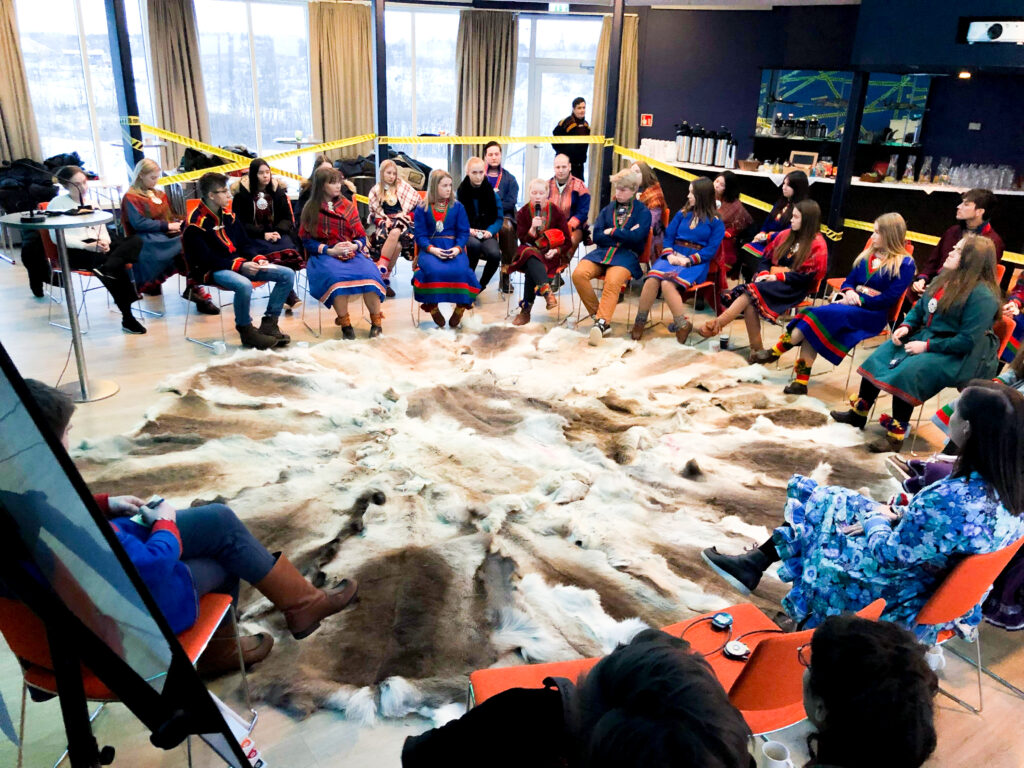
The Sámi Parliament in Norway
The Sámi Parliament in Norway was opened in Kárášjohka in 1989 after a long political process, strongly influenced by the Alta conflict and by the work of the Sámi Rights Committee. The legal basis lies in the Sámi Act of 1987, which established the Sámi Parliament as a body democratically-elected by the Sámi in Norway. The Parliament has 39 representatives elected from seven constituencies every fourth year, at the same time as Norwegian parliamentary elections. The plenary assembly is the supreme body, and the executive branch is the Governing Council, led by the President of the Sámi Parliament. In Norway, elections include both Sámi parties and Sámi lists from the country’s parties.
The Norwegian Sámi Parliament manages grant schemes and administrative tasks in areas such as language, culture, education and heritage. It also influences policy through consultations with State authorities. It is not a legislature in the same sense as the Norwegian Parliament; its power combines democratic legitimacy, delegated responsibility, budgetary influence and consultation rights.
The Sámi Parliament in Sweden
The Sámi Parliament in Sweden was established in 1993 under the Sámi Parliament Act and has its main headquarters in Giron. It has 31 members elected every four years through a separate/independent Sámi election. The plenary is the elected political body, while a Board, led by the President, functions as the executive leadership. The Swedish elections are organized through Sámi parties and electoral lists rather than through the national party system.
A defining feature of the Swedish model is the Parliament’s dual role. It is both a popularly elected Sámi body and a State administrative authority under the Swedish government. This means that it represents Sámi political interests while also carrying out State administrative tasks related to culture, language and reindeer husbandry. This dual role gives the Parliament a formal place within the State administration but it also limits institutional independence because its budget, mandate and administrative framework are controlled by the State.
The Sámi Parliament in Finland
In Finland, the current legal form of the Sámi Parliament dates from 1996, replacing a Sámi representative body established in the 1970s. It is based in Anár, within the Sajos Sámi Cultural Centre. The Parliament has 21 members and four deputy members, elected every four years. Its plenum is the supreme body and this normally meets several times a year. The plenum elects an Executive Board, led by the President. The Finnish system is less party based than the Norwegian and Swedish systems. Candidates are elected as individuals, and local networks, language communities, livelihood interests tend to matter more than formal party affiliation. The Sámi Parliament Act links the institution to constitutional provisions on Sámi linguistic and cultural self-government in their homeland.
In 2025, Finland adopted a long-awaited reform of the Sámi Parliament Act, replacing the 1995 Act, which had become outdated and was giving rise to disputes over interpretation. The reform entered into force on 1 August 2025 with the aim of strengthening the realization of Sámi self-determination and improving the conditions for linguistic and cultural autonomy and for the work of the Finnish Sámi Parliament. Among its key amendments are revised rules on the electoral roll, the establishment of an autonomous and independent review board for electoral roll matters, and a clarified obligation for public authorities to negotiate with the Sámi Parliament. The Finnish Sámi Parliament therefore has a legally important role in negotiations with public authorities. The Act requires authorities to cooperate and negotiate with the Sámi Parliament in matters that may be of specific significance to the Sámi people.

Consultation Procedures and the Role of Civil Society
Across all three states, the Sámi parliaments are democratically elected and institutionally recognized, yet their authority remains limited. They do not control the main legislative frameworks for land use, energy, mining, infrastructure, fisheries, taxation or welfare. This creates a structural gap between recognition and power. Consultation mechanisms are therefore central. Norway, Sweden and Finland all have consultation procedures for matters affecting the Sámi ,although these procedures, while important, do not fully implement Free, Prior and Informed Consent. In practice, their strength depends on timing, information, resources, the inclusion of affected Sámi communities and whether the State is prepared to alter or stop planned measures.
Sámi civil society is an essential part of Sámi governance. The Saami Council, founded in 1956, is a voluntary non-governmental organization with member organizations in Finland, Norway, Sweden and Russia. Before the establishment of the Nordic Sámi parliaments, the Saami Council was the main cross-border representative Sámi body. Today, it continues to work internationally from a pan-Sámi civil society perspective. Reindeer herding organizations, duodji (Sámi traditional handicraft) organizations, cultural institutions, youth bodies and language organizations all contribute to policy development and public debate. Sámi media also play an important role in political and cultural life.
This broader civil society landscape contributes to the overall balance and diversity of Sámi political representation. The Sámi parliaments have electoral legitimacy and formal channels of dialogue with State authorities, while civil society organizations complement this role by contributing additional voices, expertise and forms of representation. Although they do not hold the same formal mandate, these organizations can play an important role in mobilizing communities, offering constructive criticism, articulating concerns from different parts of Sámi society and raising issues in Nordic and international arenas.
Truth and reconciliation processes
Norway, Sweden and Finland have all established truth or truth and reconciliation processes concerning State policies towards the Sámi although they differ in scope and timing. In Norway, the Truth and Reconciliation Commission was appointed by the Storting in 2018 to investigate Norwegianization policy and injustices against the Sámi, Kvens/Norwegian Finns and Forest Finns. It delivered its report on 1 June 2023. In November 2024, the Storting followed up with a formal apology and decisions intended to begin addressing the Commission’s findings.
In Sweden, the government decided to establish a Truth Commission for the Sámi People in 2021, and its members were appointed in 2022. The Commission is tasked with mapping and examining State policy towards the Sámi from an historical perspective and its consequences for this community. Its final report was originally expected in 2025 but the mandate has been extended and it is now due by 1 October 2026.
In Finland, the Truth and Reconciliation Commission Concerning the Sámi People was appointed in 2021 following negotiations between the State, the Sámi Parliament and the Skolt Sámi Siida Council. It submitted its final report on 4 December 2025 after consultations with almost 400 Sámi people and the commissioning of 25 studies.
These processes show that the Nordic states are increasingly acknowledging that assimilation policies were not isolated historical mistakes. Their effects are ongoing in terms of language, education, health, identity, livelihoods, public attitudes and institutional trust. Truth-telling, however, is only the beginning. Reconciliation depends on implementation: legal reforms, resources, language revitalization, land-use governance, repatriation and education.
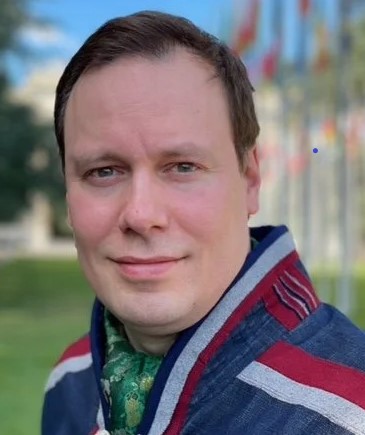
Eirik Larsen (Lásse Ivvár Erke) is a Sámi lawyer, Head of the Human Rights Unit at the Saami Council, and a lecturer at the Sámi University of Applied Sciences. He has previously served as a member of the Sámi Parliament in Norway and held advisory roles on Indigenous affairs within the Norwegian government.