
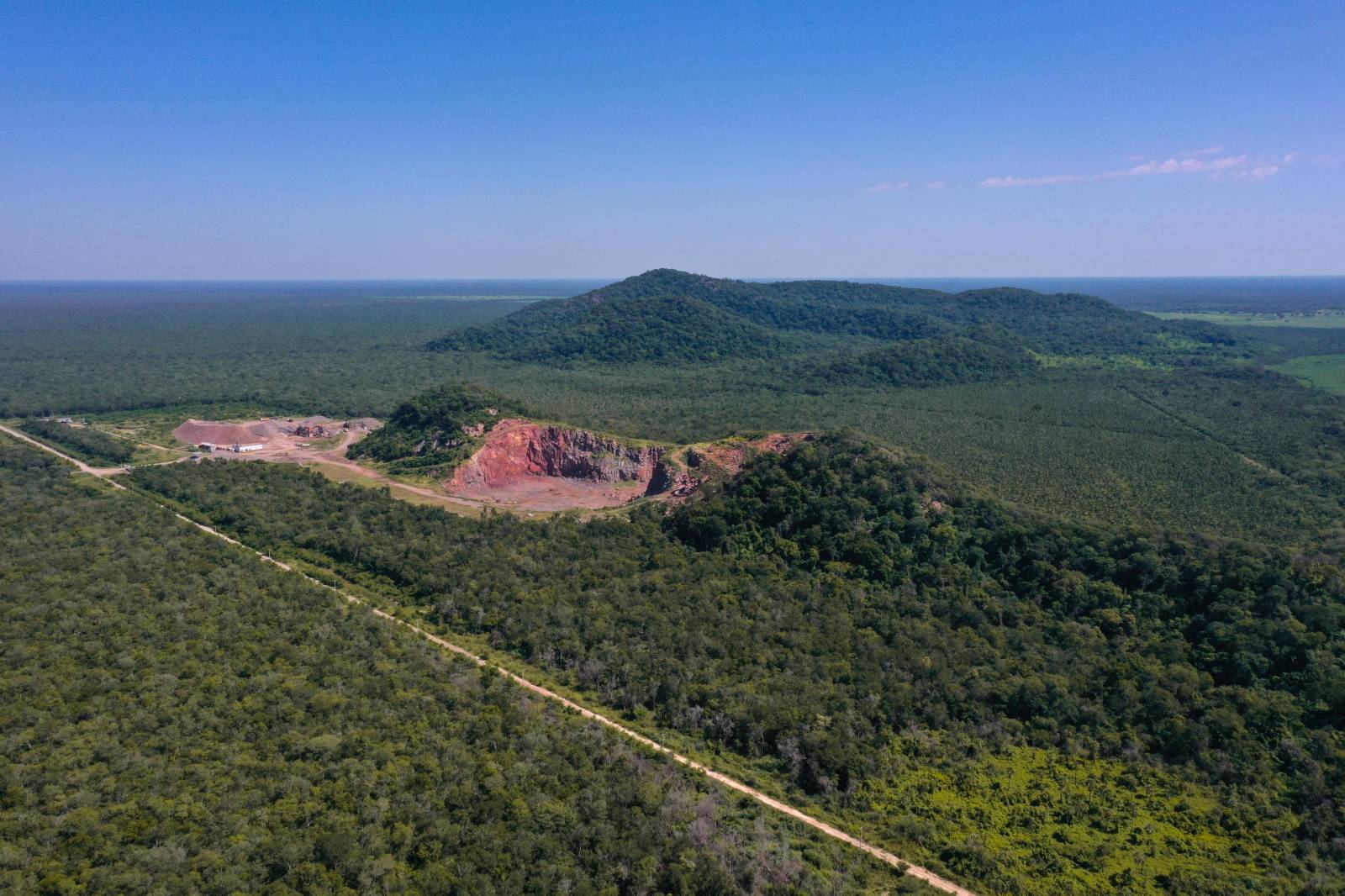
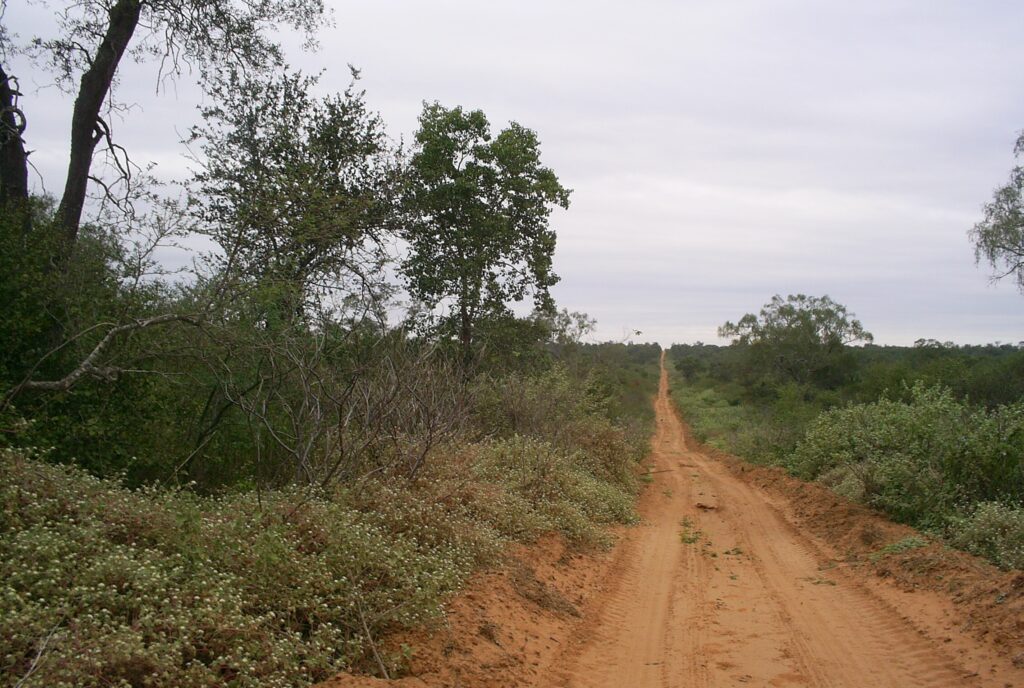
At the beginning of the twenty-first century, the northern Paraguayan Chaco was characterised by vast expanses of native forests and savannahs. Two decades later, however, agribusiness and mineral exploration have transformed much of this forested landscape into grazing lands and cattle ranches. This transformation is being further accelerated by a network of roads planned to cross Paraguay and Bolivia, linking Brazilian production corridors to ports on the Peruvian coast. Meanwhile, small groups of Ayoreo people living in voluntary isolation continue to resist, avoiding contact with the extractive activities that are destroying their world. Their struggle is not only for the survival of their people and territory, but also serves as a warning about a model of development that threatens ecosystems and humanity as a whole.
More than half of the northern Paraguayan Chaco is characterised by a semi-arid climate, with warm temperatures and dry winters. The region forms part of a biome comprising tropical and subtropical grasslands and savannahs, particularly in the east, as well as quebracho forests and shrublands towards the centre and west. In the far west, shrub savannahs define the landscape of the dune region, a unique ecosystem in South America. To the north-east, the Chaco cerrado gives way to a transitional zone with Bolivia’s Chiquitano forest region. Covering 115,750 square kilometres, this area consists predominantly of lowlands, punctuated by a few scattered low mountain formations.
Although much of the Ayoreo people have already been settled in missions and confined to small territorial enclaves, various groups have maintained their independence and autonomy from the colonising world thanks to the vastness of the forests. The silvícolas (“forest dwellers”), the “uncontacted”, the “isolated”, the “naked”, the pyta jovái, or simply the “wild Moros”, had not yet been affected by the transformations that would intensify in the decades to come. However, the conditions that enabled these groups to remain outside the dominant global system have been steadily eroded over the past twenty-five years.
Beyond protected wilderness areas, the Chaco has undergone rapid transformation under pressure from agribusiness, the hydrocarbon industry, mining and, more recently, the expansion of modern transport infrastructure. In 2000, the northern Chaco still retained 87 per cent of its native forests, savannahs and grasslands. Today, only 52 per cent remains: 42 per cent in the form of highly fragmented forests, much of which have largely lost their ecological function, and just 10 per cent within protected wilderness areas as more extensive forest remnants. It is no exaggeration to say that the northern Paraguayan Chaco is now little more than a scattered mosaic of what, only twenty-five years ago, constituted an invaluable natural heritage.
The Ayoreo People and the Last Transformation
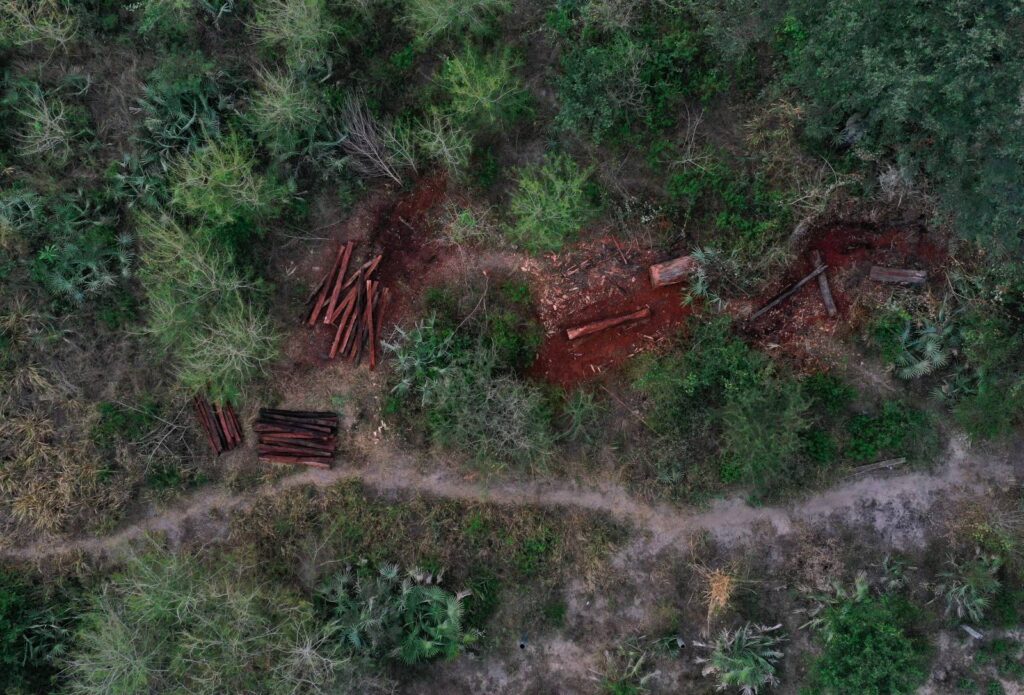
Like other peoples of the Chaco, the Ayoreo understand the passage of time through profound transformations that are preserved in oral histories, ancestral memory and collective memory. What is taking place today may well be understood as “the last transformation”: a process through which the known world collapses and a new one emerges, becoming the point of departure from which the stories of the present begin to be told. Each transformation has entailed both the collapse of an existing world and the emergence of a new way of life. The memory of these catastrophic events strengthens the Ayoreo people’s capacity to adapt to new realities, overcome the trauma of upheaval and continue to exist as a people, transcending the pain and terror experienced by individuals during each transformation.
By tracking the movements of groups living in voluntary isolation, we can observe an ongoing process of adaptation to the changes affecting the forest and its conversion into vast cattle pastures. This does not necessarily imply acceptance of the new reality. Rather, it reflects forms of resistance and adjustment in the ways life and territory are lived and understood, while the territory itself has not yet lost its meaning as a being with whom humans interact. This latest transformation is still unfolding and the risk that it may become a final and irreversible stage is increasingly imminent.
Pressure from neighbouring landowners and new occupants is constant, forcing communities to sell their natural assets—converted into economic resources—or lease portions of their territories in order to survive.
Pressure from neighbouring landowners and new occupants is constant, forcing communities to sell their natural assets or lease portions of their territories in order to survive.
What’s more, a sequential analysis of the Land Use Plans submitted by landowners and companies to obtain environmental licences for their projects indicates that, if implemented, they will trigger an accelerated process of fragmentation over the next five years, far more severe than anything witnessed to date. The outlook towards 2030 is therefore deeply concerning for the individuals and groups of the Ayoreo people who continue to live apart from modern society. Nor does it offer much hope for those communities confined to small tracts of land owned either by themselves or by the Paraguayan Indigenous Institute (INDI).
Pressure from neighbouring landowners and new occupants is constant, forcing communities to sell their natural assets—converted into economic resources—or lease portions of their territories in order to survive. Far from providing a solution, this strategy often becomes a catalyst for internal conflict, social fragmentation and violence. The process of adapting to the world that has confined them has not yet fundamentally transformed their internal political organisation, which remains rooted in the family as the basic unit of survival and in forms of leadership shaped by the ability to engage with and navigate the Western world.
The Deepening of Extractivism
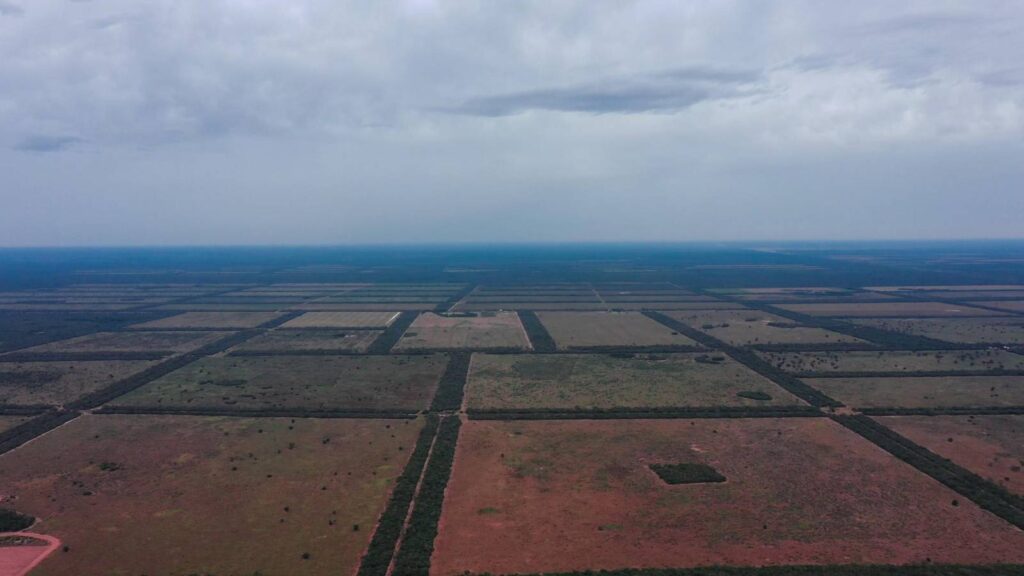
Over the past eight years, these transformations have intensified markedly as national extractivist policies have deepened and efforts have increased to identify new resources for export, attract investment and reposition Paraguay within the global economy. Successive governments—and particularly the administration of President Santiago Peña—have promoted an ambiguous agenda: while reinforcing international commitments to environmental protection and the reduction of greenhouse gas emissions, they have simultaneously expanded the exploration of mineral and hydrocarbon resources and sought to establish Paraguay among the world’s leading exporters of grain and beef.
These developments have profound consequences for the daily lives of both settled Ayoreo communities and groups living in voluntary isolation. As extractive activities continue to advance, they are left with ever fewer opportunities to shape their own future and define their own path in the face of this latest transformation.
Yet even today, vast areas of the Paraguayan Chaco remain under concession, sustained by the enduring promise of hydrocarbons in a world that is increasingly seeking to move beyond fossil fuels and transform its energy systems.
Yet even today, vast areas of the Paraguayan Chaco remain under concession, sustained by the enduring promise of hydrocarbons in a world that is increasingly seeking to move beyond fossil fuels and transform its energy systems.
A dozen rare earth and lithium exploration projects have spread across the Chaco, with little regard for the territorial rights of Indigenous Peoples and even less for the groups that continue to live in voluntary isolation. Approved by regulatory authorities, these projects are being carried out by four major companies belonging to the same corporate group, which dominates the exploration and extraction of rare minerals across the lowlands of the Americas. This wave of extractive activity also threatens the integrity of one of the region’s most fragile protected areas: Médanos del Chaco National Park.
Hydrocarbons have long served as a powerful driving development myth in the Paraguayan Chaco. Following Paraguay’s victory in the Chaco War in the 1930s—a conflict that claimed more than 90,000 lives—successive concessions were granted to foreign companies for exploration projects that ultimately proved unsuccessful. At best, these efforts led to the discovery of oil and gas reserves in quantities too small to justify the investments required for their extraction and transport. Yet even today, vast areas of the Paraguayan Chaco remain under concession, sustained by the enduring promise of hydrocarbons in a world that is increasingly seeking to move beyond fossil fuels and transform its energy systems.
The Road-Building Boom
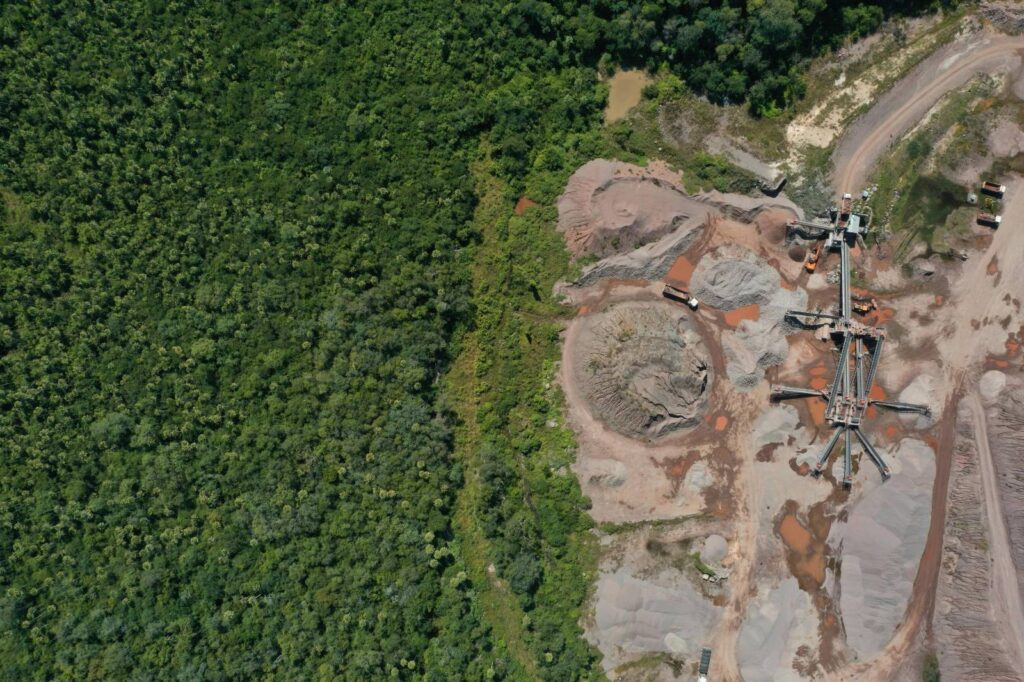
The coup de grâce for the world of the Ayoreo groups living in voluntary isolation—and for the collapse of a millennia-old cultural landscape shaped by the many Indigenous Peoples of the Chaco, of whom these Ayoreo groups are the last to remain free and in resistance—is the current boom in road construction and transport infrastructure. The Capricorn Bioceanic Corridor is now being rapidly developed across the Paraguayan Chaco from east to west, with the aim of linking the major production centres of Mato Grosso do Sul and São Paulo to ports on the Pacific coast of Chile, facilitating trade with Asian markets.
This corridor directly affects the southern portion of Ayoreo territory and indirectly impacts the territory as a whole. From this main transport axis, a network of transversal roads has already been planned to connect agricultural and livestock production areas throughout the northern Chaco to the Pacific route. At the same time, road projects planned in Bolivia and western Brazil seek to connect the Brazilian state of Rondônia to the Pacific coast. These routes would run from north to south through some of the last remaining intangible territories set aside by the Charagua Indigenous Government of the Guaraní People in the Bolivian Chaco for Ayoreo groups living in voluntary isolation, beyond the boundaries of protected areas.
After more than three decades of advances in the recognition of Indigenous Peoples’ rights, Paraguay still has not formally recognised the presence of groups living in voluntary isolation within its territory who must be protected
After more than three decades of advances in the recognition of Indigenous Peoples’ rights, Paraguay still has not formally recognised the presence of groups living in voluntary isolation.
This road-building boom is not merely about more paved roads and increased vehicle traffic; it is also transforming the production model, with a strong trend in the northern Chaco towards a shift from extensive cattle ranching to intensive agriculture. For groups living in voluntary isolation, the consequences are drastic: water sources contaminated by agrochemicals, a decline in wildlife populations (a fundamental source of protein for the Ayoreo people), and air pollution in the remaining forest areas (the fragments that remain as refuges for life).
At the same time, these transformations are also reflected in the sphere of rights. After more than three decades of advances in the recognition of Indigenous Peoples’ rights, Paraguay still has not formally recognised the presence of groups living in voluntary isolation within its territory who must be protected and for whom conditions must be guaranteed so that they can continue living in accordance with their own self-determination. Nor has there been any improvement in the implementation of legislation relating to the rights of Indigenous Peoples who have already been colonised. The right to land and to access the territories necessary for sustaining their lives remains subordinated to the property rights of settlers and, increasingly, of agro-export companies that shape political priorities and decision-making in the northern Paraguayan Chaco.
The Ayoreo Worldview and the Ideologisation of Progress
Finally, it is worth noting that this great transformation, which is set to intensify in the coming years, is driven by the discourse of economic growth and so-called “progress”, which questions and ridicules the belief systems of the peoples of the Chaco and, especially, of the groups that continue to live in voluntary isolation. According to this belief system, everything in the world—living and non-living alike—is a person and must be treated with respect. For this reason, relationships and dialogue must be established in order to access the benefits that these beings may provide to human beings and to make use of them within a framework of respect, harmony and moderation.
In contrast to the accumulation that underpins an individualistic and self-interested liberal logic, this worldview promotes the principle of sharing in order to maintain a just and balanced social order. This ideologisation of “progress” fuels the voracious drive of the West to consume without restraint everything that exists on Earth and mocks Indigenous beliefs through the discourse of economic growth and the (false) needs created by the market. On the contrary, this belief system may offer humanity a way to avoid the destruction of the world—that is, the final stage of this last transformation.
Meanwhile, a quarter of a century into the third millennium, small groups of the Ayoreo people continue to resist and avoid contact with the agents of change that are pushing their world towards collapse and ruin. This steadfast resistance, shared by all groups living in voluntary isolation, emerges as the only hope to which they cling so that the forest does not close in and fall silent, and so that this transformation does not become definitive and final.
Luis María de la Cruz is a founding member of, and member of the technical team at, the Amotocodie Initiative. He specialises in anthropology and environmental management.