
Prompted by agribusiness demands to reclassify small-scale peasant landholdings as medium-sized farms, social movements launched a wave of protests against Rodrigo Paz’s government that lasted several weeks. Amazonian peasant communities and Indigenous organisations from the Lowlands were joined by mining cooperatives, teachers’ unions, the Bolivian Workers’ Centre (COB), the Ponchos Rojos of the Altiplano and coca growers aligned with Evo Morales. After a month of ineffective handling of the conflict, the gradual exhaustion of the protesting sectors ultimately led to an agreement with the government. Yet, one month after the settlement, Bolivia’s political outlook remains uncertain.
On 25 June, the Bolivian Workers’ Centre (COB) signed an agreement with President Rodrigo Paz, bringing to an end 53 days of road blockades across the country. The conflict claimed 22 lives and caused losses estimated at around 3 billion bolivianos (US$300 million). One of the first questions that arises is what prompted the mobilisation and how it came to assume such radical forms and persist for so long. Closely linked to this the question why did the president declare a state of emergency only after the agreement had been signed, rather than using it to disperse the protests, allowing them to grow and spread for more than seven weeks?
Another key question is whether the conflict succeeded in halting the structural reforms to the country’s economic model—which initially entailed rolling back hard-won social gains—or whether it instead served to strengthen the protesters’ demand for the president’s resignation, which became the movement’s central demand during its final phase. On this point, several leaders of social organisations and peasant communities explained that the movement envisaged the resignation of the head of state, followed by the constitutional succession of Vice-President Edman Lara and the calling of fresh elections within three months. Some even advocated for allowing former president Evo Morales to stand as a candidate, although the courts have so far ruled out that possibility.
A President No One Saw Coming
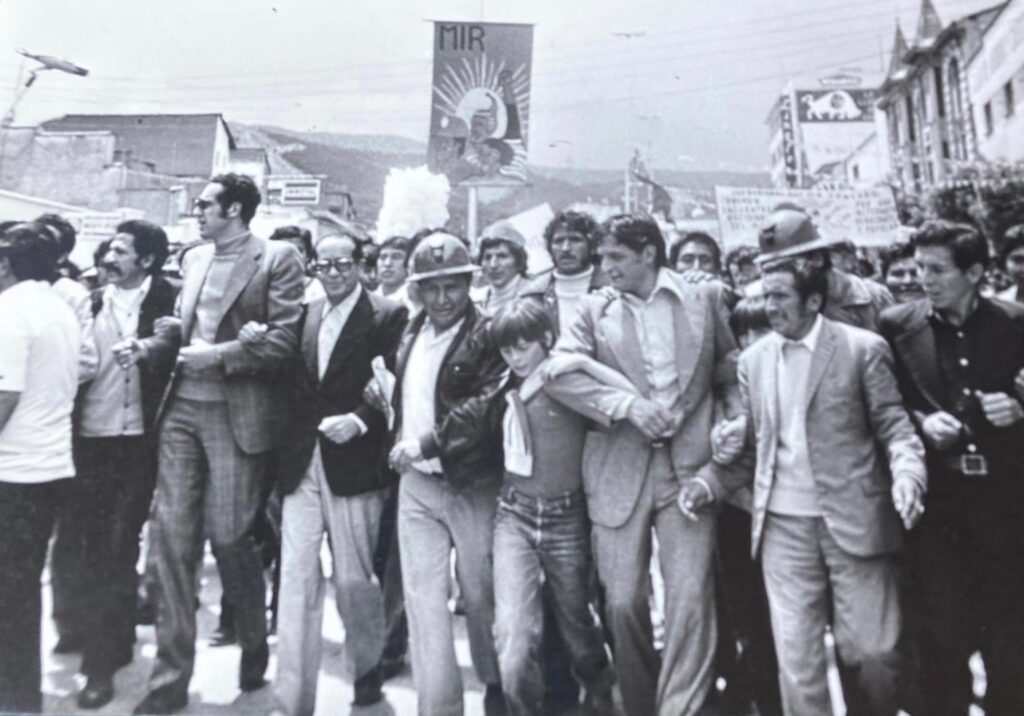
Rodrigo Paz Pereira, the son of former president Jaime Paz Zamora, came to power as a complete surprise. The son of a left-wing political family with a guerrilla past, his father served as president and led the former Revolutionary Left Movement (MIR) after forging an unlikely political alliance with the right-wing former dictator Hugo Banzer following the 1989 elections. In 2025, Paz Pereira defeated former president Jorge “Tuto” Quiroga in the presidential run-off, benefiting from the votes left politically adrift by the collapse of the Movement for Socialism (MAS). Drawn largely from popular sectors, these voters would never have supported a far-right candidate such as “Tuto”.
Once in office, Paz temporarily eased the fuel shortage through agreements with the United States and allied countries in the region. Before long, however, he began issuing decrees and resolutions aimed at dismantling what he himself described as the Estado tranca (“gridlock state”). In practice, these measures favoured the powerful economic interests of Bolivia’s eastern lowlands while alienating the electorate that had brought him to power in the Andean region. His government abolished the wealth tax and enacted Supreme Decree No. 5503, whose 121 articles introduced a fast-track procedure for approving foreign investment contracts in infrastructure and natural resource exploitation without parliamentary approval or the free, prior and informed consent of the Indigenous Peoples concerned. It also eliminated almost all subsidies on liquid fuels, doubling the price of petrol and tripling that of diesel.
The origins of the subsequent conflict can be traced back to these early days in office. From the outset, the president and his government adopted a position increasingly at odds with Vice-President Edman Lara, a former police officer who enjoyed broad popular support. Even before taking office, Lara accused the president on social media of reneging on their political agreements and forming a government without his participation. As the dispute escalated, the government issued a decree stripping the vice-president of his constitutional powers and depriving him of almost all public funding. While Paz portrayed Lara as unfit for office, a significant section of his own electorate interpreted the move as a betrayal of their class interests, particularly among the Andean popular sectors represented by peasants, small traders, self-employed workers, transport workers and labourers. These groups have traditionally been distrustful of the middle and upper classes of La Paz, Cochabamba and Santa Cruz, whom they largely perceive as belonging to the political right.
An Accumulation of Demands
The composition of the protest movement changed over time. In April, the president enacted Law No. 1720 without any prior consultation. The legislation sought to reclassify small-scale agricultural holdings as medium-sized properties through an administrative procedure, while introducing a moratorium on verifying whether medium-sized estates fulfilled their economic and social function. The government and agribusiness interests attempted to present the law as one that would benefit smallholder farmers, although it was evident that it was primarily intended to favour the large landowners of Bolivia’s eastern lowlands. Indeed, the region’s leading businessman and senator took the lead in publicly promoting and defending the legislation.
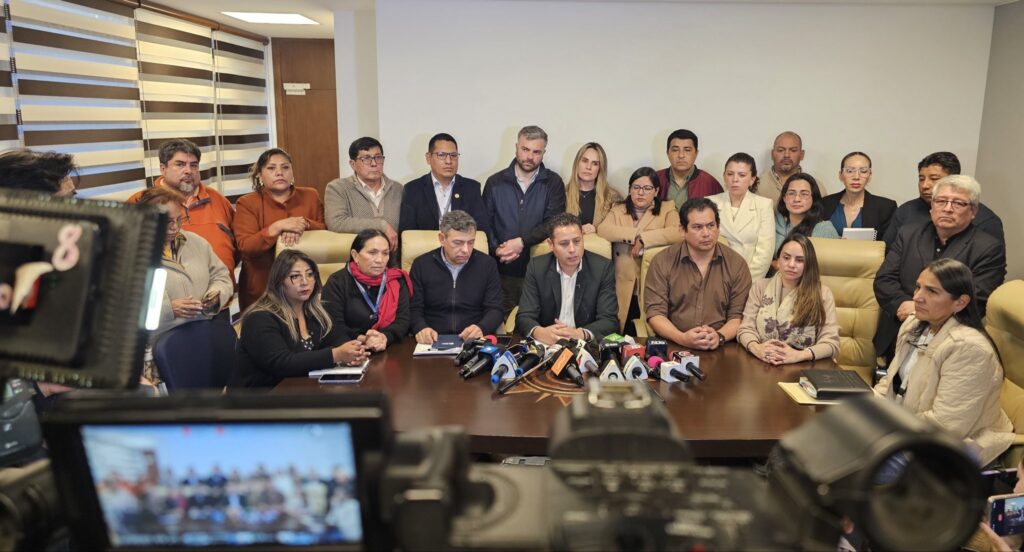
Against this backdrop, the first protest was led by peasant organisations from the Northern Amazon who launched a march demanding the repeal of Law No. 1720. Along the way, they were joined by Indigenous organisations from the department of Beni, which distanced themselves from the agreements reached between the government and the Confederation of Indigenous Nations and Peoples of the Bolivian East, Chaco and Amazon (CIDOB), as the authorities sought to downplay the significance of the peasant march. The mobilisation also prompted mining cooperatives and teachers’ unions to put forward their own demands. Up to that point, the government had portrayed the protests as a collection of sector-specific disputes, attributing them to the legacy of the “20 years of MAS” and to alleged attempts at destabilisation by political leaders displaced from power and aligned with former president Evo Morales.
The Bolivian Workers’ Centre presented its list of demands in El Alto on May 1, ushering the conflict into a new phase. The dispute took on a more structural character and social polarisation deepened, spilling onto the streets, into the media and across social networks.
The Bolivian Workers’ Centre presented its list of demands in El Alto on May 1, ushering the conflict into a new phase. The dispute took on a more structural character and social polarisation deepened.
Following the partial repeal of Law No. 1720 and the enactment of Supreme Decree No. 5613, which authorised the allocation of state-owned forest land to Amazonian peasant and Indigenous communities, the government declared that the protests were no longer driven by legitimate social demands but had become political in nature. This shift was underscored by growing calls for the president’s resignation—a demand from which Indigenous organisations distanced themselves following the partial repeal of Law No. 1720. At the same time, the government adopted a ministerial resolution allowing mining cooperatives to regularise contracts in protected areas and Indigenous territories without prior consultation. In doing so, the move further entrenched violations of the Indigenous rights enshrined in the Constitution, with the aim of neutralising one of the strongest sectors of the protest movement.
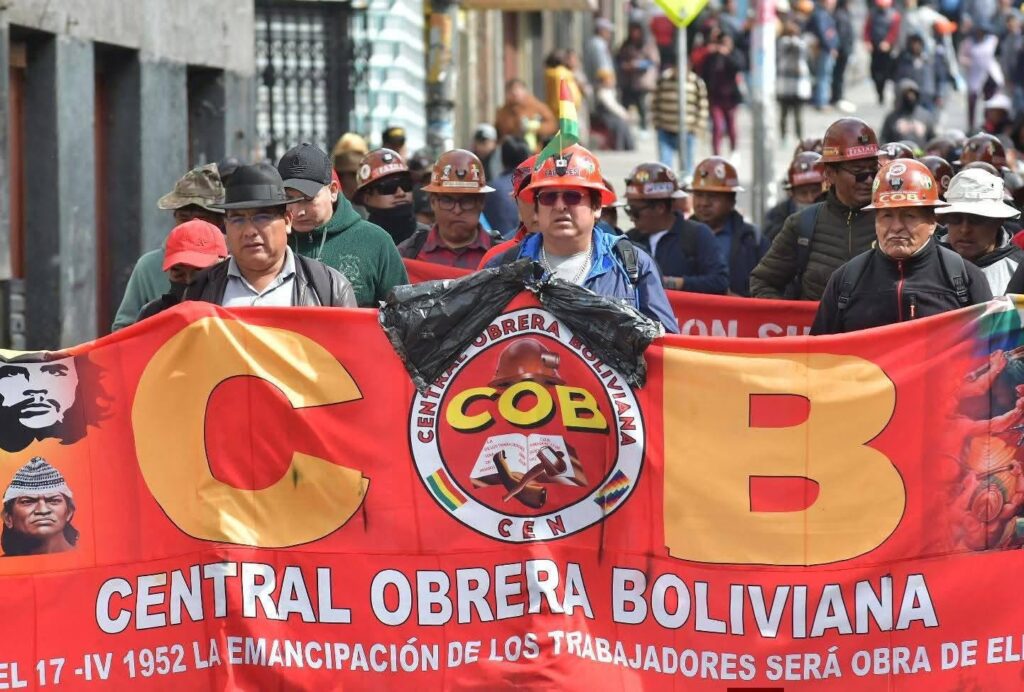
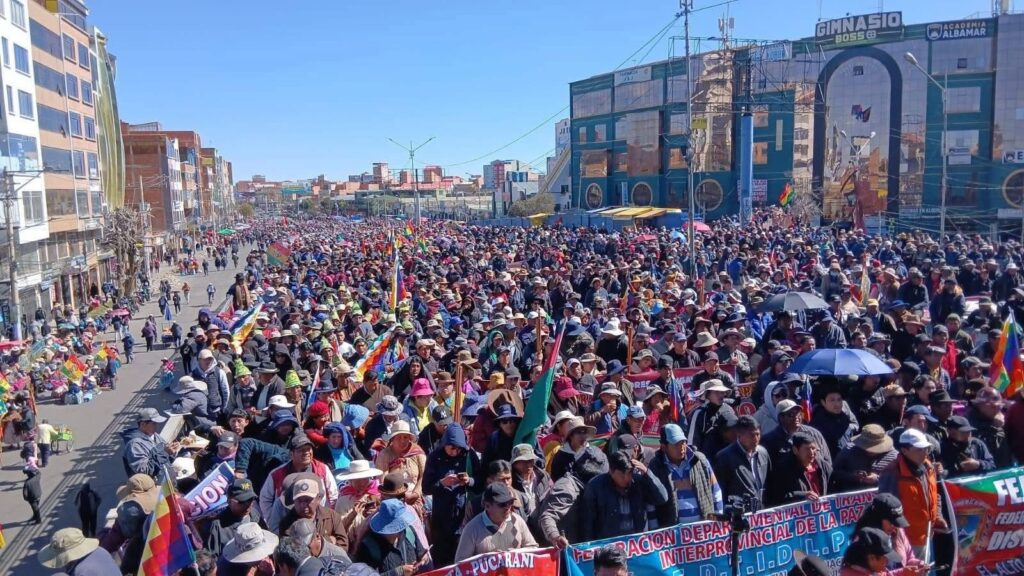
For its part, the Bolivian Workers’ Centre (COB) presented its list of demands in El Alto on May 1, ushering the conflict into a new phase. The dispute took on a more structural character and social polarisation deepened, spilling onto the streets, into the media and across social networks. At this stage, new actors came to the fore: coca growers from Chapare, who launched a march towards La Paz, and peasant organisations from the historic Túpac Katari federation, bringing together the so-called Ponchos Rojos, one of the country’s most militant social movements. Road blockades spread across almost the entire Andean region, while communal peasant communities joined the protests en masse within their own territories. By then, the movement had coalesced around a single overriding demand: the resignation of Rodrigo Paz over the sale of poor-quality fuels, the shortage of US dollars and rising inflation.
A Conflict That Seemed Never-Ending
Another dimension of the conflict was the impact, forged after his electoral victory, that Rodrigo Paz’s alliance with the economic elites of Bolivia’s eastern lowlands had on the Andean popular sectors. Combined with a series of neoliberal measures that rolled back the social gains enshrined in the Constitution, this alliance came to be seen by many as a betrayal of the very voters who had brought Paz to power. This perception was further reinforced by the removal of Indigenous symbols from the state’s official imagery, as well as by a shift in the language and practices through which the government engaged with the protesting sectors. With no interlocutors capable of understanding their grievances, the conflict reached an impasse and dragged on.
Throughout the crisis, the government consistently opted for dialogue while refusing to yield to demands for the president’s resignation, treating the unrest as a series of sector-specific disputes. For several weeks, however, the president’s resignation remained the only condition under which the nearly 100 roadblocks that were beginning to choke access to La Paz, the country’s seat of government, would be lifted. Xenophobic and discriminatory rhetoric directed at the protesters came to dominate social media and much of the mainstream media, which had largely aligned itself with the government. The protesters, for their part, responded with an anger born less of aggression than of frustration and a profound sense of powerlessness.
As in other conflicts led by popular organisations across the Andean region, polarisation exposed and intensified Bolivia’s longstanding fault lines, particularly those rooted in ethnic and regional divisions.
As in other conflicts led by popular organisations across the Andean region, polarisation exposed and intensified Bolivia’s longstanding fault lines, particularly those rooted in ethnic and regional divisions.
In this way, the government adopted a strategy of attrition, refraining from declaring a state of emergency in order to avoid drawing other sectors into the conflict and triggering an even greater crisis. While the absence of armed repression—of the kind witnessed under Jeanine Añez and Gonzalo Sánchez de Lozada, when crackdowns left a trail of deaths, injuries and arrests—kept the protests within manageable institutional limits, the prolonged conflict inflicted considerable political damage on the president, as growing sectors of society called for the army to be deployed.
As in other conflicts led by popular organisations across the Andean region, polarisation exposed and intensified Bolivia’s longstanding fault lines, particularly those rooted in ethnic and regional divisions. Given its role as the main supplier of many of the goods consumed in western Bolivia, the roadblocks in Santa Cruz were widely perceived as a measure directed against the department itself. Meanwhile, Indigenous intellectuals—especially Aymara and Quechua voices based in the country’s cities—argued that the conflict had brought to the surface the racism and discrimination still faced by the Indigenous population of the Andes, which was once again being marginalised in public policy. More broadly, there was a widespread perception that the social gains enshrined in the Constitution were under threat.
Evo Morales’ Role
Among the government’s main efforts to discredit the protests was its claim that Evo Morales was behind an attempted insurrection and that he was financing the road blockades through drug trafficking, with the aim of securing his eligibility to stand in the elections that would supposedly follow the president’s resignation. In reality, apart from the mobilisation of coca growers from Chapare, the former president played a much greater role in media coverage than in the protests themselves, not least because he remained at odds with several of the sectors taking part in the mobilisation. Although his supporters shared the movement’s central demand, the broad coalition brought together by the Bolivian Workers’ Centre (COB) and peasant organisations far exceeded the mobilisation of the coca-growing sector, which marched from its historic stronghold in Chapare to the seat of government.
The most tense moments came in May, when several marches entered La Paz and the city was brought to a complete standstill by the road blockades. Protesters increasingly targeted businesses that refused to close and even ordinary citizens who opposed both the radical nature of the protest measures and the calls for the president’s resignation only six months into Rodrigo Paz’s presidency. Across the country, the blockades paralysed the economy and directly and indirectly claimed 22 lives. Ambulances were prevented from passing through blockade points, denying critically ill patients access to medical care, while shortages of essential supplies left hospitals unable to treat those in urgent need.
Urban sectors also criticised the president for his ineffective handling of the crisis, which exposed the government’s limited understanding of the groups behind the protests, particularly those mobilised around land and territorial rights. In this context, the government’s public response was led by senator and landowner Branko Marinkovic, a member of the Free Alliance party headed up by former far-right presidential candidate Jorge “Tuto” Quiroga. His prominent role became another factor fuelling the protests, as many demonstrators saw him as a white landowner of foreign descent from Bolivia’s eastern lowlands promoting a reform that clearly harmed smallholder farmers while relying on arguments that many found unconvincing.
The Truce and the Uncertainty Ahead
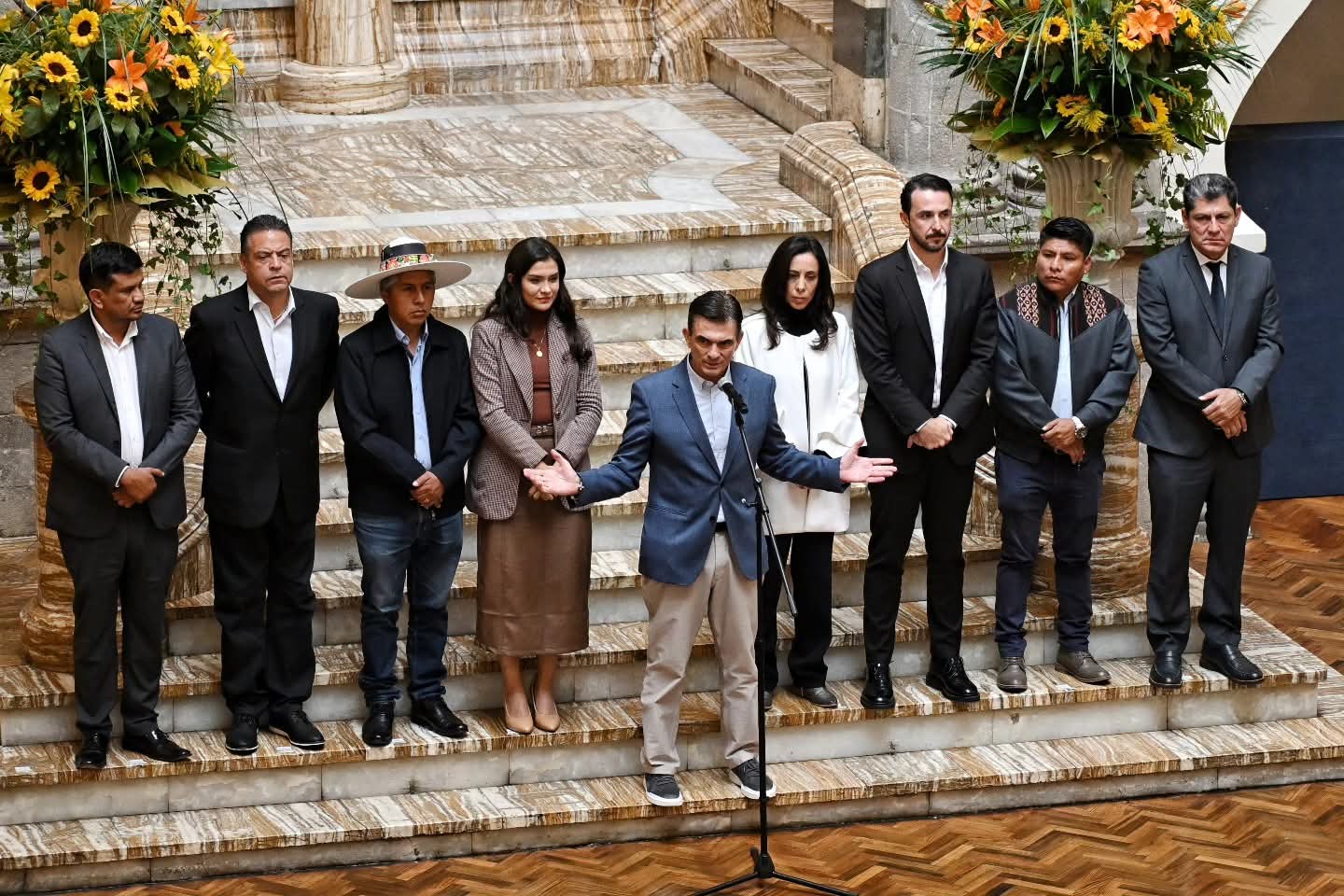
The conflict came to an end with the signing of an agreement on 26 June. Although it does not amount to a political programme for the popular movement, it could mark a turning point in the relationship between the state and a broad range of social actors with regard to their historic achievements: national sovereignty; respect for Indigenous Peoples; consultation and participation in decisions that may affect them; and the commitment not to authorise mining activities in protected areas and Indigenous territories. One of the agreement’s central commitments was Rodrigo Paz’s pledge not to relinquish control over the country’s natural resources—gas and lithium—or to privatise its strategic state-owned enterprises. The agreement also provided for compensation for damage caused to vehicles by poor-quality fuel, measures to protect household purchasing power, and commitments to restore wages and pensions.
Nearly a month after the agreement was signed, it is clear that many of its demands remain unresolved. Politically, President Rodrigo Paz neither resigned nor was forced to do so. Instead, he declared a state of emergency, although this was not the mechanism that brought the road blockades to an end. Fragmentation in Congress also persists, while the popular organisations have neither regrouped nor emerged stronger. Having secured agreements on a number of specific demands, they returned to their respective regions. Economically, there is still no clear development strategy. The government continues to combine ambitious rhetoric with an unavoidable reliance on international borrowing to fill the budgetary gaps left by the collapse of gas revenues.
Only time will tell who ultimately gained the upper hand in this conflict. The government is already beginning to quietly reintroduce several elements of its economic agenda: allowing the exchange rate to float in order to “correct” its value, proposing legislation to attract foreign direct investment, and easing taxes and state regulations. The proposal to reclassify small-scale agricultural holdings as medium-sized properties—the measure that originally triggered the conflict—has recently reappeared in the form of two new bills, albeit with several amendments and an explicit safeguard for the collective ownership of Indigenous territories. Whether this initiative originated with the agribusiness sector or the government itself remains unclear. If it was indeed the latter, the government would be playing with fire before the crisis unleashed by the road blockades has even fully subsided.
Leonardo Tamburini is Executive Director of ORÉ – Legal and Social Support Organisation, a lawyer from the Università degli Studi di Macerata (Italy), and holds a Master’s in Indigenous Rights and Development from the Universidad Autónoma Gabriel René Moreno (Bolivia).