
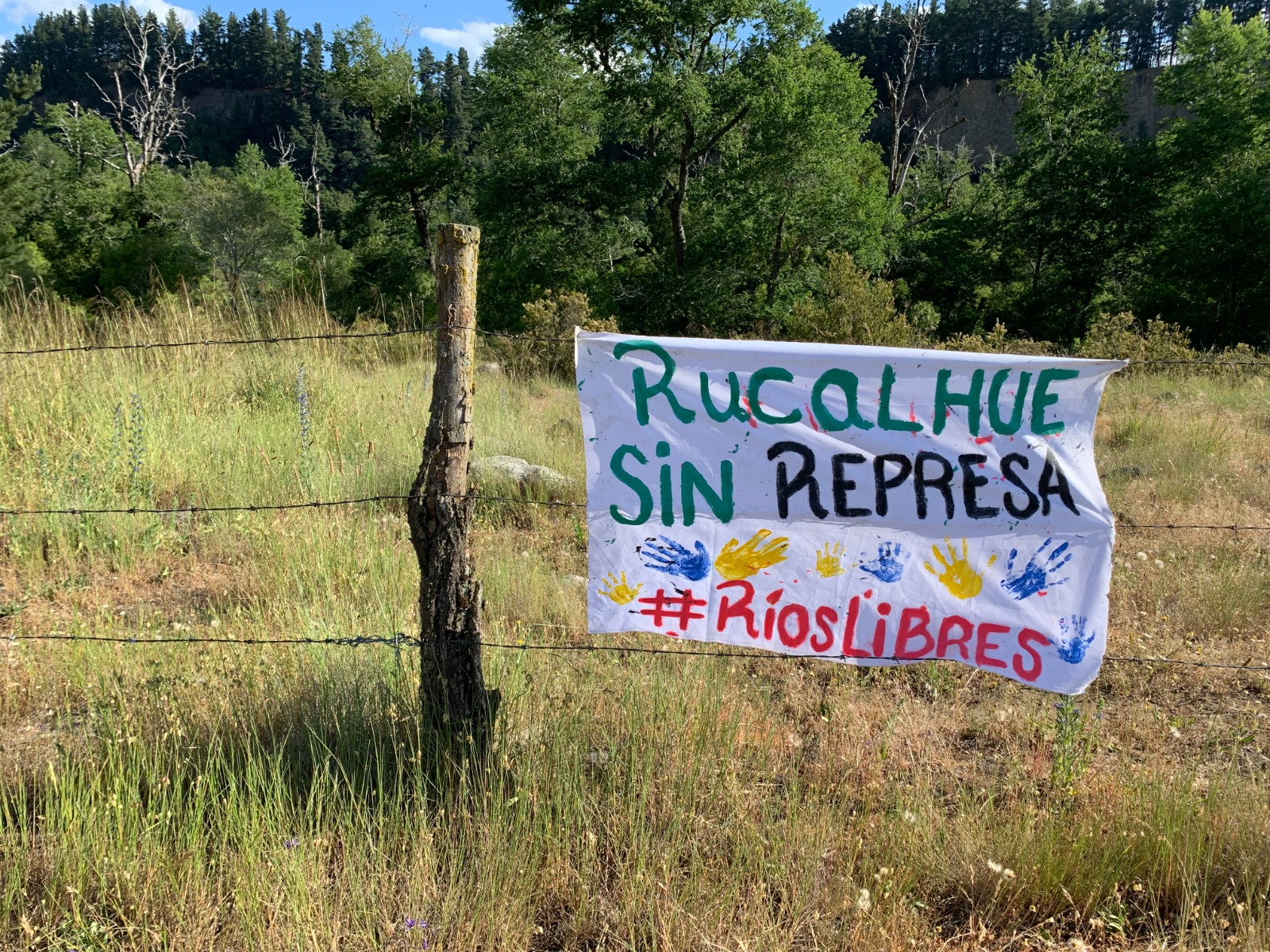
In his first months as President of Chile, José Antonio Kast has shaped the country's Indigenous policy around an agenda centred on security, investment, the dismantling of the Lafkenche Law, and weakening the land tenure system established under the Indigenous Law. Framed through the rhetoric of development, the government's official narrative portrays the collective rights of Indigenous Peoples as an obstacle to economic growth.
In his first State of the Nation Address, José Antonio Kast unveiled his Indigenous policy immediately after announcing measures regarding security and territorial control for the so-called Macrozona Sur (Southern Macrozone). This part of the country, home to a large Mapuche population and administratively comprising the Biobío and Los Lagos regions, the new government has sought to focus its security strategy on the demands for territorial restitutions from the communities inhabiting ancestral Mapuche territory.
Following a similar approach adopted by previous governments, the current administration has extended the constitutional state of emergency in the region. During his State of the Nation Address, President Kast stated: “Araucanía is one of Chile’s most beautiful and promising regions. Its people deserve to live in peace, work in tranquility and see their land flourish. In this region, as throughout Chile, we need increased tourism, a return on investment, and recovery of development. To achieve this, these measures will be accompanied by a coherent Indigenous policy, which we have been developing.”
In this context, it is hardly surprising that the ownership and exploitation of Indigenous lands have become the centrepiece of the government’s Indigenous policy. As Kast announced: “A reform of the Indigenous Law will grant greater freedoms and tools for development, removing restrictions on the use of Indigenous lands and allowing them to lease and mortgage on equal terms with the rest of Chilean citizens.” To this end, the consultation process for the new land system will be redesigned, while the land acquisition system will be restructured by introducing market-value appraisals and full traceability for each purchase.
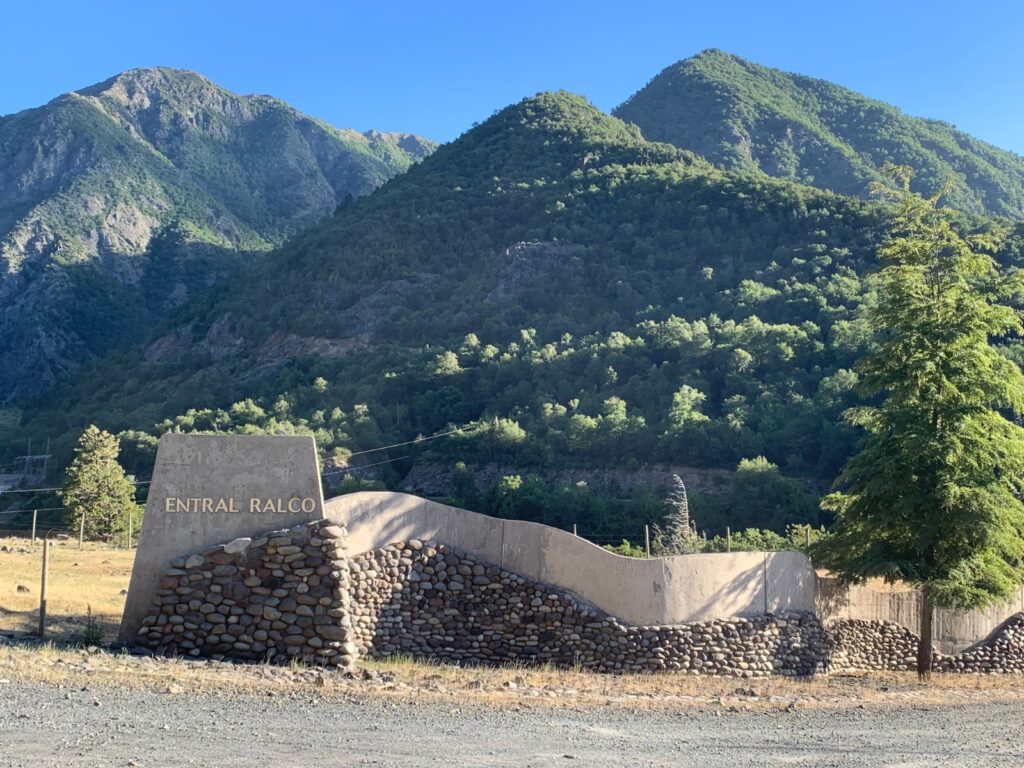
Indigenous Lands and the Institutionalisation of Dispossession
The Indigenous Peoples Law (Law No. 19,253) was enacted in 1993 under the government of Patricio Aylwin, following Chile’s restoration of democracy. While the law has received criticism for its definition of Indigenous lands, any attempt to amend the legislation has been regarded as a potential threat, particularly in a context where Indigenous Peoples lack constitutional recognition and political representation within the Chilean nation-state. This law created the National Corporation for Indigenous Development (CONADI) and established regulations for the protection, advancement, and development of Indigenous Peoples. It defines Indigenous lands as those held under land grants (títulos de merced), commissioner’s titles (títulos de comisario) and the other forms of title listed in Article 12, as well as lands recognised on the basis of historical occupation.
Against this backdrop, the proposal to amend the law to allow Indigenous lands to be leased and mortgaged is framed in the language of individual freedom and equality before the market. However, the current law already permits individually owned Indigenous lands to be leased for up to five years and allows liens to be created with CONADI’s authorisation. It also prohibits the leasing of collectively-owned Indigenous lands and protects both individual and communal lands against alienation, seizure and acquisition by third parties. History offers a clear warning. When legal restrictions on Indigenous lands were lifted in Chile, particularly between 1943 and 1947, almost one-fifth of those lands were alienated. Later, under the military dictatorship, 99-year leases deprived Indigenous families and communities of the use of their lands.
The current government seeks not only to reduce territorial demands to a market issue, but does so without considering the Commission’s 21 recommendations on territorial reparations, institutional framework, participation and development.
The current government seeks to reduce territorial demands to a market issue, without considering recommendations on territorial reparations, institutional framework, participation, and development.
To implement this reform, the Executive Branch has announced that it will reformulate the consultation process on the new land system. According to the Executive Branch, Gabriel Boric’s administration “abandoned [this reform] without producing any results”, referring to the proposals put forward by the Commission for Peace and Understanding (CPPyE). Established by Supreme Decree No. 14, the Commission’s primary mandate was “to conduct an assessment of the Mapuche people’s land demands, the lands already granted by the Chilean State, and the remaining gaps in this area, with the aim of quantifying that demand.”
To fulfil this mandate, the CPPyE carried out a comprehensive assessment of Mapuche land demands, existing gaps in this area, and the limitations of the current mechanism. The assessment found that this mechanism had been used “almost in its entirety” by Mapuche communities in the four designated regions, accounting for 99.59% of all land purchases completed up to 2024, while more than 1,100 applications remain pending. Under these circumstances, the Commission recommended moving towards a new land system that harmonizes the Indigenous Peoples Law with ILO Convention No. 169, incorporating mechanisms for territorial reparations, prioritisation criteria, institutional reforms, and tools to strengthen relations between the State and the Mapuche people.
Because these measures would directly affect Mapuche communities and organisations, they were deemed likely to have a direct impact on Indigenous Peoples, triggering the State’s obligation to carry out a consultation process. However, the process was widely rejected by Mapuche communities and was ultimately discontinued. The current government seeks not only to reduce the issue of territorial demands to a market problem, but also to do so while disregarding the Commission’s 21 recommendations on territorial reparations, institutional arrangements, participation and development.
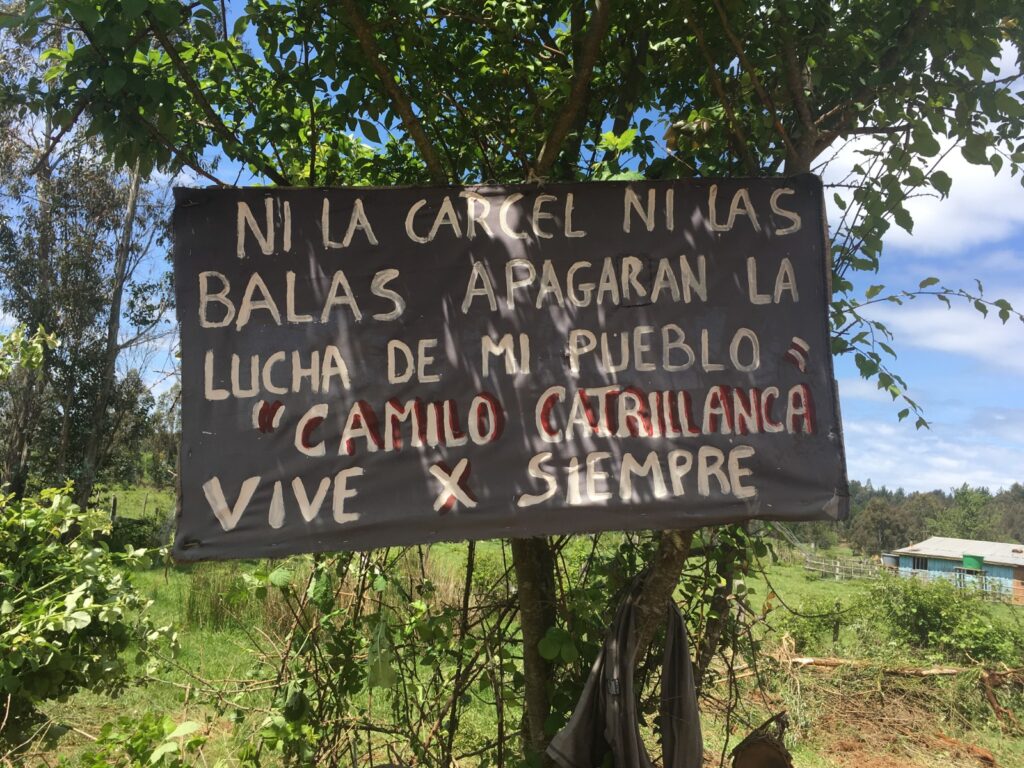
Indigenous Marine and Coastal Areas under Pressure
However, the policies of José Antonio Kast’s government go beyond the proposed reform to the Indigenous Peoples Law. Rather, its emphasis on land and property should be understood as part of a broader strategy aimed at limiting the rights of Indigenous Peoples and their communities’ decision-making authority over natural resources. From a neoliberal perspective, these resources should be exploited by private capital, while land ownership is linked to a security agenda. Alongside the proposed reform of the Indigenous Peoples Law, the Executive Branch has also promoted amendments to the so-called Lafkenche Law.
Law No. 20.249 (2008), known as the Lafkenche Law, created Indigenous Marine and Coastal Areas (Espacios Costeros Marinos de Pueblos Originarios, ECMPOs) to safeguard customary uses of coastal areas and entrust their management to the Indigenous communities that have ancestrally inhabited them. Although ECMPOs do not confer ownership of these territories, they must operate under a management plan designed to enable the coexistence of the different users of the coastal zone, including industrial and artisanal fisheries, tourism, and navigation. This plan must receive final approval from the Regional Commission for the Use of the Coastal Zone (CRUBC). In practice, however, Indigenous communities have faced opposition from fishing companies—particularly salmon farming companies—as well as from the State authorities responsible for approving these plans. In this regard, a narrative has emerged questioning the capacity of Indigenous communities to manage these areas, portraying their applications as excessive, accusing them of holding up investment and claiming that they seek exclusive control over the coastline.
Indigenous organisations have defended the law as a means of preserving historical memory, ensuring food sovereignty and protecting future generations.
What is at stake is how Chile chooses to relate to the sea, its territories, and its communities.
In 2024 alone, 80 percent of the applications submitted by Indigenous communities or Indigenous community associations were rejected by the Regional Coastal Zone Management Commission (CRUBC), where the state bodies represented on the Commission have been the main opponents of the creation of new Indigenous Marine and Coastal Areas (ECMPOs). As a result, these rejections have been based primarily on political grounds rather than technical considerations, since the CRUBC intervenes before communities submit their management plans. In fact, the available evidence refutes the claim that ECMPOs have brought the salmon farming industry to a standstill, as the sector has continued to expand both its production and its exports.
Indigenous organisations, such as the Network of Indigenous Women for the Defence of the Sea, have challenged this reversal of responsibility and defended the law as an instrument that preserves historical memory, ensures food sovereignty and protects future generations. They argue that it disproves the myth that community management cannot coexist with productive activities. Rather, they argue that what is at stake is how Chile chooses to relate to the sea, its territories, and its communities.

Indigenous Policy and the Market: Two Sides of the Same Coin
After just four months in office, the commodification of Indigenous lands and of the resources valued by private companies has emerged as the central focus of Indigenous policymaking. In the case of lands, collective protection must be justified against the principle of freedom of contract. In the case of marine and coastal areas, customary use must justify its extent in the face of investment. In both cases, the burden of proof falls on Indigenous Peoples to demonstrate that these are not “idle resources”. Therefore, these are not two separate policies, but two sides of the same coin.
In Chile, the market is presented as synonymous with development, while collective rights are portrayed as constraints that must be corrected. As a result, land ceases to be understood as the material basis for the historical and cultural continuity of Indigenous Peoples. At the same time, the maritorio—the Indigenous conception of the interconnected marine and coastal territory—ceases to be recognised as a space of memory, food sovereignty, and intergenerational stewardship. The issue is not whether mechanisms should be developed to improve the living conditions of Indigenous families and communities. Rather, the critical point is that these needs cannot be used to weaken collective rights or to prevent communities from making decisions about their territories under the guise of development.
Therefore, the first months of this new government not only open a legislative debate on the Indigenous Law and the Lafkenche Law, but also raise a deeper question about respect for Indigenous policy in Chile and the implementation of rights guaranteed to Indigenous Peoples under international law. If the starting point is security, investment and legal certainty for private actors, Indigenous rights are relegated to the sidelines through the lens of a colonial state. Consequently, what is at stake is not only land ownership or the coastline, but the possibility of imagining a different relationship between the State, the market and Indigenous Peoples—one in which their rights are not treated as a bargaining chip. For now, however, everything suggests that this horizon remains a distant prospect.

Verónica Figueroa Huencho is a Mapuche scholar and Tenured Professor within the School of Government, University of Chile.