
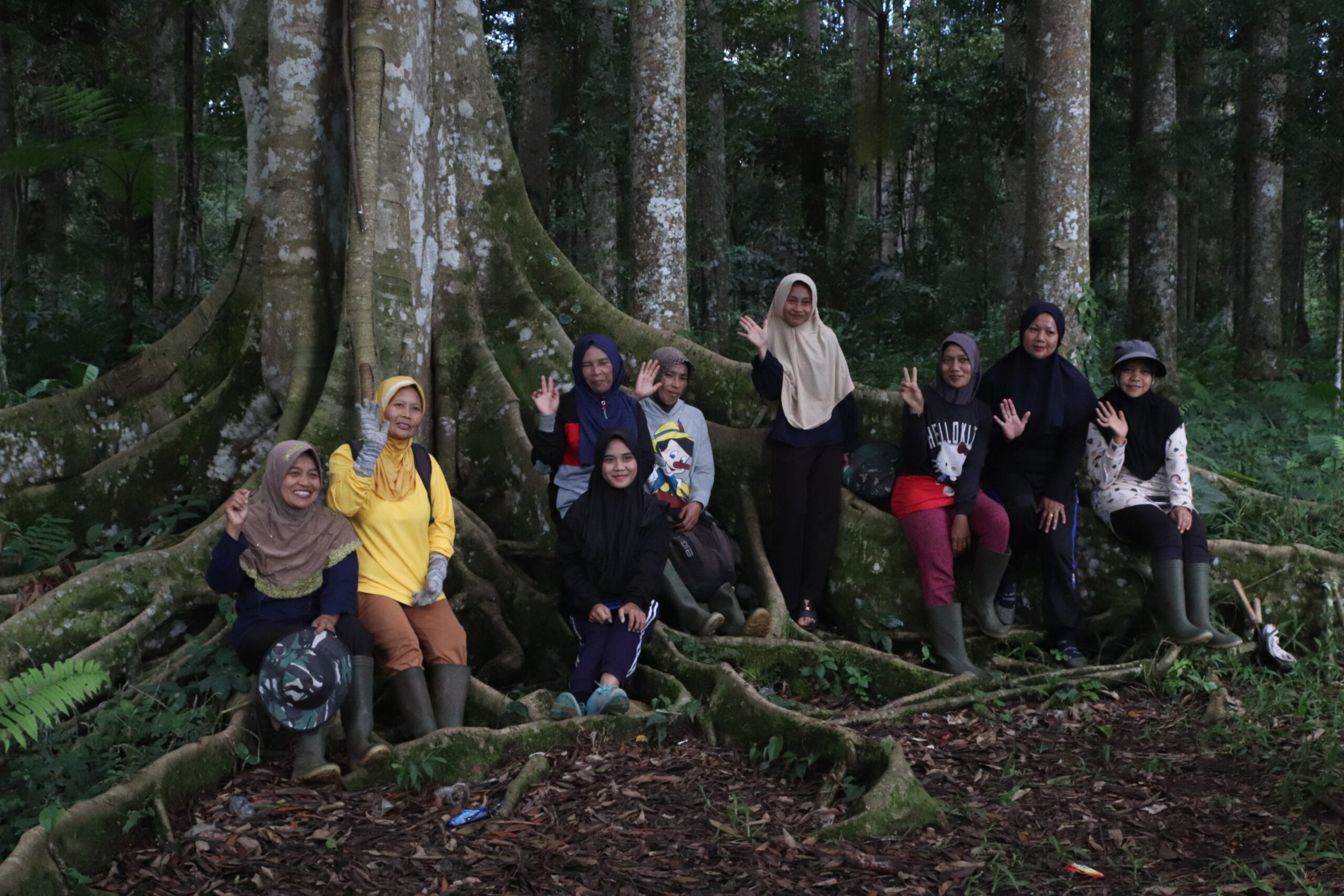
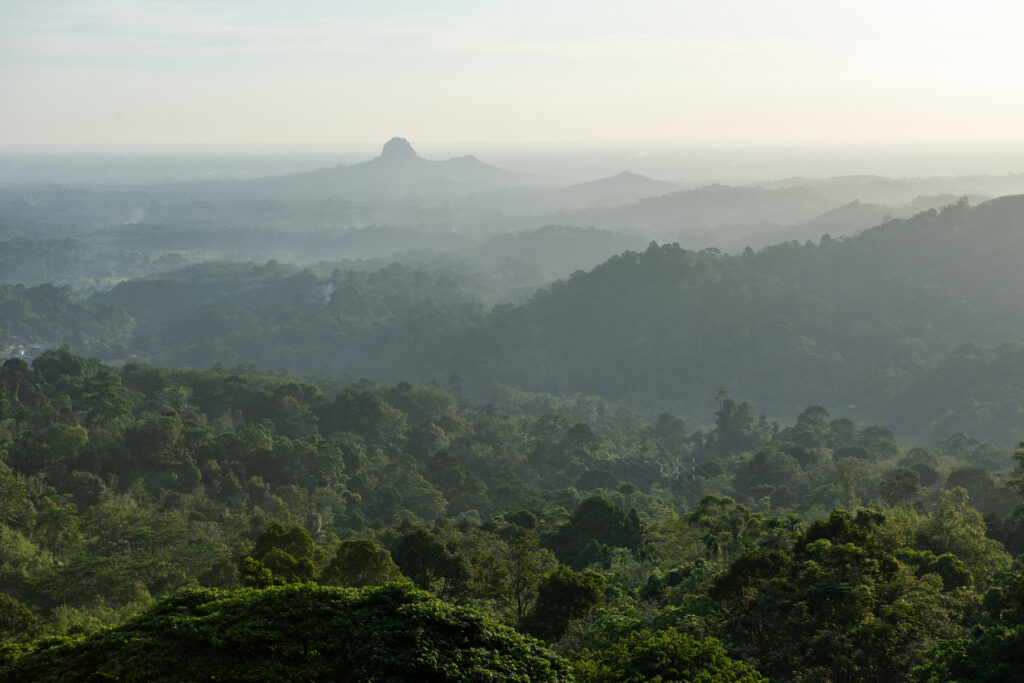
Although the total land area of Indonesia only covers around 1.3 percent of the Earth’s surface, it is home to the world's third largest tropical rainforest. These forests contain some of the highest levels of biodiversity in the world, including 17 percent of the world's bird species and another 12 percent of Earth's mammal species. For the Indigenous communities living in Indonesia, the forests provide a plethora of food, medicine, materials and cultural values while also holding generational Indigenous knowledge.
The tropical forests of Indonesia are shrinking fast. The 2025 Indonesia Deforestation Status (STADI) report from Auriga Nusantara recorded forest loss of 433,751 hectares that year, up 66 percent from 261,575 hectares the year before. Papua recorded the sharpest rise in forest loss nationwide, up 348 percent to 60,337 hectares. Most of this loss occurred in Merauke, the site of a national food and bioethanol project that runs under military guard and threatens roughly two million hectares of rainforest and Indigenous Peoples’ rights.
Further, the 2025 End-of-Year Report from the Indigenous Peoples’ Alliance of the Archipelago (AMAN) recorded 135 cases of Indigenous territory dispossession, up from 121 cases the year before. The mining sector accounted for the most cases, with 69 incidents affecting 1.06 million hectares. The plantation sector caused the most widespread damage, covering 1.95 million hectares. Indigenous communities lost 3.8 million hectares of their ancestral territories that year, and authorities criminalized 162 Indigenous people for defending their living space.
There are generally three interlocking mechanisms which are driving both ecological damage and violations of Indigenous Peoples’ rights: Legislation reduces ecological reality to administrative categories such as state forests and industrial zones; Development extractivism treats nature as a capital that must be exploited. The Mineral and Coal Mining Law, the Plantation Law, and the Job Creation Law form the legal basis for mining and palm oil expansion. Further, conservation and climate policy that exclude participation often repeat the same extractivist patterns. Carbon markets lock up Indigenous forests through bans on access, cultivation shifts, and firewood gathering.
These three mechanisms converge on one point: the bodies of Indigenous women, who tend and care for their lands and communities every day.
The Burden that Lands on Indigenous Women’s Bodies
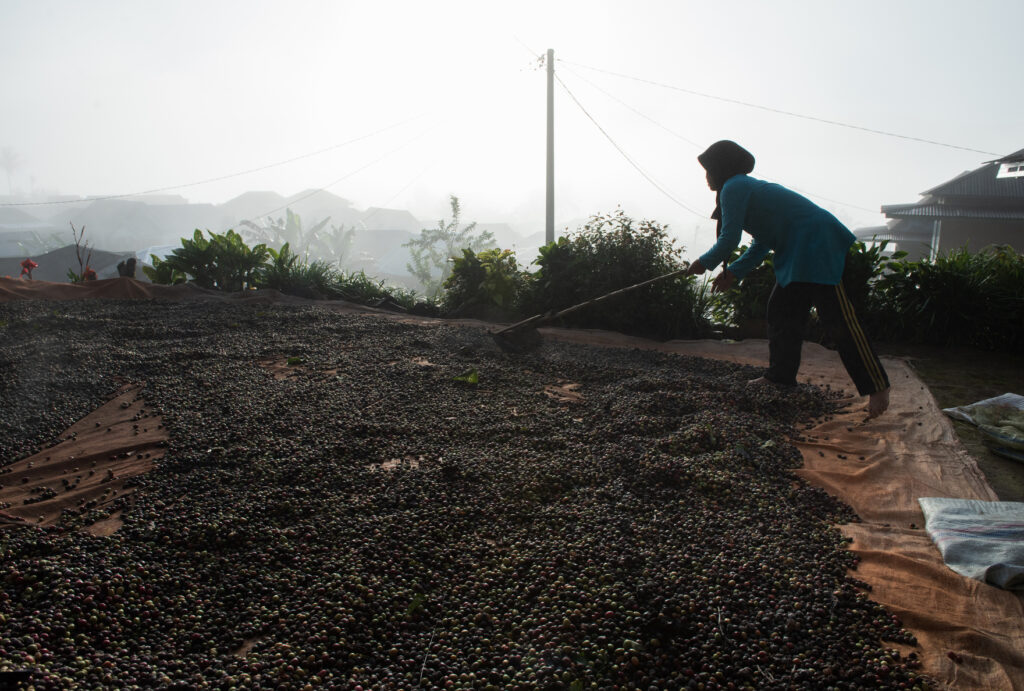
Indigenous women fetch water, gather firewood, harvest medicinal plants, and tend to rotational gardens. When ecosystems break down, this work grows heavier and riskier. When rivers become polluted, women have to walk farther to find clean water. When the forests disappear, medicinal plants disappear with them, so women care for sick family members without the remedies they normally use.
Ecosystem damage also correlates with health problems. Women near coal mines in East Kalimantan have reported that dust from mine haul roads disrupts their menstrual cycles and their children’s health. Water contaminated with heavy metals causes skin infections and reproductive disorders. Environmental Impact Assessments (AMDAL) rarely capture this data as they measure water quality standards and emission limits rather than women’s domestic workload or reproductive health.
In many territories, when forests are turned into monoculture plantations, women lose their income from non-timber forest products, and their positions within the household weaken.
When forests are turned into monoculture plantations, women lose their income from non-timber forest products, and their positions within the household weaken.
Ecosystem damage also negatively interferes with the transmission of Indigenous ecological knowledge. Indigenous women have obtained knowledge about fruiting seasons, animal migration cycles, and the location of medicinal plants through direct observation over generations. In the Rejang, Serawai, and Malin Deman Indigenous territories in Bengkulu, Indigenous women identify hundreds of forest plant species as food and medicine. When the forests are cleared for plantations or mines, the younger generations lose the chance to learn this knowledge firsthand.
Lastly, Indigenous territories also serve as spaces for women’s ritual life and economic activity. In many territories, when forests are turned into monoculture plantations, women lose their source of income from non-timber forest products, and their position within the household weaken.
The Climate Crisis Deepens the Double Burden
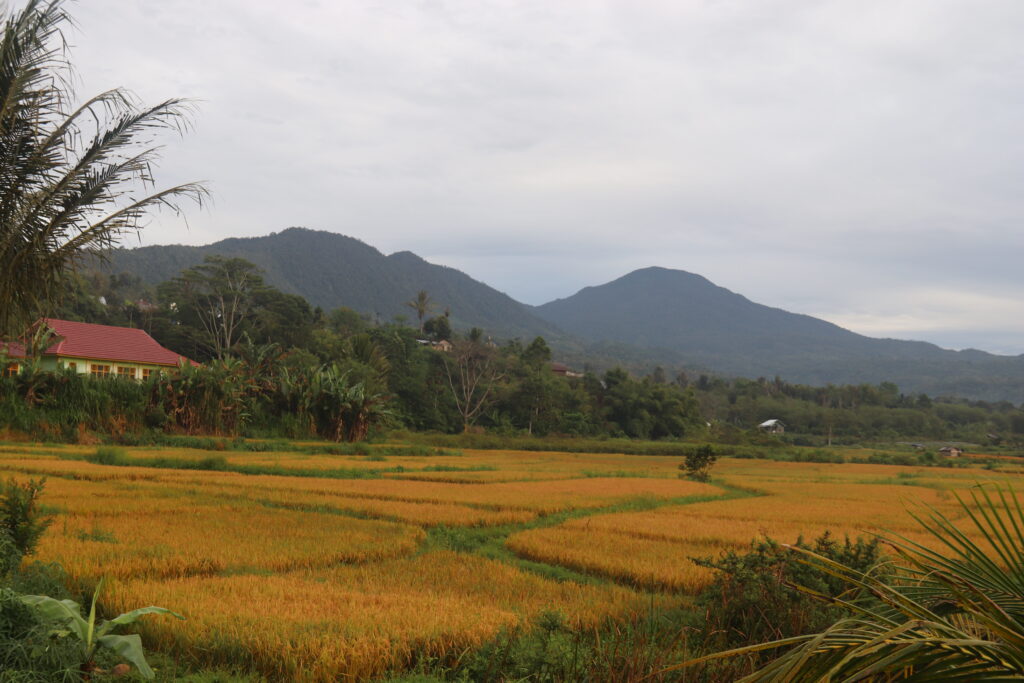
The biodiversity and climate crises are connected. Deforestation releases carbon stored in the forests and peatlands, which accelerates global warming. Indigenous women bear the brunt of the impacts from both crises. As forests disappear, the land loses its capacity to store water. Dry seasons grow drier, and rainy seasons bring a higher risk of flooding. Women responsible for household water must walk farther during the dry seasons on top of dealing with gardens suffering from damages, as well as contaminated water, during the rainy seasons.
Shifts in planting seasons also disrupt women’s Indigenous knowledge of ecological indicators. When seasonal patterns become unpredictable, harvests decline. In many Indigenous households, women reduce their own food portions first to ensure that their children have enough to eat. Carbon market schemes add new risks. These schemes require large forest areas, and as a direct consequence such schemes often impose access restrictions. As such, Indigenous women’s needs for shifting cultivation, resin, and firewood remain further disrespected.
Ecosystem damage also threatens keystone species that form part of Indigenous women’s knowledge systems. The Sumatran tiger, orangutan, and elephant lose their habitats as forests are converted into palm oil plantations and mines. For Indigenous women, the presence of certain species indicates forest and water quality levels. When those species disappear, women lose the tools they use daily to read and understand their environment.
Women and the Recovery of the Commons
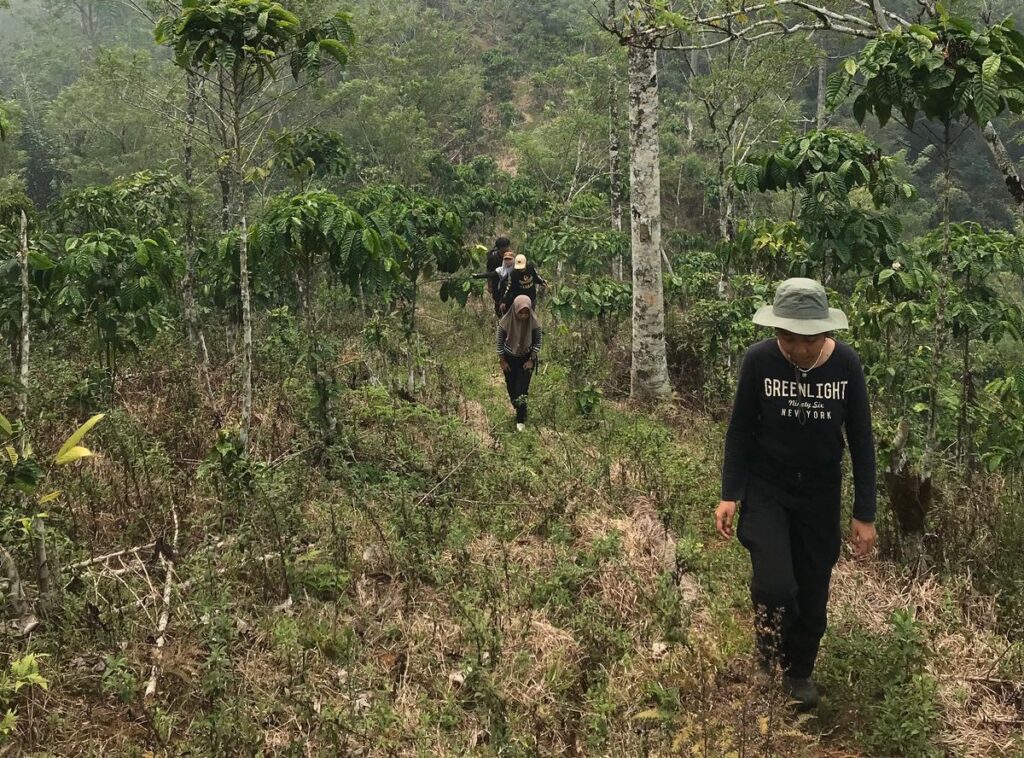
Indigenous women do not only carry the burden. They are the keepers of seeds, they are leaders of agrarian resistance, and they build conservation practices rooted in Indigenous knowledge. The Kendeng Indigenous women, for example, printed their feet in cement in front of the State Palace to oppose a cement factory in the Kendeng Mountains, then continued their advocacy through independent monitoring of spring water quality and flow. Papuan women resisted the expansion of a large-scale food estate project in Merauke, while documenting sago-processing knowledge so it would not disappear.
In Bengkulu, Rejang women store local rice seeds between planting seasons as a living gene bank, while maintaining garden rotation that restores soil fertility. In Merpas and Linau Villages, along the south Bengkulu coastal area, women avoid destructive fishing gear and have agreed on spawning zones in the lagoon. These practices show that conservation does not require removing people from protected areas. Conservation grounded in Indigenous women’s knowledge works through active involvement rather than restricted access.
Commoning Movement builds solidarity among Indigenous women’s communities, works with legal partners, and advocates for policies that require Indigenous women’s Free, Prior and Informed Consent.
Commoning Movement builds solidarity among Indigenous women’s communities, works with legal partners such as Akar Law Office.
Akar Global Initiative developed the Rebuilding the Commons framework to strengthen women’s contributions across four dimensions. Commoning Land restores Indigenous land as a jointly managed space through participatory mapping, restoration based on local species, and collective governance that includes Indigenous women as decision-makers. Commoning Care recognizes women’s care work as ecological labour, supported by clean water infrastructure, documentation of care work, and reproductive health services in affected areas.
Commoning Culture restores ritual practice and Indigenous ecological knowledge through oral documentation and intergenerational education programs, so that younger generations receive elder women’s knowledge before it disappears. Commoning Movement builds solidarity among Indigenous women’s communities, collaborates with legal partners such as Akar Law Office, and advocates for policies that require Indigenous women’s Free, Prior and Informed Consent (FPIC) for every permit necessary for mining, plantation, and energy. These four dimensions support one another.
Challenges on the Ground
This collective action framework faces three concrete challenges. In many regions, customary structures still place men as the community’s representatives, so formal engagement of Indigenous women often meets resistance. Government and international donor conservation programs still measure success by protected area size or stored carbon volume rather than measuring the impacts on Indigenous women’s living conditions. Without a change in the aforementioned indicators, Indigenous women’s contributions remain officially unrecognized. Pressure from mining expansion and national strategic projects also keeps rising each year, so community-based recovery keeps facing new threats whose scale exceeds what Indigenous communities can respond to alone.
In turn, biodiversity and ecosystem restoration and recovery require legal change, not only technical rehabilitation programs. Environmental impact assessments need to include body-level indicators, such as the distance Indigenous women travel to find clean water and the number of medicinal plants lost from their daily access radius. Legal frameworks need to recognize Indigenous women’s ecological knowledge of seasons, seeds, and ecological indicators as equal to formal scientific studies, through a mechanism that requires Indigenous women’s Free, Prior and Informed Consent as a condition for valid permits.
Indonesia’s biodiversity and deforestation crises are not isolated technical problems. This damage lands hardest on Indigenous women, who fetch water, keep seeds, and carry out the ecological rituals.
Indonesia’s biodiversity and deforestation crises are not isolated technical problems. This damage lands hardest on Indigenous women, who fetch water, keep seeds, and carry out the ecological rituals.
Environmental law paradigms also need to shift from state sovereignty over natural resources toward shared governance, where Indigenous women act as decision-makers, not merely consultation participants. Ecological justice requires reparation, not just financial compensation. This means returning Indigenous land, water sources, ritual spaces, and lost species, paired with ecological regeneration programs led by Indigenous women.
Indonesia’s biodiversity and deforestation crises are not isolated technical problems. This damage lands hardest on Indigenous women, who fetch water, keep seeds, and carry out the ecological rituals that bind their communities to nature every day. Indonesia’s biodiversity recovery will only succeed once policy recognizes Indigenous women as primary agents of recovery, not passive beneficiaries of conservation programs designed without their involvement.

Pramasti Ayu Kusdinar is a feminist organizer and researcher from Bengkulu, Sumatra, Indonesia, who works with grassroots and Indigenous women defending forest, coastal, and agricultural commons across Indonesia. Pramasti's career spans over a decade of community organizing, agrarian research, and coalition building at Akar Global Inisiatif.