
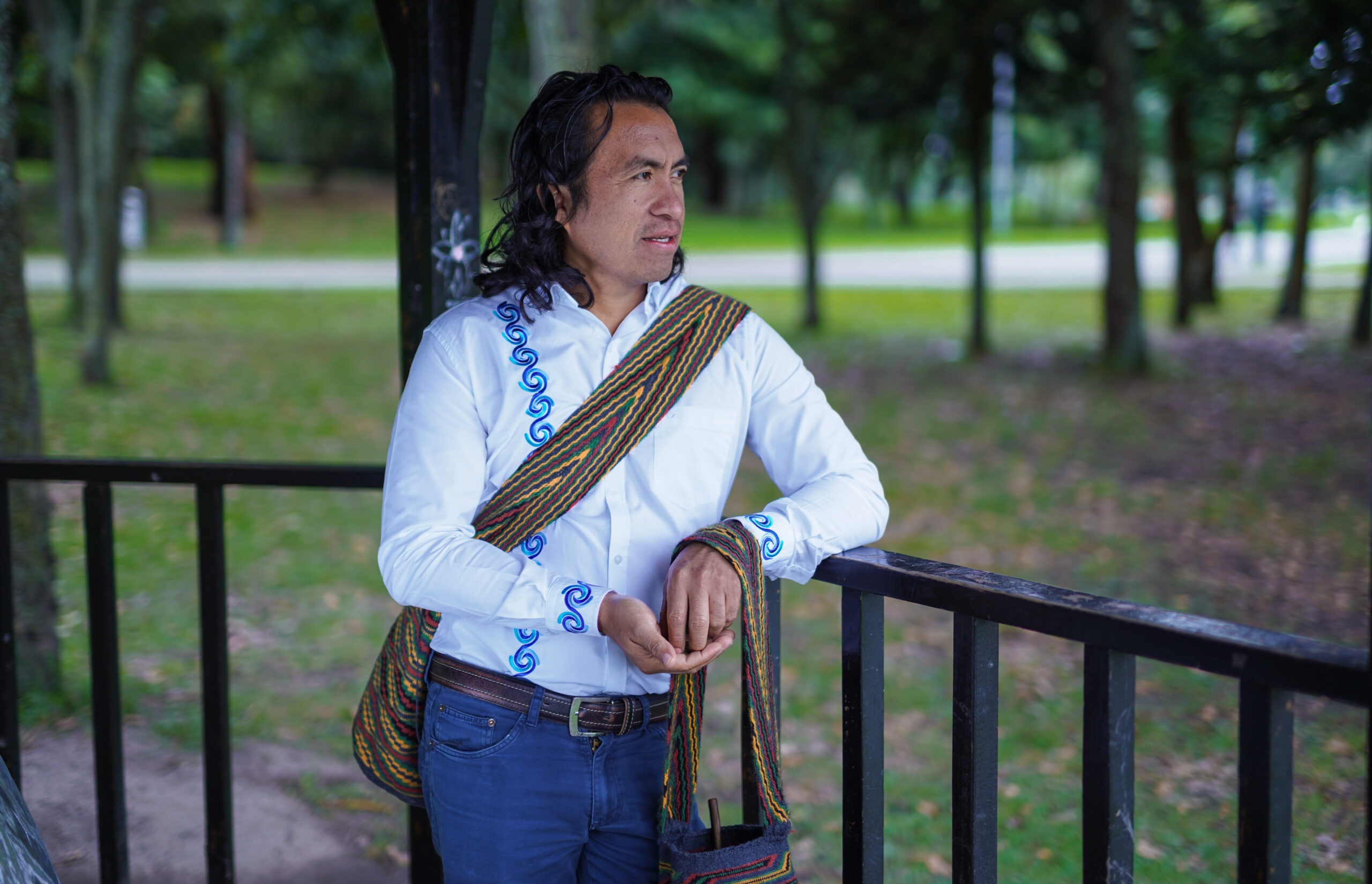
The Arhuaco leader from the Sierra Nevada de Santa Marta in Colombia has served for more than a decade as Indigenous Technical Secretary of the National Commission for Indigenous Territories (CNTI), a forum for dialogue and agreement on territorial matters between the Indigenous Government and the National Government. For Camilo Niño, autonomy means moving beyond the language of recognition: it is measured by a people’s effective capacity to make decisions over its territory. The new administration's announcement that it intends to reverse the establishment of Indigenous territorial entities shows that recognising autonomy is one thing, while accepting its implications for the distribution of territorial power is quite another.
Laura Galvis Santacruz (LGS): When we speak of Indigenous autonomy in Colombia today, what does it mean in practice?
Camilo Niño Izquierdo (CNI): Autonomy is one of the principles and legal standards governing the rights of Indigenous Peoples, and it encompasses several spheres. For millennia, we have struggled to have our differences recognised and made legally binding on the Colombian State. To speak of autonomy is to speak of being Indigenous within our own spaces, within our territories. Autonomy is what sustains the survival and continuity of our peoples. And within those “territories of our own” lies the fundamental right of Indigenous Peoples to full recognition, which remains incomplete today. Territory is the right that underpins all other rights: without it, none of the others could be possible. It is there that our knowledge systems exist, that our spiritual and cultural practices are exercised, and that our governance, our own government, health and education exist.
LGS: The 1991 Constitution provided significant recognition of this autonomy. More than 30 years later, what is happening in practice?
CNI: Colombia made significant progress with the 1991 Constituent Assembly. Indigenous Peoples emerged as key actors, and this was reflected in the recognition of territories, the constitutional protection of resguardos, the creation of Indigenous territorial entities, political participation, and the incorporation of international standards that form part of the bloque de constitucionalidad [body of constitutional law/constitutional block]. Colombia enshrined rights to the fullest extent. But how much progress has actually been made? In territorial matters, progress had already been made before 1991, because the resguardo predates the Constitution. It was during the 1980s that the largest amount of territory was recognised under this legal framework. Since then, more resguardos have been recognised, but over smaller areas of land: more resolutions, fewer hectares. So, more rights were enshrined, but in practice titled territories are still not fully protected.
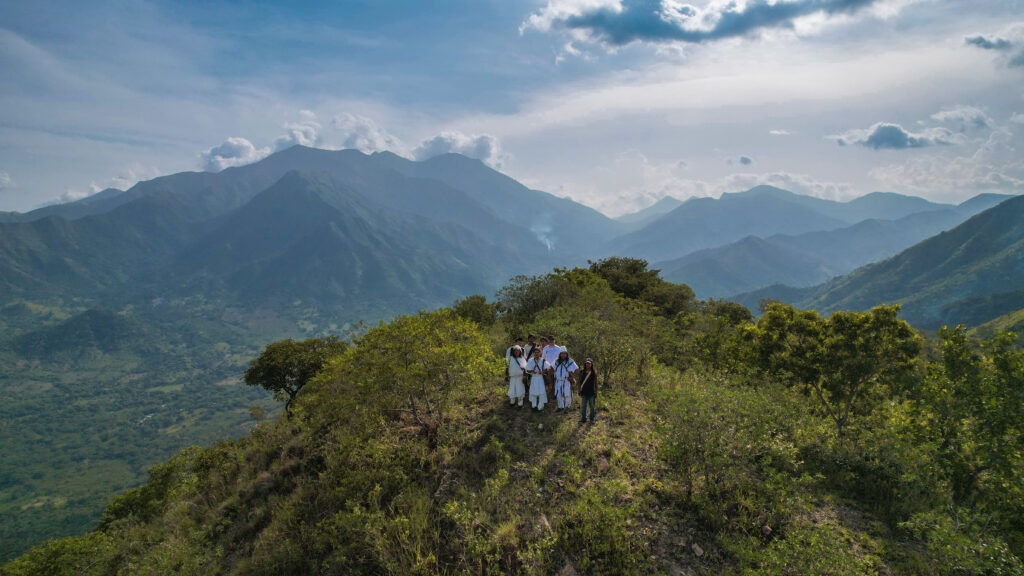
LGS: So where does the gap lie between constitutional recognition and effectively exercising rights with relation to such recognition?
CNI: We could speak of two major challenges that have yet to be overcome: on the one hand, institutional adaptation and, on the other, the regulatory changes needed to streamline procedures. But behind both lies political will. One example of regulatory adaptation is the amendment of Decree 2164 of 1995, which for 30 years governed the establishment, expansion and legal regularisation of resguardos through procedures that slowed the process down. We spent more than five years discussing amendments to it. The decree that replaced it, Decree 1392, was signed on 22 December 2025, but in order to implement it, the National Land Agency (Agencia Nacional de Tierras) must issue its internal guidelines. In practice, these guidelines determine what a community is required to provide. It is now August 2026 and we have still not been able to discuss them. Moreover, this is sometimes where additional requirements end up being introduced that are not provided for in the decree.
As for institutional adaptation, the National Land Agency has a Directorate for Ethnic Affairs, but no Indigenous sub-directorate. This Directorate serves both Indigenous Peoples and Afro-descendant communities in addition to being responsible for land acquisition. Given the way the requirements are currently designed, it is much easier today for a private individual to acquire a property through the Agency than it is for an Indigenous People. It seems as though an additional burden is imposed when it comes to us.
LGS: Can effective autonomy exist without legal certainty and genuine control over territory?
CNI: There can be no autonomy without territory. Legal certainty goes beyond holding title. The National Land Agency grants title to a collective territory by means of a resolution issued following the completion of an entire procedure. That resolution is registered with the Superintendency of Notaries and Registration (Superintendencia de Notariado y Registro), but this does not mean that the territory is comprehensively protected. The best-known example is that of the Nukak people, who have a territory recognised by the State and a resolution granting them rights to it, but are unable to exercise those rights because other actors are exerting influence over the territory. Similarly, in Putumayo, territory was recognised for the Inga people, but not a single Inga person lives there: they were displaced, and others now occupy the territory. This is why we insist that territories must be comprehensively protected.
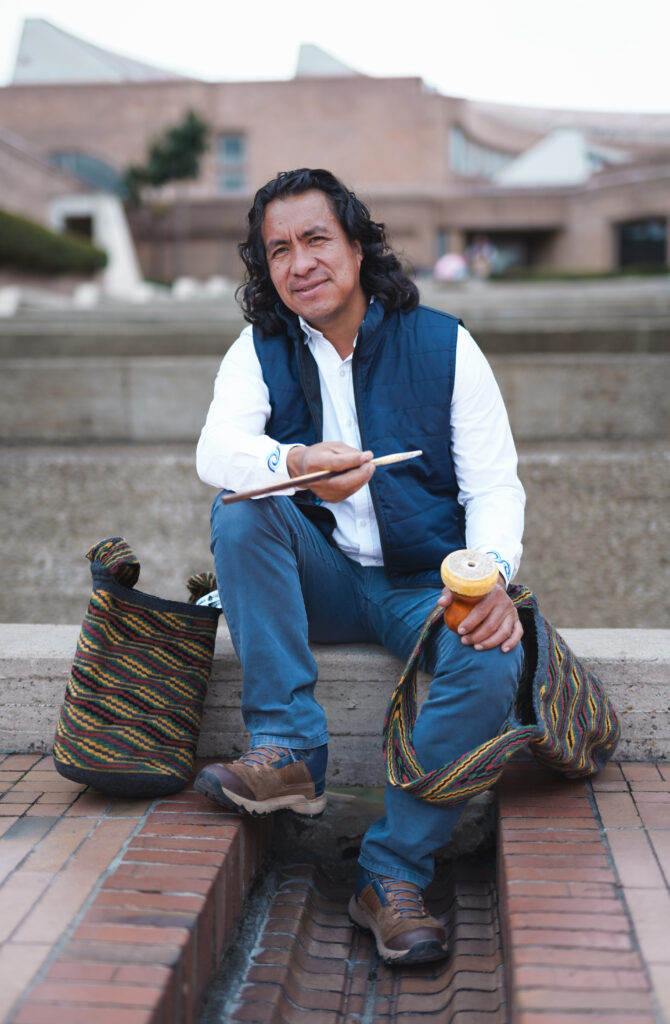
LGS: Indigenous territorial entities are one of the most concrete expressions of this autonomy. Are they an end point or a tool within a broader process?
CNI: Colombia has a historical debt. The Constitution established that Indigenous territorial entities must be created and, until that happened, Transitional Article 56 was included to allow for their gradual development. Thirty-four years later, their implementation has still not been resolved. There has been progress. Decree 1953 of 2014, which emerged from a mobilisation, enables Indigenous Peoples to directly administer resources from the General System of Participations, removing them from the municipalities, which previously received the funds and entered into agreements with the resguardos. Last year, following a major national mobilisation led by Amazonian peoples, eight Indigenous territorial entities became a reality, in addition to one in La Guajira. The aim is for Indigenous Peoples to exercise their autonomy and governance and receive direct funding, subject to the same oversight as any other territorial entity. For me, this is a starting point rather than an end point. This was already set out in the Constitution 34 years ago: it is a development of the bloque de constitucionalidad [body of constitutional law], not the work of any particular government. The decrees create the territorial entities, but they do not specify when or how they will become operational. That is the challenge.
LGS: A single territory may be subject to various powers and jurisdictions, concerning the surface, the subsoil, a protected area or a mining title. What happens to autonomy when decision-making is fragmented in this way?
CNI: Recognition goes beyond the granting of title, because recognition is often given without being binding in practice. Furthermore, municipalities do not recognise the status of resguardos, because it is very difficult for a local authority to recognise another authority at the same level. And an Indigenous authority, in addition to being recognised as such under customary law, must complete the required procedure with the municipal authorities and be registered with the Ministry of the Interior. Without this, Indigenous authorities cannot be officially recognised. Then there is the issue of mining and energy concessions. The clearest example is Putumayo: it has the highest number of applications for the expansion, establishment and legal regularisation of resguardos, for the protection of ancestral territories and for land restitution, while at the same time also having the highest number of applications for mining and energy exploration and exploitation. When these interests collide, what is defined as the national interest usually prevails.
LGS: And what happens in the case of National Natural Parks?
CNI: A resguardo does not protect the subsoil; the only legal designation that protects the subsoil is that of a National Natural Park. It is as though we lived within just two metres: we can look around a little and downwards, only as far as the ground beneath our feet, but no further. And it is there, beneath our feet, that the resources over which the State grants concessions are found. We argue that there must be comprehensive protection of the airspace, the electromagnetic spectrum used for communications and the subsoil. That is why autonomy is limited: it extends only as far as others allow it to. In territories that overlap with parks, any activity undertaken by Indigenous Peoples requires certification that it does not interfere with the park’s mandate. This entails a loss of autonomy, even when we are referred to as co-managers. Some of our Indigenous brothers and sisters are critical of the National Natural Park designation, while others see it as an opportunity because it has helped to protect territories. This is the case of Yaigojé Apaporis, where the Constitutional Court upheld the park and halted the Cosigo mining project, and of the Sierra Nevada, where National Natural Park status helped to stop the dam planned at Los Besotes. The U’wa Nation, by contrast, is calling for the park to be abolished.
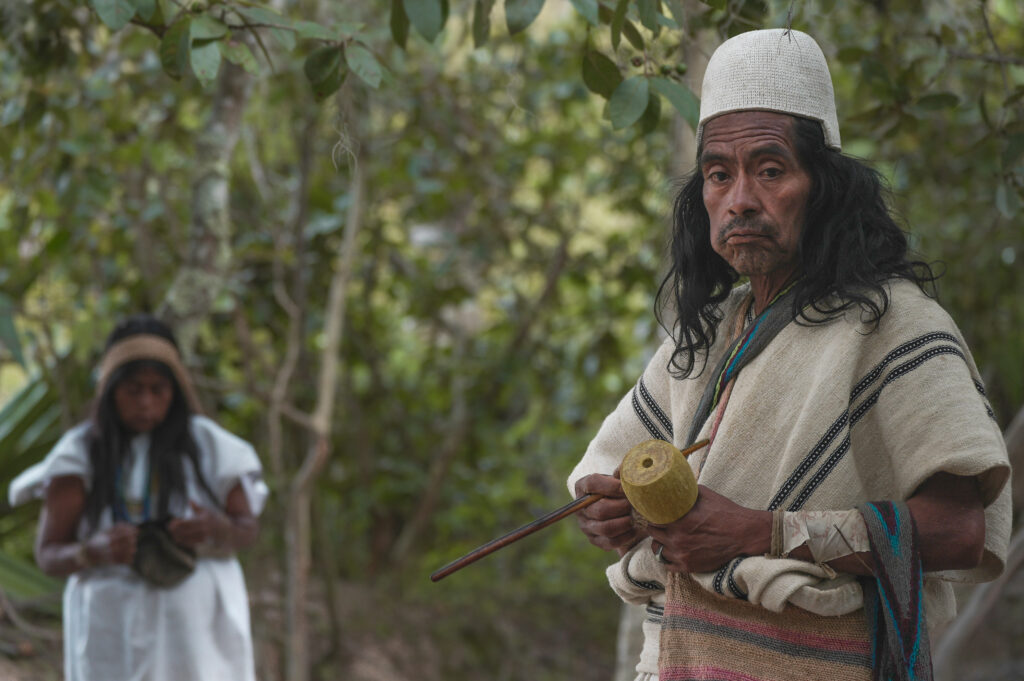
LGS: The new government has announced plans to reverse the establishment of Indigenous territorial entities, while public discourse has portrayed them as “federated territories” or as a threat to the country’s unity. How do you view this situation in terms of Indigenous autonomy?
CNI: There is great concern. In law, there is a principle of progressivity and non-regression. There is a lot of noise in the media and not enough effort to explain what these entities actually are. It is being said that Indigenous territorial entities will become separate governments, as though a State within the Colombian State were being created. There are actors fuelling this misinformation and pushing this narrative. The reality is that recognising these entities and bringing them into operation is an obligation of the State. It is already established in the Political Constitution; it is nothing new. To abolish this form of territorial organisation in a State with 115 Indigenous Peoples, which recognises and protects ethnic and cultural diversity, would be to violate the Constitution itself.
Meanwhile, the government is already repealing existing measures: it revoked the resolution that established a protection reserve for the La Baja micro-watershed, outside the Santurbán páramo, as well as other measures issued by the Ministry of Labour that recognised labour rights. Many measures relating to Indigenous Peoples were adopted towards the end of the previous presidential term, and this raises concerns about the protection of the Sierra Nevada de Santa Marta, where more than 1.5 million hectares were set aside for protection from mining and hydrocarbon activities. There were also reports that the country might withdraw from International Labour Organization Convention No. 169, which enshrines the fundamental right to prior consultation.
LGS: Have you seen any willingness on the part of the current government, at least to sit down and engage in dialogue?
CNI: So far, the government has not approached us; they are only now appointing directors and deputy directors. But consulting Indigenous Peoples on the National Development Plan is an obligation of the State, and that means we have to sit down together. The National Commission for Indigenous Territories provides a forum for this dialogue, and we are ready to engage. Otherwise, we will pursue other avenues to assert our demands. We have always sought dialogue and agreement, but we have also pursued the full exercise of autonomy and mobilisation. Everything we have achieved has been the result of a historical struggle. We have survived for more than 500 years and have come to understand that governments are temporary, while the State endures. And it is worth being clear about the figures: today there are 974 Indigenous resguardos, covering more than 35 million hectares. We face four years in which we will have to defend what we have achieved. A government can repeal a measure, but it cannot erase years of struggle.
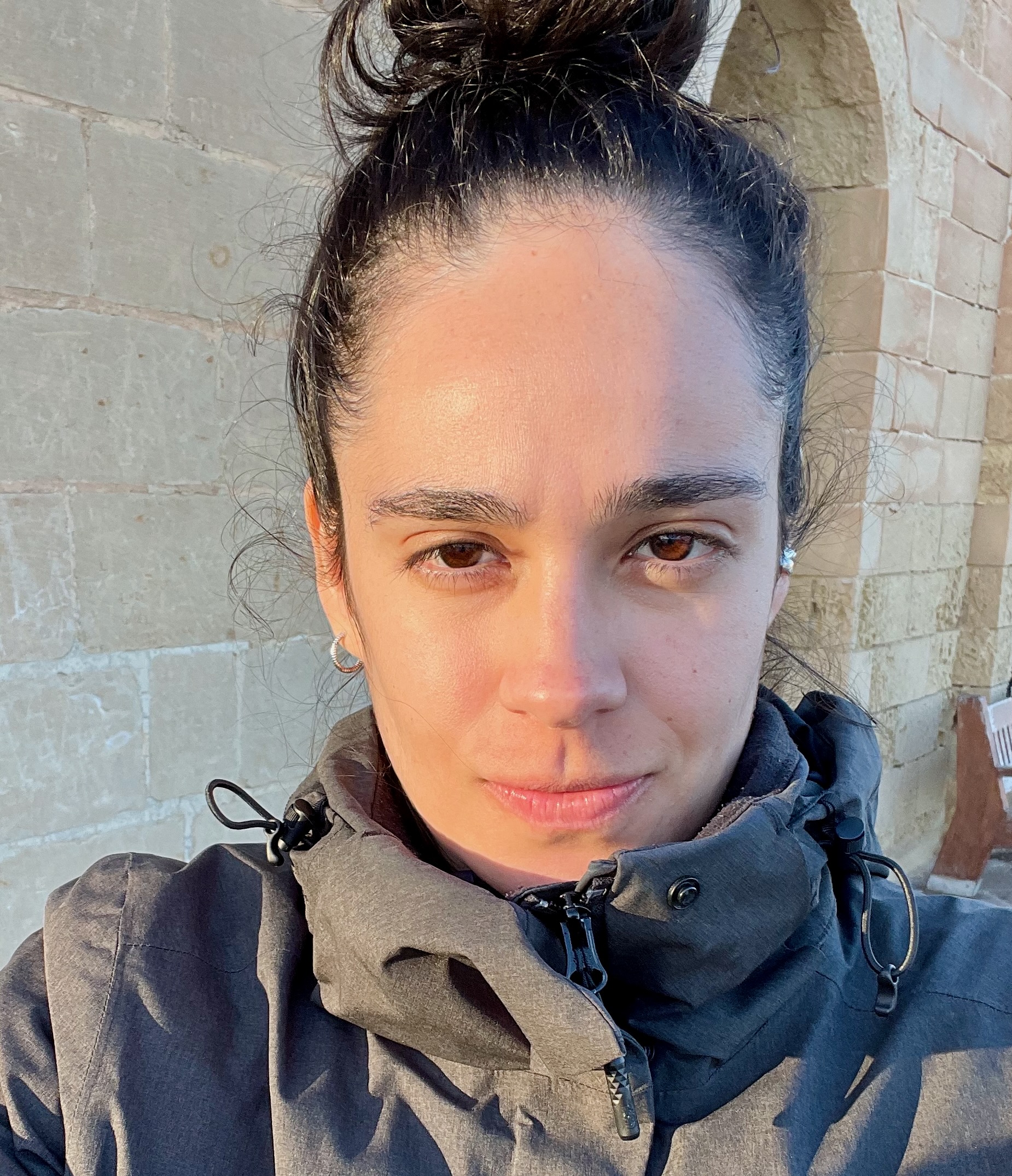
Laura Camila Galvis Santacruz is a Colombian sociologist and holds a Master’s degree in International Development and Management from Lund University (Sweden). She has a decade of experience analysing territorial dynamics and socio-environmental conflicts in the mining, energy and environmental sectors.