
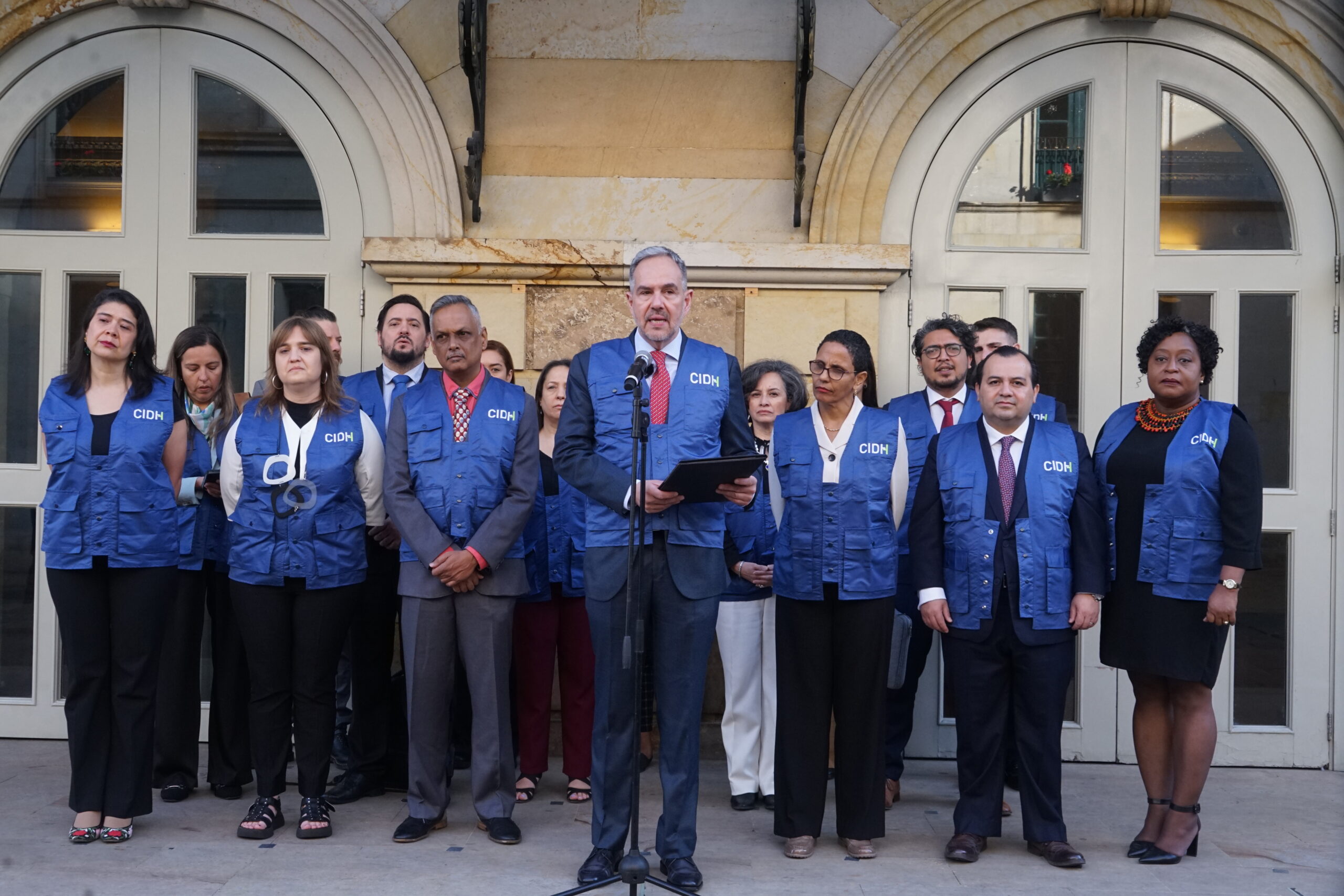
The Inter-American System recognises the autonomy of Indigenous and Tribal Peoples as a pre-existing right. It should therefore be understood neither as a concession nor as something granted by the State. The Inter-American Court of Human Rights’ ruling in favour of the autonomy of the U’wa People of Colombia is the most recent affirmation of Indigenous Peoples’ right to self-government, to define their own institutions and to decide on their internal affairs.
On 4 July 2024, the Inter-American Court of Human Rights found the Colombian State responsible in the case of the U’wa Indigenous People and its members for failing to guarantee prior, free, and informed consultation in relation to dozens of extractive projects overlapping their ancestral territory. Delivered three decades after the U’wa People publicly expressed their resistance to oil exploration in their territory, the judgment reaffirmed key standards on Indigenous self-determination: the inseparable relationship between territory, cultural identity and a people’s ability to determine its own destiny.
This ruling did not emerge in a vacuum. It confirms and applies standards that the Inter-American Commission on Human Rights (IACHR) had systematised five years earlier, on 28 December 2021. The IACHR approved its thematic report Right to Self-Determination of Indigenous and Tribal Peoples. In that report, the Commission identified autonomy — that is, the right of peoples to govern themselves, define their own institutions and decide on their internal affairs — as one of the constituent elements of self-determination, alongside self-identification, cultural identity, collective property, political and participation rights, and the rights to free, prior, and informed consultation and consent.
Five years after that report, and with a recent case once again placing the issue on the regional agenda, it is worth examining what the Inter-American System has specifically noted about the right of Indigenous and Tribal Peoples to autonomy and self-government in its various dimensions. The purpose of the article is to examine the standards developed by the Commission and the Court, showing that the U’wa case is not an isolated event. Rather, the U’wa case serves as the most recent expression of a sustained body of institutional work spanning more than two decades, through the IACHR’s thematic and case reports and a continually evolving body of Inter-American jurisprudence.
Autonomy at the Core of Self-Determination
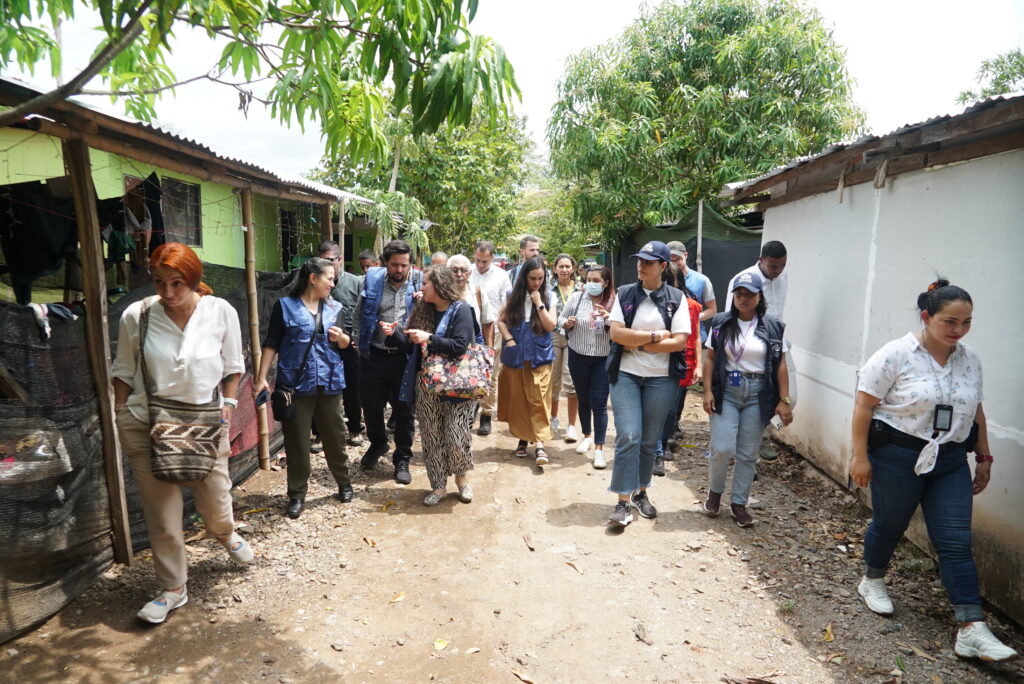
The self-determination of Indigenous and Tribal Peoples goes beyond the recognition of collective ownership of their lands. As the IACHR has stated, this right also entails the power to govern their territories through their own authorities, as part of the right to autonomy or self-government expressly recognised in Article XXI of the American Declaration on the Rights of Indigenous Peoples (ADRIP) and Article 4 of the United Nations Declaration on the Rights of Indigenous Peoples (UNDRIP). The Commission notes that the exercise of territorial governance is one of the most significant expressions of Indigenous and Tribal self-determination, as it entails the recognition of their own systems of government, which exercise control over, manage, and administer their ancestral territories.
Such control goes beyond holding title to the land. The IACHR emphasises that an essential component of Indigenous and Tribal autonomy is effective control over ancestral territories and the natural resources found within them. Ancestral territories and such natural resources constitute the material basis for the existence of these peoples as collective subjects, rather than commodities. They serve as “the basis of their economic subsistence” as well as a “source of their cultural identity and spiritual well-being”. However, the Commission notes with concern that, to date, very few States in the region have established legal or administrative mechanisms to guarantee the autonomy of Indigenous and Tribal Peoples over their natural resources and means of subsistence. On the contrary, it points out that domestic legal frameworks generally prevent these peoples from holding rights over the natural resources within their own habitats.
As early as 2001, in the case of the Mayagna (Sumo) Awas Tingni Community v. Nicaragua, the Inter-American Court recognised the close relationship between territory and the subsistence of Indigenous Peoples as organised collectives.
As early as 2001, in the case of the Mayagna (Sumo) Awas Tingni Community v. Nicaragua, the Inter-American Court recognised the close relationship between territory and the subsistence of Indigenous Peoples as organised collectives.
This difficulty is compounded by territorial fragmentation. The Commission has found that granting land titles to individual communities, rather than to entire peoples or territories, can exclude areas that are essential to their way of life and seriously hinder the exercise of autonomy. This is further compounded by the fragmentation caused by State borders themselves, which, in the case of cross-border and binational peoples — as in the Amazonian corridor between Colombia, Ecuador and Peru — restricts the exercise of rights associated with historical patterns of territorial mobility that do not recognise national boundaries.
This understanding of autonomy as territorial control is not new to the Inter-American System. As early as 2001, in the case of the Mayagna (Sumo) Awas Tingni Community v. Nicaragua, the Inter-American Court recognised the close relationship between territory and the subsistence of Indigenous Peoples as organised collectives. In doing so, it laid the foundations upon which, two decades later, the Commission would develop specific standards on autonomy and self-government.
Self-Government Within, Participation Beyond
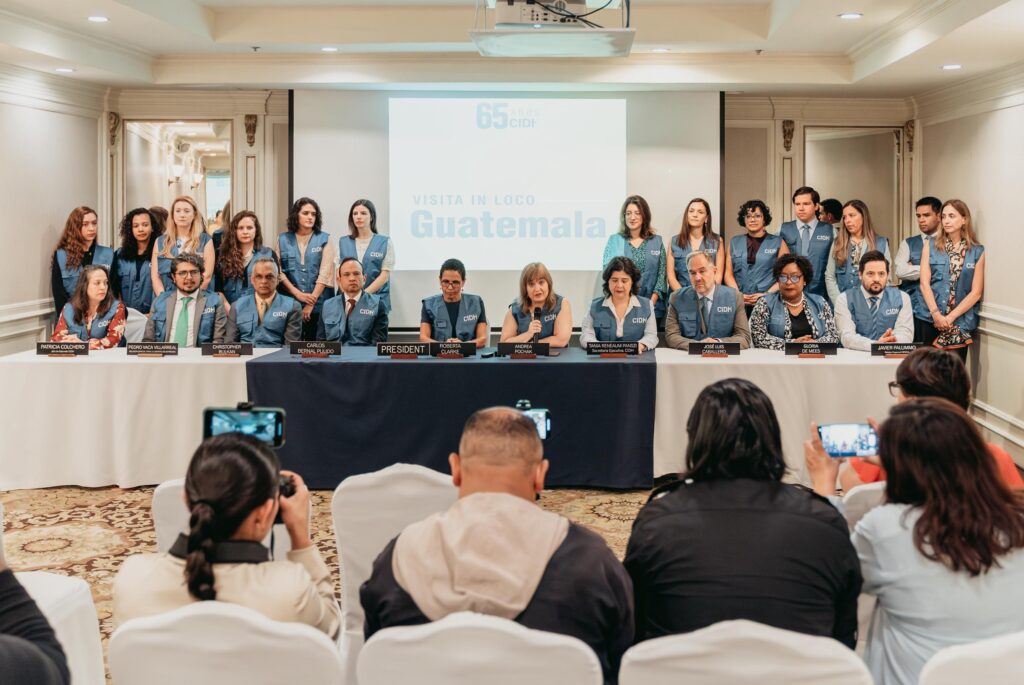
The IACHR understands the right to autonomy or self-government as having a dual dimension. On the one hand, it entails the right of Indigenous and Tribal Peoples to have an autonomous government; on the other, it encompasses their right to participate in the broader social and political structures of which they form part, including the State itself.
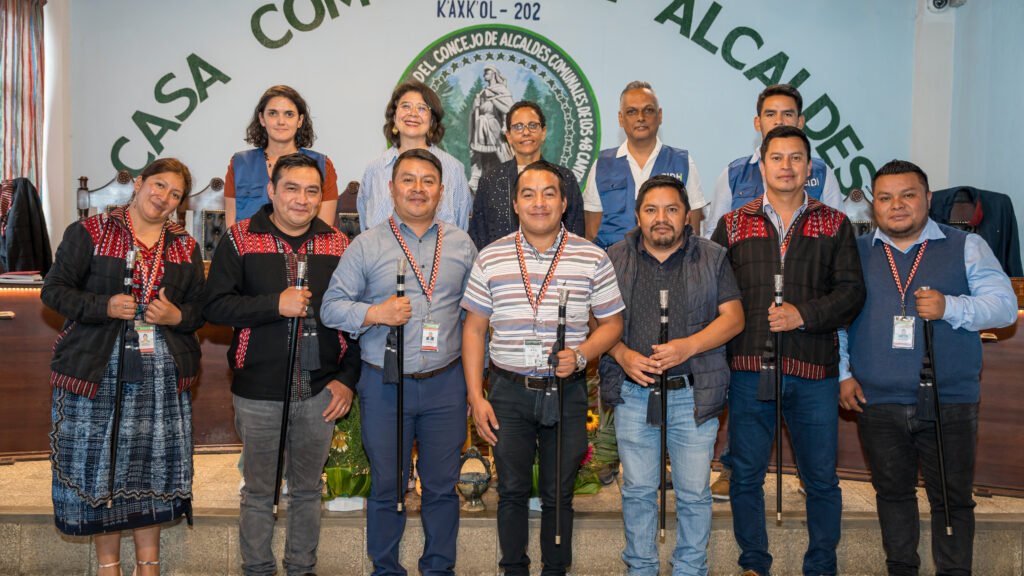
The internal dimension entails the recognition and preservation of their own decision-making institutions, including the free selection of their traditional authorities without external interference. The State, in turn, has a general duty not to interfere with the functioning of these institutions. The Commission is explicit on this point: where a legal system requires a State authority to certify the election of an Indigenous authority, such certification is merely a declaratory record of the will of the people, as expressed through its respective territorial or community assembly. Under no circumstances may this replace, override, or supersede the decision taken collectively.
The Commission has documented the concrete consequences of failing to uphold this standard: both State action and inaction that foster the creation of “parallel” governments alongside those legitimately elected by Indigenous Peoples constitute violations of the right to self-government. This seriously undermines their self-determination, weakens traditional structures and can lead to social conflict within the communities themselves.
On a particularly important point, the Commission expressly rejects framing consent as a “right of veto”. It considers that such a view oversimplifies the issue and disregards the self-determination of Indigenous and Tribal Peoples.
The Commission expressly rejects framing consent as a “right of veto”. It considers that such a view oversimplifies the issue and disregards the self-determination of Indigenous and Tribal Peoples.
In its external dimension, the right to political participation requires that Indigenous and Tribal Peoples, through their own authorities and institutions, take part in State decision-making processes that may affect their rights. The Commission makes clear that such participation must be effective, rather than merely formal. It is not sufficient to entrust representation to a local or regional government authority that may not necessarily be familiar with the priorities and concerns of the people in question. In this regard, the IACHR has also noted with concern that political participation quotas do not always ensure genuine representation and that, in certain contexts, political party co-optation has resulted in a loss of political autonomy for Indigenous Peoples.
For the IACHR, the right to prior, free and informed consultation and consent is a direct manifestation of self-determination rather than a mere administrative procedure. It is the fundamental premise that enables peoples to determine how they wish to exercise the rights to which they are entitled, closely linking it to the aforementioned external dimension. On a particularly important point, the Commission expressly rejects framing consent as a “right of veto”. It considers that such a view oversimplifies the issue and disregards the self-determination of Indigenous and Tribal Peoples by wrongly assuming that the State’s decision-making process has the power to forcibly impose a particular activity.
Two Decades of Inter-American Standards
These developments by the Commission both draw on and contribute to a body of Inter-American Court jurisprudence that has evolved over more than 20 years. In the 2007 case of the Saramaka People v. Suriname, the Court established that, in the case of large-scale development or investment projects that would have a major impact on Indigenous or Tribal territory, the State has not only a duty to consult but also an obligation to obtain the people’s prior, free and informed consent, in accordance with their own customs and traditions. Five years later, in the case of the Kichwa Indigenous People of Sarayaku v. Ecuador, the Court further developed the relationship between territory, cultural identity and a people’s ability to develop and pursue their own plans for life.
In 2020, in the case of the Indigenous Communities Members of the Lhaka Honhat (Our Land) Association v. Argentina, the Court went a step further. The Court extensively linked economic, social, cultural and environmental rights to autonomy and the effective enjoyment of collective territory, recognising the interdependence of these rights. This includes the rights to a healthy environment, adequate food, water and cultural identity. These developments were systematised by the IACHR in its December 2021 report, in which it devotes a specific section to the internal and external dimensions of autonomy and their relationship with economic, social, cultural and environmental rights. The U’wa case, with which this article opens, reaffirms this same line of thought in a highly contemporary context: that of extractive projects overlapping ancestral territories, one of the situations that the IACHR itself identifies as recurring across the region.
This body of work by the Commission and the Court is underpinned by four approaches that the IACHR applies across the right to self-determination and that also provide a framework for autonomy. The first is its reparative nature: self-determination is understood as a corrective response to the historical injustices of dispossession, colonisation and denial of rights suffered by these peoples. The second is interculturality, which requires a shift from assimilation towards coexistence based on respect for different worldviews, together with a genuine sharing of decision-making power over their own development priorities. The third is its cross-cutting nature: for the Commission, self-determination should guide the way in which the State guarantees all other rights of these peoples, rather than being treated as an isolated issue. The fourth and final approach combines gender and intergenerational perspectives: the IACHR has highlighted the participation of Indigenous women in self-government and community leadership, as well as intergenerational solidarity as a means of ensuring that their own forms of organisation are sustained over time.
A Gap Yet to Be Closed
Five years after the IACHR report, the Inter-American standard on the autonomy of Indigenous and Tribal Peoples is clearly established. Autonomy is not a discretionary concession by States, but a pre-existing right which, as the Commission itself recalls, “should not be understood as a concession or something granted”. What persists, however, is the gap between this standard and its effective implementation: the Commission notes that very few States in the region currently have legal or administrative mechanisms in place to guarantee Indigenous autonomy over their territories and natural resources.
Closing this gap requires States to bring their legal and institutional frameworks into line with the standards developed by the Inter-American System, rather than treating the recognition of Indigenous autonomy as an exception or a concession. In this endeavour, both the IACHR — through its thematic and case reports and its ongoing monitoring — and the Inter-American Court — through its continually evolving jurisprudence, of which the U’wa case is but one recent expression — continue to provide a reference framework for Indigenous and Tribal Peoples throughout the Americas to exercise their right to self-government in practice.
I am grateful to Mishkila Rojas, a specialist with the IACHR Rapporteurship on the Rights of Indigenous Peoples, for her valuable support in the preparation of this article.
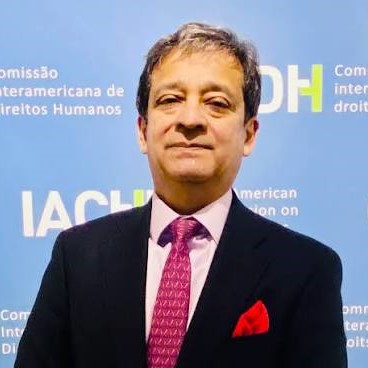
Riyad Insanally is a Commissioner of the Inter-American Commission on Human Rights (IACHR), Rapporteur on the Rights of Indigenous Peoples and a citizen of Guyana. He studied Modern Languages and Latin American Studies and holds Master of Arts and Master of Philosophy degrees from the University of Cambridge, as well as a doctorate from Harvard University. He has more than 31 years of experience in multilateral diplomacy.