
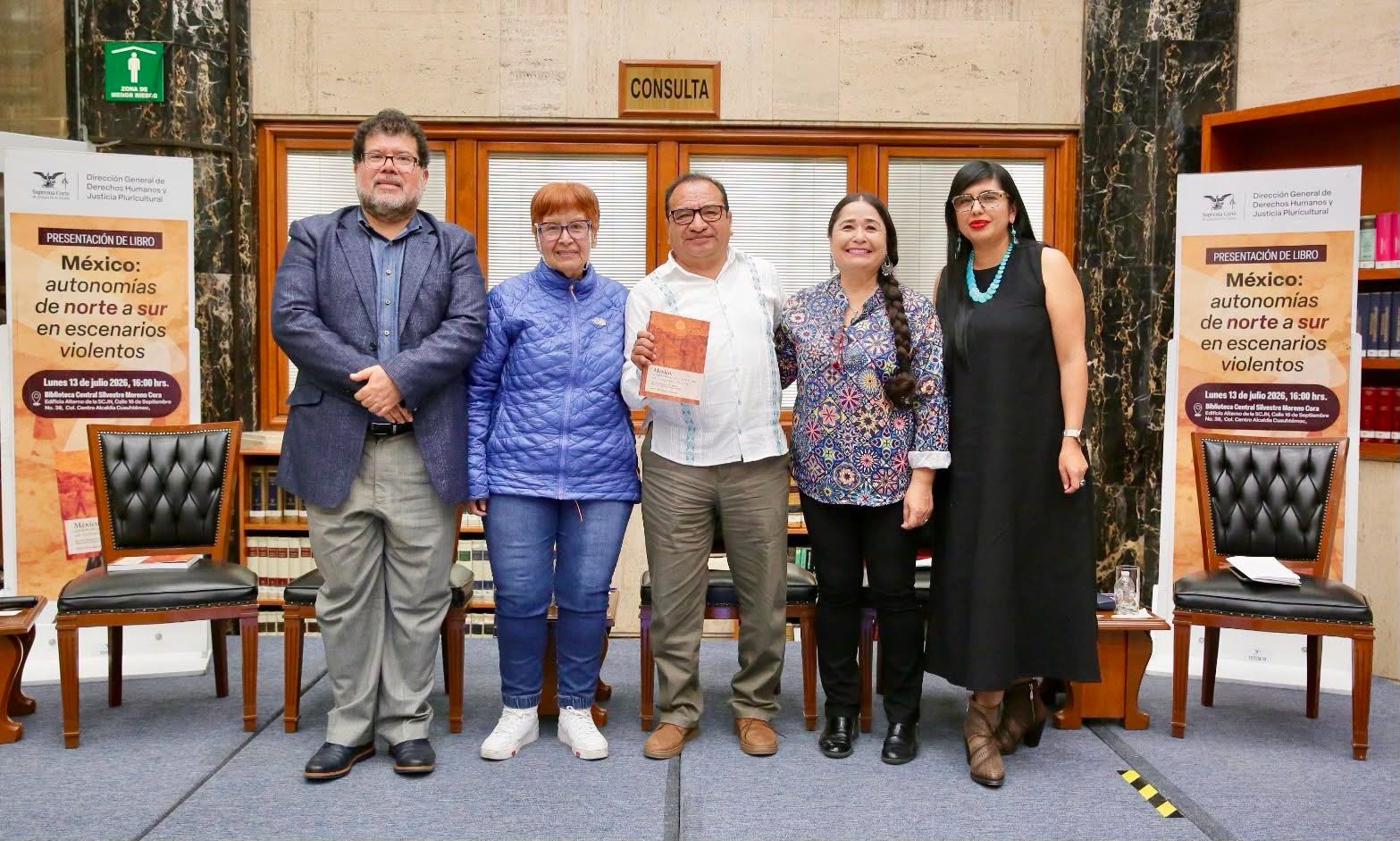
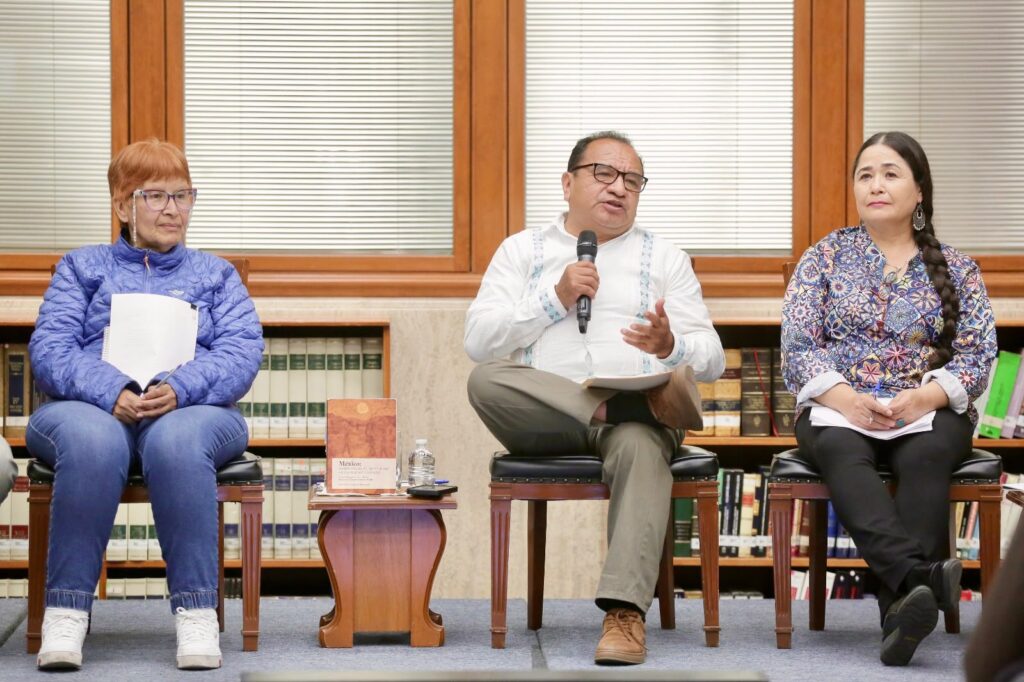
As organised crime continues to expand, Indigenous territories have become contested spaces, posing new challenges to the exercise of autonomy and eroding community ties and ways of relating to one another. In response, Indigenous Peoples are weaving together mechanisms of defence and control to sustain their ways of life and forms of organisation. The book Mexico: Autonomies from North to South in Diverse Contexts explores experiences that place territorial security, community defence and the resilience of Indigenous Peoples at the heart of the debate.
Mexico is experiencing a paradoxical phenomenon. While significant progress has been made in recent years in the legal recognition of the rights to self-determination and autonomy, major challenges remain in putting these rights into practice. At the same time, criminal violence is spreading across vast Indigenous regions. Indigenous autonomies are thus taking shape amid illegal economies and extractive interests. In many cases, they also face pressure from government actors who collaborate with these groups. Therefore, crime is not a phenomenon external to Indigenous territoriality but a force that penetrates territories, captures local institutions, reshapes community relations and threatens the foundations of Indigenous self-government.
The book Mexico: Autonomies from North to South in Diverse Contexts, published by IWGIA (2026) and coordinated by the authors of this article, shows that criminal violence is more than a public security issue: organised crime operates as a mechanism of territorial control aimed at gaining control over natural resources, strategic routes, productive activities and community governance structures. The case studies show that, in many places, Indigenous autonomies have become sites of political contestation between community projects of self-determination and criminal actors seeking control over territories.
A Book Explaining the Erosion of Indigenous Autonomy
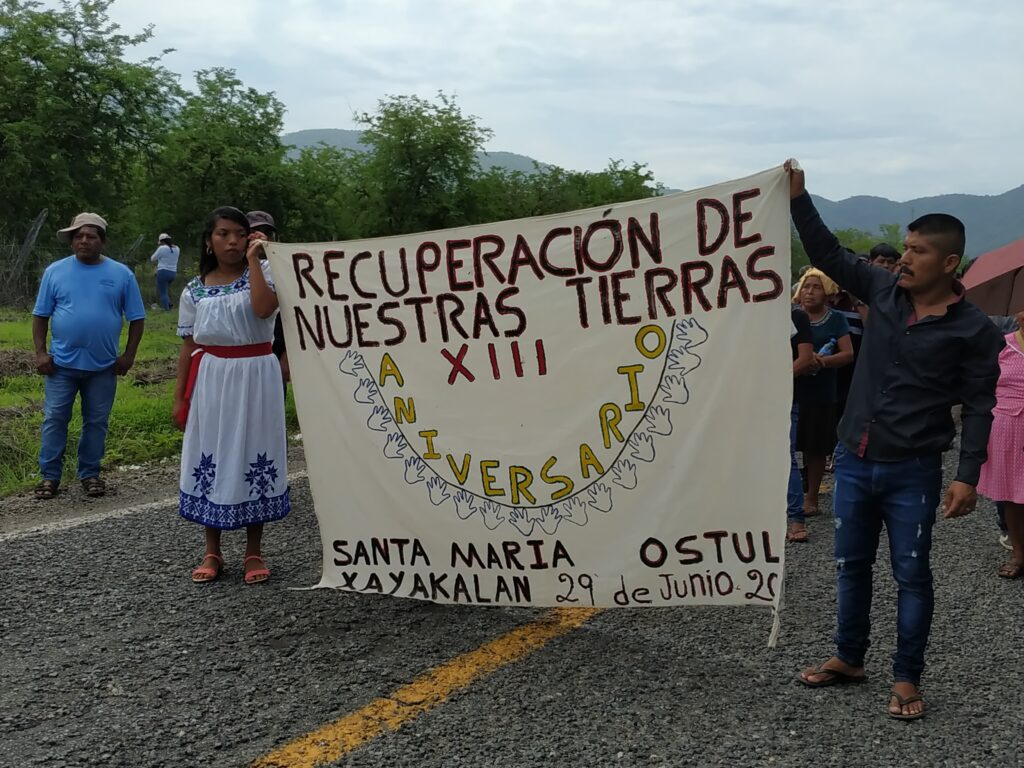
Sociologist Carlos Rafael Rea shows how, in the state of Nayarit, Indigenous communities are caught in armed confrontations between criminal organisations. This results in forced displacement, the recruitment of young people, economic control over everyday life and the erosion of their own institutions. Autonomy does not disappear immediately but is gradually eroded and weakened in the face of criminal actors capable of replacing or exerting pressure on community authorities.
In Guerrero, the case of the Regional Coordination of Community Authorities–Community Police (CRAC-PC), analysed by Evangelina Sánchez and Claudia Rangel, illustrates the complex relationship between criminality and autonomy. This experience shows how community-based systems of security and justice can become priority targets for criminal actors and external interests seeking to weaken them and fragment these forms of resistance. Violence against community leaders, co-optation and attempts to dismantle their organisations have become recurring mechanisms for undermining communities’ capacity to defend themselves.
The case studies show how criminal groups instrumentalise Indigenous organisational practices and mechanisms to gain legitimacy or access to local power, profoundly transforming community life. Enriqueta Lerma’s analysis of the Yaqui people introduces the notion of “narco-ethnocide” to explain how organised crime does not only perpetrate physical violence. It also reshapes the community’s political, symbolic and cultural structures. Along similar lines, Medardo Tapia develops the concept of the “social accumulation of violence” to explain the rise in homicides, extortion and other forms of insecurity affecting community life in Coatetelco, Xoxocotla and Hueyapan, in the state of Morelos.
Attacks on Indigenous Self-Government
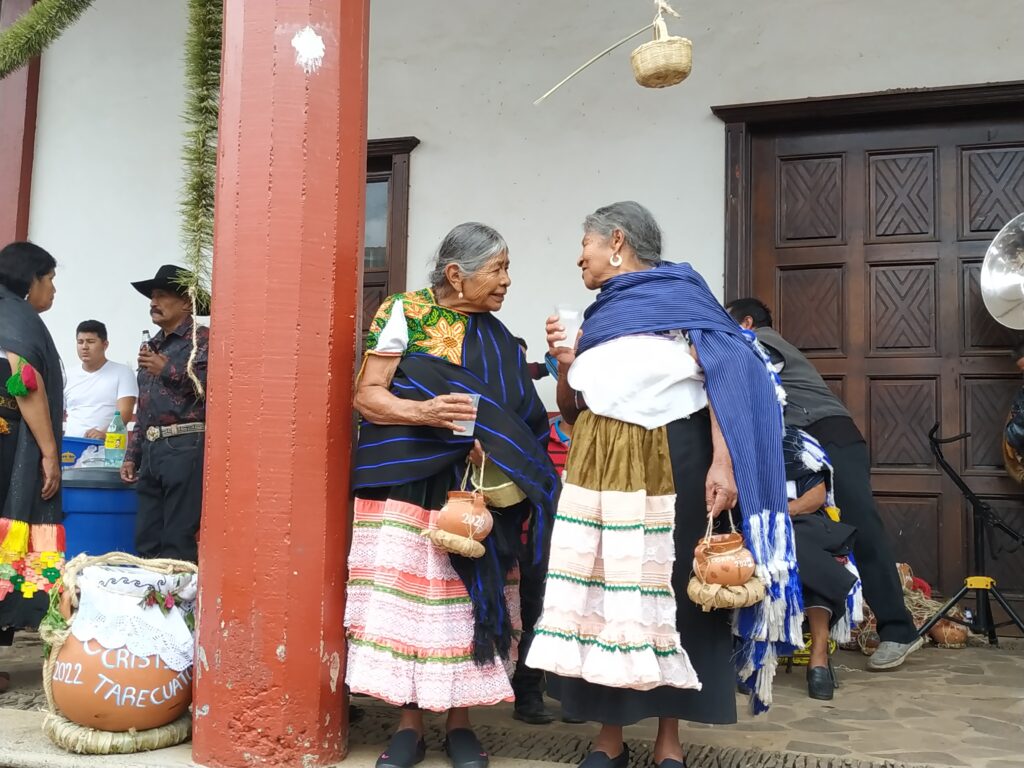
The book also documents the blurred boundaries between criminal and state violence. Professor and researcher Carmen Ventura examines the struggles of Nahua and P’urhépecha communities to defend their territories and establish autonomous forms of governance in contexts of structural violence and dispossession. Ventura documents how Indigenous Peoples in Mexico face threats arising from illegal economies, large-scale extractive projects and exclusionary state policies.
Other studies highlight territorial dispossession, the capture of local governments, threats against traditional authorities, the killing of community leaders, the forced recruitment of young people and population displacement. The articles show that these mechanisms do not operate in isolation. They also form part of complex strategies aimed at gaining control over Indigenous territories and undermining autonomous forms of organisation.
Other Indigenous Peoples are experiencing the fragmentation of their community structures and the weakening of their decision-making and community protection mechanisms. They face a form of “community capture” whereby the loyalty of their authorities is bought, turning them into spokespersons for the interests of dominant economic actors and illegal economies, whether through inducements or the use of force.
The evidence presented shows that organised crime not only causes killings, displacement and fear but also directly attacks institutions of self-government, forms of community organisation and Indigenous Peoples’ projects of self-determination. This analysis helps to reframe the debate on Indigenous autonomies, moving beyond discussions focused primarily on their legal dimension. In essence, this article also encourages to consider Indigenous autonomies from the perspective of territorial security, community defence and the resilience of Indigenous Peoples in contexts of extreme violence.
Indigenous Peoples’ Responses
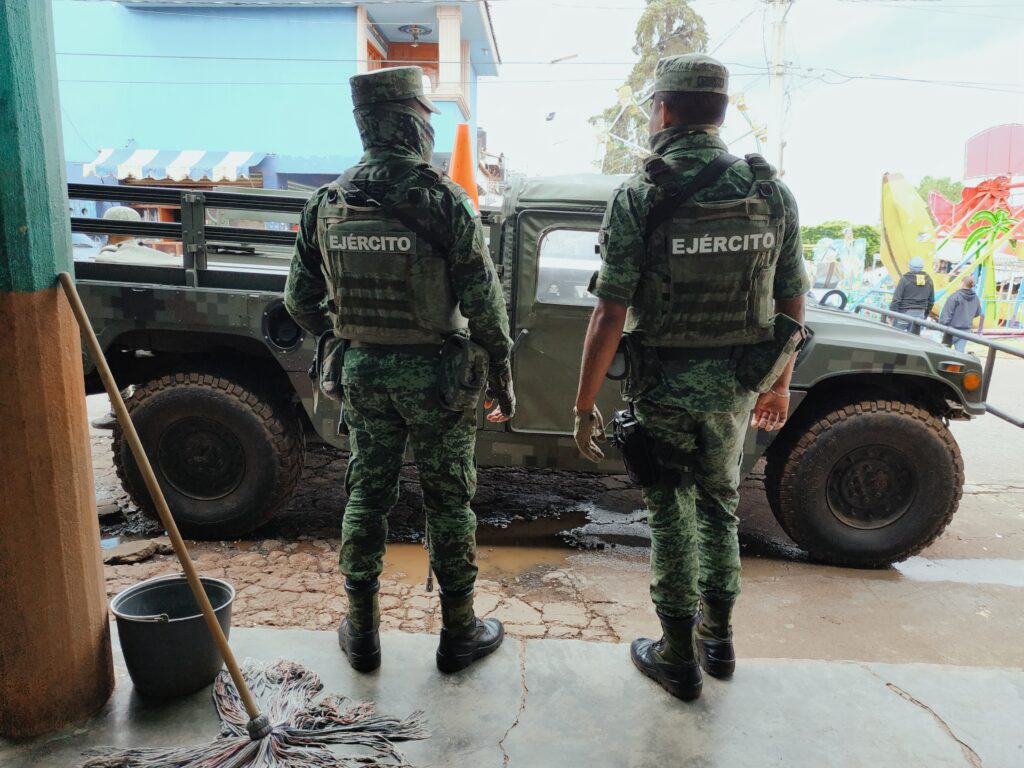
Communities are reconfiguring their communal governments, creating new forums for building consensus, strengthening regional ties and forging alliances to improve their position in negotiation processes and political mobilisation. In other cases, they turn to legal action. This includes (i) filing amparo actions (constitutional protection claims) in response to violations of their right to prior consultation and the dispossession of their territories; (ii) seeking the suspension of projects; (iii) challenging the enforcement of laws that threaten their autonomous practices; (iv) denouncing the contamination of their ecosystems; (v) demanding the release of imprisoned community members; and (vi) seeking justice for those who have been disappeared or killed. Finally, they turn to human rights bodies to seek protection and demand respect for their right to self-determination.
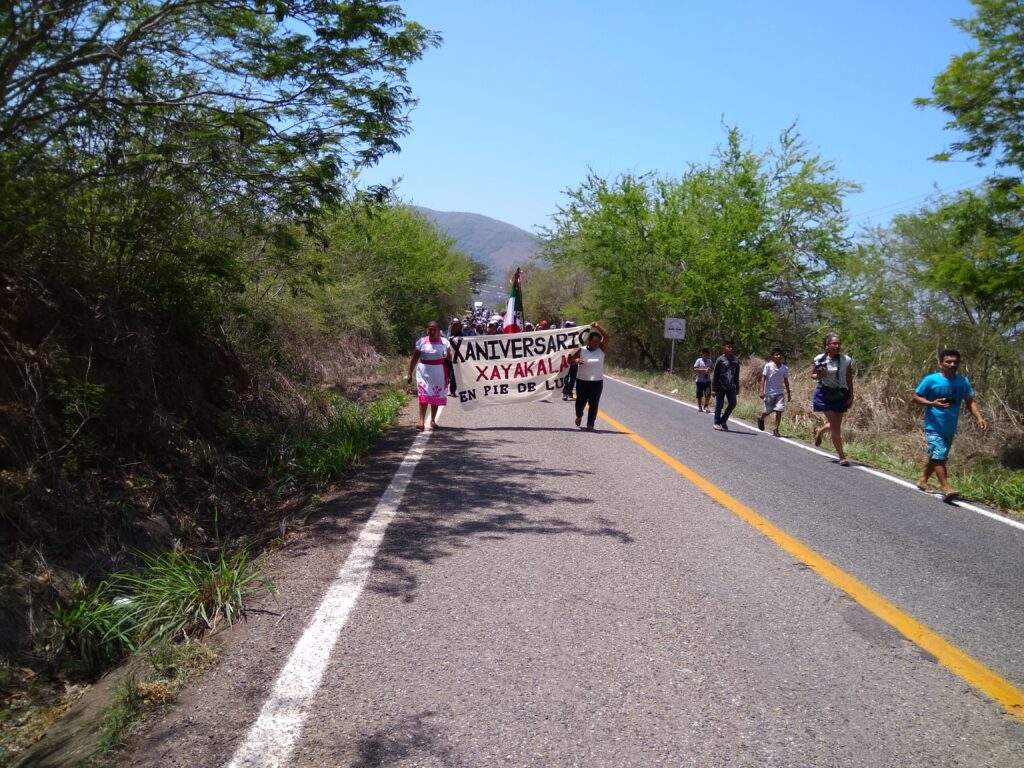
Regional organisations such as the Regional Coordination of Community Authorities–Community Police (CRAC-PC), in the Costa-Montaña region of Guerrero, have succeeded in protecting local communities and establishing a widely recognised justice system for more than 30 years. Today, however, the CRAC-PC faces a critical situation amid pressure from mining interests, the effects of government policies aimed at institutionalising it, and repeated armed incursions by organised crime. These have led to the displacement of more than 30,000 people from their communities, dozens of killings and the imprisonment of its defenders.
In Nayarit, communities have adopted various strategies in response to the imposition of large-scale infrastructure projects and extreme violence. These include the revitalisation of the community police in the municipality of Del Nayar, an initiative that resonated across the region. However, its leaders were arrested and imprisoned on charges of criminal association, leading to the organisation’s dismantling.
Collective Alternatives for Territorial Security
The territories of Indigenous Peoples in southern and south-eastern Mexico were at the centre of government geostrategic projects during the 2018–2024 period: the Interoceanic Corridor of the Isthmus of Tehuantepec, which comprises ten development hubs, and the Maya Train, with major environmental and social impacts. The State strategy combined social assistance programmes with legal measures, including a decree declaring these large-scale infrastructure projects to be matters of public interest and national security, with the aim of curbing the series of amparo actions filed against them. These measures were accompanied by coercive actions, including imprisonment, threats against defenders, and the militarisation of the region.
Other community-based experiences can be found in states such as Hidalgo, Veracruz, San Luis Potosí and Michoacán. When these communities have exercised their autonomy, they have established community guards or police forces to protect their territories. Their members are appointed and regulated by community assemblies and their own normative systems, and provide a service to the community. These services include response to crime and house burglaries, address logging and community defence against armed incursions. The experience of San Luis Potosí is particularly noteworthy: 90 of its 389 communities have decided to prohibit the sale of alcohol, while around 5,500 community police officers operate across its 22 Indigenous municipalities. These measures enable communities to exercise a degree of control over security while strengthening their autonomy.
In Michoacán, the right to exercise what is known as the “direct budget” has been recognised, whereby communities directly administer the share of municipal resources allocated to them according to their population. These resources have been significant in enabling more than 50 communities to provide basic services and establish new government institutions. Some have strengthened their communal governments, while others have been dismantled by disputes over the administration of these resources.
However, only these more than 50 communities are entitled to establish their own security forces, leaving the more than 300 remaining communities in a situation of illegality and exposing them to criminalisation. Violence is present throughout the region. Consequently, territorial dispossession driven by mining and agro-export capital, together with the presence of armed actors, is putting these processes of autonomy at risk.
A State of Permanent Emergency
In the state of Sonora, the construction of an aqueduct and a gas pipeline crossing Yaqui lands sparked widespread mobilisation. However, their organisation was infiltrated by organised crime actors, who co-opted young people and weakened traditional governments and collective strength. In Chiapas, meanwhile, the continued paramilitary presence in Indigenous territories, as part of a counter-insurgency strategy, together with local caciquismo and actors involved in illegal economies, poses new challenges to the consolidation of de facto processes of autonomy. These challenges are compounded by large-scale infrastructure projects, state-run social programmes, and the co-optation of community leaders.
In Morelos, the creation of new Indigenous municipalities as a political means of exercising power and achieving security has also encountered setbacks. These setbacks include disputes between local leaders, negotiations with government authorities and the incursion by organised crime, all of which have weakened these processes. Finally, in Baja California, the Kumiai are resisting structural forms of violence that have reduced and fragmented their “large territory”. In response, they are building alliances with Native Americans, maintaining their emotional and spatial ties, revitalising their language, protesting against the border wall, resisting the plundering of their archaeological heritage, continuing to hold ceremonies at their sacred sites and keeping alive their knowledge of the desert.
This brief overview allows us to conclude that Indigenous societies today live in a state of permanent emergency. They are not only rights-bearing subjects but also political actors with the capacity to participate actively in shaping laws that respond to their demands, with a view to building horizons of hope. The cases documented in the book Mexico: Autonomies from North to South in Diverse Contexts show that Indigenous autonomies cannot be understood solely through the lens of vulnerability. In contexts of extreme adversity, Indigenous Peoples continue to develop strategies of resistance, organisational rebuilding and the creation of political alternatives.
The book’s main contribution lies in showing that the future of Indigenous autonomies in Mexico will depend not only on new constitutional recognition or legal reforms. It will also rely on the capacity to create effective conditions for guaranteeing territorial security, protecting community authorities, ensuring access to justice and fully respecting the collective decisions of Indigenous Peoples. Rethinking autonomy in the 21st century requires recognising that the central struggle is no longer waged solely in the realm of rights but also in the defence of territories against the multiple forms of violence that seek to dismantle community projects. Despite these pressures, Indigenous Peoples continue to develop their own forms of government, memory and resistance, which constitute one of the most significant expressions of democracy and political pluralism.

Araceli Burguete Cal y Mayor holds a Ph.D. in Political and Social Sciences from the National Autonomous University of Mexico (Universidad Nacional Autónoma de México) and is a professor-researcher at the Center for Research and Higher Studies in Social Anthropology (Centro de Investigaciones y Estudios Superiores en Antropología Social, CIESAS), based in San Cristóbal de Las Casas, Chiapas.

María del Carmen Ventura Patiño holds a PhD in Social Sciences, specialising in social anthropology, and is a professor and researcher at El Colegio de Michoacán.