
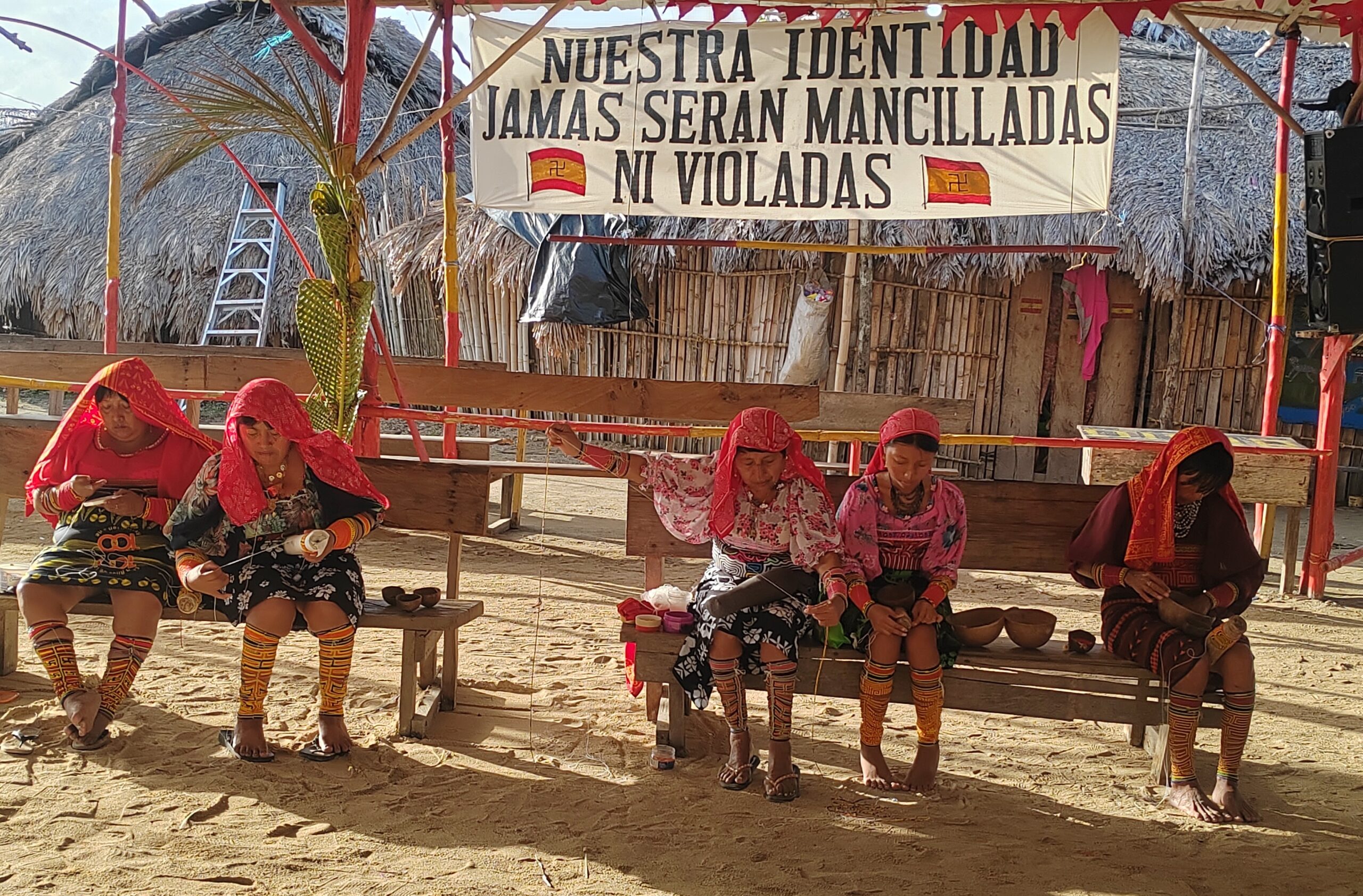
For the Guna people, Grandmother Sea is part of their identity. Grandmother Sea is a vital extension of Mother Earth, providing the Guna people with countless resources. A century after securing their autonomy, the Guna face the challenge of climate change, as rising sea levels threaten their territory, which encompasses both islands and coastal areas. Looking to the future, they are paying close attention to infrastructure projects, the education and training of their young people, and the limited physical space available on the islands.
The autonomy of the Gunadule people was consolidated in 1925 with the Dule Revolution, or Bila Igala. This event set a pioneering precedent for Indigenous Peoples throughout Latin America by compelling a nation state to recognise the territorial and cultural rights of an Indigenous People. Today, its legacy lives on through self-government in the three comarcas of Gunayala, Madungandi and Wargandi, as well as in the ancestral territory of Dagargunyala and the territories of Arquia and Caimán Nuevo in Colombia.
Gunayala encompasses both land and sea. Through negsedi (autonomy), the Gunadule people exercise control over their land and marine territories which include the islands and the marine resources of Muubilli (Grandmother Sea). In the face of the accelerating impacts of climate change, the Guna regulate fishing, land and maritime transport, and tourism according to our own rules. The Gunayala Comarca has consolidated its autonomy through its two principal Congresses: the General Congress, which is political and administrative, and the Congress of Culture. Within this framework, essential autonomous laws have been developed, including those aimed at protecting and caring for Nabgwana (Mother Earth) and Muubilli, which lie at the heart of our economy, food and well-being.
Today, there is an urgent need to rethink health and education in order to strengthen the autonomy of the Gunadule people. Although significant progress has been made in the education of Guna professionals, these efforts have not been sufficient to achieve self-determination, as they have strengthened the state model rather than our own Guna systems. Current health and education models impose a colonial and Eurocentric vision of state control. These systems disregard Gunadule sacred medicine and ancestral knowledge. This is why our Gunadule people must come together and engage in dialogue to create our own systems of health, education and territorial governance. These must be grounded in Guna wisdom and in the spirit of the historic struggle of 1925.
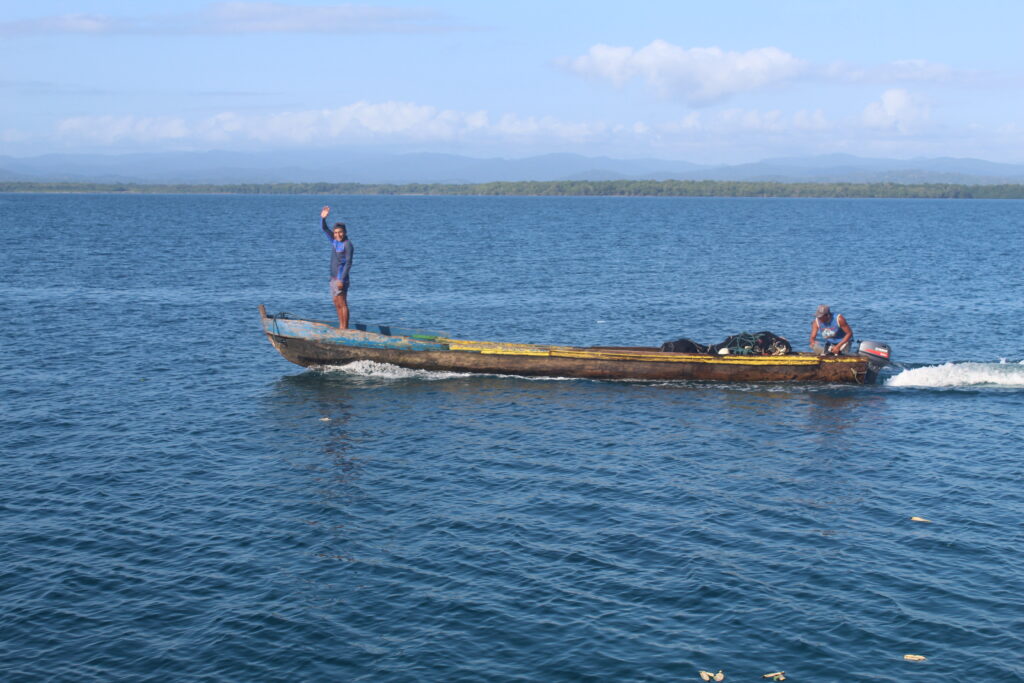
Negsedi Igala and Muubilli: Territorial and Marine Autonomy
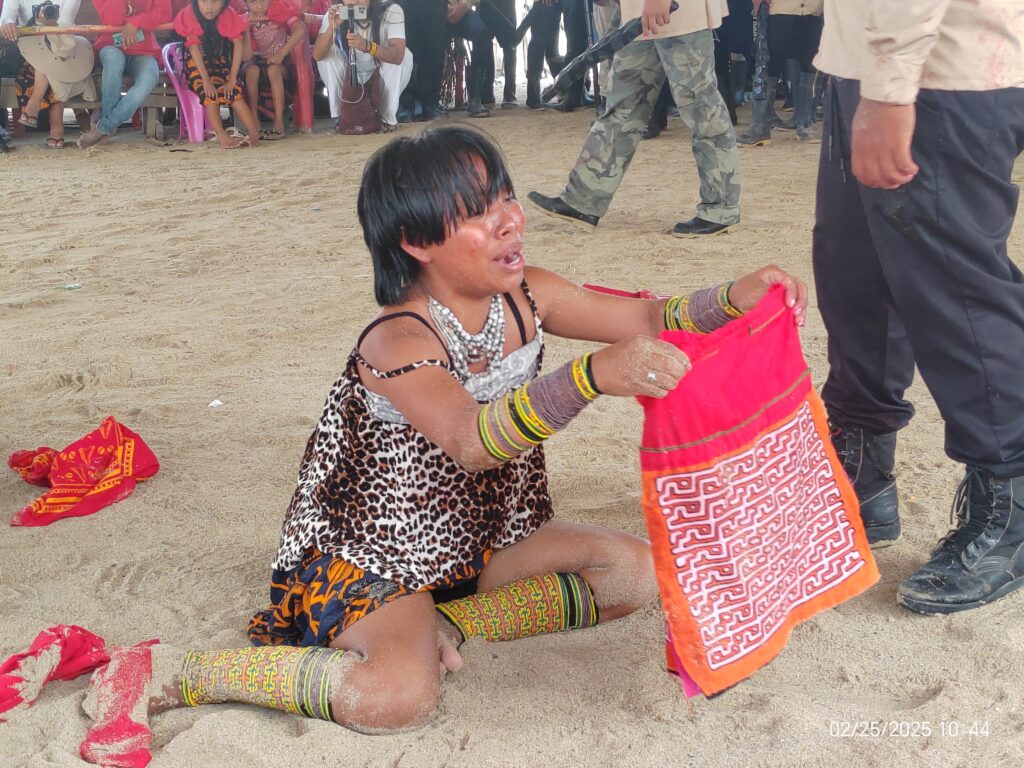
Guna autonomy is the outcome of a historical process of struggles, negotiations and peace agreements rooted in the history of the Gunadule people. It was consolidated in 1925 in defence of their identity, spirituality and the mola (the traditional dress of Guna women), in response to the Panamanian government’s policies of forced assimilation at the time. In terms of self-government, the Guna General Congresses are the highest political, administrative, cultural and spiritual authorities. They are responsible for controlling resources, regulating agriculture, planning investments, and managing land use within the comarca.
Our understanding of Muubilli (marine autonomy) is based on a holistic vision: the sea is not merely a boundary but a vital extension of Mother Earth. It is an indivisible part of the Guna identity, livelihoods and ancestral way of life. Responsibility for exercising this autonomy lies with the Maritime Transport Secretariat of the Guna General Congress, which coordinates navigation and commercial activities within the marine territory. Tourism activities, including cabins, boats and guides, likewise operate under the rules of the Guna Congress and local authorities. The same applies to community conservation rules and seasonal bans on the artisanal fishing of spiny lobster, king crab and queen conch, which are intended to prevent exploitation by external actors.
However, defending the marine territory remains one of the main challenges facing Gunadule autonomy. In 1987, the Guna General Congress proclaimed the land and marine territory the Kuna Yala Biosphere Reserve and World Heritage Site, but the Panamanian State did not recognise Muubilli in its entirety. Instead, under legislation adopted in 1994, it designated only part of the Narganá corregimiento as a Protected Wilderness Area, leaving the Gunadule people’s holistic conception of their marine territory without recognition.
Threats and Challenges to Autonomy
As in other territories across Latin America, large-scale infrastructure projects are the primary threats to the island region of Gunayala. The authorisation agreement for one of the projects, the ARCOS-1 submarine fibre-optic cable, is currently under review. While this project exclusively benefits international companies, Guna communities still lack access to the internet. At the same time, the Guna General Congress has authorised a consultation process within the communities on the Colombia–Panama Electricity Interconnection Project, which would run both by sea and over land and forms part of a binational government project. The consultation is being conducted in exercise of the right to self-determination and in accordance with the Guna people’s own rules. Its purpose is to inform the communities so that they can reach a final decision.
Two roads are also planned: one between Mordi and Sasardi Muladub, linked to the electricity interconnection project; and another from Usdub-Ogobsuggun to Wala-Nurra, promoted by several communities and which could affect the local ecosystem. Finally, a growing number of yacht and sailing-boat operators are monopolising marine tourism. All of these projects are being examined and debated by the Guna authorities, who are assessing whether they are compatible with their own rules and with the preservation of Gunayala’s territory.
A second challenge is population growth. There is currently a lack of physical space on the islands, compounded by the challenges of waste management and protecting marine reefs.
A second challenge is population growth. There is currently a lack of physical space on the islands, compounded by the challenges of waste management and protecting marine reefs.
In terms of the challenges facing autonomy, the most pressing is climate change. Rising sea levels have made it necessary to plan the unprecedented relocation of island communities to the mainland, as in the case of Gardi Sugdub. Similarly, the community of Ugguba had to be relocated to another part of the coast because of flooding and the impact of waves. In response, we have developed the Gunayala Strategic Plan (PEGY), which brings land and sea together with the aim of consolidating the Gunayala Biosphere Comarca.
A second challenge is population growth. There is currently a lack of physical space on the islands, compounded by the challenges of waste management and protecting marine reefs. The Guna people are also experiencing a steady outflow of community members to cities outside the territory due to the lack of employment and educational opportunities suited to the realities of the comarca. Finally, the Guna must prepare new generations to navigate the modern world through Intercultural Bilingual Education, without losing their roots in the Gunadule people; educate young people to defend Guna autonomy; promote the responsible use of artificial intelligence (AI); and foster agricultural production and sustainable artisanal fishing in order to achieve food sovereignty.
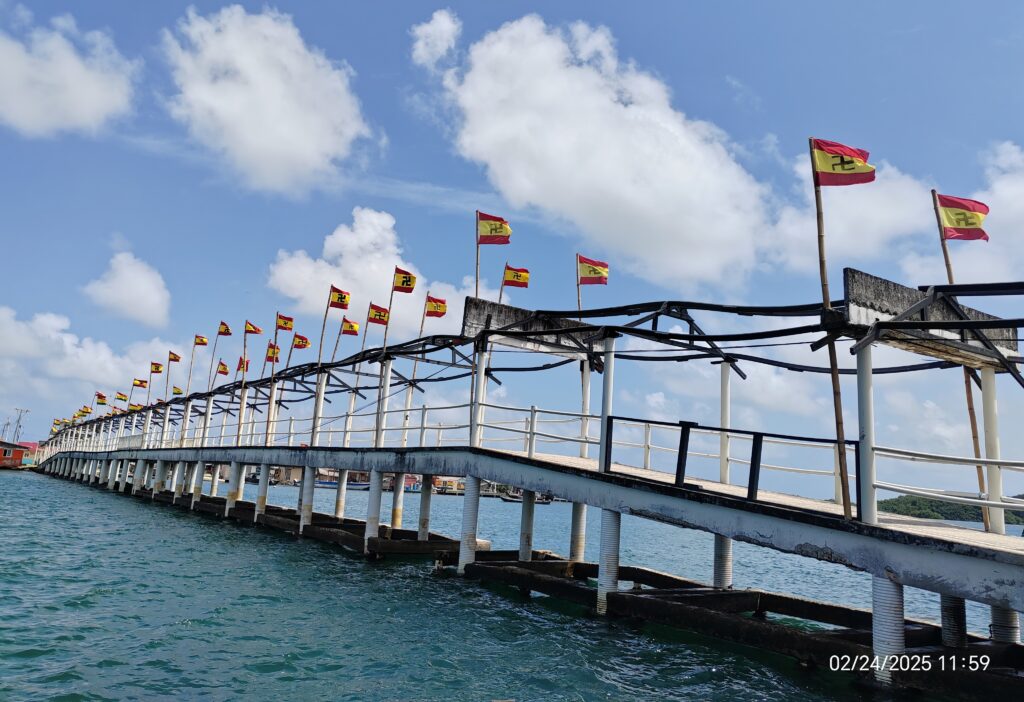
Strengthening the House
Indigenous autonomy remains a powerful force. In the case of the Gunadule people, it has been said that the time has come to embark on a new Bila (revolution), no longer through arms but through words, history and wisdom. As Guna elders say: “Anmar Bila Nongi Uroe” (“Our struggle will be through wisdom”). At this stage, resistance is shifting from physical confrontation towards the defence of territory through knowledge, education, community organisation and political action, while preparing new generations to preserve Gunadule autonomy.
The main challenges facing Gunayala’s autonomy today are clear: defending Muubilli, protecting ancestral knowledge and wisdom, and strengthening Negsedi. In the face of these challenges, we say that Bila Igar (the path of war) lives in the spirit of every Gunadule: it is in the body, in the blood and in the fabric that continues to guide the defence of the life, territory and autonomy of the Gunadule people.
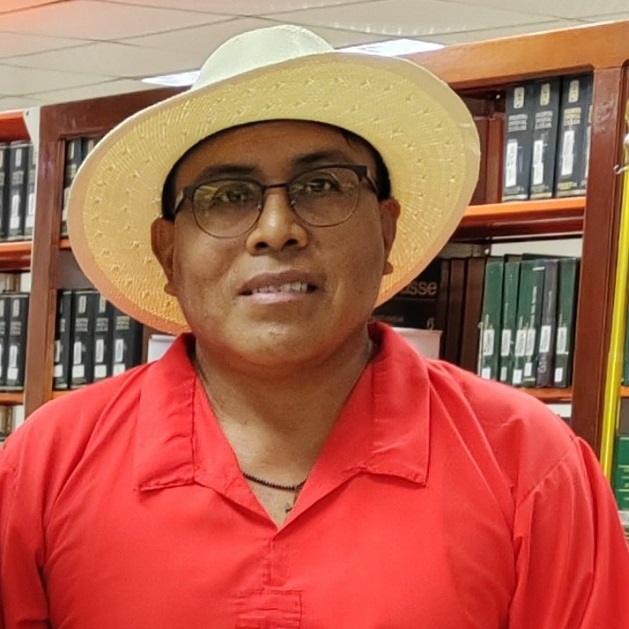
Bernal Damián Castillo Díaz is an anthropologist and historian of Gunadule origin. He is a professor at the University of Panama, a researcher at the Guna People’s Heritage Institute and the Center for Environmental and Human Development (CENDAH), and the director of the Indigenous Peoples Office at the University of Panama (OPINUP).