
Both the Bolivian and Ecuadorian constitutions provide for reconvening the founding power, but the trigger and the ratification belong to the nation as one body of voters, and neither leaves any founding capacity with a constituent people as such. The Naga case presents the reciprocal difficulty — a claim to political authority that no state conferred, asserted for seven decades but never translated into a settled founding act, by a people whose ancestral territory and political representation have been divided among existing states. These are different expressions of a common constitutional problem. Durable self-government depends on three conditions that neither case has secured together — a material base understood as effective control rather than legal title alone, a constituent power reserved in the text rather than exhausted at the founding, and a people with the institutional capacity to deliberate, design and govern through its own institutions.
Diagnosis
1. Two dates, one problem
In 2009, Bolivia remade itself as a plurinational state, on the authority of a constituent assembly in which Indigenous Peoples took part as principals and not as petitioners. Since then, eight Indigenous autonomies have been constituted. They exercise no authority over the subsoil beneath their territories and are financed on substantially the same terms as any municipality.
In 2015, the Government of India and Naga negotiators signed a Framework Agreement recording that in a democracy sovereignty lies with the people. Eleven years on, the Naga people have not been asked to exercise it.
Both of these problems arise from the same constitutional question. The issue is where that authority originates and whether it can be called upon again. The plurinational constitutions recognise many peoples as subjects of the order and one people as its author. The Naga difficulty is the reverse — an authority never conferred, and so never closed, but with no settled constitutional mechanism through which the people can exercise it. Neither arrangement secures both dimensions.
2. Terms, comparison and scope
Sovereignty is the quality of ultimate political authority, which in a democracy resides in the people and is not transferable, though its exercise may be entrusted. Self-determination is a right of peoples, with an internal dimension concerning how a people governs itself within an existing state and an external dimension concerning international status. Autonomy denotes a sphere of authority recognised by a state; self-government denotes the standing capacity of a people to constitute and direct the institutions through which it governs; self-governance denotes the continuing practice of governing through those institutions, norms and relationships.
Bolivia and Ecuador underwent constituent processes aimed at refounding the state. The Naga case is a long bilateral negotiation between a state and a political movement. These are not the same kind of process but what is compared is a relation, namely the relation between the source of a people’s authority and the material and institutional base on which that authority can be exercised. The relation appears in both settings, despite their very different political and institutional conditions.
The Nagas are a territorial majority in their homeland, while Indigenous Peoples hold varying demographic positions in Bolivia and Ecuador. These Andean nations are rentier
states, whereas the Indian state in the Northeast operates primarily as a security state.The Nagas constitute a territorial majority in their homeland, whereas Indigenous Peoples occupy different demographic positions in the two Andean states.
The Nagas constitute a territorial majority in their homeland, whereas Indigenous Peoples occupy different demographic positions in the two Andean states. Bolivia and Ecuador are rentier states whose legitimacy rests on redistributing resource revenue; the Indian state in the Northeast has operated substantially as a security state through exceptional legislation, which produces different incentives and different instruments of control. The relationship between Indigenous movements and political parties differs in each. These are the limits of the comparison. If the same relationship appears in such different settings, it is more likely to reflect a structural pattern than a feature of one political environment.
This article is written from a Naga vantage point and for a Naga purpose, which is to learn from what Indigenous Peoples in Bolivia and Ecuador achieved and from what they were unable to hold. The Latin American material rests on the work of scholars and movements in the region. The Latin American literature on de facto autonomy is taken up below through a single case, Chiapas, as a particularly clear instance of autonomy exercised without formal legal recognition. The internal contestation of Indigenous self-government, including the scholarship of Indigenous women, is touched on only where it bears on what peoplehood requires.
On sources, two competing versions of the text of the Framework Agreement have been published in the media but the competency proposals that followed are not in the public domain; the discussion below is therefore limited to the broad constitutional and political arrangement they indicate and does not quote the provisions directly. The claim on which the argument turns is independent of those confidential materials. It is that no constituent act appears on the public record, a claim that would be displaced by the production of such an act.
3. Bolivia: an architecture built, then narrowed
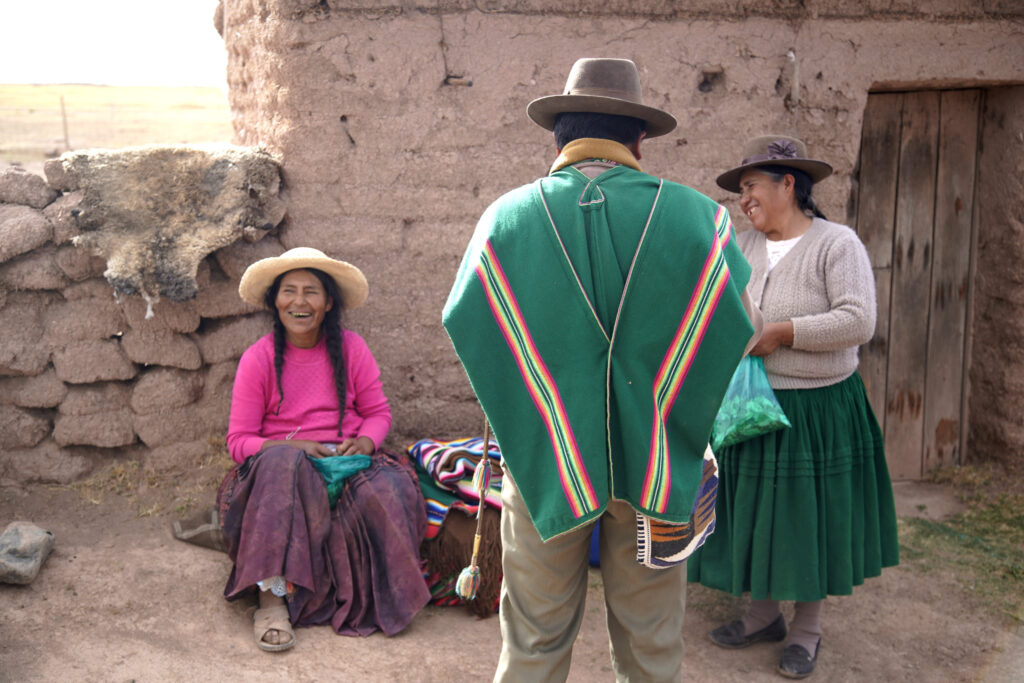
Bolivia gave constitutional standing to 36 nations and their languages, created a Plurinational Constitutional Tribunal and special Indigenous constituencies, recognised Indigenous jurisdiction as equal to the ordinary courts, and recognised Indigenous autonomy as arising from the pre-existing authority of Indigenous nations rather than as a grant from the centre. This was won over decades, at a cost that included lives.
The boundary between what the constitution recognised and what remained with the state is consistent throughout.Identity, language, custom and jurisdiction were recognised; the subsoil, the resource rent and much of the fiscal power stayed with the state. Bolivian Indigenous autonomies hold certain taxation powers attached to municipal competencies, but the available tax base is negligible and dependence on central transfers remains very high. A distinction that is often overlooked also matters. Indigenous territories hold considerably stronger rights over renewable natural resources than over the non-renewable subsoil, which remains with the state.
Equality therefore survives as a constitutional principle while the scope of the jurisdiction is narrowed by ordinary law. What a constitution grants, an ordinary statute can substantially narrow without amendment.
Equality therefore survives as a constitutional principle while the scope of the jurisdiction is narrowed by ordinary law.
Two mechanisms then narrowed what recognition delivered. The first is at the point of entry. A territory or municipality seeking Indigenous autonomy had to draft a written statute, win a local referendum and pass constitutional review; Ley 1198 of 2019 later eased that route, allowing a statute to be approved in a recognised Indigenous territory through the people’s own norms and procedures, with legislative approval to follow. Conversion nonetheless remained slow, which locates the constraint in the organisational capacity needed to complete the process, not in procedure alone.
The second mechanism works after recognition has been won. The Jurisdictional Demarcation Law, passed the year after the constitution, drew the boundary of that formally equal jurisdiction narrowly, placing serious criminal matters outside it along with mining, hydrocarbons and other fields. Equality therefore survives as a constitutional principle while the scope of the jurisdiction is narrowed by ordinary law. What a constitution grants, an ordinary statute can substantially narrow without amendment. This is the process of hollowing out. The breaking points have been where recognition meets the material base — the road driven through the Isiboro Sécure territory in 2011 being the clearest instance. Where a state lives on resource rent, the redistribution that sustains its legitimacy is financed by extraction from the territories where self-government would have real force.
4. Ecuador: an architecture declared, and not built
The 2008 constitution of Ecuador established plurinationality and interculturality as principles of the state and recognised Indigenous jurisdiction and Indigenous territorial districts, but it did not produce an equivalent institutional architecture for Indigenous autonomy, and no Indigenous territorial district has been constituted. Where Bolivia built and narrowed, Ecuador declared and did not build.
The narrowing that did occur came through adjudication. In 2014, in La Cocha, the Constitutional Court held that Indigenous jurisdiction does not extend to cases involving death, narrowing by interpretation the jurisdiction that the constitution had recognised in principle. Then, a national referendum in 2023 mandated an end to drilling in Yasuní, but the result has not been fully implemented. By 2026, a major exercise of Indigenous political mobilisation had become defensive. Indigenous organisations helped defeat a referendum on a new constituent assembly, while Indigenous and environmental organisations faced restrictions on their civic activity, including the freezing of bank accounts.
5. What the two retreats share
Hollowing out by statute in one state, non-implementation and judicial restriction in the other — different routes producing a similar structural weakness. This points to something in the structure of conferred recognition rather than to the politics of one governing party. Three features are common. The material base stayed with the state in each. The difficulty of the route to autonomy was in each case read back into the people as evidence of incapacity. And because the plurinational project was constituted through constitutional law, its survival depends in significant part on courts and legislatures continuing to uphold it. Where judicial independence erodes or political institutions turn hostile, its constitutional protections become vulnerable. By 2026 the strain is visible in both, with Bolivia’s long protest wave taking place inside the constitutional order rather than directed towards a new one. What was not secured was a continuing institutional capacity for the peoples themselves to reopen the constitutional settlement. The constituent power that could author the order was exercised at the founding but not reserved to be exercised again.
6. A people that has not been asked
6.1. A regime nobody granted
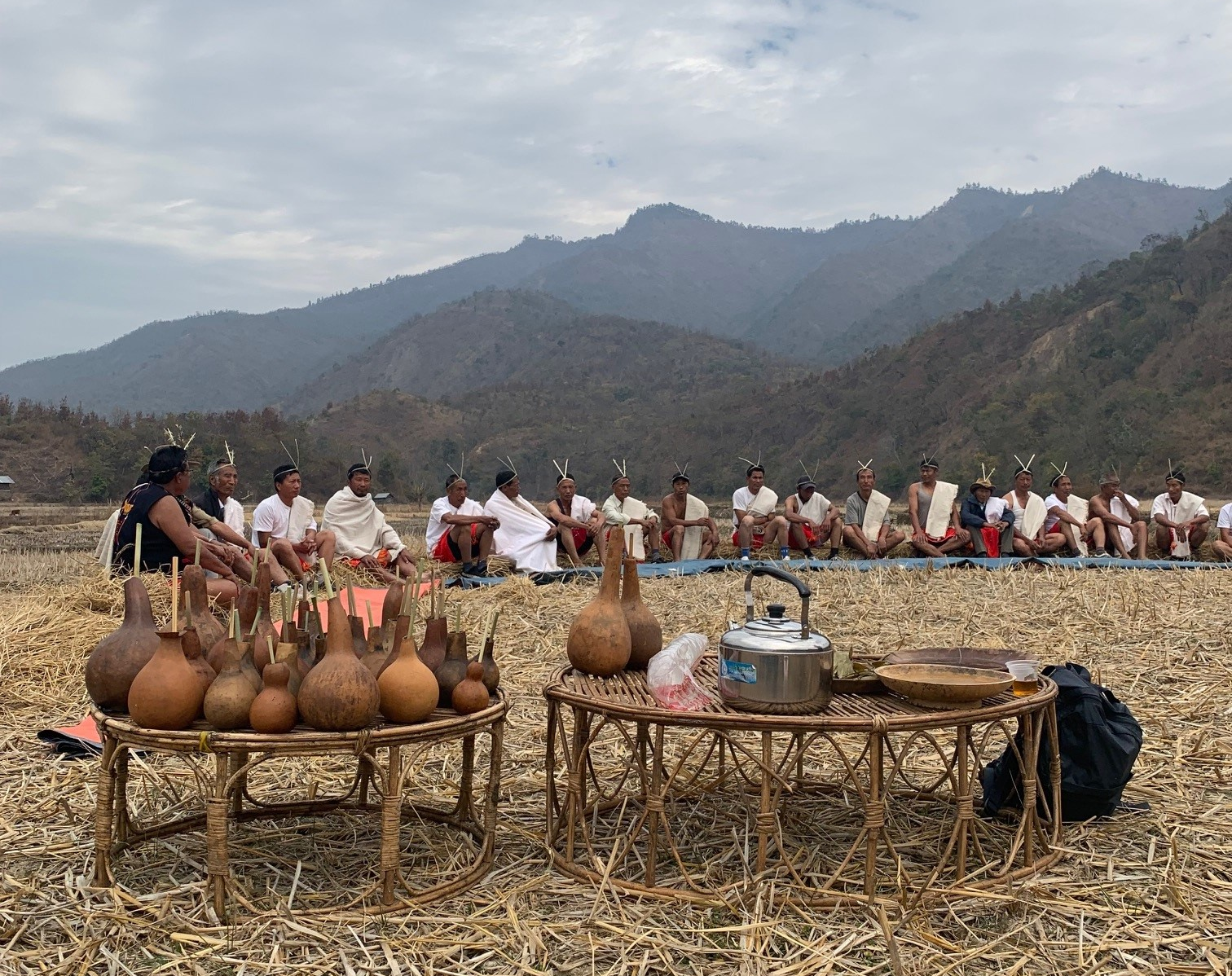
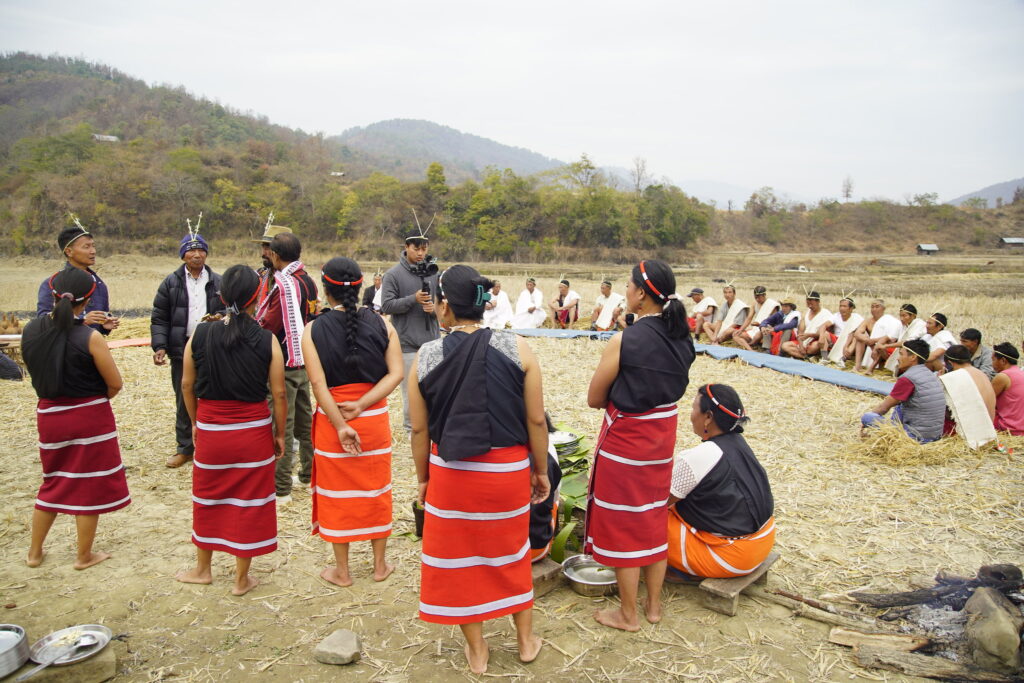
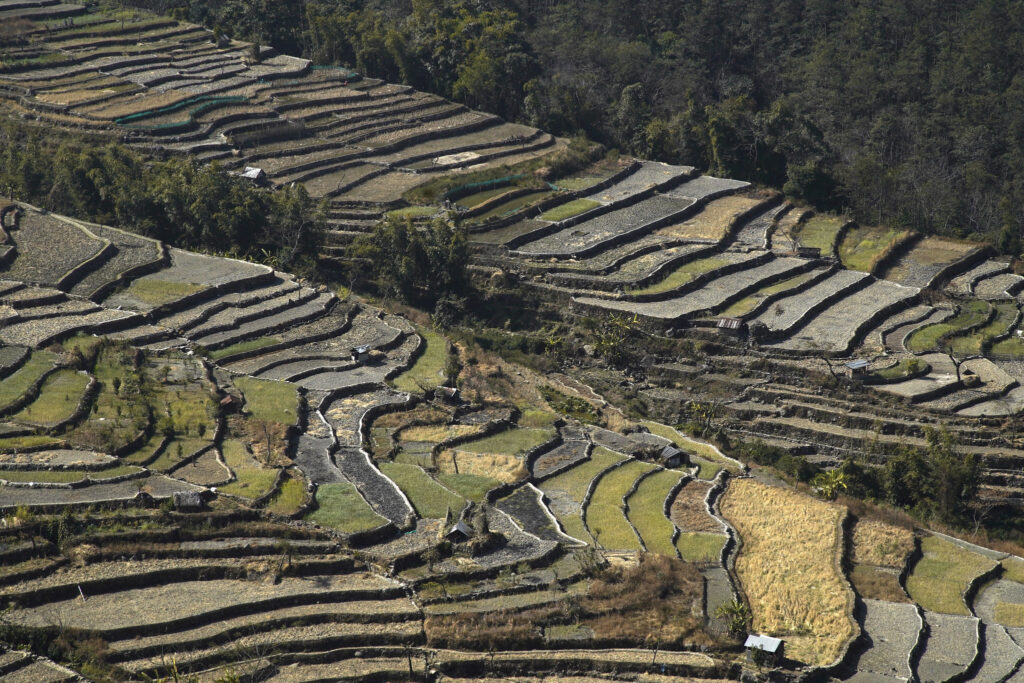
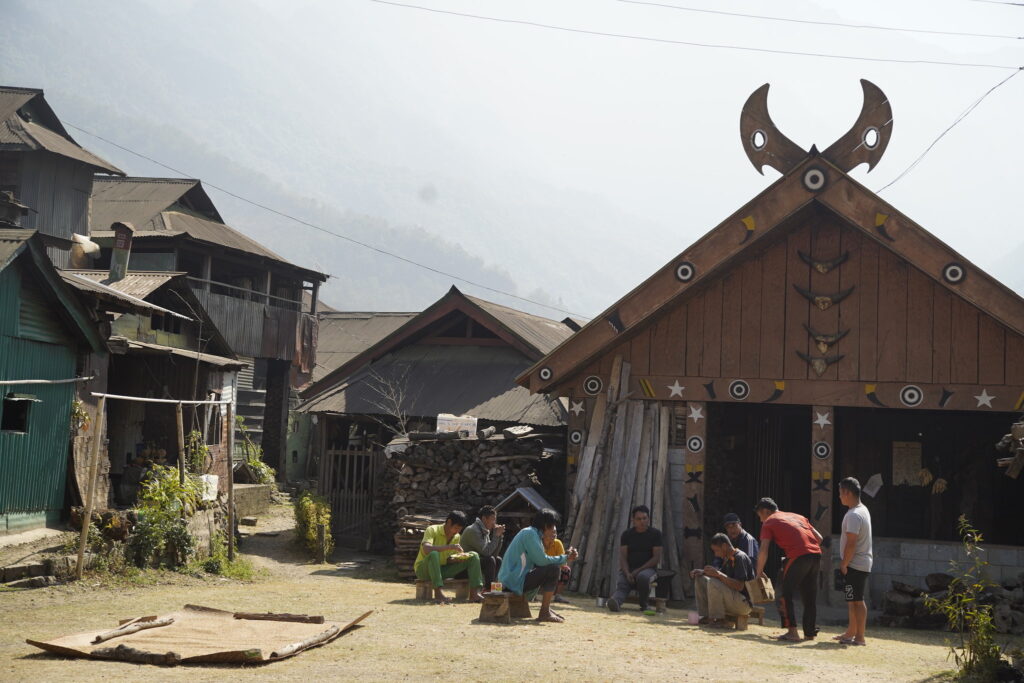
The Naga homeland lies across what is now northeast India and northwest Myanmar. Before colonial rule, there was no centralised Naga state because political authority was organised at the village level. Each village was its own polity, governing through its own institutions, holding its land and settling disputes under its customary law, with authority resting on the agreement of those who lived under it. Land and its resources belonged to communities and still do. That political and territorial inheritance was not granted by a state.
British administration gradually brought Naga territories under separate colonial jurisdictions during the nineteenth century, and the transfer of power in 1947 divided the Naga homeland again between India and Burma, now Myanmar, without a settlement reached with the people who lived there. A wider Naga political consciousness grew from this experience rather than preceding it. Division imposed from outside made a common political voice a practical necessity. A plebiscite was held in 1951; armed conflict followed, then long negotiation, and a ceasefire has held since 1997.
6.2. Article 371A: a shelter, not a foundation
Article 371A of the Constitution of India, in force since 1963, provides that no Act of Parliament touching Naga religious or social practice, Naga customary law and procedure, the administration of justice under that law, or the ownership and transfer of land and its resources shall apply in Nagaland unless the state legislative assembly decides that it should. Since land and its resources are understood to belong to the communities, this protects the material base more firmly than almost anything available in Latin America.
The provision must nonetheless meet the same test applied to conferred authority elsewhere, and it does not pass it. Article 371A is part of the Indian constitutional order and operates through a state legislative assembly. What is distinctive in the Naga situation is not the provision but the customary regime of community ownership that the provision recognises — a regime that predates the Indian constitutional order and is not derived from it. Article 371A is therefore the state’s recognition of an existing Naga institution, not the source of that institution.
The consequences follow from that distinction. The protection is conditional because the constitutional exclusion operates through the decision of the state legislative assembly. It is a shelter rather than a foundation. And because the Naga political question has never been settled, there has been no constituent act through which the Naga people authorised a permanent transfer or surrender of that authority. A settlement of wider scope, negotiated without constituent authority, could concede what the people never empowered their negotiators to concede. That makes protection of the material base, rather than its creation, one of the first questions any constituent settlement would have to address.
6.3. The Framework Agreement and the question of source
The Framework Agreement of 3 August 2015 recognises the unique history and position of the Nagas; records that both parties are cognizant of the universal principle that in a democracy sovereignty lies with the people; and speaks of sharing the sovereign powers as defined in the competencies.
Its meaning is contested. The Government of India has not publicly characterised the arrangement as shared sovereignty in the same terms as the NSCN (IM) but has indicated it as an enhanced form of autonomy. The leadership of the NSCN (IM) reads the same text as recognising Naga sovereignty and a relationship of shared sovereignty between distinct entities. The question pursued here is prior to both readings and has not been joined by any of the parties.
A proposed settlement intended to establish a new political order, but which cannot be shown to the people whose constituent power it claims to exercise, is not an exercise of that power, whatever its content.
A proposed settlement that cannot be shown to the people is not an exercise of their power.
The detailed competencies since proposed take the Framework Agreement as their point of departure and proceed directly to subjects of governmental and administrative power and would have the agreement itself stand as a constitution. Competencies are therefore being prepared without any exercise of constituent authority. Where the source of the competencies is unnamed, they remain open to being read as flowing from the Constitution of India, at which point the sharing of sovereign powers between two peoples could become an arrangement of autonomy within an existing constitutional order rather than a new constitutional relationship between distinct constituent peoples.
The confidentiality of the documents bears on the same point. A proposed settlement intended to establish a new political order, but which cannot be shown to the people whose constituent power it claims to exercise, is not an exercise of that power, whatever its content. Constituent authority is not a quality a document can hold privately.
6.4. What counts as a constituent act
A claim that constituent authority has not been exercised requires a criterion made up of three elements, applied to the whole record rather than to the current negotiation alone. A constituent act is one in which a people deliberates, decides by its own procedures, and authorises the creation or fundamental reordering of its political institutions.
The memorandum submitted to the Simon Commission in 1929 was a petition, not a decision. The plebiscite of 1951 satisfies the first two elements in relation to political status but not the third, since it established no institutions and conferred no mandate to design them. The Sixteen-Point Agreement of 1960 was concluded by a body with no mandate to represent or negotiate, at a point when the Naga resistance movement had been largely suppressed and the organisation claiming a mandate from the plebiscite was in no position to contest it. The Shillong Accord of 1975 was repudiated on the ground that it had not authorised the terms agreed. The competencies now under discussion rest on mandated negotiators.
Across almost a century, the Naga political process has repeatedly produced instruments that did not clearly rest on the consent of the constituent power, which is a substantial part of why none has settled the question. In the current negotiation for settlement, that power has never been expressly invoked through a constituent procedure, and the competencies still lack a publicly named source.
6.5. Who would vote?
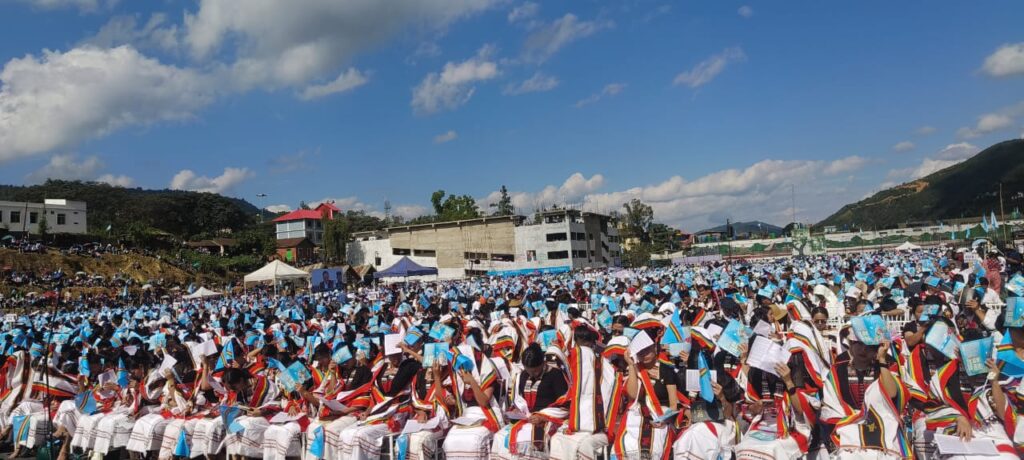
If a people is to adopt its own settlement and reopen it, its identity cannot remain implicit. The Naga people and their ancestral territory are substantially identifiable, and identifiability is not what the Government of India disputes. The difficulty is that this homeland no longer coincides with present administrative boundaries, and Naga communities are now situated across Nagaland, Manipur, Assam, Arunachal Pradesh and, across the international boundary, Myanmar. The questions include: Who participates in the settlement, which Naga ancestral areas fall within its scope, and what constitutional form can give effect to a people whose homeland has been divided among existing states? The territorial question therefore belongs within the constituent process rather than being left as a matter to be resolved afterwards. The Myanmar side raises a separate interstate question and cannot be carried into a constitutional settlement confined to India.
In comparison, a plurinational constitution can reserve constituent authority to an electorate whose legal boundaries are already drawn, even where that electorate contains several recognised peoples. The Naga constituent community is identifiable, but its political territory and the present representation of its members do not coincide. The problem lies in the absence of a constitutional form through which an existing peoplehood, whose homeland and political representation have been divided among state boundaries, can act collectively. The definition of the constituent subject is therefore inseparable from the reservation of constituent authority to that subject.
6.6. What an unresolved question costs
The Naga position is not a solution to the problem identified above; it is a different way of remaining outside a settled constitutional order. There is no settled territorial jurisdiction, and talks have been stalled for years over a flag and a constitution. A negotiation running for decades can become a form of government in itself. Authority accumulates in the bodies conducting it, prolonged representation displaces participation, and rival bodies each claim to carry an authority whose source remains uncertain.
A political community that has spent 70 years without a settled constitutional relationship has also had no occasion to build the deliberative and administrative practice that exercising one would require. This creates a problem that is structurally comparable to the difficulty seen in Bolivia, but the causes are different. In Bolivia, institutional capacity was tested by a state-defined procedure for obtaining autonomy. In the Naga case, the absence of a settled constitutional relationship has limited the opportunity to develop institutions through which the people could exercise their constituent authority.
7. What a material base must include
7.1. Title and control
A material base of self-government cannot be reduced to legal title, subsoil ownership or resource revenue. Zapatista self-government in Chiapas has operated for decades without state recognition and without any conventional transfer of fiscal resources. Its experience shows that self-government can persist where formal title and state-derived revenue are absent, provided that communities retain effective control over territory and develop the organisational capacity to exercise that control.
This makes effective control a necessary part of the material base. What sustains self-government day to day is not legal title or resource revenue as such, but effective control over territory together with accumulated organisational capacity. On that reading, Chiapas is not an exception to the argument but an important illustration of it. The Zapatistas have exercised substantial control and built organisational capacity in the absence of formal title and resource rents.
The distinction is therefore between the legal and the practical dimensions of authority. Effective control is what makes a right usable; recognised rights are what make control legally defensible. Neither substitutes for the other in a settled relationship with a state. A durable settlement of self-government therefore requires both recognised authority and the effective capacity to exercise it.
7.2. Scale as a condition of control
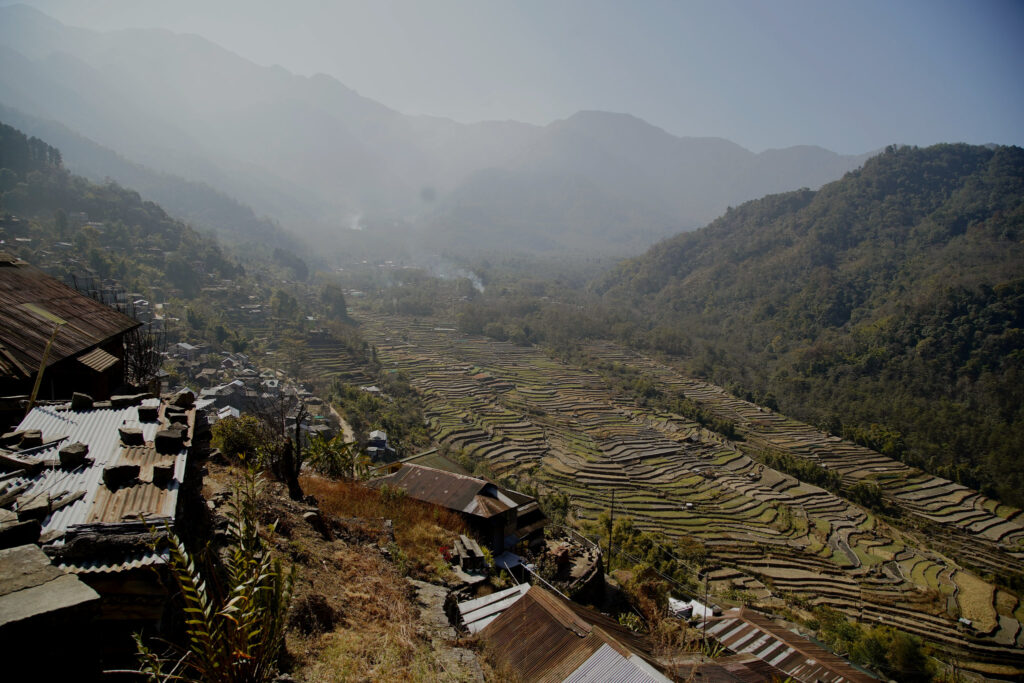
Latin American scholarship has long argued that self-government needs a territorial and political scale able to sustain an economic base, and that autonomy confined to fragmented municipal units becomes municipal administration under another name. Bolivian Indigenous autonomy was encapsulated within municipalities before it was further constrained by the state’s retention of subsoil resources, and the two limitations compound one another. A unit too small to sustain an economy cannot exercise resource rights effectively even where it formally holds them. Scale is therefore a condition of effective control.
The claim for integration arises in part because the present arrangement distributes Naga areas across administrative units, few of which are viable as the territorial basis of self-government. If integration were achieved, it would also avoid the problem of winning a majority among neighbours who want no part of the arrangement, a difficulty seen in some Bolivian cases. It carries an obligation in return. Where proposed Naga territories overlap with territories inhabited by other peoples, integration would place those peoples in the position of a minority within an autonomy constituted primarily by the Naga people. The terms on which those neighbours are included would therefore have to be settled with them, rather than assumed as part of the Naga claim. Subsurface deposits straddle these boundaries and the homeland crosses an international border, so shared resources would need a regime agreed with neighbours and the State.
7.3. Ownership without the means of exercise
The Naga evidence states the proposition in reverse. Recognised community ownership has not settled who may licence extraction. Oil was produced at Changpang from 1981 until May 1994, when the operator withdrew amid demands for payment for Naga resources, leaving wells improperly decommissioned; the constitutional question remains open, with Nagaland invoking Article 371A and the Union invoking the Union List together with the Mines and Minerals (Regulation and Development) Act 1957. More than 60 years after Article 371A came into force, recognised ownership has still not produced effective control over the resource.
Ownership recognised without the institutions through which it can be exercised — including a clear linkage between customary and statutory jurisdiction, budgetary authority at the community level, and the technical and legal capacity to negotiate rather than merely refuse — leaves the right formally intact but practically exposed. Where those institutions do not exist, the state retains much of the practical machinery through which resource decisions are made. Building an effective system of community resource governance would therefore require authority and institutional capacity to exercise ownership.
An independent material base does not democratise-government by itself. Revenue accruing to an autonomous authority can concentrate power within a territory just as readily as it can remain under external control.
8. The condition no settlement supplies for itself
The constitutional settlement cannot supply for itself the political capacity needed to sustain it. The constitutional texts of Bolivia and Ecuador did not change between 2009 and 2026; the executives did, and recognition proved vulnerable once the institutions responsible for implementing it turned against it. More broadly, Indigenous self-government is difficult to sustain where the surrounding state ceases to respect democratic institutions and recasts claims to self-government as threats to territorial unity.Across Asia, claims to self-governance have often been treated as separatism and answered with force.
There is a trap in the observation. If self-government must await the state’s democratisation, the state holds a veto over it. Two considerations close the trap. Indigenous self-government is itself democratising. Plurinationality is, at its core, a claim about the character of democracy — that a political order can contain more than one legitimate source of authority and still hold together. Coexistence therefore requires more than the restraint of the state. It requires a shared political and moral horizon between peoples, built through their relationship rather than granted by one to the other.
A shared horizon is required between peoples, so that coexistence rests on something other than the balance of force. Peoplehood is therefore a precondition rather than a sentiment.
A shared horizon is required between peoples, so that coexistence rests on something other than the balance of force.
Self-determination is in this sense a practice carried on over time rather than a fixed institutional arrangement. A shared horizon is required between peoples, so that coexistence rests on something other than the balance of force. Peoplehood is therefore a precondition rather than a sentiment. Coherence sufficient to act together means the capacity to act through disagreement, not its absence, and a conception of peoplehood that treats dissent as a threat to unity produces a silenced subject rather than a constituent one, and the experience of Indigenous women in particular shows that rights are claimed within autonomy rather than against it.
The Bolivian record is telling here. The composite category through which Indigenous peoplehood entered the constitutional text held as long as the coalition behind it held, then broke along the division it had covered, between Andean peasant federations and lowland territorial organisations. By the time the order needed its authors again, they no longer existed in a form able to act. That closure was contingent and political rather than inherent in constitution-making, which places the remedy less in drafting than in the maintenance of political power.
Proposal
Since the diagnosis is that constitutional texts are insufficient without the power and capacity to sustain them, the proposals address who holds and can exercise something — authority, territory, revenue or institutional capacity — rather than what a document merely says about it. Reserved constituent power.
Sovereignty is inherent in the people and cannot be permanently transferred, even though its exercise may be entrusted to institutions.A constitution must therefore specify when and in what circumstances the founding power may be reconvened and must leave that power with the people rather than with the head of state, the institutions or the negotiators. Where the text draws no such boundary, whoever holds office will draw it.
A standard objection in constitutional theory is that once a constitution regulates how a constituent power is exercised, what it regulates is no longer constituent power but a constituted power of amendment.No constitution creates constituent power, and none can abolish it; a reopening clause acknowledges a power the text cannot originate and specifies who may set it in motion. The alternative to specifying it is not preservation but silence, which leaves the question to whoever holds office when it arises. The objection also points to a useful distinction. If a regulated reopening procedure is merely an amendment power, then the Bolivian and Ecuadorian provisions should not be described as reservations of constituent power to Indigenous peoples. What is proposed here is narrower in scope than general constituent power but distinct from ordinary amendment, reaching only the terms of the relationship between a people and the state.
A power invocable at will would make government impossible; one never invocable is not reserved. Four specifications give it workable shape:
- Who may trigger it. The people whose authority is at stake, acting through their own institutions and procedures, and not only the national electorate. In a plurinational order each constituent people holds the trigger for the terms constituting its own relationship with the state.
- What it reaches. Not the constitution at large but the terms of the relationship; the distribution of authority between the people and the state, the territorial arrangement, the material base, and the reopening procedure itself. Ordinary legislation and ordinary amendment remain with the constituted powers.
- Under what circumstances. Material breach, where the state has failed to implement or has legislated to narrow what was agreed; fundamental change of circumstances, such as a major resource discovery or a fundamental change in the constitutional character of the state; and periodic review at intervals of a generation. Periodic review matters most in practice, because it makes reconsideration a normal constitutional possibility rather than an allegation of bad faith.
- By what procedure. Deliberation within the people according to its own norms, decision by the people concerned, negotiation with the state, ratification by both. Initiation would not be unilateral, but neither would it require the other party’s permission.
Any such clause should state expressly that it is not a right of secession and should be drafted so that it cannot be read as one. Its purpose is the renegotiation of terms within a continuing relationship.
Both plurinational constitutions do provide for reconvening the founding power. In Bolivia, total reform, or reform touching the fundamental bases, rights and guarantees, proceeds through a plenipotentiary constituent assembly activated by referendum, which may be set in motion by citizen initiative carrying at least twenty per cent of the electorate, by an absolute majority of the Plurinational Legislative Assembly, or by the President, the resulting text requiring approval at a constitutional referendum. In Ecuador, a constituent assembly may be convoked only through popular consultation, requested by the President, by two-thirds of the National Assembly, or by twelve per cent of those on the electoral register, with any new constitution approved by referendum.
The trigger and the ratification mechanisms are organised through the national electorate as a single constitutional body. Neither constitution reserves the initiative to a constituent people as such. A plurinational constitution reserving the founding power only to the national body of voters has not institutionalised plurinationality in this respect. It recognises many peoples as subjects of the order and one people as its author. The criticism is internal to the plurinational project rather than directed against it. The question is whether recognising several peoples should extend beyond recognising them as subjects of rights and autonomy to reserving to each a constituent authority over the fundamental terms of its own relationship with the state.
9. What international law supports
India has not ratified ILO Convention No. 169; Bolivia ratified it in 1991 and Ecuador in 1998. Its consultation and benefit-sharing requirements therefore bind Bolivia and Ecuador as parties to the Convention, but not India. The relevant provision is in any event conditional in form, addressing cases in which the State retains ownership of mineral or sub-surface resources, and so presupposes rather than confers that ownership, which arises under domestic law.
UNDRIP recognises, in Article 26, the right to own, use, develop and control lands, territories and resources without expressly excluding sub-surface resources; requires, in Article 32(2), free, prior and informed consent before approval of projects affecting those territories, naming mineral resources expressly; and provides redress where resources have been taken without consent. The argument here draws on this stronger conception of control and consent rather than treating consultation as the outer limit of Indigenous participation.
One foreseeable objection concerns territorial integrity. The Declaration carries a savings clause for the territorial integrity and political unity of sovereign and independent states. That clause does not itself establish an unconditional rule that existing territorial arrangements prevail over all claims of self-determination. The closely related 1970 Friendly Relations Declaration states the territorial-integrity principle in a formulation that refers to states conducting themselves in compliance with the principle of equal rights and self-determination and possessing a government representing the whole people without distinction. Territorial integrity appears there as a condition to be met, not a guarantee.
The Friendly Relations Declaration states the territorial-integrity principle in a formulation referring to States conducting themselves in compliance with the principle of equal rights and self-determination and possessing a government representing the whole people.
The Friendly Relations Declaration states the territorial-integrity principle, referring to States in compliance with the principle of equal rights and self-determination.
A second foreseeable objection concerns India’s position on self-determination. India has entered a declaration concerning Article 1 of the International Covenant on Civil and Political Rights that limits the right of self-determination, for purposes of India’s undertaking under the Covenant, to peoples under foreign domination. France, Germany, the Netherlands and Pakistan objected to that declaration. The declaration records India’s position in the treaty framework; it does not by itself determine what India and the Nagas may agree in a negotiated settlement. No such settlement has yet been concluded.
10. What self-government is, and what a settlement must secure
Self-government is the standing capacity of a people to establish, direct and remake the institutions through which it governs itself, resting on five conditions together — a people coherent enough to act together, in the sense given above; authority originating in the people rather than in a grant; a material base consisting of effective control over territory and its resources, at a scale able to sustain them, together with revenue held as of right; institutions answerable to the people and capable of being remade; and the practical capacity to design those institutions and govern through them.
Stated as requirements, and drawn from what the two experiences show, this is what a settlement would need to secure:
- Name the origin of the authority it recognises, and recognise rather than create it;
- Be adopted by the people themselves through a constituent assembly, referendum, plebiscite or comparable process, and not by negotiators alone;
- Set out when and how the people may reconvene to revise it, with a trigger available to the people concerned and not only to a wider electorate;
- Secure land, subsoil and resources as of right, at a viable scale, together with authority over their alienation and transfer, and the institutions and revenue through which that holding can be exercised;
- Reduce nothing already protected, a settlement being measured against the position it replaces;
- Entrench competencies so that they cannot be narrowed by statute or emptied by interpretation, with disputes referred to an independent forum rather than to the administration of one party;
- Draw the form of government from the people’s own traditions rather than an external template;
- Answer to its own members, standards such as the equal standing of women being reached through the people’s own institutions, supported by education and resources, rather than by external mandate alone;
- Establish a standing forum in which the parties meet as parties, and a corresponding forum with neighbouring peoples or jurisdictions where territory or resources are shared;
- Treat the capacity to design a governing architecture, and to govern through it, as a standing programme of work rather than as something acquired after signature.
The first nine are matters to be secured through mutual agreement and reciprocal obligation; the tenth is a capacity that no settlement can confer and that the people themselves must build and exercise. Capacity of this sort — administrative, fiscal, deliberative, and sufficient to carry internal disagreement — must be built by Indigenous governments and movements themselves, and there are two reasons for treating it as urgent. Where autonomy has functioned well in Latin America, organisational depth and governing practice generally preceded the legal form, with the legal framework recognising and consolidating capacities that had already developed. And states have learned to read missing capacity as a reason to withhold authority, turning a shortfall into an argument against further authority.
The pathways through which movements enter parties and state programmes, the conditions attached to participation, and the dismantling or displacement of institutions peoples had built for themselves all shape how much organisational capacity can accumulate. In the Naga case, the raw material has not been absent. Villages have governed continuously, although protracted militarisation, institutional disruption and weaknesses within the movements themselves have eroded that inheritance. What remains missing and unfinished is the deliberate work of revitalising and connecting those surviving institutions into a wider political, fiscal and administrative capacity capable of sustaining self-government at the scale required.
11. Conclusion
None of this requires an unprecedented constitutional imagination, with States building beyond the doctrinal minimum. Denmark’s Self-Government Act recognises the people of Greenland as a people under international law with the right of self-determination and establishes a defined legal route through which the relationship may develop further. The Latin American constituent processes also went a considerable distance, but stopped short when they recognised multiple peoples as subjects of the constitutional order but did not reserve to those peoples a continuing constituent authority, and substantial control over the material base remained with the state. The Naga process has kept the question open at the cost of never securing an answer and now risks settling how government will work without first settling where its authority comes from.
The question is who constitutes whom — and whether, once answered, that question may be asked again.

Gam Angkang Shimray is a member of the United Nations Expert Mechanism on the Rights of Indigenous Peoples (EMRIP), representing Asia. He has served as Secretary-General of the Asia Indigenous Peoples Pact (AIPP).