
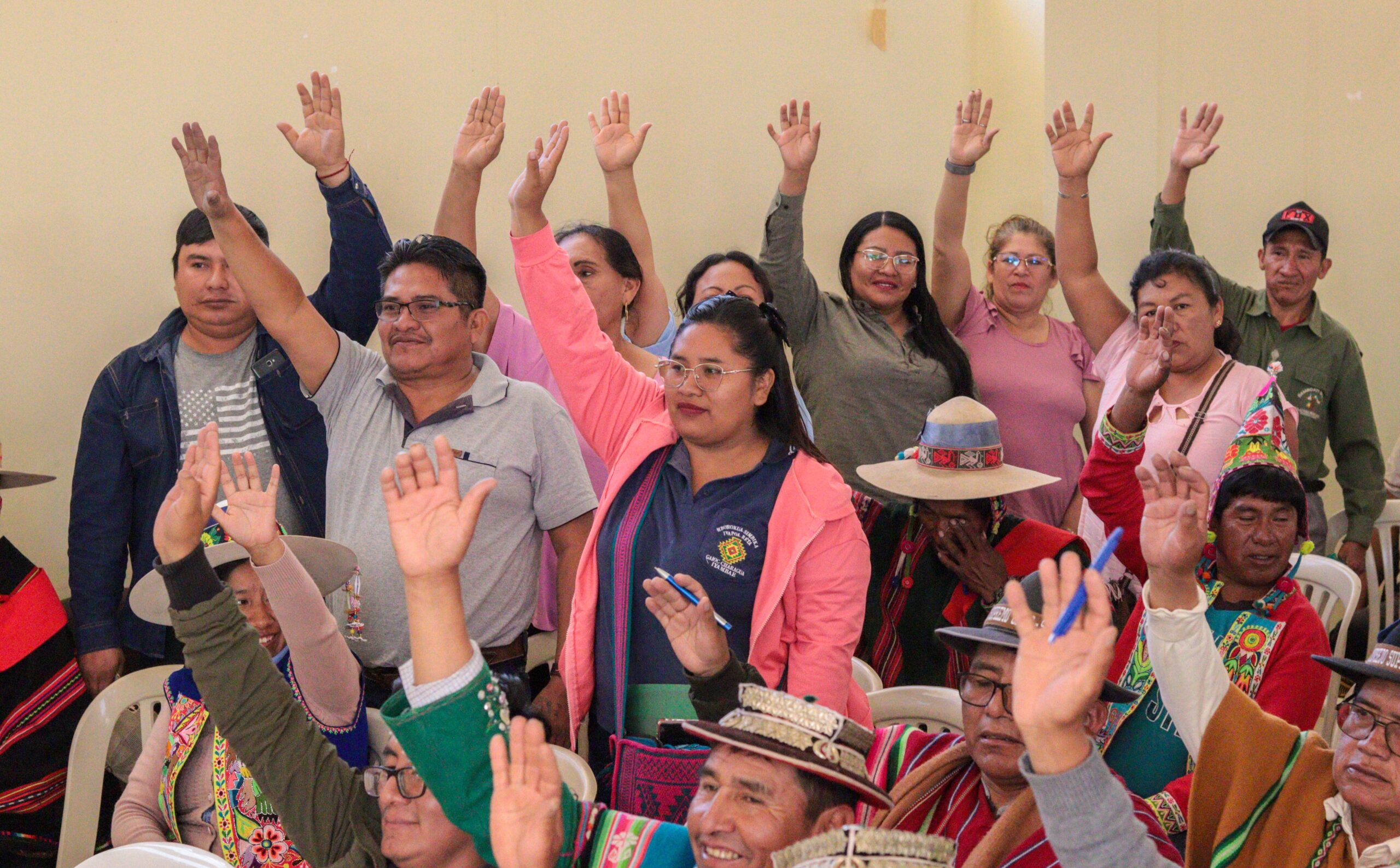
Following the adoption of the 2009 Political Constitution of the State and after a lengthy process, nine Indigenous Native Peasant Autonomous Governments have been established, each at a different stage in their implementation and exercise of public administration. This process has led to the development of rules, regulations, procedures and instruments grounded in the concrete experiences of the inhabitants of the territories themselves. However, their establishment does not necessarily guarantee the effective capacity to exercise power and make decisions on strategic matters affecting them.
More than 15 years have passed since the adoption of the 2009 Political Constitution of the State, which recognised the right of Indigenous Native Peasant nations and peoples to self-determination, autonomy and self-government. This recognition marked a new stage in the history of Indigenous struggles in Bolivia and paved the way for the institutionalisation of their own forms of government within the structure of the Plurinational State.
However, Indigenous Native Peasant Autonomies (AIOCs) did not just emerge with the 2009 Constitution. They are the result of a long process of territorial claims, the restoration of authorities, the rebuilding of community institutions and the pursuit of political recognition. After more than 15 years of implementation, the question is no longer whether these autonomies have succeeded in becoming institutionally established, but rather the extent to which these institutions have transformed power relations and strengthened the capacity of Indigenous Peoples to govern their territories.
From this perspective, the trajectory of Indigenous autonomies must be understood both as a political and administrative reform of the State and as a historical struggle for territorial power. The central question is whether the institutionalisation of AIOCs is enabling historical structures of self-government to be effectively oriented towards public and territorial governance, or whether there is a risk that autonomous governments may reproduce the administrative logic of state institutions.
From Territorial Claims to the Exercise of Authority
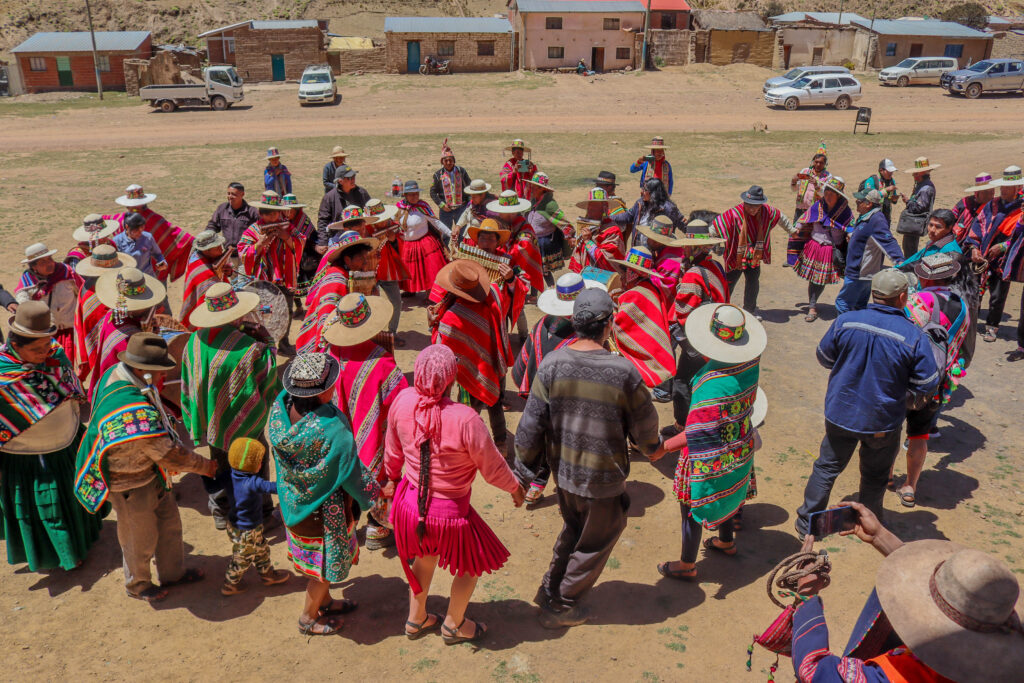
Throughout history, the Indigenous Peoples of Bolivia have developed diverse strategies of struggle, resistance and negotiation to defend and assert their rights to land and territory. This defence was not only limited to securing access to land, but was also closely linked to their own forms of organisation and authority, resource management and the reproduction of community life. Within this process, the 1990 March for Territory and Dignity marked an important milestone in bringing Indigenous demands to national attention and establishing territory as a central issue on the country’s political agenda. Demands for Indigenous territories also encompassed recognition of their own forms of organisation and their right to make decisions on matters affecting their collective life.
These demands subsequently led to collective titling processes through the recognition of Native Community Lands (Tierras Comunitarias de Origen, TCOs). Titling helped to strengthen territorial security, organisational cohesion and cultural identity, while also enabling the development of territorial management processes and plans. In this way, collective titling laid the foundation for the subsequent process towards autonomy, enabling a shift from claiming and defending territory towards a broader demand: to exercise authority, make decisions and govern their own territory. It should be noted, however, that collective ownership was not always sufficient to ensure effective control in the face of external pressures, particularly those associated with extractive activities.
The adoption of the Political Constitution of the State in 2009 opened a new phase. Indigenous Native Peasant Autonomy was recognised as a form of territorial organisation of the State and as an expression of the right of Indigenous Peoples to self-government.
That collective ownership was not always sufficient to ensure effective control in the face of external pressures, particularly those associated with extractive activities.
A second phase unfolded during the 1990s, with the process of municipalisation and the introduction of popular participation. Indigenous organisations began to seek ways to engage in local public administration and steer municipal institutions towards the demands of their communities. Participation in planning and social oversight, the creation of Indigenous municipal districts, the election of deputy mayors through their own procedures, and the incorporation of community-based mechanisms into public administration all represented important steps forward. However, the limitations of Indigenous participation within municipal structures led to the need to move towards forms of government with greater decision-making authority over their territories.
The adoption of the Political Constitution of the State in 2009 opened a new phase. Indigenous Native Peasant Autonomy was recognised as a form of territorial organisation of the State and as an expression of the right of Indigenous Peoples to self-government. The first autonomy processes (Charagua, Uru Chipaya and Raqaypampa) developed different forms of coordination between historical structures of self-government and the new autonomous governments. Territorial assemblies and other community bodies continued to play a central role in deliberation, decision-making and shaping the direction of public administration.
Building Indigenous Self-Government
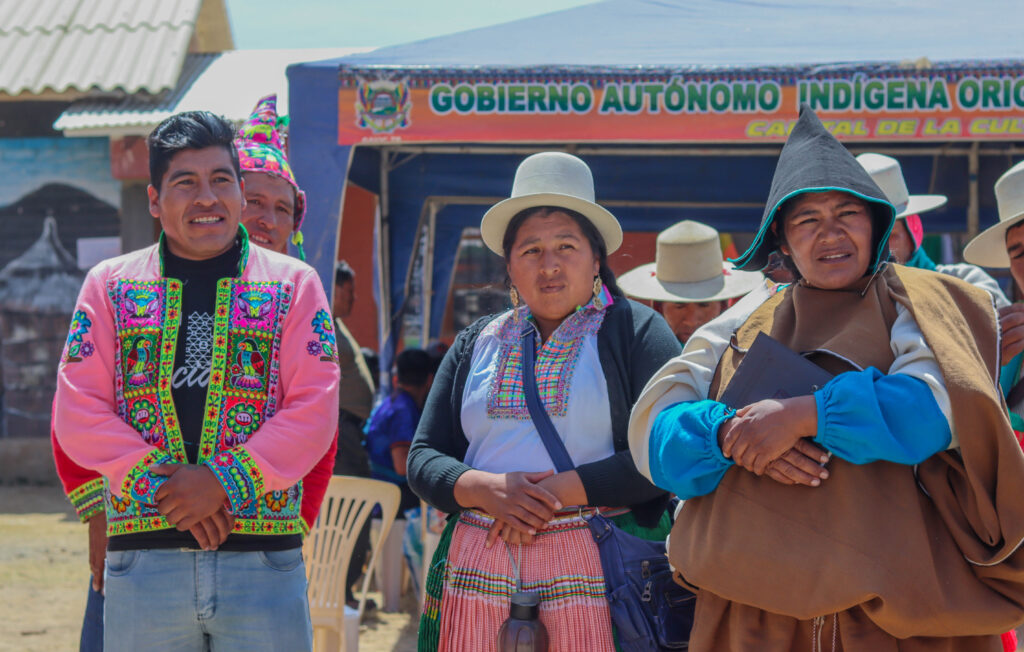
The establishment of the nine autonomous governments represents significant institutional advances in the development of these forms of government. A first key element is the election of authorities according to their own rules and procedures, without the involvement of political parties. Elections take place in assemblies and cabildos, using mechanisms such as acclamation, queuing and other customary practices. In Charagua, the electoral practices of the capitanías (the territorial organisational structures of the Guaraní people) are combined with universal suffrage in urban areas, giving rise to a form of intercultural democracy. Other autonomies also incorporate principles such as rotation, or muyu; the trajectory and experience embodied in the thaki; and complementarity between men and women.
A second key element is political representation linked to territorial structures. Ayllus, capitanías, subcentrals and centrals are represented within government bodies. In Raqaypampa, legislative representation is distributed among the five subcentrals; in Challa, the Native Assembly comprises representatives of the three ayllus, while the Justice Council likewise reflects this territorial representation. Another important aspect is the recognition of the territorial assembly as a space for deliberation, decision-making and social oversight. In this way, the authorities of the autonomous government do not necessarily replace community structures but must work in coordination with them.
These experiences show that the autonomies are bringing elements and mechanisms of community structures into the State and creating new ways of exercising power at the local level.
These experiences show that the autonomies are bringing elements and mechanisms of community structures into the State and creating new ways of exercising power at the local level.
This is further reinforced by the exercise of community democracy within autonomous institutions. Practices of collective deliberation, territorial representation, rotation, election according to their own rules and procedures, and community oversight are given a formal place within autonomous government. These practices operate alongside mechanisms of representative democracy, as in Charagua. An additional advance is the recognition of Indigenous Native Peasant Jurisdiction (JIOC) as part of the exercise of self-government. The statutes provide for their own rules, procedures and authorities for resolving disputes, in coordination with territorial structures.
Taken together, these experiences show that the autonomies are bringing elements and mechanisms of community structures into the State and creating new ways of exercising power at the local level. By exercising their right to self-government, Indigenous Peoples are defining, from the local level, the terms of their participation and incorporation into the State, although numerous bureaucratic barriers, administrative requirements and regulatory obstacles remain to be overcome. In this way, they have progressively forged their own path towards implementation.
Tensions and Limits of Indigenous Autonomy
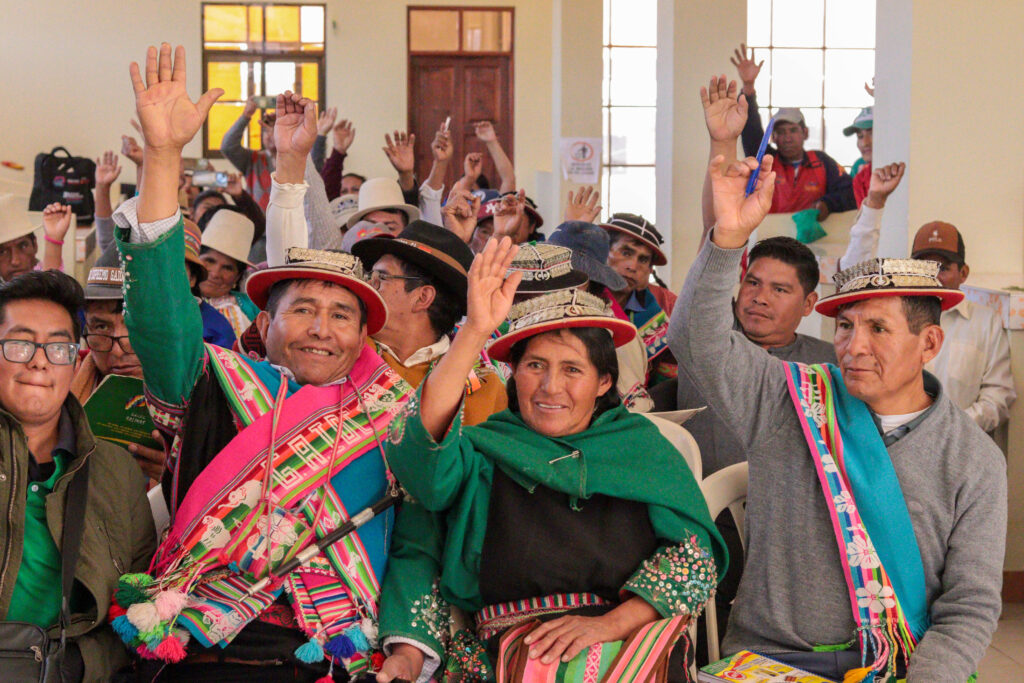
Despite these advances, significant constraints remain in translating the formal recognition of self-government into an effective capacity for territorial governance and control. A primary limitation is that public administration continues to be heavily shaped by national rules and procedures. This restricts the scope of Indigenous governments to determine how resources are allocated in accordance with their own priorities, potential and forms of governance. The administration of resources still largely follows the model of municipal government, a situation that has led Indigenous autonomy organisations to put forward a proposal for a Public Administration Law that would allow local mechanisms to be incorporated.
Another challenge, is the limited capacity to generate their own revenue, which restricts the ability of Indigenous governments to develop policies and actions with greater autonomy from the powers and resources provided by the central State. This is compounded by the lengthy and complex bureaucratic, administrative and legal process required to attain and implement Indigenous autonomy. Finally, internal conflicts and tensions persist in relation to political representation, the location of seats of government, recognition of different sectors, differing visions of development, overlapping forms of territorial organisation, and the presence of diverse actors and interests.
These limitations point to a fundamental tension: the institutionalisation of autonomy does not, in itself, guarantee the effective exercise of self-government. After more than 15 years of implementation, it is necessary to assess the extent to which Indigenous autonomous governments are strengthening their effective capacity to exercise power and make decisions over their territories. The autonomies have statutes, authorities, legislative and executive bodies, budgets and administrative systems, yet they continue to face constraints on their ability to intervene in strategic matters affecting their territories.
From Autonomous Government to Territorial Control
Indigenous autonomous governments are currently engaged in a process of developing and strengthening their own mechanisms of public administration, seeking to coordinate the management of financial resources with their institutional and territorial structures. These experiences include the contracting of local suppliers, community-based planning and oversight mechanisms, prior consultation protocols, and rules concerning the care and use of the commons. Together, these mechanisms reflect an effort to apply public administration progressively to the particular characteristics and priorities of each territory.
The establishment of autonomous governments has also brought about a reconfiguration of power relations within the territories. The institutionalisation of new forms of representation and decision-making has opened up spaces for participation and the redistribution of political power. Territorial assemblies play an important role in electing authorities, setting planning priorities and overseeing the management of public resources.
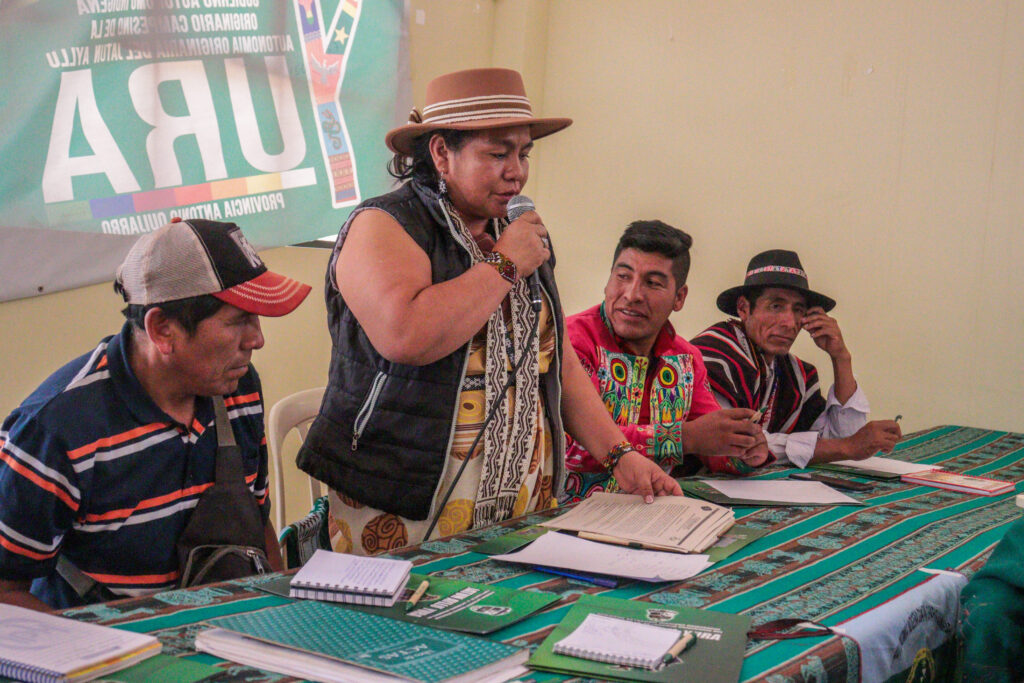
In Ayllu Jatun Ayllu Yura, organisations have put forward demands concerning the economic benefits derived from hydroelectric activities carried out within their territory.
In Ayllu Jatun Ayllu Yura, organisations have put forward demands concerning the economic benefits derived from hydroelectric activities carried out within their territory.
However, effective territorial control through the exercise of self-government remains at an early stage. A significant proportion of the powers vested in autonomous governments are focused on administrative management, while strategic decisions concerning certain natural resources and economic activities remain heavily regulated by, or reserved for, the central level of the State. This creates a tension between the recognition of self-government and the effective capacity of Indigenous Peoples to make decisions on processes that directly affect their territories.
Nevertheless, some recent advances point to the potential for expanding this capacity. In Charagua Iyambae, mechanisms have been developed to engage in territorial defence and in processes aimed at protecting conservation areas. In Ayllu Jatun Ayllu Yura, organisations have put forward demands concerning the economic benefits derived from hydroelectric activities carried out within their territory. In Challa, the establishment of the Justice Council opens up opportunities to strengthen the role of Indigenous authorities in resolving disputes.
From Self-Government to the Plurinational State: A Horizon Yet to Be Built
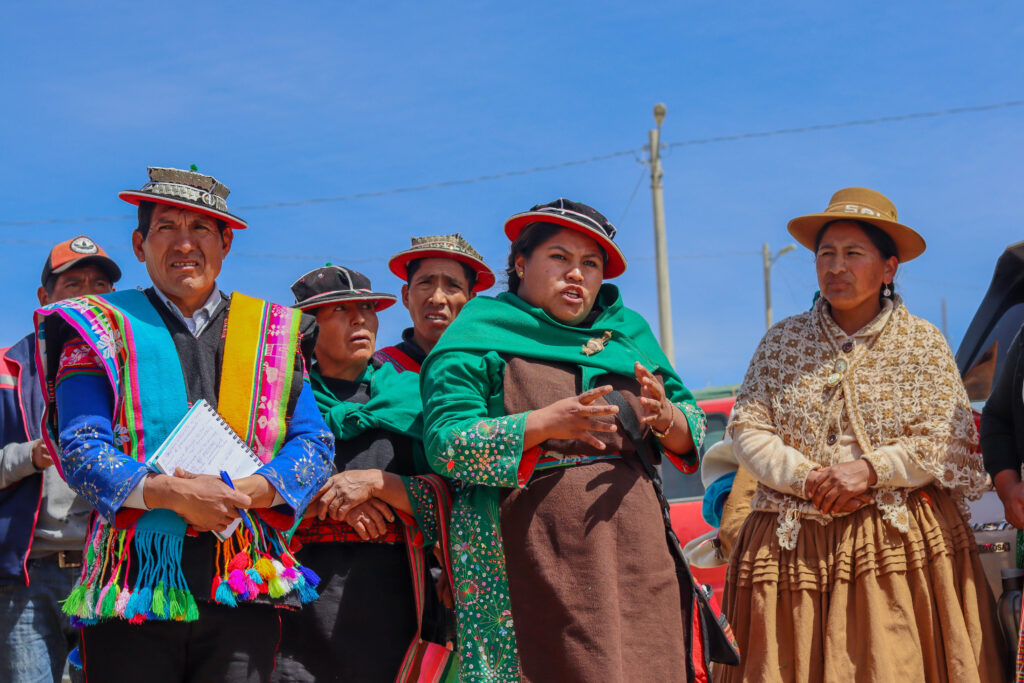
The trajectory of Indigenous autonomies in Bolivia can be understood as a process that has moved from territorial claims towards the pursuit of the power to govern their territories. First, through territorial defence, social mobilisation and the recovery of territory; second, through the restoration and strengthening of their own authorities and mechanisms; third, through participation in and the gradual assumption of roles within municipal governance; and finally, following the adoption of a new Political Constitution, through the institutionalisation of self-government by means of Indigenous autonomies.
The outcome is significant, and is reflected in the establishment of nine Indigenous governments with their own statutes, institutional structures, mechanisms of community democracy and territorial representation, as well as experiences of coordination between historical forms of self-government and public administration. Despite numerous limitations, these advances are contributing to the construction of the Plurinational State, albeit to a limited extent, and to the effective exercise of intercultural democracy. The challenge remains to move towards genuine self-government and effective territorial control.
However, the institutional recognition of Indigenous government is not synonymous with self-government. The challenge now is to consolidate these new institutions so that they effectively contribute to transforming power relations while also strengthening Indigenous territorial structures as spaces for political decision-making. Ultimately, this means moving from formal government to the effective exercise of authority over the territory and, from there, contributing to the construction of the Plurinational State.
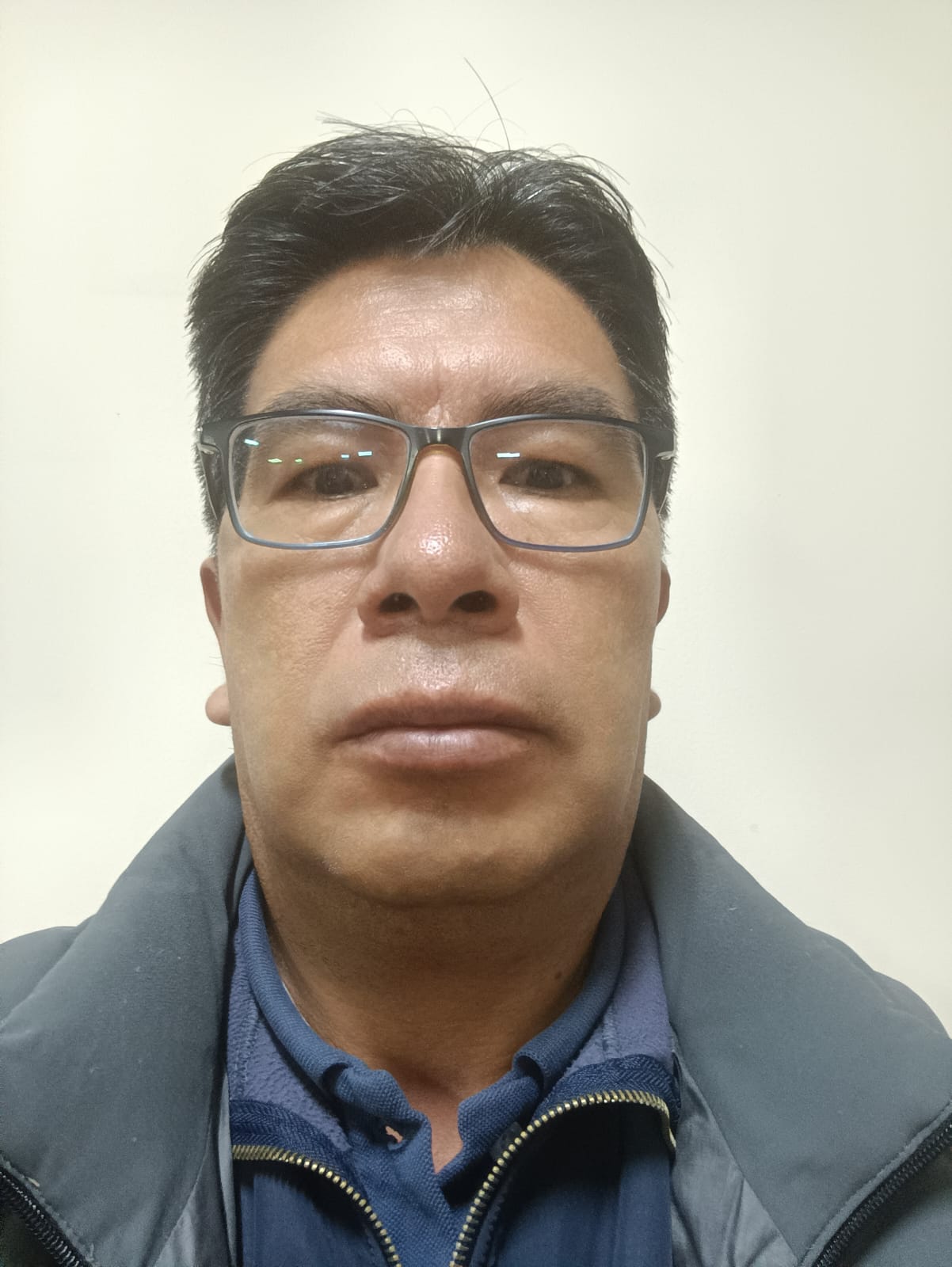
Fredy Villagomez is Director of the Centre for Andean Communication and Development (CENDA) and holds a degree in Sociology from the Universidad Mayor de San Simón (UMSS). He is also a former Director of the Centre for Research and Promotion of the Peasantry (CIPCA) and has extensive experience in Indigenous autonomies, territorial governance, intercultural community democracy, direct representation and the right to free, prior and informed consultation.