October 2026
Indigenous autonomy is a pre-existing right recognised by the Inter-American System. It is neither a concession nor something granted by the State. Constitutional recognition alone, therefore, does not guarantee self-government: autonomy lies in a people’s ability to exercise effective decision-making over its territory. In this special issue, Indigenous Debates brings together the experiences of the Naga Peoples of India, the Gunadule People of Panama and the Arhuaco People of Colombia. We also examine the lessons learned from Bolivia, Mexico and Peru.
Indigenous autonomy is a pre-existing right recognised by the Inter-American System. It is neither a concession nor something granted by the State. Constitutional recognition alone, therefore, does not guarantee self-government: autonomy lies in a people’s ability to exercise effective decision-making over its territory. In this special issue, Indigenous Debates brings together the experiences of the Naga Peoples of India, the Gunadule People of Panama and the Arhuaco People of Colombia. We also examine the lessons learned from Bolivia, Mexico and Peru.
View articles
September 2026
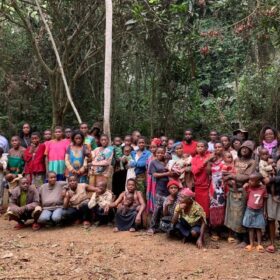
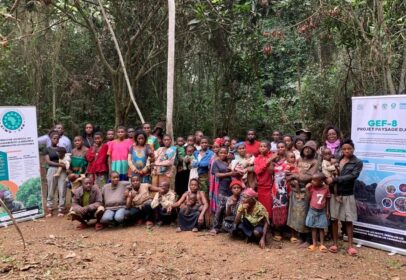
The survival of the most resilient ecosystems depends on recognising the Indigenous Peoples who have cared for them for centuries. While Indigenous women in Indonesia face deforestation driven by mining and plantations, the Baka people resist encroachment on their territories in the Congo Basin. Similarly, the Gheba Karen community works to preserve Myanmar’s tropical forests. In Latin America, the IACHR warns of the impacts of gold mining in the Amazon. Additionally, in the region, Bolivia shows that global conservation targets cannot be achieved unless Indigenous rights are fully guaranteed.
The survival of the most resilient ecosystems depends on recognising the Indigenous Peoples who have cared for them for centuries. While Indigenous women in Indonesia face deforestation driven by mining and plantations, the Baka people resist encroachment on their territories in the Congo Basin. Similarly, the Gheba Karen community works to preserve Myanmar’s tropical forests. In Latin America, the IACHR warns of the impacts of gold mining in the Amazon. Additionally, in the region, Bolivia shows that global conservation targets cannot be achieved unless Indigenous rights are fully guaranteed.
View articles
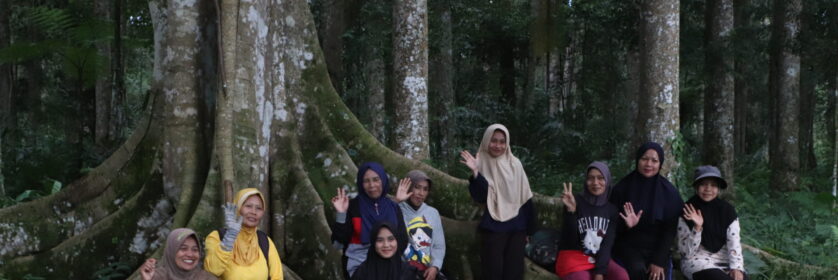
Indigenous Women’s Struggle: Facing the Biodiversity Crisis and Deforestation Burden in Indonesia
Although the total land area of Indonesia only covers around 1.3 percent of the Earth’s surface, it is home to the world's third largest tropical rainforest. These forests contain some of the highest levels of biodiversity in the world, including 17 percent of the world's bird species and another 12 percent of Earth's mammal species. For the Indigenous communities living in Indonesia, the forests provide a plethora of food, medicine, materials and cultural values while also holding generational Indigenous knowledge.
Pramasti Ayu Kusdinar
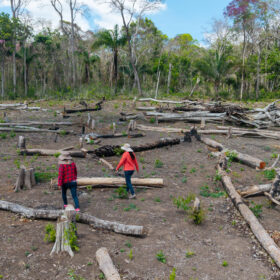
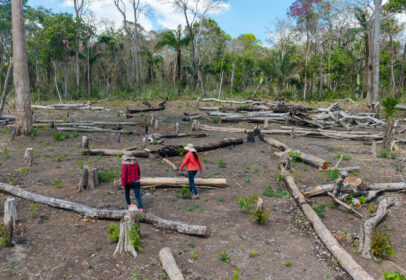
30×30 and Indigenous Territories: Bolivia’s Contradiction
Nelfi Fernandez Reyes
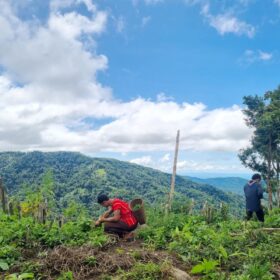
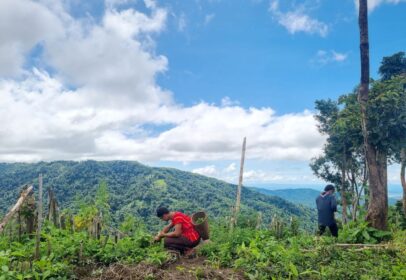
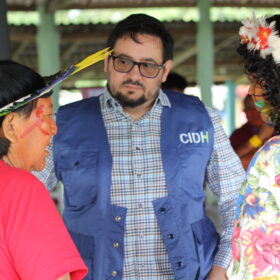
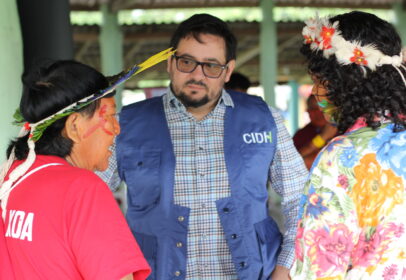
Gold, Territories and Rights: Illegal Mining in the Amazon and the Guiana Shield
Javier Palummo Lantes
August 2026
In recent years, following the lead of US President Donald Trump, South America has begun to shift towards far-right governments. In this context of democratic and human rights backsliding, Indigenous Peoples, like many other groups, are being forced to adapt to an increasingly challenging political landscape. From the expansion of mining on Indigenous lands to the spread of racist rhetoric, the growing radicalisation of the right in government marks the beginning of a new phase in the struggle to defend Indigenous rights.
In recent years, following the lead of US President Donald Trump, South America has begun to shift towards far-right governments. In this context of democratic and human rights backsliding, Indigenous Peoples, like many other groups, are being forced to adapt to an increasingly challenging political landscape. From the expansion of mining on Indigenous lands to the spread of racist rhetoric, the growing radicalisation of the right in government marks the beginning of a new phase in the struggle to defend Indigenous rights.
View articles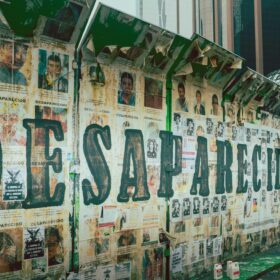
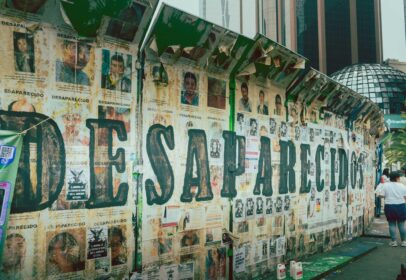
The Ball Returns to Mexico—But What About the Disappeared?
Andrea de la Serna Alegre, Rosalva Aída Hernández Castillo, Omar Tapia
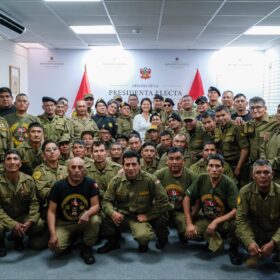
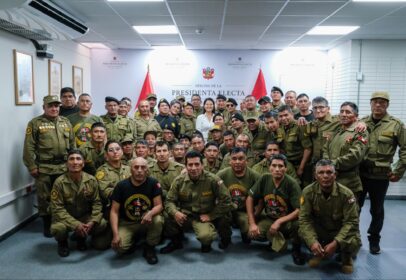
Narratives of Stigmatisation and Racism in Colombia: The Risk of Regression in Collective Rights
Diana M. Ramírez Rosales
The End of Bolivia’s Great National Blockade: No Winners, No Losers?
Leonardo Tamburini
The Laws of the Market? Indigenous Policy under the Kast Government
Verónica Figueroa Huencho


Costa Rica: Continuity Without the Promise of Change
Alancay Morales Garro
July 2026
Across the world, market‑based schemes are being advanced as supposedly innovative responses to the climate and biodiversity crises, yet they are rapidly reshaping control over Indigenous territories. This special issue examines how carbon and biodiversity credits commodify forests and ecosystems, turning them into tradable assets that enable polluting economies to continue largely unchanged, while intensifying pressures on lands stewarded by Indigenous Peoples. We analyse the global architecture of carbon markets, from REDD+ to Article 6 of the Paris Agreement, and explore how safeguards such as free, prior and informed consent are routinely weakened or bypassed, resulting in opaque contracts, dispossession and internal conflict. At the same time, we highlight Indigenous‑led strategies for collective organising, rights‑based engagement and direct access to climate and biodiversity finance, placing territorial rights and self‑determination at the centre of any genuine approach.
Across the world, market‑based schemes are being advanced as supposedly innovative responses to the climate and biodiversity crises, yet they are rapidly reshaping control over Indigenous territories. This special issue examines how carbon and biodiversity credits commodify forests and ecosystems, turning them into tradable assets that enable polluting economies to continue largely unchanged, while intensifying pressures on lands stewarded by Indigenous Peoples. We analyse the global architecture of carbon markets, from REDD+ to Article 6 of the Paris Agreement, and explore how safeguards such as free, prior and informed consent are routinely weakened or bypassed, resulting in opaque contracts, dispossession and internal conflict. At the same time, we highlight Indigenous‑led strategies for collective organising, rights‑based engagement and direct access to climate and biodiversity finance, placing territorial rights and self‑determination at the centre of any genuine approach.
View articles
Carbon Markets and Indigenous Peoples: Between False Solutions and Forced Choices
Carbon markets, promoted by governments, corporations and international conservation NGOs, are expanding rapidly across Indigenous territories in Africa, Asia, and Latin America. For many Indigenous Peoples, these mechanisms represent a familiar pattern of external control over their lands, now falsely justified under a green flag. Rather than addressing the root causes of climate change, mechanisms such as REDD+ reframe Indigenous territories as "carbon reservoirs" intended to offset pollution produced elsewhere — a form of climate colonialism that reshapes power over land and governance while allowing extractive economies to continue operating.
Paine Eulalia Mako, Tunga Bhadra Rai, Gideon Sanago, Rosario Carmona, Stefan Thorsell


Biodiversity Credits: ‘Innovative’ Structures, Old Risks for Indigenous Peoples
Rosario Carmona, Silje Heldt Zaltzman, Fer Rojas
The Amazon at a Crossroads: Indigenous Peoples Confront the Expansion of Carbon Markets
Pamela Troya, Sara Gómez
Putting the Leadership of Indigenous Peoples at the Center of Carbon Markets
Elijah Lempaira, Erin Kitchell, Dominique Calañas
June 2026
In South America, extractivism continues to advance across Indigenous territories. On the one hand, cattle ranching and the expansion of road networks are encroaching on the forests of the Paraguayan Chaco, where Ayoreo peoples living in voluntary isolation continue to resist outside intrusion. On the other hand, lithium mining, viticulture and tourism are affecting Indigenous communities in north-western Argentina. We also continue our coverage of the Arctic, a region spanning approximately 30 million square kilometres and home to more than 500,000 Indigenous Sami people. Finally, we examine the structural barriers that Indigenous women in Nepal face in accessing justice, and express our profound sorrow at the death of Brooklyn Rivera while in the custody of the Nicaraguan government, following his enforced disappearance in September 2023.
In South America, extractivism continues to advance across Indigenous territories. On the one hand, cattle ranching and the expansion of road networks are encroaching on the forests of the Paraguayan Chaco, where Ayoreo peoples living in voluntary isolation continue to resist outside intrusion. On the other hand, lithium mining, viticulture and tourism are affecting Indigenous communities in north-western Argentina. We also continue our coverage of the Arctic, a region spanning approximately 30 million square kilometres and home to more than 500,000 Indigenous Sami people. Finally, we examine the structural barriers that Indigenous women in Nepal face in accessing justice, and express our profound sorrow at the death of Brooklyn Rivera while in the custody of the Nicaraguan government, following his enforced disappearance in September 2023.
View articles
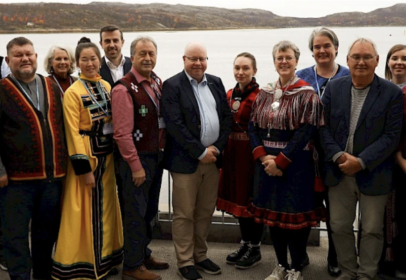
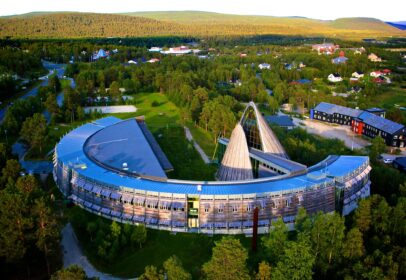
Indigenous Peoples’ role in the Arctic Council
Okalena Patricia Leganoff-Gregory, Rosa-Máren Magga, Linda Lyberth Kristiansen
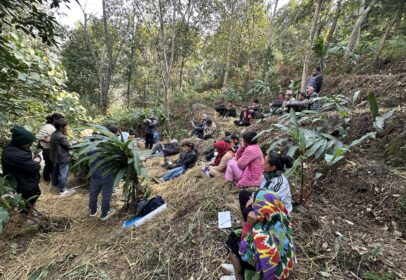
Access to Justice for Indigenous Women in Nepal
Shankar Limbu
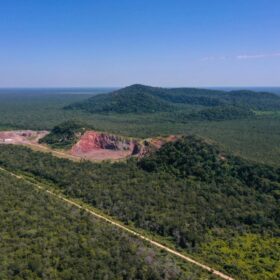
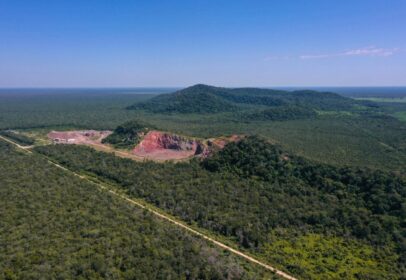
The Ayoreo People Confront Extractivism in the Paraguayan Chaco
Luis María de la Cruz
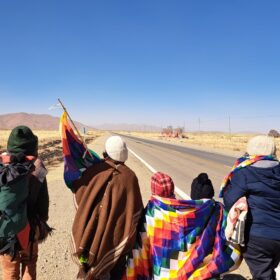
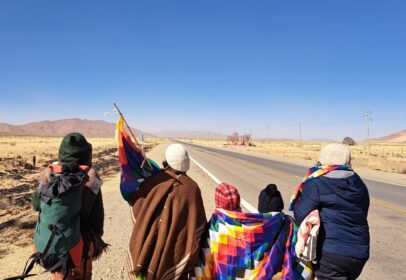
“Being on the Land Is Our Best Defence”: Indigenous and Peasant Territorial Resistance in Jujuy
Natalia Castelnuovo Biraben, Anabella Denuncio, Natalia Boffa


In Memory of Taupla Brooklyn Rivera
Indigenous Debates
May 2026
While the Arctic faces a pivotal moment amid the climate crisis and accelerating biodiversity loss, Greenland—one of its key territories—is closely monitoring growing geopolitical pressure over its natural resources. At the same time, the 25th anniversary of the mandate of the Special Rapporteur on the Rights of Indigenous Peoples is being marked: a Human Rights Council mechanism that has become one of the leading international instruments for the protection and promotion of Indigenous Peoples’ rights.
While the Arctic faces a pivotal moment amid the climate crisis and accelerating biodiversity loss, Greenland—one of its key territories—is closely monitoring growing geopolitical pressure over its natural resources. At the same time, the 25th anniversary of the mandate of the Special Rapporteur on the Rights of Indigenous Peoples is being marked: a Human Rights Council mechanism that has become one of the leading international instruments for the protection and promotion of Indigenous Peoples’ rights.
View articles


Scientific cooperation in the Arctic: the importance of building networks among researchers in Sámi studies
Paulette Birgitte van der Voet, Ekaterina Zmyvalova


A Just Future Beyond Fossil Fuels
Rosario Carmona
April 2026
Respect for Indigenous rights is often a measure of our shared humanity. In this special issue, Debates Indígenas examines the enforced disappearance of the historic Nicaraguan leader Brooklyn Rivera, the detention in Russia of Selkup rights defender Daria Egereva, and the Argentine State’s failure to comply with the Inter-American Court of Human Rights’ ruling in favour of Lhaka Honhat. At the same time, we explore the growing debate around carbon credits and the commodification of Indigenous territories, and continue our coverage of Indigenous women’s access to justice.
Respect for Indigenous rights is often a measure of our shared humanity. In this special issue, Debates Indígenas examines the enforced disappearance of the historic Nicaraguan leader Brooklyn Rivera, the detention in Russia of Selkup rights defender Daria Egereva, and the Argentine State’s failure to comply with the Inter-American Court of Human Rights’ ruling in favour of Lhaka Honhat. At the same time, we explore the growing debate around carbon credits and the commodification of Indigenous territories, and continue our coverage of Indigenous women’s access to justice.
View articles


Carbon markets in Ecuador: climate offsetting or territorial control?
Paul Andrés Sabando Mosquera, Andrés Tapia


Rollback of rights in Bolivia: an offensive against peasant land
Fátima Monasterio Mercado
March 2026
In Asia, Africa, and Latin America, Indigenous women and girls face intersectional violence. Their rights are routinely violated on the basis of gender, identity, and social class. Rape, sexual violence, denial of inheritance rights, criminalization, and poor conditions of detention are among the challenges they confront. These forms of violence are compounded by cultural barriers and discrimination that hinder access to justice. In the face of impunity, Indigenous women are advancing processes of community organizing and empowerment.
In Asia, Africa, and Latin America, Indigenous women and girls face intersectional violence. Their rights are routinely violated on the basis of gender, identity, and social class. Rape, sexual violence, denial of inheritance rights, criminalization, and poor conditions of detention are among the challenges they confront. These forms of violence are compounded by cultural barriers and discrimination that hinder access to justice. In the face of impunity, Indigenous women are advancing processes of community organizing and empowerment.
View articles


Prisons and Colonial Continuities: Indigenous Women’s Experiences of Judicial Racism in Mexico
R. Aída Hernández Castillo, Marcia Daniela Trejo Bizarro


Cultural Barriers in Indigenous Pastoralist Women and Girls’ Access to Justice in Tanzania
Maanda Ngoitiko Sinyati


February 2026
Across different territories in Latin America, Asia, and Africa, Indigenous peoples face conflicts shaped by militarisation, territorial dispossession, and the imposition of extractive and development projects. Far from being passive settings, these territories are spaces of resistance, negotiation, and peacebuilding. In contexts marked by both state and non-state violence, Indigenous communities develop their own practices of reconciliation, justice, and governance. In this sense, peace does not appear as a closed agreement, but as a living process rooted in territory, memory, and self-determination.
Across different territories in Latin America, Asia, and Africa, Indigenous peoples face conflicts shaped by militarisation, territorial dispossession, and the imposition of extractive and development projects. Far from being passive settings, these territories are spaces of resistance, negotiation, and peacebuilding. In contexts marked by both state and non-state violence, Indigenous communities develop their own practices of reconciliation, justice, and governance. In this sense, peace does not appear as a closed agreement, but as a living process rooted in territory, memory, and self-determination.
View articles

Peace as a living system: Indigenous perspectives from the voice of Leonor Zalabata Torres
Leonor Zalabata Torres is a Colombian Indigenous leader of the Arhuaco people from the Sierra Nevada de Santa Marta. She participated in the 1991 constitutional process and is currently Colombia's permanent representative to the United Nations. She is the first Indigenous woman to hold this position and represent the country on the Security Council. Talking about conflict and peace with Leonor Zalabata means thinking outside of the usual boxes. In her opinion, peace is not a legal armistice or a pact between “parties” but a deeper condition: the stability of life.
Laura Galvis Santacruz


Indigenous Adivasi Youth-Led Peacebuilding Amidst Escalating State-Corporate Developmental Violence in India
InSAF India, Indian Alliance Paris


Rehumanising Self-Determination: The Naga Experience and the Limits of State-Centred Peace
Aküm Longchari, Gam A. Shimray


Peacebuilding in the 21 Communities of Teopisca
María del Carmen Pérez Díaz, Elisa Cruz Rueda
December 2025
From Ecuador and Colombia to Sweden and Nepal, Indigenous Peoples are confronting state violence, mounting pressure over critical minerals, and the steady encroachment on their territories. Meanwhile, in Bolivia a new autonomy is taking shape; in Chile a book is reclaiming the memories of Mapuche women; and in Mexico the debate on interculturality is gaining ground.
From Ecuador and Colombia to Sweden and Nepal, Indigenous Peoples are confronting state violence, mounting pressure over critical minerals, and the steady encroachment on their territories. Meanwhile, in Bolivia a new autonomy is taking shape; in Chile a book is reclaiming the memories of Mapuche women; and in Mexico the debate on interculturality is gaining ground.
View articles

Ecuador: Between Oligarchic Violence and Popular Majorities
Manuel Bayón Jiménez


Ñamnagün Mew Ta Pünon: Memories of Mapuche Women Relatives of the Detained-Disappeared
Carolina Espinoza Cartes


When Sacred Land Meets the Law: Stories of Legal Resistance from Nepal and Colombia
Lieselotte Viaene, Sabin Ninglekhu


Political Victory for Challa: Bolivia’s New Autonomous Territorial Entity
Betzabe Saca Choque


Diversity in Mexico: Towards an Intercultural Model
Elias Angeles-Hernandez
November 2025
This special issue addresses the impact of fossil fuels on Indigenous Peoples, revealing how oil, coal and gas projects cause displacement, pollution and rights violations. From Lot 192 in Peru, El Cerrejón in Colombia, coal mining in India and the EACOP in Tanzania, to the mining paradox in Quebec and the ‘green’ transition with lithium, the articles document struggles, resistance and demands for a just transition.
This special issue addresses the impact of fossil fuels on Indigenous Peoples, revealing how oil, coal and gas projects cause displacement, pollution and rights violations. From Lot 192 in Peru, El Cerrejón in Colombia, coal mining in India and the EACOP in Tanzania, to the mining paradox in Quebec and the ‘green’ transition with lithium, the articles document struggles, resistance and demands for a just transition.
View articles

The Clean Energy Smokescreen: Quebec’s Fossil Fuel Ban and the Mining Boom on Indigenous Lands
The US Department of Defense's involvement in projects such as Lomiko and Strange Lake shows how clean energy narratives can align with military objectives. Minerals such as graphite, lithium, rare earths, and nickel are essential not only for electric vehicle batteries, but also for the military industry. Quebec has a decision to make: honor its commitments to Indigenous rights and climate justice, or quietly align itself with US military priorities.
Earthworks


